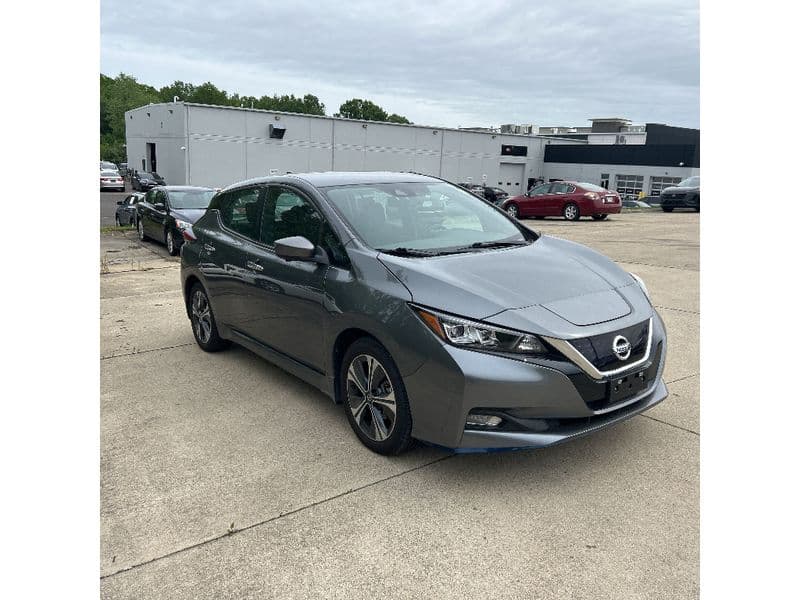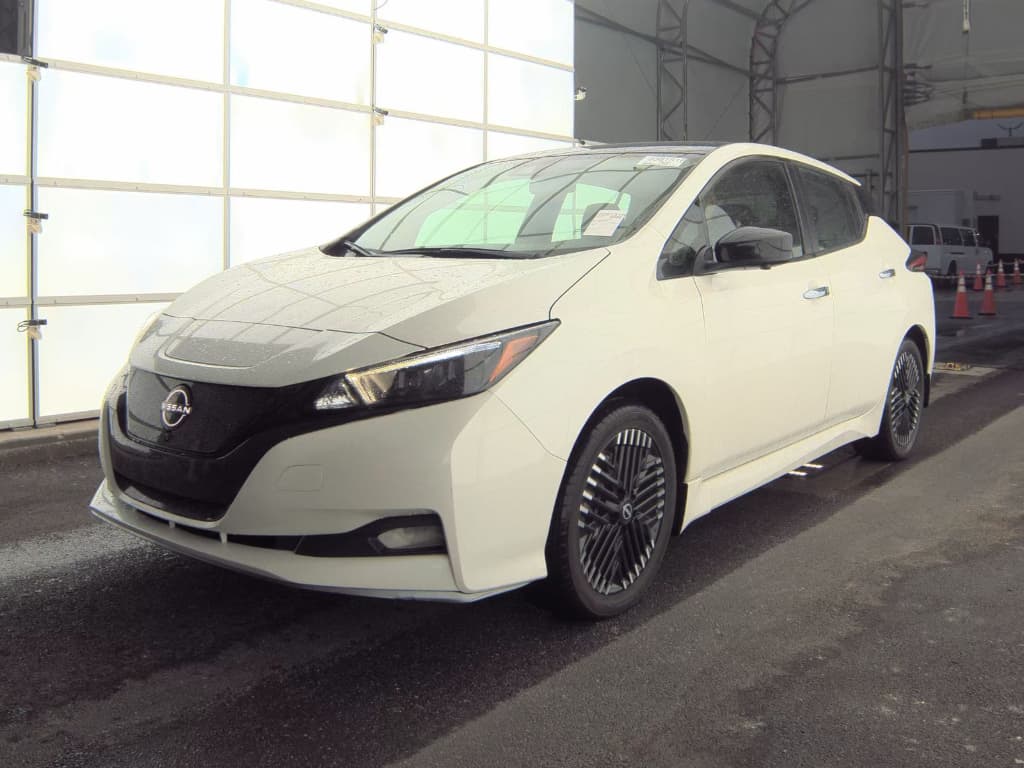
If you’re planning to buy or sell a Nissan Leaf in 2026, price is everything. The Leaf has some of the steepest depreciation of any modern EV, but that pain for first owners turns into opportunity for used‑EV shoppers who know what they’re looking at, especially when you factor in battery health, incentives, and the all‑new 2026 model.
A quick note on this 2026 forecast
Why Nissan Leaf prices matter in 2026
By 2026, the Nissan Leaf will occupy a unique space in the EV landscape. On one end, you have early‑generation Leafs with short range and cheap prices. On the other, you have the redesigned 2026 Leaf, aiming to be the cheapest new EV in the U.S. while offering modern range and tech. That split will create big spreads between the best and worst deals, and make pricing more confusing for shoppers and current owners alike.
Nissan Leaf value snapshot heading into 2026
Where Nissan Leaf prices stand today
To understand any Nissan Leaf price forecast for 2026, you first need a baseline. As of late 2025, the used‑EV market has cooled sharply compared with the pandemic run‑up. Multiple analyses put average Leaf depreciation well above 60% after five years, and several pricing indexes have tracked double‑digit year‑over‑year drops in used Leaf values as off‑lease and fleet vehicles hit the market.
Illustrative U.S. Nissan Leaf price bands heading into 2026
These are broad, real‑world ranges for clean‑title Leafs with typical mileage and no major accident history. Actual prices vary by battery health, options, and region.
| Model years | Typical mileage in 2025 | Common asking‑price band (USD) | Typical use case |
|---|---|---|---|
| 2011–2015 | 60k–110k+ | $4,000–$8,000 | Short‑range city cars, often with significant degradation |
| 2016–2018 | 50k–100k | $7,000–$11,000 | Second‑gen styling begins, mix of 30 kWh and early 40 kWh packs |
| 2019–2021 | 30k–70k | $10,000–$15,000 | Sweet spot for many buyers; modern safety tech and 40/62 kWh packs |
| 2022–2024 | 10k–45k | $13,000–$20,000 | Late‑run hatch, strong supply from leases and fleet cars |
| 2025 | <20k | $16,000–$23,000 | Latest pre‑redesign models; already being discounted vs. MSRP |
Use these ranges as sanity checks, outliers usually mean either an unusually strong battery or a hidden problem.
Beware of outliers, especially cheap early Leafs
Nissan Leaf depreciation: the basics
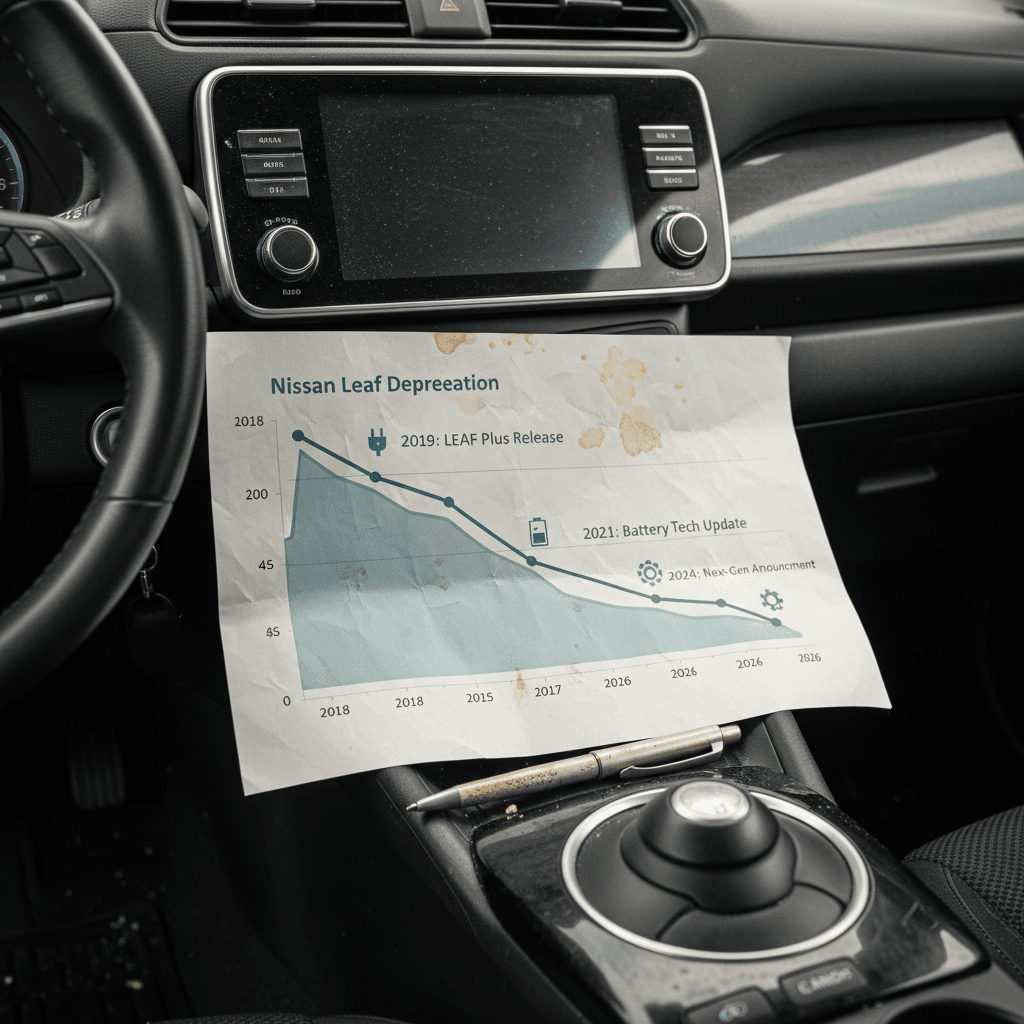
The Leaf has been a depreciation outlier since launch. Several large‑scale studies of 2014–2024 resale data show the Leaf losing roughly 60–65% of its value within five years, faster than most EVs and far faster than most gas compacts. The reasons are straightforward: modest highway range, early batteries without active thermal management, rapid improvements in newer EVs, and a flood of off‑lease supply.
- Early generations (2011–2015) were hit hardest, thanks to small batteries and accelerated degradation in hot climates.
- Second‑generation cars (2018 onward) improved range and durability, but arrived just as the broader EV market began discounting heavily.
- The Leaf has remained one of the most common fleet and lease EVs, feeding a steady stream of low‑mile used inventory into the market.
- New EV prices have come down and incentives have shifted, putting further pressure on older Leafs.
What “normal” depreciation looks like
Nissan Leaf price forecast for 2026: overview
Looking at transaction data, new‑model announcements, and broader used‑EV trends, our base‑case Nissan Leaf price forecast for 2026 points to continued softness, but not a collapse. In plain language: prices should drift lower for older hatchback Leafs, level off for the best late‑run models, and reset entirely around the new 2026 Leaf crossover.
2026 Nissan Leaf price forecast at a glance
Three big themes to watch as the market digests the new model and a maturing used‑EV supply.
1. Older Leafs keep getting cheaper
2. Late hatchbacks stabilize
3. 2026 Leaf sets a new reference point
2026 Nissan Leaf price outlook by model year
Forecasting exact numbers for any used vehicle is impossible, but you can build realistic guardrails. Below is a directional view of where U.S. asking prices for typical Leafs are likely to land by late 2026, assuming no major macro shock and continued EV price competition.
Directional Nissan Leaf price forecast for late 2026 (U.S.)
Ranges below assume clean titles, average mileage for age, and battery state of health that’s reasonable for the year, neither exceptional nor disastrous.
| Model years | Typical mileage by late 2026 | Illustrative private‑party price band (USD) | Trend vs. 2025 |
|---|---|---|---|
| 2011–2015 | 80k–130k+ | $3,500–$6,500 | Down modestly; many cars approach bottom of market |
| 2016–2018 | 70k–120k | $6,000–$9,500 | Down 5–15% as buyers favor newer EVs |
| 2019–2020 | 50k–90k | $9,000–$13,000 | Mostly flat to slightly down; best batteries hold value better |
| 2021–2022 | 35k–70k | $10,500–$15,000 | Slight softening; discounts sharpen as 2026 model spreads |
| 2023–2024 | 25k–55k | $12,500–$17,500 | Down 10–20% vs. early 2025 as nearly‑new used supply builds |
| 2025 | 15k–35k | $14,000–$20,000 | Heaviest hit from launch of 2026 Leaf; nearly new pricing, but below original MSRPs |
Use this as a reference band. Battery condition, mileage, trim, and local incentive quirks can easily push a specific car above or below these numbers.
Forecast, not a promise
How the new 2026 Leaf changes the pricing story
In 2025, Nissan unveiled a ground‑up third‑generation Leaf for the 2026 model year, a compact crossover sharing hardware with the Ariya but priced to undercut nearly every rival. Early reporting points to U.S. pricing that starts just under $30,000 for the S+ trim, with higher trims still undercutting many compact EVs while delivering 250+ miles of range and 150 kW DC fast charging.
What this means for new‑car shoppers
- Cheapest new EV anchor: When the 2026 Leaf is marketed as the most affordable new EV in the U.S., shoppers benchmark everything against that sticker price.
- Less room for discounting rivals: Competing new EVs and leftover 2025 Leafs may need deeper incentives to compete.
- More showroom traffic: A compelling new Leaf brings shoppers into Nissan stores, some will end up in certified pre‑owned Leafs instead.
What this means for used‑Leaf prices
- Pressure on 2024–2025 values: When you can buy a brand‑new 2026 Leaf for not much more money, sellers of nearly‑new hatchbacks have to sharpen their pencils.
- Halo effect on older cars: Marketing the Leaf as the budget EV of choice draws more price‑sensitive buyers into the used market.
- Two distinct products: The old hatchback and new crossover will behave like different vehicles on the used market, with different buyer profiles.
How to use the 2026 Leaf to your advantage
Battery health: the single biggest price swing
For the Leaf, model year and mileage only tell half the story. Because earlier Leafs lack active thermal battery management and all Leafs use air‑cooled packs, state of health (SOH) can vary wildly. Two 2018 SVs with the same odometer reading can differ by 20–30% in remaining capacity, and thousands of dollars in fair value.
How battery health reshapes 2026 Leaf pricing
Three real‑world scenarios you’re likely to see in the listings.
High‑SOH unicorns
Average but usable packs
Heavily degraded cars
How Recharged de‑risks Leaf pricing
Ready to find your next EV?
Browse VehiclesBattery factors that will move Leaf prices in 2026
1. Climate history
Cars that spent most of their life in hot regions (think Arizona, Nevada, Texas) tend to show faster degradation. A Leaf that lived in a cooler coastal or northern state will often be worth more, all else equal.
2. DC fast‑charging habits
Frequent DC fast charging stresses air‑cooled packs. A Leaf that mostly used Level 2 home charging is generally more valuable and should hold its price better into 2026.
3. Mileage vs. age
A high‑mileage but healthy‑battery Leaf can be a better buy than a low‑mile car with an abused pack. Don’t let odometer alone drive your valuation, especially on 2018+ cars.
4. Replacement or upgraded packs
Some older Leafs now have replacement or upgraded batteries. Done properly, that can boost value substantially, but documentation and quality of work matter. On Recharged, those details show up clearly in the Score Report.
Regional and policy factors shaping 2026 Leaf prices
Nissan Leaf prices don’t move in a vacuum. They’re tightly linked to local incentives, charging infrastructure, and how easy it is to live with a shorter‑range EV where you are. In 2026, three factors are likely to matter most: state‑level incentives for used EVs, congestion and parking rules that favor zero‑emission vehicles, and the continued build‑out of public charging in second‑tier markets.
Where Leafs stay more expensive
- EV‑friendly policy states: Places with stacked incentives (think extra used‑EV rebates, HOV perks, or local utility credits) often see higher Leaf prices.
- Dense urban areas: In cities where parking is tight and daily mileage is low, a compact Leaf with modest range can fit the use case perfectly, and prices reflect that.
- Regions with high gas prices: When fuel costs bite, cheap‑to‑run EVs gain pricing power relative to similar‑age gas compacts.
Where bargains will be easier to find
- Sunbelt markets with early degradation: Hot‑climate Leafs with tired batteries will need deep discounts to move, particularly older model years.
- Suburban and rural areas: Where range anxiety is real and DC fast charging is sparse, demand chases longer‑range EVs, pushing Leaf prices down.
- Tax‑credit cross‑currents: If a competing used EV qualifies for a bigger local or federal incentive than the Leaf in 2026, sellers have to compensate with price.
Look beyond your local ZIP code
Buying strategies for 2026 Nissan Leaf shoppers
If you’re a 2026 shopper, the Leaf’s brutal depreciation is your leverage. The trick is separating genuinely good deals from cars that are cheap for a reason. Here’s how to tilt the odds in your favor.
Smart 2026 Leaf buyer playbook
Four practical paths depending on your budget and risk tolerance.
Budget commuter
Value sweet spot
Low‑risk nearly‑new
New‑model shopper
Checklist: sanity‑checking a Leaf’s price in 2026
1. Compare to forecast bands
Start by matching the listing to the right model‑year row in the forecast table above. If the price is 20%+ above the top of the band, the seller needs a very good explanation.
2. Demand real battery data
Look for documentation, LeafSpy screenshots, dealership printouts, or a <strong>Recharged Score Report</strong>, that shows battery SOH. A missing report on an otherwise detailed listing is a red flag.
3. Adjust for incentives and tax credits
If the car qualifies for a used‑EV tax credit or local rebate, factor that into your effective price. Sometimes a slightly more expensive car with better battery health ends up cheaper net of incentives.
4. Weigh warranty coverage
Nissan’s battery warranty can run up to 8 years/100,000 miles on qualifying cars. A 2021 Leaf with two years of battery coverage left can justify a higher price than a 2018 just out of warranty.
5. Factor shipping vs. local compromise
A fair‑priced Leaf with a strong battery a few states away can be a better deal, even after delivery, than an overpriced or weak‑battery car across town.
How Recharged helps buyers in 2026
Selling or trading in a Leaf in 2026
If you already own a Leaf, 2026 is a year to be realistic and strategic. The introduction of the new model and ongoing used‑EV softness mean you won’t get pandemic‑era prices, but you can still do better than the first offer you see if you present the car well and target the right buyers.
Pricing your Leaf realistically
- Start with the 2026 forecast table and peg your asking price near the middle of the band for your year/mileage if your battery is average.
- If your Leaf has an unusually strong battery, clean history, and desirable trim (SV Plus, SL Plus), you can reasonably ask toward the top of the band.
- For cars with notable degradation, price near the bottom, and be upfront about range so you attract city‑car buyers instead of disappointing long‑distance shoppers.
Maximizing offers and minimizing hassle
- Gather documentation: battery health reports, maintenance records, and any warranty paperwork.
- Get multiple valuations: instant offers, dealer trade‑ins, and marketplace comps.
- Consider consignment or specialist marketplaces like Recharged if you want higher exposure and expert pricing guidance without handling every inquiry yourself.
Use a professional valuation as your starting point
FAQ: Nissan Leaf price forecast 2026
Frequently asked questions about 2026 Nissan Leaf prices
Bottom line: making Nissan Leaf values work for you in 2026
By 2026, the Nissan Leaf will be a tale of two markets. Older hatchbacks will keep drifting down in price, rewarding buyers who understand their range needs and insist on solid battery health. Nearly new 2024–2025 cars will feel the squeeze from the all‑new 2026 Leaf crossover, creating opportunities for shoppers willing to hunt for discounts and documented packs.
If you’re a buyer, use this Nissan Leaf price forecast for 2026 as a framework: pick your model‑year target, sanity‑check asking prices against our bands, and never skip a real battery report. If you’re a seller, price realistically, lean on documentation, and consider expert help instead of going it alone.
Either way, the Leaf’s aggressive depreciation doesn’t have to be a problem. Handled correctly, it’s exactly what turns this long‑running EV into one of the most attainable electric cars on the U.S. used market, and a compelling on‑ramp to EV ownership with the right support from a specialist retailer like Recharged.