If you judge it by headlines, the Nissan Leaf should have been dead years ago. Yet in 2026 it’s still quietly doing what it’s always done best: offering one of the cheapest paths into electric driving. This Nissan Leaf long term review for 2026 looks past the sticker price and spec sheet to focus on what actually matters a decade down the road, battery health, range, charging realities, reliability and total cost of ownership.
Who this review is for
Why a Nissan Leaf Long-Term Review Matters in 2026
The Leaf is an oddball in EV history. It was the world’s first mass‑market electric car back in 2011 and, unlike many early EVs, it’s still here. That means we now have 10+ years of real‑world data on how its batteries age, how its values hold up, and what it’s like living with a Leaf when the technology and infrastructure around it have moved on.
Nissan Leaf by the numbers in 2026
At Recharged, we see the full spread: $3,000 early Leafs with 80 miles of real‑world range sitting next to late‑model 62 kWh cars that can credibly replace a compact gas car. And now the 2026 Leaf adds a 300‑mile, NACS‑equipped crossover to the family. You can get a bargain, or a compromise, depending on which Leaf you choose and how you plan to use it.
Recharged perspective
Nissan Leaf generations at a glance
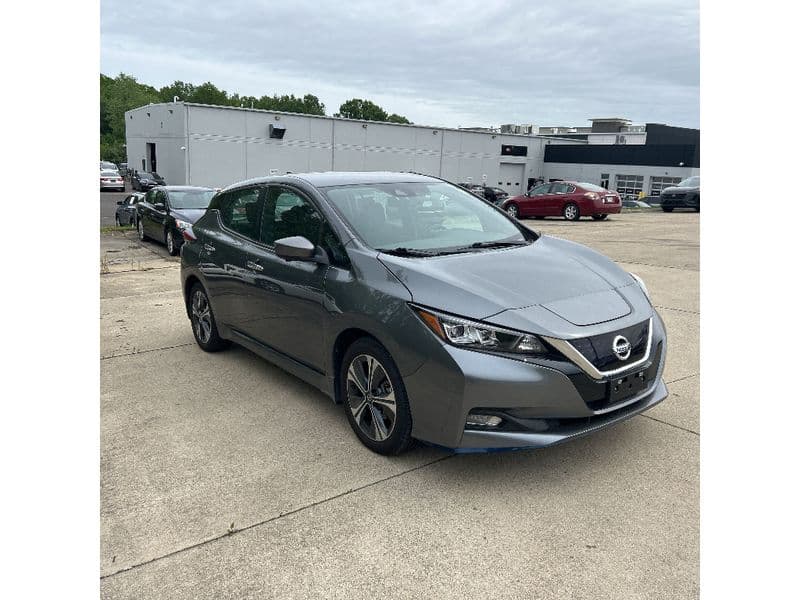
Before you can talk about long‑term ownership, you need to know which Leaf you’re dealing with. Nissan has used the same nameplate for three very different products.
Nissan Leaf generations and key specs
How the Leaf evolved from a compact hatchback commuter to a 300‑mile crossover in 2026.
| Generation | Model years (US) | Body style | Battery sizes | Fast charging | Typical use case |
|---|---|---|---|---|---|
| Gen 1 (AZE0) | 2011–2017 | Compact hatchback | 24 kWh, 30 kWh | CHAdeMO (up to ~50 kW) | Short‑range city commuter |
| Gen 2 pre‑Plus | 2018–2019 | Updated hatchback | 40 kWh | CHAdeMO | Daily driver for shorter commutes |
| Gen 2 Plus | 2019–2025 | Updated hatchback | 62 kWh | CHAdeMO (higher peak) | More flexible commuter / light road‑trip use |
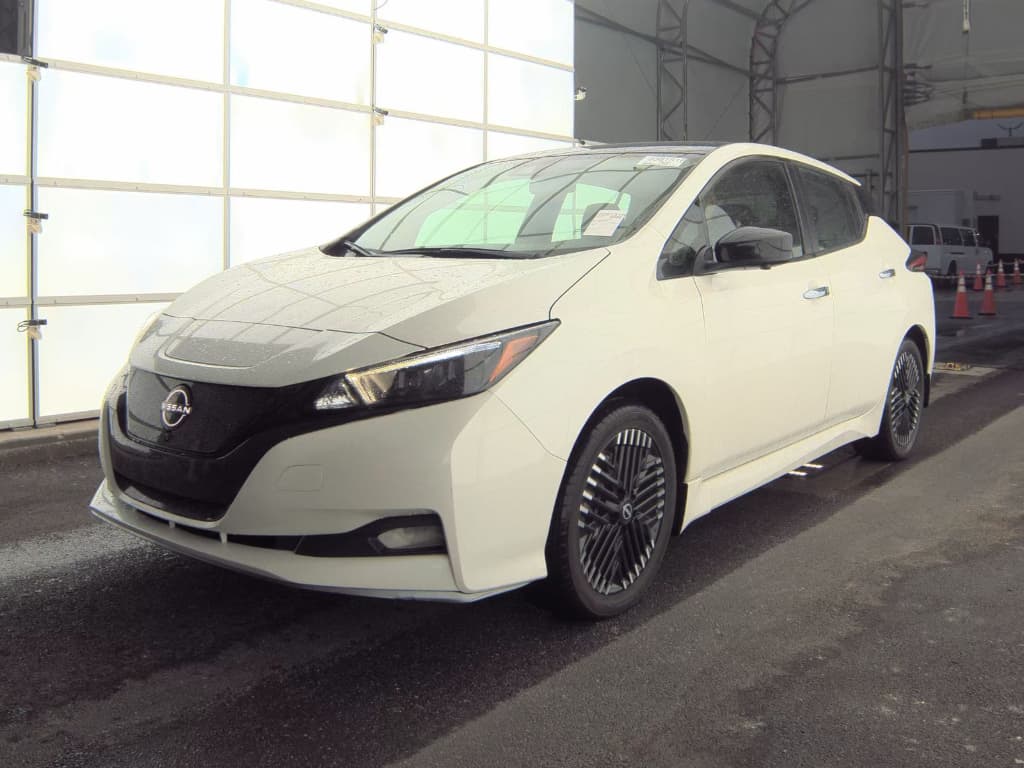
| Gen 3 (2026+) | 2026– | Crossover/SUV | ~60–75 kWh (trim‑dependent) | NACS + J1772 (no CHAdeMO) | Main car for most households |
Battery size and charging hardware are the two things that most affect long‑term ownership.
Why the generation matters
Battery degradation: what actually happens over time
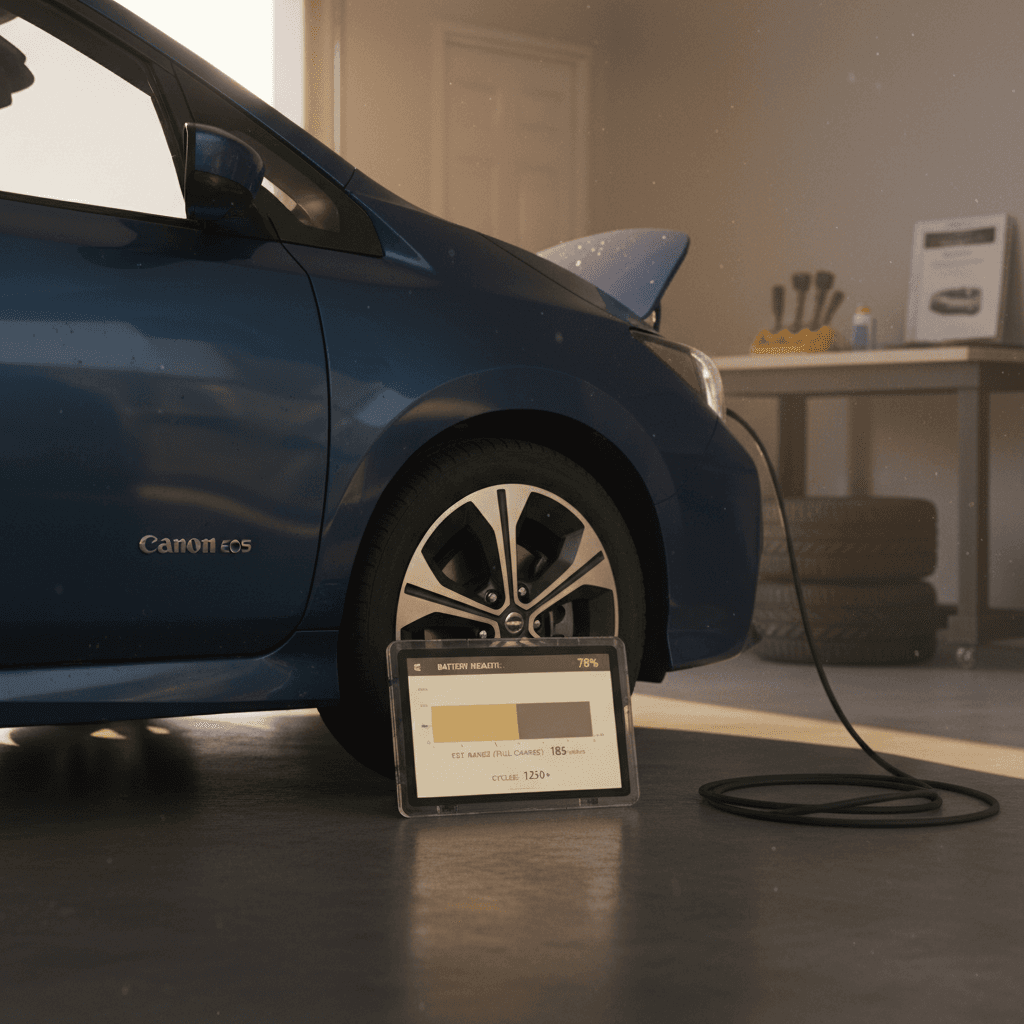
Battery degradation is the Leaf’s defining long‑term story. Early cars proved that air‑cooled packs in hot climates lose capacity faster than many buyers expected, but they also showed that not all Leafs age the same. In 2026, the right question isn’t “Do Leafs degrade?”, it’s “How fast does this specific Leaf’s battery degrade in my climate and usage pattern?”
How Leaf batteries tend to age
Patterns we see across thousands of long‑term Leaf owners and used‑market data
Early 24 kWh packs (2011–2014)
Biggest risk, especially in hot climates. These small, air‑cooled packs run hot and cycle often.
- Desert/sunbelt cars can lose 25–35% capacity in the first 5–7 years.
- Mild‑climate, low‑mileage examples can still be usable commuters.
- Many early packs are now on their second replacement or down to 8–9 bars.
30 & 40 kWh packs (2015–2019)
Noticeably better, but not bulletproof.
- Bigger buffer slows degradation vs 24 kWh.
- Still air‑cooled, so repeated DC fast charging and hot parking accelerate loss.
- Well‑cared‑for cars often retain 80%+ capacity after 7–8 years.
62 kWh "Plus" packs (2019–2025)
Best long‑term bet among older Leafs.
- Much larger capacity means fewer full cycles for the same miles.
- Real‑world reports show modest degradation so far.
- Even with 10–15% loss, they remain practical daily drivers.
Why climate and charging habits matter
The 2026 Leaf switches to a much more modern pack and thermal strategy. Nissan’s own technical work over the last decade has focused on cell chemistry and temperature control, and it’s reasonable to expect slower degradation than any previous Leaf. But because it’s brand‑new, 2026 models simply don’t have the real‑world track record yet that a skeptic should demand. If you’re conservative about battery risk, a 2022–2024 Leaf Plus with a known health history can actually be a safer bet than the first year of a new generation.
Real-world range by generation
EPA range numbers are a useful starting point, but long‑term owners care about today’s usable range, not the number on the original window sticker. Below is how different Leafs usually perform after a few years, assuming average degradation and mixed‑weather driving.
Typical usable range in 2026
Approximate real‑world ranges for each Leaf generation assuming a healthy, but not brand‑new, battery.
| Leaf type | Original EPA range (mi) | Typical real‑world new (mi) | Typical real‑world now (mi) | Good use case in 2026 |
|---|---|---|---|---|
| 2011–2014 24 kWh | 73–84 | 65–75 | 45–65 | Short urban hops, 2nd/3rd car |
| 2015–2017 30 kWh | 107 | 95–105 | 75–90 | Suburban commuting under 40 mi/day |
| 2018–2019 40 kWh | ~150 | 130–150 | 110–130 | Most daily commutes, limited highway use |
| 2019–2025 62 kWh | ~215–226 | 190–220 | 160–200 | Primary car for many one‑car households with occasional fast charging |
| 2026 Leaf (est.) | ~260–300+ | 240–300+ | Too early to say | Full‑range primary car, true gas replacement |
Your actual range will vary with climate, driving style, tires and heater/AC use.
Cold weather penalty
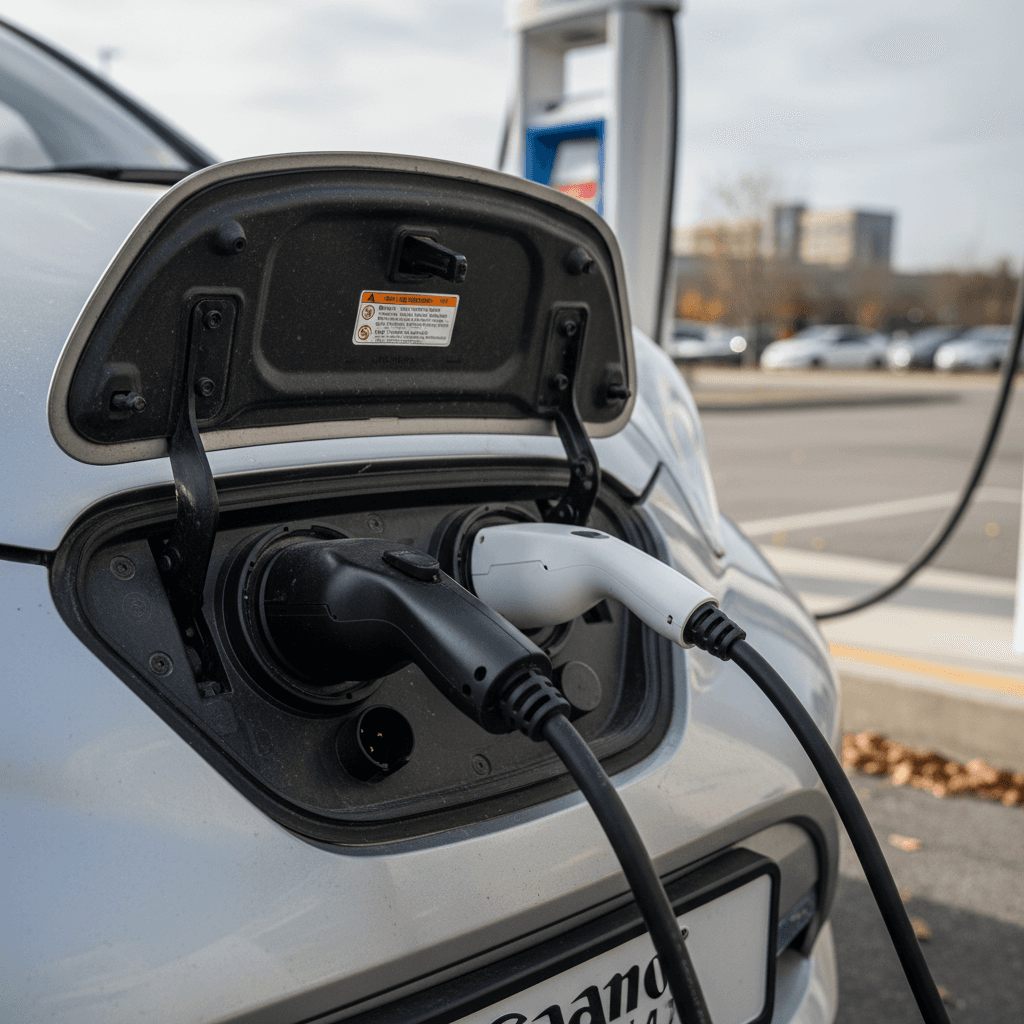
Charging today: CHAdeMO pain vs NACS fix
The Leaf’s other long‑term story is charging. For more than a decade it used the Japanese CHAdeMO DC fast‑charging standard, fine in 2013, increasingly awkward in 2026 as networks prioritize CCS and NACS. The 2026 Leaf finally corrects course with native NACS (Tesla‑style) DC fast charging and J1772 for AC, but the used market is dominated by CHAdeMO cars.
Owning a CHAdeMO Leaf in 2026
- Public DC fast charging is shrinking, not growing in North America, even though new stations are still being added here and there.
- Most big networks focus on CCS/NACS; CHAdeMO often means a single stall at the edge of the lot.
- For many Leaf owners that’s fine because they charge at home and rarely fast‑charge.
- For road trips, you need to plan carefully and expect slower stops (~40–60 minutes 20–80%).
Owning the 2026 NACS Leaf
- Native NACS port means access to Tesla Superchargers plus newer NACS public stations.
- No more CHAdeMO adapter gymnastics; you’re aligned with where the market is going.
- Plug & Charge support on major networks simplifies payment and session start.
- For long‑distance travel, this puts the Leaf on an even footing with most modern EVs.
Home charging is the real anchor
If your budget only stretches to a cheap, CHAdeMO‑equipped Leaf, the key is to treat fast charging as a backup, not a lifestyle. Think of it as an electric Corolla designed for commuting, not as an all‑weather, all‑distance touring machine.
Reliability and common issues
Mechanically, the Leaf is one of the simplest modern cars sold in the US: no engine, no multi‑speed transmission, no exhaust system, and modest power levels. That pays dividends in long‑term reliability. When problems do crop up, they tend to be predictable and relatively contained.
Common long-term Leaf issues
What tends to go wrong after the honeymoon period
Battery capacity loss
This isn’t a "fault" so much as a design trade‑off, but it’s the single biggest Leaf complaint.
- Most pronounced on 24 kWh packs in hot climates.
- Can render the car unsuitable for original use case (e.g., 60‑mile commute).
- Battery replacement is possible but costly relative to vehicle value on older cars.
HVAC & accessories
Heat pumps and resistive heaters, like any HVAC system, can fail with age.
- Blower motors and A/C compressors occasionally need replacement.
- Interior fan or PTC heater failures are annoying but usually fixable at independent shops.
Suspension & wear items
As mileage climbs, Leafs are just like any compact car.
- Struts, bushings and sway‑bar links wear and can cause clunks.
- 12‑V accessory batteries can die unexpectedly and strand the car in "no start" mode.
The upside: simple EV hardware
Total cost of ownership and depreciation
If there’s one place the Leaf is undeniably world‑class, it’s depreciation. Early cars have shed almost all of their original value, which is painful for first owners but a gift for used‑EV shoppers. Later 62 kWh cars hold value much better, but they’re still cheaper than comparable Teslas or Korean EVs of the same age.
What you actually spend over time
- Fuel: Even with higher US electricity prices, Leafs are dramatically cheaper to run per mile than gas compacts, especially if you charge off‑peak.
- Maintenance: No oil changes, spark plugs or timing belts. Budget for tires, brake fluid every few years, cabin filters and 12‑V batteries.
- Insurance: Often similar to or slightly higher than a comparable gas hatchback; check quotes by VIN.
How depreciation cuts both ways
- 2011–2015 Leafs can be absurdly cheap (low four figures), but you’re buying a battery as much as a car.
- 2018+ 40 kWh cars strike a balance between price and usability.
- 2019–2024 62 kWh Leafs hold value best, but still undercut newer long‑range rivals.
If you buy smart, total cost of ownership over 5–7 years can undercut nearly any gas car, even before you factor in lower maintenance.
How Recharged helps on costs
Daily driving experience: comfort, tech and performance
From the driver’s seat, a Leaf is less about thrills and more about quiet competence. That’s not a criticism, electric torque off the line makes it feel quicker than the numbers suggest, and the simplicity of one‑pedal driving in traffic is addictive if you’re coming from a conventional automatic.
- Ride and noise: Later Leafs (2018+) ride more quietly and smoothly than early cars, but all generations feel like honest compact hatchbacks, not luxury cars.
- Cabin space: The upright roof and hatchback shape make the Leaf more practical than many small crossovers. Rear legroom is decent; cargo space is generous for the class.
- Tech: Nissan’s infotainment and driver‑assist tech lag behind the latest EVs, but 2018+ cars with ProPILOT Assist deliver competent lane‑keeping and adaptive cruise for highway slogs.
- Performance: Acceleration is zippy up to city speeds, especially in the 62 kWh cars, but highway passing power is adequate rather than exciting. The 2026 Leaf’s stronger motor changes this calculus, but we’re still waiting on large‑scale long‑term data.
"If you accept that it’s not a Tesla, the Leaf is one of the least stressful cars you can own. Plug it in, drive it hard, and it just shrugs. The only thing you really have to watch is the battery gauge."
Used Nissan Leaf buying guide for 2026
Shopping for a used Leaf in 2026 is less about trim names and more about matching battery size and health to your life. Here’s a practical checklist to avoid the common traps.
Essential checks before you buy a used Leaf
1. Start with your daily range needs
Add up your real daily mileage including errands and weather cushion. If you routinely drive more than 50–60 miles a day, early 24 kWh Leafs are risky unless you have winter range backup.
2. Verify battery health, not just odometer
Capacity bars on the dash are crude. Ideally, use a professional battery test (like the <strong>Recharged Score</strong>) or a trusted OBD app to see State of Health (SOH) before you buy.
3. Prefer mild-climate, garaged cars
A 2015 Leaf from Seattle can be a much better long‑term bet than a 2018 Leaf from Phoenix with similar miles. Ask where the car lived and how it was stored.
4. Decide on CHAdeMO tolerance
If you’ll almost never DC fast‑charge, a CHAdeMO Leaf is fine and cheap. If you dream of cross‑country road trips, either budget for a second car or focus on the 2026 NACS Leaf instead.
5. Inspect for crash and flood damage
As values fall, some Leafs end up in less‑than‑perfect repairs or flood auctions. Look for overspray, mismatched panels, damp smells and check that all charging functions work before buying.
6. Factor in potential battery replacement
On very cheap, early Leafs, it can make sense to buy the car assuming you might eventually replace the pack, or treat it as a 5‑year city car with a planned end‑of‑life, not a forever car.
The big mistake to avoid
Should you buy a Leaf in 2026? Scenarios
Whether a Leaf makes sense in 2026 depends almost entirely on your use case. Here’s how it shakes out for different types of buyers.
Who the Leaf still makes sense for
Match your situation to the right generation
Urban apartment dweller (limited charging)
Risky unless you have reliable Level 2 nearby.
- Early Leafs: generally avoid, short range plus no guaranteed charging equals stress.
- 40/62 kWh Leafs: workable only if your building or workplace offers dependable charging.
- 2026 Leaf: best choice, but still only if you have predictable access to plugs.
Homeowner with garage or driveway
Leaf can be a total bargain.
- 24/30 kWh: perfect cheap second car for local miles.
- 40 kWh: solid primary car if your commute is modest.
- 62 kWh or 2026 Leaf: realistic one‑car solution for most families.
Frequent road-tripper
Be honest about your expectations.
- CHAdeMO Leafs: possible but slow and infrastructure‑dependent. Not ideal as your only car.
- 2026 NACS Leaf: finally credible for regular long‑distance use alongside other modern EVs.
FAQ: Nissan Leaf long-term ownership questions
Frequently asked questions about the Nissan Leaf in 2026
Bottom line on the Nissan Leaf in 2026
The Nissan Leaf in 2026 is a split personality. On one side you have deeply depreciated, short‑range commuters that can be incredible value if you understand their limits and verify battery health. On the other you have the new 2026 Leaf, finally aligned with the mainstream on charging and range, promising to be a legitimate one‑car solution for many households.
If you treat the Leaf like what it really is, a simple, honest electric appliance rather than a tech toy, it can be one of the lowest‑stress, lowest‑cost ways to drive electric. The trick is choosing carefully. That means prioritizing battery condition over leather seats, home charging over public infrastructure, and total cost of ownership over hype.
If you’re ready to run the numbers on a Leaf that actually fits your life, you can browse used Nissan Leafs on Recharged, see a full Recharged Score battery report for each car, and get EV‑specialist guidance from your couch. In a market that’s increasingly crowded and confusing, that kind of clarity is worth as much as the car itself.