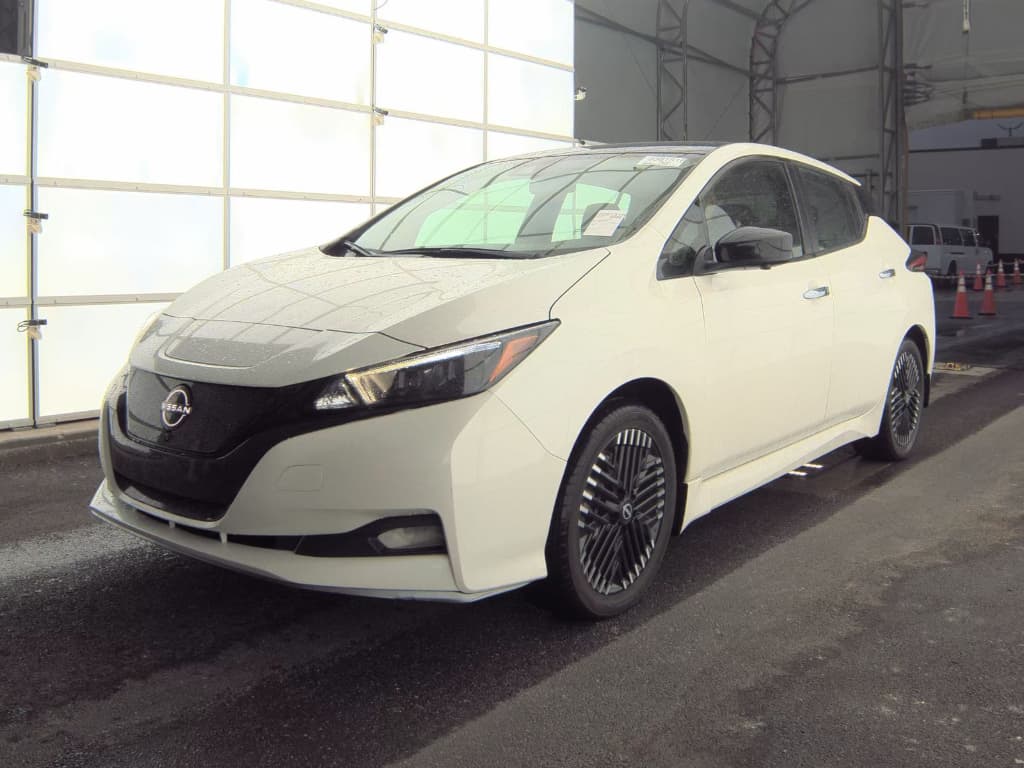
If you own a Nissan Leaf, you already know it’s a rock‑solid city car. But what about long-distance driving, those 200–500 mile days to see family, hit the beach, or cross a few states? With the right expectations and some smart planning, a Nissan Leaf can absolutely do road trips, especially newer and larger‑battery cars. This guide walks you through practical Nissan Leaf long distance driving tips, with a special focus on real‑world range, charging, and how to decide if your specific Leaf is up for the job.
Start with honest expectations
Can you drive a Nissan Leaf long distance?
The short answer: yes, but it depends which Leaf you have and where you’re going. Early Leafs with 24 kWh and 30 kWh batteries were built for short‑haul commuting. Newer 40 kWh and 62 kWh Leaf Plus models have much more realistic highway range and can cover serious ground, if the charging network cooperates. Your experience will hinge on three things: 1. The usable highway range of your particular Leaf today (not when it was new). 2. The availability of CHAdeMO fast chargers (the Leaf’s DC connector) along your route. 3. How flexible you can be about time, speed, and driving style.
Typical Nissan Leaf EPA ranges when new (U.S. market)
Those numbers are “when new”
Know your Leaf’s real-world range first
Before you even open a maps app, you need a realistic picture of how far your Leaf actually goes at highway speeds. EPA ratings assume mixed driving; long‑distance trips are mostly highway, which is tougher on range, especially for the Leaf’s relatively simple, air‑cooled battery.
Rough real-world highway range by Leaf battery size
Assumes healthy battery, mild weather (around 70°F), 65–70 mph, light load.
24 kWh & 30 kWh Leafs
- 24 kWh (early cars): Think ~50–60 miles of highway range left in many used examples.
- 30 kWh (2016–2017): Perhaps 70–90 miles on the highway if the battery is in good shape.
- These packs are usually best for short hops between slow or Level 2 chargers, not multi‑hundred‑mile days.
40 kWh & 62 kWh Leafs
- 40 kWh (2018+): Real‑world highway often lands in the 100–120 mile ballpark with a healthy battery.
- 62 kWh Leaf Plus: Many owners see ~150–180 highway miles per charge when new, less with some degradation.
- These are the variants that make true road trips much more realistic.
How to measure your own highway range
Is your specific Leaf road-trip ready?
Not every Leaf should be pushed into long‑distance duty. Two cars of the same year can behave very differently depending on how they’ve been used and how their batteries have aged. Before you plan a big drive, give your car a quick health check.
Quick Leaf road-trip readiness checklist
1. Check battery health, not just range estimate
On the Leaf’s dash, those little capacity bars to the right of the battery icon tell you how much usable capacity is left. If you’re down several bars, your maximum range may be too short for relaxed highway travel.
2. Confirm you have CHAdeMO fast charging
Look for the second, larger DC port door next to your J1772 charge port. Some base trims skipped CHAdeMO, those cars are effectively Level 2 only on the road, which makes long trips impractical.
3. Make sure your 12V battery is healthy
A weak 12V battery can cause all kinds of weird behavior and warning lights. If it’s several years old, consider replacing it before a big trip.
4. Inspect tires and set proper pressures
Under‑inflated or unevenly worn tires kill range and can be dangerous at highway speeds. Set pressures to the driver’s door‑jamb spec, not what’s printed on the tire.
5. Update navigation and charging apps
Factory navigation in older Leafs is limited. Install up‑to‑date apps like PlugShare, A Better Routeplanner (ABRP), and your preferred networks (EVgo, ChargePoint, etc.).
6. Get an honest battery report if buying used
If you’re planning a long‑distance‑capable Leaf and shopping used, a <strong>Recharged Score Report</strong> includes verified battery health so you know whether that Leaf can realistically cover your road‑trip plans.
Where Recharged fits in
Ready to find your next EV?
Browse VehiclesPlan your route around CHAdeMO fast charging
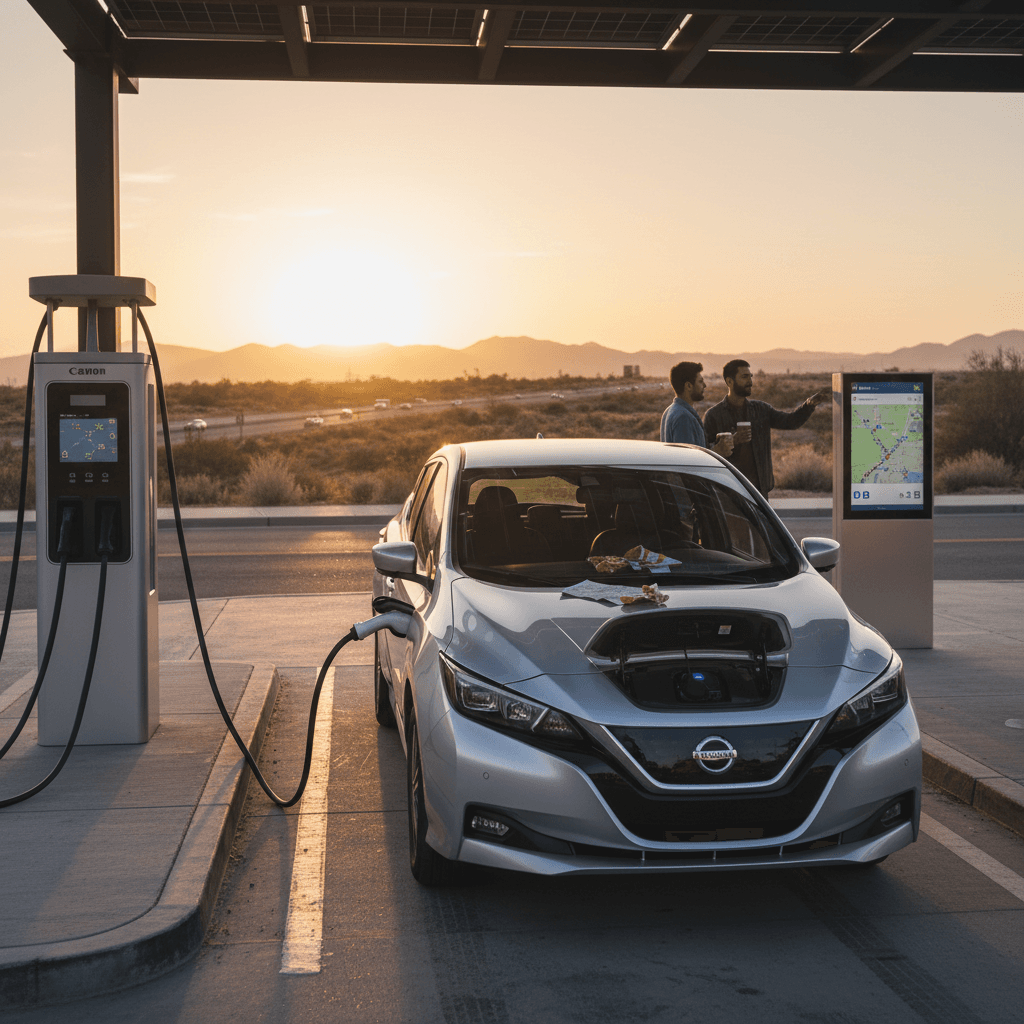
Unlike most newer EVs that use CCS or NACS, the Nissan Leaf relies on the CHAdeMO standard for DC fast charging. That network grew quickly in the early 2010s and then slowed as the industry moved toward other connectors. Today in the U.S., there are still thousands of CHAdeMO plugs, but coverage is patchy, especially once you leave the coasts and major corridors.
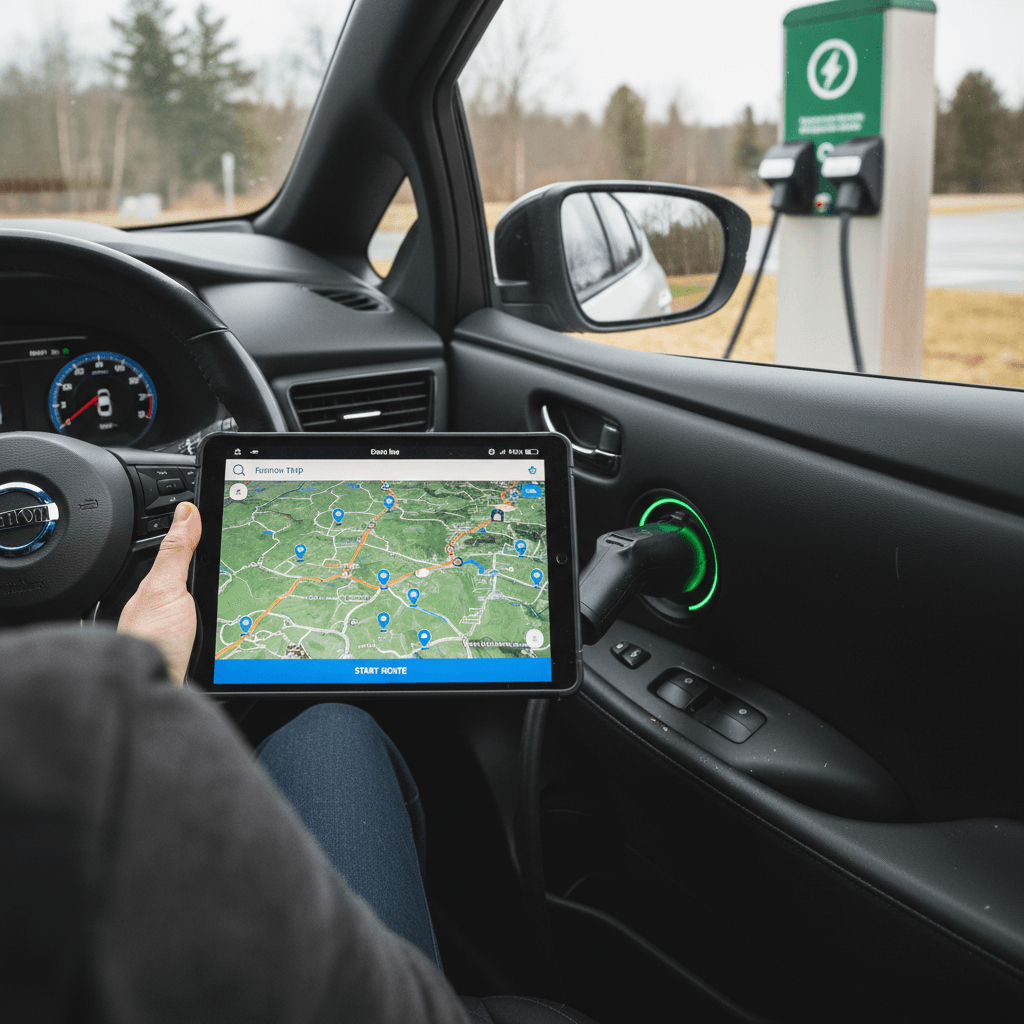
Must-have planning tools
- PlugShare: Community‑driven map of all public chargers. Filter by CHAdeMO for the Leaf.
- A Better Routeplanner (ABRP): Lets you input your Leaf model, battery health estimate, speed, and temps to simulate realistic stops.
- Network apps: EVgo, ChargePoint, Electrify America (and any local utilities) for live status and starting sessions.
Smart CHAdeMO routing habits
- Plot chargers 40–70 miles apart for smaller batteries, 60–120 miles for 40/62 kWh Leafs.
- Always have a backup CHAdeMO or Level 2 within reach in case your first choice is down.
- Favor chargers near food, restrooms, and 24‑hour services so downtime is useful, not miserable.
Call the station when in doubt
Driving techniques to stretch Leaf range
On road trips, how you drive your Leaf can add or subtract dozens of miles of range. The Leaf doesn’t have a huge battery buffer, so small changes in speed and smoothness really show up on the guess‑o‑meter.
- Aim for 60–65 mph instead of 75–80 mph. Aerodynamic drag skyrockets with speed, and the Leaf’s shape is tuned more for city use than triple‑digit Autobahn runs.
- Use ECO mode and gentle throttle. ECO softens power delivery and encourages you to accelerate more gradually, which keeps energy use down.
- Look ahead and coast early into slowdowns instead of braking late. Regenerative braking helps, but not wasting speed in the first place is even better.
- Use B mode in hilly areas to capture more regeneration on descents, but don’t rely on it to save a badly planned leg.
- Avoid full‑throttle launches. They’re fun in an EV, but repeated 0–60 blasts eat into both range and battery temperature headroom.
- Try to keep the real‑time power usage gauge (or bar graph) in the middle range on the highway, not pegged to the max.
Watch mi/kWh, not just miles remaining
Smart charging strategy for long Leaf trips
Fast charging is where the Leaf’s road‑trip personality really shows. Most U.S. CHAdeMO stations are labeled 50 kW, but many Leafs, especially before the 62 kWh Plus, rarely sit at full power for long. The car tapers quickly as the battery warms up and state of charge climbs.
Good vs. painful charging strategy in a Leaf
Use the battery and charger where they’re happiest.
What works well
- Arrive at fast chargers around 10–25% state of charge.
- Charge only to 60–80% on most stops, where power is still reasonably high.
- String together more shorter, faster stops instead of one huge 0–100% session.
- Use overnight Level 2 charging at hotels or relatives to start days at 90–100%.
What makes trips drag
- Letting the battery sit at very high state of charge and then fast charging again quickly.
- Driving at high speeds, then immediately fast charging repeatedly, this can trigger aggressive tapering as the pack heats.
- Regularly charging above 80–90% on DC fast chargers during a single day.
- Relying on DC fast charging for every mile, every day; this isn’t what the Leaf was designed for.
A word about battery heat and “rapidgate”
Weather, terrain, and load: how conditions cut range
The Leaf’s range can shrink fast when conditions stack up against you. On long drives, it’s safer to assume you’ll get less than your perfect‑day range and plan a buffer of at least 15–20% state of charge at arrival.
How different factors affect Leaf road-trip range
These are ballpark impacts versus mild‑weather, level‑road highway driving at moderate speeds.
| Factor | Typical impact | What to do about it |
|---|---|---|
| Cold weather (below ~40°F) | −20% to −40% | Pre‑heat while plugged in, slow down, use seat/steering‑wheel heaters instead of blasting cabin heat. |
| Very hot weather (above ~90°F) | −10% to −20% | Pre‑cool while plugged in, park in shade, use ECO mode, avoid aggressive driving. |
| Strong headwinds | −10% to −25% | Slow down 5–10 mph, accept shorter legs, keep your next charger closer. |
| Mountain climbs | −15% or more on the uphill leg | Charge extra before big climbs; you’ll gain some back on the downhill in B mode. |
| Heavy load (people & cargo) | −5% to −15% | Remove roof racks when not needed, pack light, keep speeds conservative. |
| Rain, snow, or slush | −10% to −30% | Use eco driving, avoid standing water, accept lower speeds and shorter legs. |
Always layer these penalties conservatively if several apply at once.
Comfort vs efficiency: finding the balance
You’re not trying to win a hypermiling contest on a family visit. The goal is to arrive safely without stress, not to freeze just to save 2% battery. The Leaf gives you a few tools to balance comfort and range.
Smarter climate control use
- Pre‑heat or pre‑cool the cabin while plugged in so you start with a comfortable interior and a full battery.
- Use seat and steering‑wheel heaters in winter, they sip power compared to full cabin heat.
- In moderate weather, try fan with A/C off before committing to full air conditioning.
Cruise control and mental load
- On flatter stretches, cruise control at 60–65 mph can smooth out your driving and reduce fatigue.
- In rolling hills, manual control often beats cruise in efficiency, since you can ease off the throttle uphill and coast more intelligently.
- Build in real breaks at charging stops, stretch, eat, walk, so you’re not tempted to speed to “make up time.”
Sample trip scenarios: what a Leaf can really do
Theory is nice. But what does this look like when you’re actually trying to get somewhere on a schedule? Here are some rough scenarios to help you benchmark your expectations. Your numbers will vary, battery health, weather, and terrain make a huge difference, but the patterns hold.
Three example Leaf long-distance day trips
Assumes healthy batteries, cooperative weather, and working chargers.
Older Leaf, 24–30 kWh
Use case: 100–150 mile total day with a long stop in the middle.
- Start full, drive 50–70 miles.
- Level 2 charge for several hours while visiting someone or exploring.
- Drive home another 50–70 miles.
- Not ideal for 300‑mile days; too much time charging.
40 kWh Leaf (150 mi EPA)
Use case: ~200–250 mile day with 1–2 DC fast charges.
- Segment legs at ~80–110 highway miles.
- Plan 30–45 minute CHAdeMO stops to 70–80%.
- Overnight Level 2 makes multi‑day trips manageable.
- Sweet spot: regional trips, not cross‑country cannonballs.
62 kWh Leaf Plus
Use case: 300–400 mile day in CHAdeMO‑dense regions.
- First leg 150–180 miles, then 2–3 shorter fast charges.
- Comfortable if you accept lower speeds and 2–3 longer breaks.
- Practical for multi‑day journeys where CHAdeMO coverage is decent.
Play to your region’s strengths
When a Nissan Leaf is the wrong tool for the trip
As much as I like rooting for the underdog, there are trips where the honest answer is: leave the Leaf at home. Knowing when to say no is part of being a happy EV owner instead of a frustrated one.
- Your main corridor has few or no CHAdeMO chargers, or the stations are unreliable and far apart.
- You drive an older 24 kWh or 30 kWh Leaf with substantial degradation; your real‑world highway range may be under 60–70 miles.
- You’re on a strict schedule where adding 2–4 hours of charging time would cause major problems.
- Weather forecasts call for extreme cold plus headwinds over remote stretches with few backup options.
- You’re hauling a full load of people and cargo through mountains, which stacks the deck against your range.
Consider a different EV for heavy road-trip duty
FAQ: Nissan Leaf long-distance driving
Frequently asked questions about Leaf road trips
Bottom line: making peace with the Leaf’s strengths
Long‑distance driving in a Nissan Leaf is all about playing to the car’s strengths and respecting its limits. The Leaf is a fantastic, efficient commuter that can absolutely handle road trips when you plan around its real‑world range, CHAdeMO availability, and the realities of an air‑cooled battery. Newer 40 kWh and especially 62 kWh Leaf Plus models can cover impressive ground if you’re willing to slow down a bit and treat charge stops as part of the journey.
If your current Leaf just isn’t the right tool for the drives you want to take, that’s not a failure, it’s a sign you’ve outgrown the car. Whether you’re dreaming of a bigger‑battery Leaf or a different long‑range EV altogether, Recharged can help you understand your present car’s battery health, value your trade, and step into something that fits your actual miles. Start with honest range numbers, build a conservative route, and your next Leaf road trip can be memorable for all the right reasons.