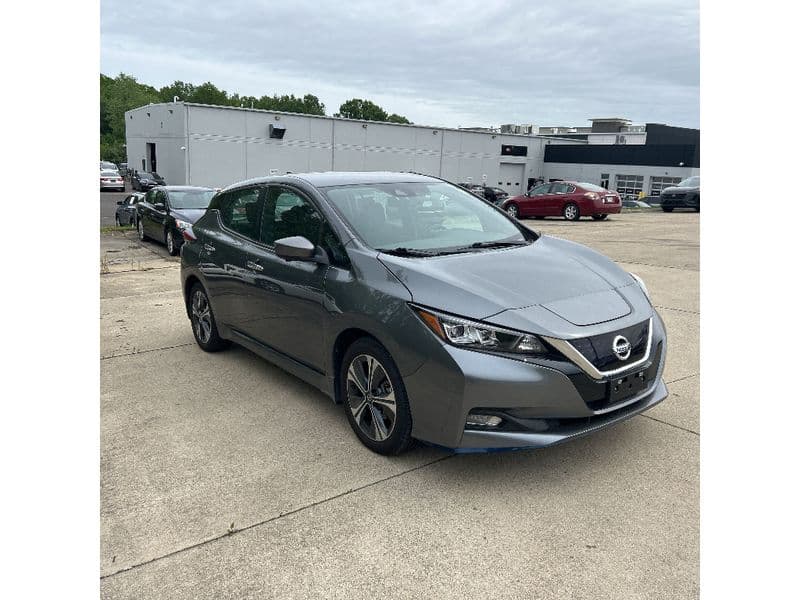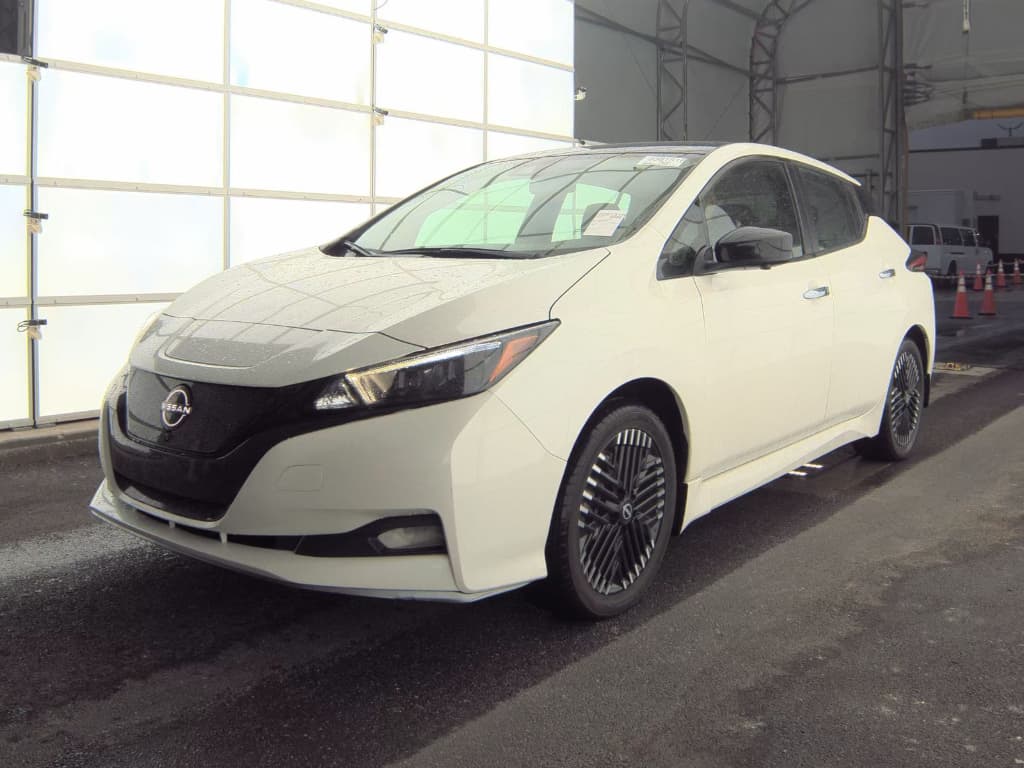
The Nissan Leaf is one of the cheapest and most common used EVs on the market, and one of the easiest to get wrong. A smart Nissan Leaf buying checklist helps you match the right model year and battery to your daily driving, avoid the problem years, and make sure the pack still has the range you’re paying for.
Who this checklist is for
Why a Nissan Leaf buying checklist matters
With the Leaf, the drivetrain is usually the least of your worries. The big swing factor is battery degradation: early 24 kWh Leafs were notorious for losing range, while later 40–62 kWh packs are much more robust. Model‑year differences, climate history, and charging habits can mean the difference between a car that comfortably does your commute and one that becomes a headache within a year.
Nissan Leaf battery and range at a glance
Leaf buying reality check
Step 1: Clarify how you’ll use your Leaf
Before you dive into trim names and battery chemistries, get clear about your use case. The right Nissan Leaf for a 10‑mile commute is very different from the right Leaf for a 60‑mile winter highway round‑trip.
Match your Leaf to your real use case
Estimate your maximum daily round‑trip distance (including errands and detours), not just your one‑way commute.
Urban commuter (≤ 40 miles/day)
Early Leafs with smaller packs can work here if the battery is healthy.
- Target: 24–40 kWh pack with good state of health
- Focus on low price and simple spec
- Home Level 2 charging highly recommended
Suburban mixed driving (40–80 miles/day)
You’ll want more buffer and better degradation resistance.
- Target: 40 kWh (2018+) or 60/62 kWh (Leaf Plus/SV+)
- Prioritize cars with mild‑climate history
- Look for heat pump & heated seats in cold states
Occasional road‑tripper
The hatchback Leafs were never designed as long‑distance highway cars. The 2026 Leaf crossover changes that, but used prices will be high.
- Target: Larger pack (60+ kWh) or 2026+ Leaf
- Plan around CCS/NACS fast‑charging availability
- Be honest about whether another EV fits you better
Quick homework
Step 2: Choose the right Leaf generation and battery
Not all Leafs are created equal. The model year and battery pack largely define your range, reliability expectations, and price. Here’s how the main eras break down in simple checklist form.
Nissan Leaf generations & batteries (simplified)
Use this to narrow your search to the model years that match your range and budget targets.
| Generation / Years (U.S.) | Battery sizes | Approx. EPA range when new | Typical buyer fit |
|---|---|---|---|
| Gen 1 (2011–2015 hatchback) | 24 kWh | 73–84 mi | Ultra‑cheap city car; only if low‑mileage and strong battery health |
| Gen 1.5 (2016–2017 hatchback) | 24 or 30 kWh | 84–107 mi | Budget commuter; 30 kWh packs better but had some BMS issues |
| Gen 2 (2018–2024 hatchback) | 40 kWh (Leaf), 60–62 kWh (Leaf Plus/SV+) | 149–226 mi | Best value used Leafs; improved chemistry and more range |
| Gen 3 (2026+ crossover) | Smaller base pack, 75 kWh on S+/SV+/Platinum+ | ~255–303 mi (est.) | Modern interior, long range, higher price; early used deals will be rare |
EPA ranges are approximate and assume the battery was new. A used car will deliver less, depending on degradation.
Watch the problem years
Step 3: Range reality check vs your driving
Once you know which era of Leaf you’re targeting, you need to translate brochure numbers into real life. EPA range numbers were measured when the pack was new, on standardized cycles, and in mild weather. Your used Leaf will almost always deliver less.
How real‑world Leaf range behaves
- Degradation: A healthy used pack might be at 85–95% of original capacity; an abused one can be far lower.
- Speed: Highway driving (70–75 mph) can cut range by 20–30% vs city use.
- Weather: Winter temps below freezing can knock another 20–35% off if you use the heater heavily.
- Terrain & cargo: Hills and heavy loads also eat into range.
Simple Leaf range rule of thumb
Take the original EPA rating for that trim, then:
- Multiply by your estimated remaining battery health (for example, 0.9 for 90%).
- Deduct 20% if most of your driving is highway.
- Deduct another 10–20% if you expect frequent winter use.
If the result is less than your worst‑case daily mileage plus a 30–40% buffer, look for a larger pack or a newer car.

Step 4: Battery health checklist – the Leaf‑specific stuff
For most used Leafs, **battery health is the entire deal**. A mechanically clean car with a tired pack is effectively a short‑range city runabout, no matter what the sticker says. Here’s how to evaluate the pack like a pro.
Nissan Leaf battery health checklist
1. Read the capacity bars (but don’t stop there)
The right‑side of the Leaf’s cluster shows 12 tiny capacity bars. A new car shows 12/12. Each lost bar represents a sizable chunk of capacity. Many buyers aim for at least 11/12 on newer packs and avoid anything below 9/12 unless it’s extremely cheap and truly fits a short‑range use case.
2. Use a scan tool or trusted report
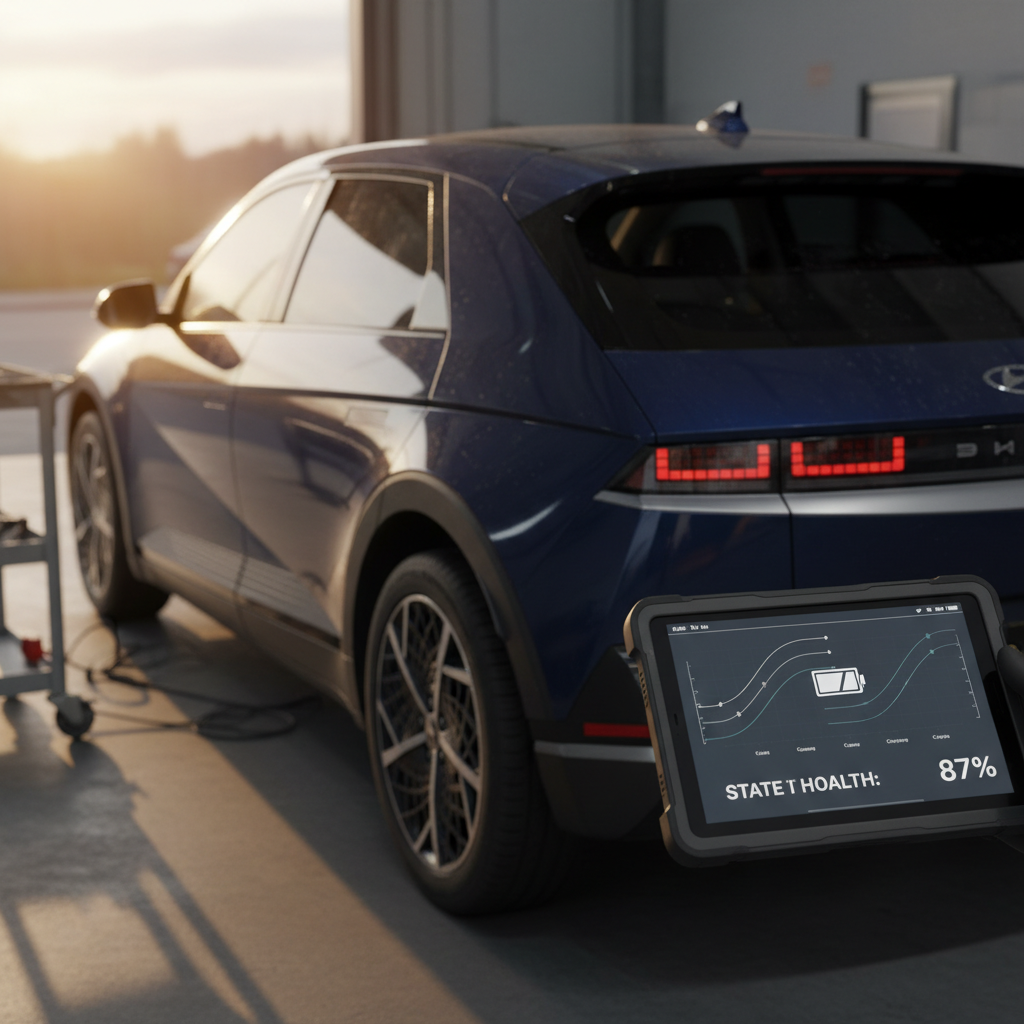
Apps like Leaf Spy can read state of health (SoH) from the battery management system if you have the right OBD‑II dongle. An SoH of ~90% means about 10% capacity loss; 70% means you’ve effectively lost nearly a third of the original range. At Recharged, this data is baked into our <strong>Recharged Score</strong>, so you see verified battery health before you buy.
3. Ask about climate and storage history
Heat is the Leaf’s enemy. Cars that lived in hot, high‑solar states and parked outside degrade faster, especially early 24 kWh packs with no active cooling. Mild‑climate, garaged Leafs generally hold capacity far better.
4. Check fast‑charging usage
Occasional DC fast charging (CHAdeMO, or CCS/NACS on the 2026+) is fine, but daily fast‑charging, especially to 100%, accelerates wear. Ask the seller how often they used fast chargers and look for service records or telematics where available.
5. Confirm any battery warranty or replacement
U.S. Leafs typically carried an 8‑year/100,000‑mile battery warranty against excessive capacity loss. Some early cars have had their packs replaced under warranty or upgraded to larger packs at independent shops. Get documentation; a newer pack in an older chassis can be a great deal.
6. Watch for recall or safety notes
Recent Leafs with larger packs have had scattered recalls around battery behavior during fast charging. Run the VIN through NHTSA’s recall checker or ask the selling dealer for an up‑to‑date recall printout.
How Recharged simplifies battery checks
Step 5: Years, trims, and features – what to seek or avoid
Once you’re comfortable with battery health basics, it’s time to zoom out to model years and trims. Here’s a pragmatic view of **which Nissan Leaf years generally make sense**, and what features to look for if you live in a hot or cold climate.
Which Nissan Leaf years fit most buyers?
Use this as guidance, not gospel, battery health and price still matter more than model year alone.
High‑risk value plays
2011–2012 (24 kWh)
- Fastest‑degrading packs in many climates
- Short range and dated tech
- Only consider with documented pack replacement or deep discount
Conditional bargains
2013–2017
- 24 or 30 kWh packs with incremental improvements
- Some 30 kWh cars had BMS quirks and recalls
- Best if you need 40–70 real‑world miles and can verify high SoH
Sweet‑spot used Leafs
2018–2024
- 40 kWh Leaf and 60–62 kWh Leaf Plus / SV+
- More range, better chemistry, modern driver‑assist
- Often the best balance of price, range, and features
Trim and feature checklist by climate
Not all Leafs are optioned the same way. Some features matter a lot more if you live in extreme temperatures.
| Climate / Use | Must‑have features | Nice‑to‑have features |
|---|---|---|
| Cold climates | Heated seats & steering wheel, battery heater or heat pump (where available) | Remote pre‑heat via app, heated mirrors |
| Hot climates | Tinted glass, remote pre‑cool via app, verified healthy pack from mild‑climate use | Heat pump A/C, covered parking history |
| Highway commuting | Adaptive cruise / ProPILOT Assist on newer trims | Blind‑spot monitoring, lane‑keeping assist, better sound insulation |
| Urban short‑hop | Backup camera (standard on later years), parking sensors | Around‑view camera, smaller wheels/tires for comfort |
When shopping online, zoom into interior photos and option lists to confirm these items rather than trusting badges alone.
Don’t ignore safety tech
Step 6: Inspect, drive, and review history
Even with a clean battery report and the right model year, a sloppy inspection can turn a great deal into a regret. Here’s a focused checklist for test‑driving and evaluating a used Nissan Leaf.
Physical inspection & test‑drive checklist
1. Exterior & underbody
Look for uneven panel gaps, mismatched paint, or rust on underbody components. Leafs don’t rust badly in most climates, but cars from salty regions can show corrosion on suspension parts and battery‑bonding plates.
2. Tire and brake condition
EVs are heavy; they can wear tires faster than comparable gas cars. Check for even tread wear and budget for a new set if you’re near the wear bars. Regenerative braking means pads often last a long time, but have them inspected if mileage is high.
3. Charging hardware and ports
Confirm that the car comes with a working Level 1 or Level 2 charging cable, and inspect the J1772 and CHAdeMO (or CCS/NACS on the 2026+) ports for damage, corrosion, or loose latches. Plug in during your test if possible.
4. Cabin electronics & HVAC
Test infotainment, Bluetooth, cameras, and all climate settings. In cold climates, verify the heater warms quickly; in hot climates, make sure the A/C cools strongly without strange noises or smells.
5. Drive and listen
On your test drive, listen for whines or clunks from the motor, reduction gear, and suspension. A healthy Leaf should feel smooth and quiet. Test at city and highway speeds to check for wind noise, vibration, or pull under braking.
6. Service history, recalls, and title
Ask for maintenance records, especially any battery warranty work or software updates. Pull a title/accident history report. For peace of mind, confirm open recalls have been handled; Nissan dealers can print this with the VIN.
Where Recharged fits in
Ready to find your next EV?
Browse VehiclesStep 7: Total cost, warranty, and future‑proofing
Leafs are cheap to "fuel" and maintain, but total cost of ownership still depends on where the car is in its lifecycle. A bargain 2013 with a tired pack might end up more expensive than a pricier 2019 with years of useful range left.
Total cost checklist
- Battery headroom: How many years of acceptable range does the current pack realistically have given your driving and climate?
- Charging setup: Do you already have a 240V outlet or will you need to budget several hundred to a couple thousand dollars for installation?
- Tires & wear items: Price out a quality set of tires, cabin filters, and any obvious cosmetic fixes.
- Insurance & taxes: Get quotes, Leafs are usually cheap to insure, but it varies by state and carrier.
Warranty & future‑proofing
- Battery warranty: Check remaining time and mileage on the original 8‑year/100,000‑mile battery coverage if applicable.
- Aftermarket options: For older Leafs, understand local options for pack upgrades (e.g., swapping in a 40+ kWh pack) if you plan to keep the car long‑term.
- Charging standards: Newer Leafs, especially the 2026 model with CCS and NACS ports, are better aligned with where U.S. infrastructure is headed.
- Resale value: A well‑documented car with strong battery health will be much easier to resell or trade.
Financing and trade‑in options
Nissan Leaf buying checklist summary
When you buy a Leaf, you’re really buying a specific combination of **range, battery health, and features**. Price only makes sense in that context. A structured Nissan Leaf buying checklist keeps you from being distracted by color, wheels, or gadgets while missing the pack that actually determines how usable the car is.
One‑page Nissan Leaf buying checklist
1. Define your use case
Write down your worst‑case daily mileage (including winter penalty) and add 30–40% buffer. That number should drive all your decisions.
2. Pick your Leaf era
Decide whether you’re shopping ultra‑cheap 2011–2015 city cars, mid‑range 2016–2017 commuters, value‑sweet‑spot 2018–2024 hatchbacks, or saving up for a newer‑generation 2026+ Leaf.
3. Set a minimum usable range
Convert the original EPA rating to a realistic range using battery SoH, climate, and speed. Don’t shop anything that can’t comfortably clear your daily buffer.
4. Demand real battery data
Check capacity bars, get Leaf‑specific SoH data (via Leaf Spy or a Recharged Score Report), and confirm any battery warranty or replacement history.
5. Screen for features that match your climate
Heated seats, heat pump and battery heater in cold states; strong A/C and mild‑climate history in hot states; driver‑assist tech if you do a lot of highway driving.
6. Inspect, test‑drive, and verify history
Look for physical damage or corrosion, test all electronics and HVAC, drive at city and highway speeds, and review service, recall, and title history.
7. Run the total‑cost math
Factor in charging installation, tires, insurance, and the realistic remaining life of the battery. A slightly more expensive Leaf with a strong pack is often the cheaper car in the long run.
FAQ: Nissan Leaf buying questions
Frequently asked questions about buying a Nissan Leaf
If you treat the Nissan Leaf like any other cheap compact, you’ll fixate on mileage, color, and monthly payment. Treat it like what it is, an electric car whose value lives in its battery, and your **Nissan Leaf buying checklist** will guide you to the right pack, the right year, and the right price for how you actually drive. And if you’d rather skip the DIY diagnostics, you can let Recharged do the testing and still enjoy the savings that made the Leaf famous in the first place.