If you’re thinking about going electric, you’ve probably heard that electric car insurance can cost more than insurance for a comparable gas car. That’s mostly true today, but the gap isn’t as simple as one scary number. It depends on the model you buy, whether it’s new or used, and how smart you are about shopping your policy.
Key takeaway
Does electric car insurance cost more? The short answer
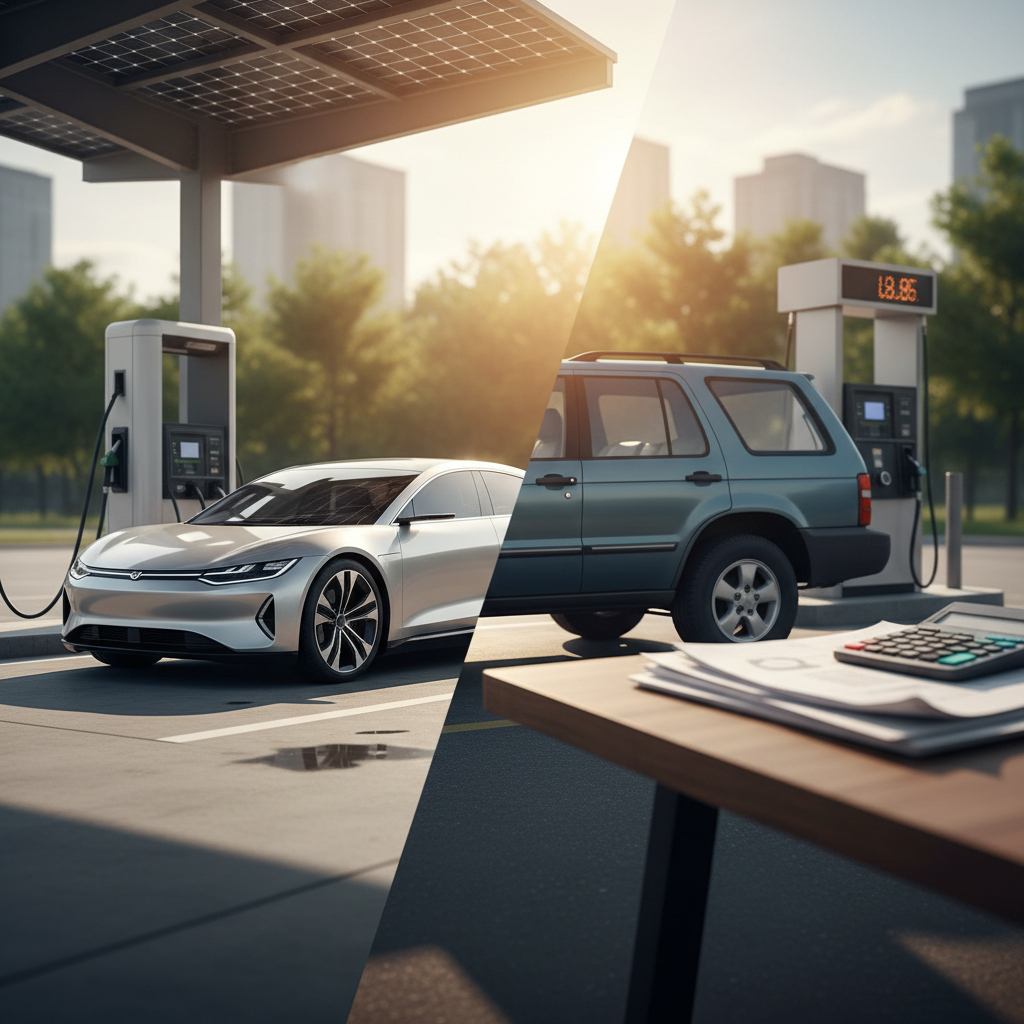
In most current data, yes, electric car insurance does cost more on average than insurance for comparable gas-powered vehicles. Several large insurance analyses show EV drivers paying hundreds of dollars more per year for full-coverage policies than similar internal-combustion (ICE) drivers, mainly because EVs are more expensive to repair when something goes wrong.
Electric car insurance vs gas: recent national averages
Those are national averages. Your reality may be very different. Some mainstream EVs insure much like comparable gas crossovers, while high-performance or luxury EVs (think large Teslas) can land at the very top of the rate charts. The important thing is to understand why the gap exists and how you can narrow it.

How much more does EV insurance cost than gas cars?
Different studies slice the numbers in different ways, but most recent U.S. analyses land in a similar band: EV insurance costs around 10–30% more than insurance for a comparable gas car, with some outliers above that range.
Recent examples: average annual insurance costs
These snapshots from major insurance studies and rate surveys give a sense of the current EV vs gas premium gap. Your own quote will depend on your location, driving record, and coverage levels.
| Source & year | Average EV premium | Average gas premium | EV vs gas difference |
|---|---|---|---|
| National rate study, 2024 | $3,430 | $2,778 | +23% |
| Multi-insurer survey, 2025 | $4,058 | $2,732 | +49% |
| EV-focused comparison, 2026 | $3,174 (EVs only) | $2,663 (all vehicles) | +19% vs overall fleet |
All figures are for full-coverage policies; they’re not offers or guarantees, but useful benchmarks for comparison.
Don’t apply national averages to your exact car
Why electric car insurance often costs more
Electric vehicles usually don’t cost more to insure because they crash more often. The big drivers are how expensive they are to repair or replace and how confident insurers feel setting prices in a relatively new segment.
The main reasons EV insurance premiums run higher
Think like an underwriter: you’re pricing in repair costs, total losses, and uncertainty.
1. Expensive battery packs
2. Higher repair severity
3. Fewer qualified repair shops
4. Higher purchase prices
5. Complex tech and sensors
6. Limited long-term data
Good news for the long term
When EV insurance doesn’t necessarily cost more
While averages tell one story, individual models tell another. There are situations where an electric car can cost about the same, or even less, to insure than a comparable gas car:
- A modestly priced compact EV versus a turbocharged performance sedan with a high claim rate.
- A used EV that has already taken its big depreciation hit versus a brand-new gas SUV.
- An EV with a strong safety record and standard driver-assistance features versus an older gas car without modern crash protection.
- Drivers in states that actively promote EVs and have competitive insurers targeting that niche.
Insurance companies price every vehicle on its own merits: claim history, parts costs, theft rates, safety scores, and who tends to drive it. That’s why the most expensive EVs to insure are often high-performance luxury models, not everyday commuter hatchbacks.
Where used EVs can shine
Used EVs: insurance and total cost of ownership
Most conversations about electric car insurance focus on brand-new models, but a growing number of buyers are looking at used EVs, both to save money up front and to offset higher ownership costs like insurance.
How used pricing helps insurance
Insurance companies look at what it would cost to replace your vehicle if it’s totaled. A used EV that sells for $22,000 instead of $38,000 carries a much lower replacement cost, which can directly reduce your comprehensive and collision premiums.
That’s part of why the fast-falling prices in the used EV market are such a big deal for budget-conscious shoppers.
Where you still need to be careful
The big wild card with older EVs is the battery. If an out-of-warranty pack is damaged in a crash, replacement costs can still push the car toward a total loss, even if the resale value is modest. Some insurers price that risk in more aggressively than others.
This is where a battery health report and transparent condition history become critical when you’re shopping used.
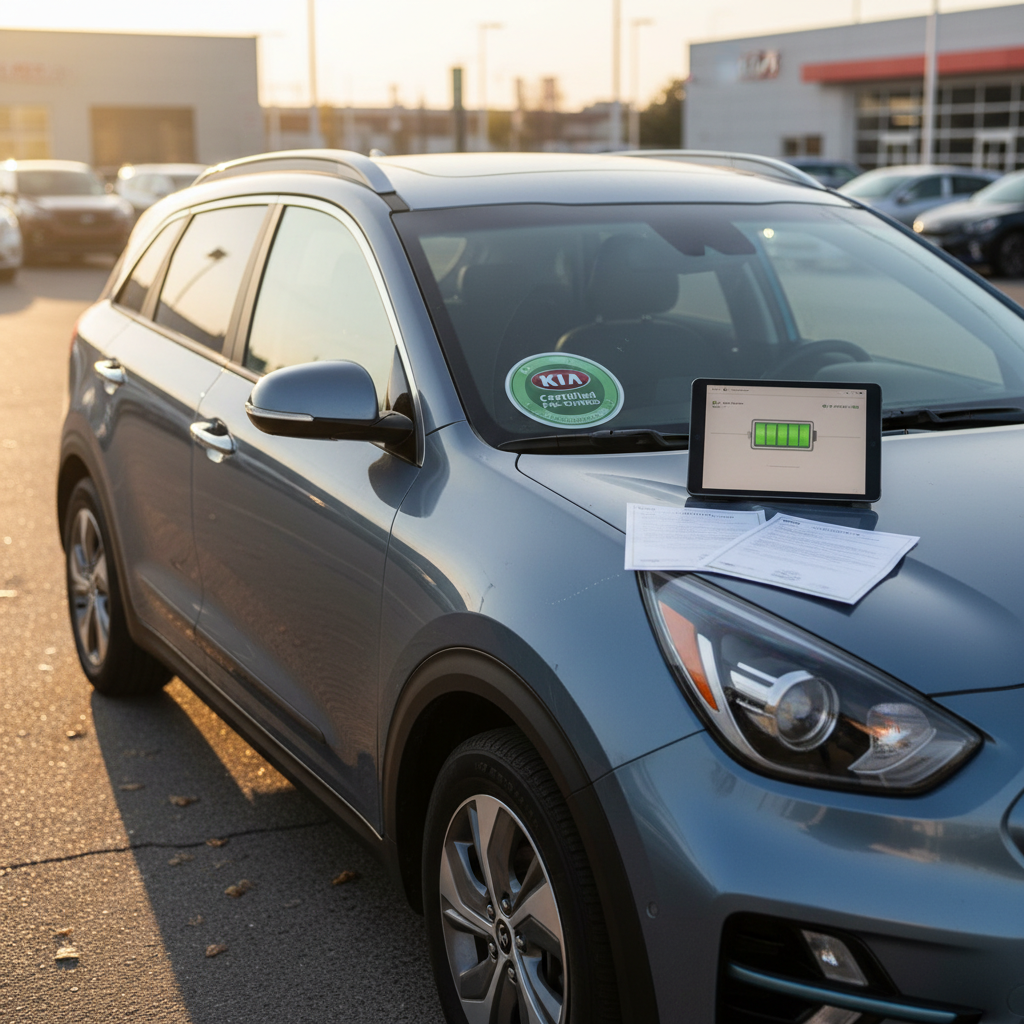
At Recharged, every used EV comes with a Recharged Score Report that includes verified battery health and market-correct pricing. That doesn’t just help you feel better about the car; it gives you a solid baseline when you’re getting insurance quotes, because you can clearly document the vehicle’s condition and value.
How insurers actually set rates for electric cars
Electric or gas, insurers use the same basic playbook to price your policy: they estimate how likely you are to file a claim and how expensive that claim will be. EVs simply tweak a few of the inputs.
What goes into your EV insurance rate
Vehicle value and trim
A dual-motor performance EV with a long-range battery will almost always cost more to insure than a base-trim model. Higher MSRP and more equipment mean a higher worst-case claim payout.
Battery and repair costs
Insurers use internal and third-party data on average <strong>repair severity</strong>. If an EV model tends to rack up large repair bills, especially after moderate crashes, they’ll adjust prices accordingly.
Safety features and claim frequency
Strong crash-test ratings and active safety tech (automatic emergency braking, lane keeping, etc.) can reduce the likelihood or severity of a crash, which helps on the rate side.
Driver profile and location
Your age, credit tier (in most states), driving record, annual mileage, and garaging ZIP code still matter more than the powertrain. High-theft or high-traffic areas cost more either way.
Usage: commuting vs pleasure vs business
If you put 22,000 miles per year on an EV in dense city traffic, you’ll usually pay more than a low-mileage suburban driver, regardless of fuel type.
Coverage limits and deductibles
High liability limits and low deductibles provide more protection but cost more in premiums. With any modern EV, it’s wise to avoid state-minimum liability limits.
EV vs gas: some factors cancel out
Practical ways to lower your electric car insurance
You can’t change the cost of an EV battery, but you have more control over your premium than you might think. The same strategies that work for gas cars work for EVs, with a few twists worth calling out.
Seven proven ways to cut EV insurance costs
Use as many of these as you reasonably can, small moves add up.
1. Shop multiple quotes
2. Right-size your coverage
3. Adjust deductibles strategically
4. Take advantage of discounts
5. Prioritize safety and anti-theft
6. Get a quote before you buy
7. Consider a gently used EV
Comparing models: EV vs gas insurance examples
Every insurer uses its own rating formulas, but the broad pattern looks like this: mainstream EVs cost somewhat more to insure than mainstream gas crossovers, while luxury and performance EVs can be outliers at the top of the charts.
Illustrative EV vs gas insurance comparisons
These simplified examples show how risk class and vehicle type can matter as much as the powertrain itself.
| Vehicle type | Example EV | Comparable gas car | Relative insurance cost |
|---|---|---|---|
| Compact commuter | Chevy Bolt EUV (used) | Honda Civic hatchback | EV often ~10–20% higher, but sometimes similar in certain markets |
| Family crossover | Hyundai Ioniq 5 | Toyota RAV4 | EV commonly 20–30% higher today |
| Luxury performance SUV | Tesla Model X | Mercedes-Benz GLE | Both expensive; EV can be the most costly to insure in the segment |
| Entry used EV | Nissan Leaf (5–7 years old) | Toyota Corolla (5–7 years old) | EV may be somewhat higher, but falling used values can narrow the gap |
Assumes similar drivers, locations, and coverage limits; exact quotes will vary.
Why this matters when you’re choosing a model
EV insurance shopping checklist
Before you commit to an electric vehicle, do this
1. Get insurance quotes on specific VINs
Don’t rely on generic online calculators. Ask for quotes on the <strong>exact EVs you’re considering</strong>, including used vehicles. A lower purchase price and better safety record can quickly show up in the premium.
2. Compare total cost of ownership, not just premium
Look at <strong>fuel vs electricity costs, maintenance, and insurance together</strong>. An EV that’s $300 a year more to insure can still save you $800+ in fuel and maintenance.
3. Ask about EV-specific coverage options
Some insurers offer coverage for home chargers, battery replacement endorsements, or roadside assistance tailored to EVs. Understand what’s included and whether the added cost is worth it for you.
4. Check repair and parts reputation
Search for how easy it is to get your chosen EV repaired locally. If there are <strong>multiple certified EV body shops</strong> in your area, that can translate into more competitive insurance pricing over time.
5. Review deductibles and emergency fund
Make sure your deductible settings align with your savings. With higher-dollar repairs on the table, you don’t want a deductible you can’t comfortably cover.
6. Re-shop after you buy
Once your EV is in the driveway and you have the finalized VIN and coverage needs, <strong>re-shop your policy after 6–12 months</strong>. As insurers gather more EV data, rates can shift.
Electric car insurance FAQ
Frequently asked questions about EV insurance costs
Bottom line: Is higher EV insurance a deal-breaker?
Electric car insurance does cost more on average today, but for most drivers it’s just one line in a bigger ownership equation. The added premium is real, yet often outweighed by savings on fuel and maintenance, especially if you choose the right vehicle and shop your coverage intelligently.
If you’re considering an electric car, don’t treat insurance as an afterthought. Get quotes early, compare specific models (including used EVs), and look at the full cost of ownership over several years. Tools like the Recharged Score Report, with verified battery health and transparent pricing, can give you the confidence to choose a used EV that fits both your lifestyle and your insurance budget.
Handled the right way, higher EV insurance costs don’t have to be a deal-breaker. They’re simply another factor to understand and manage on your path to electric ownership.