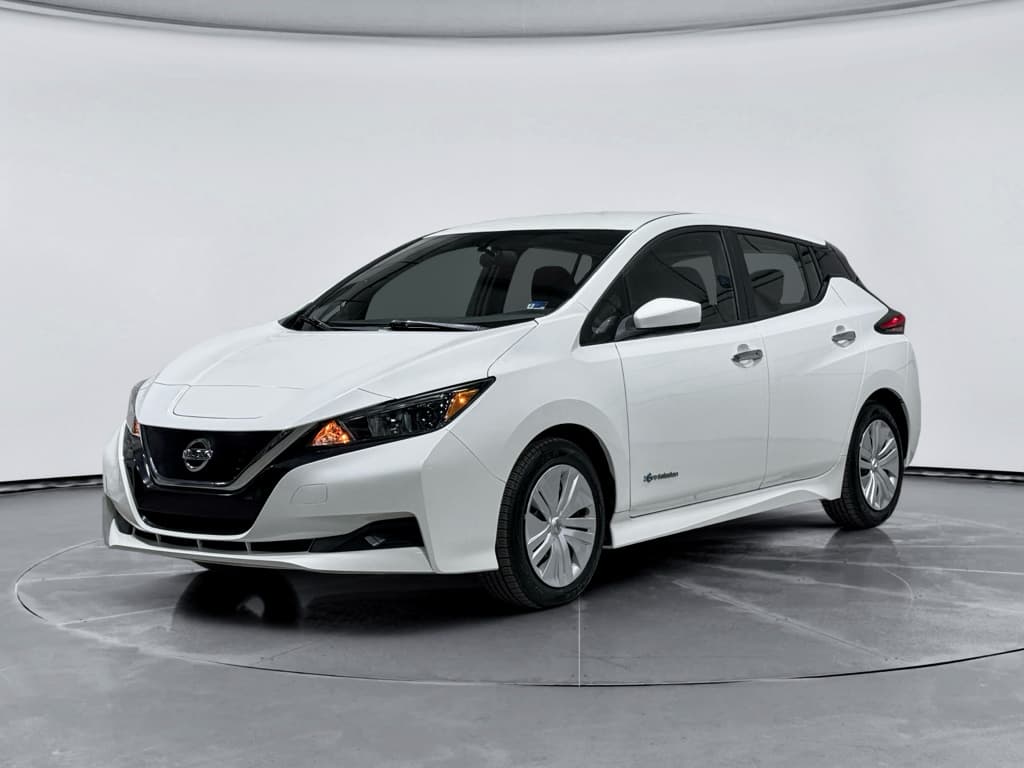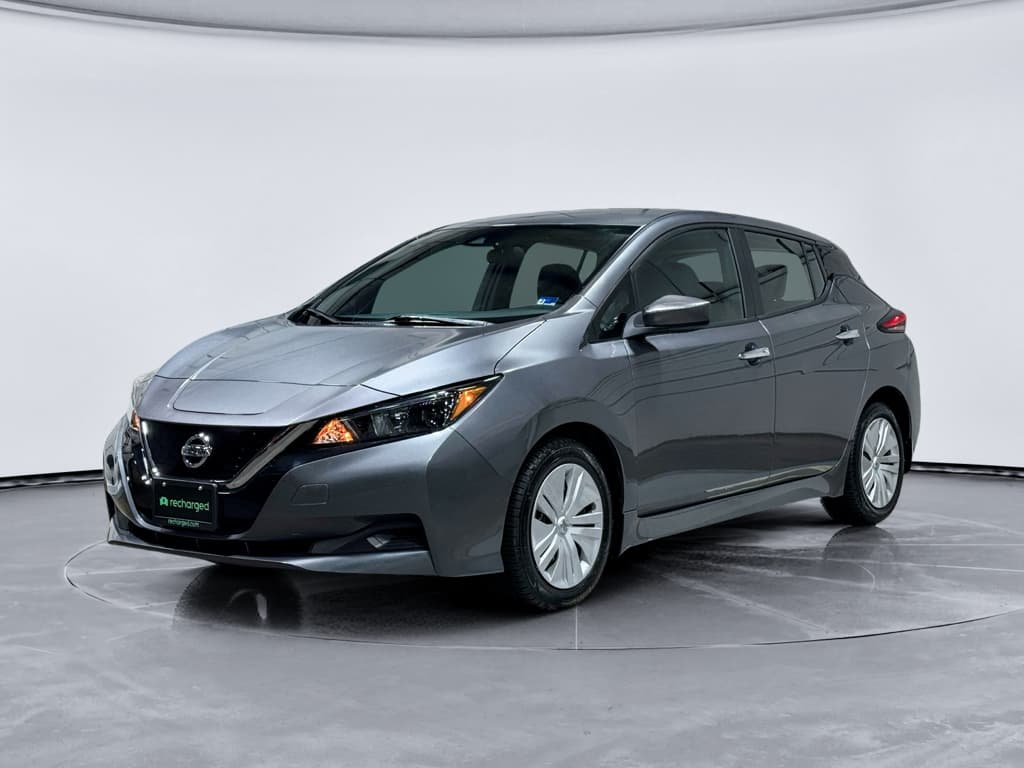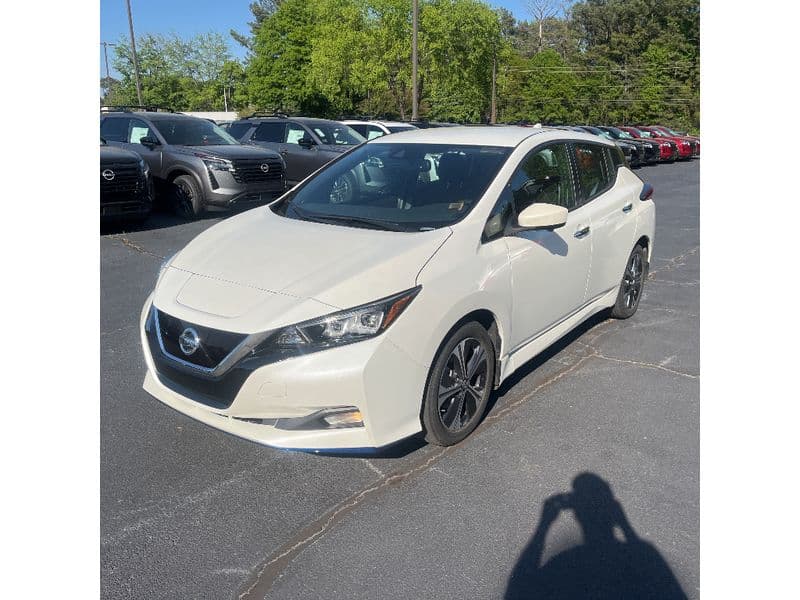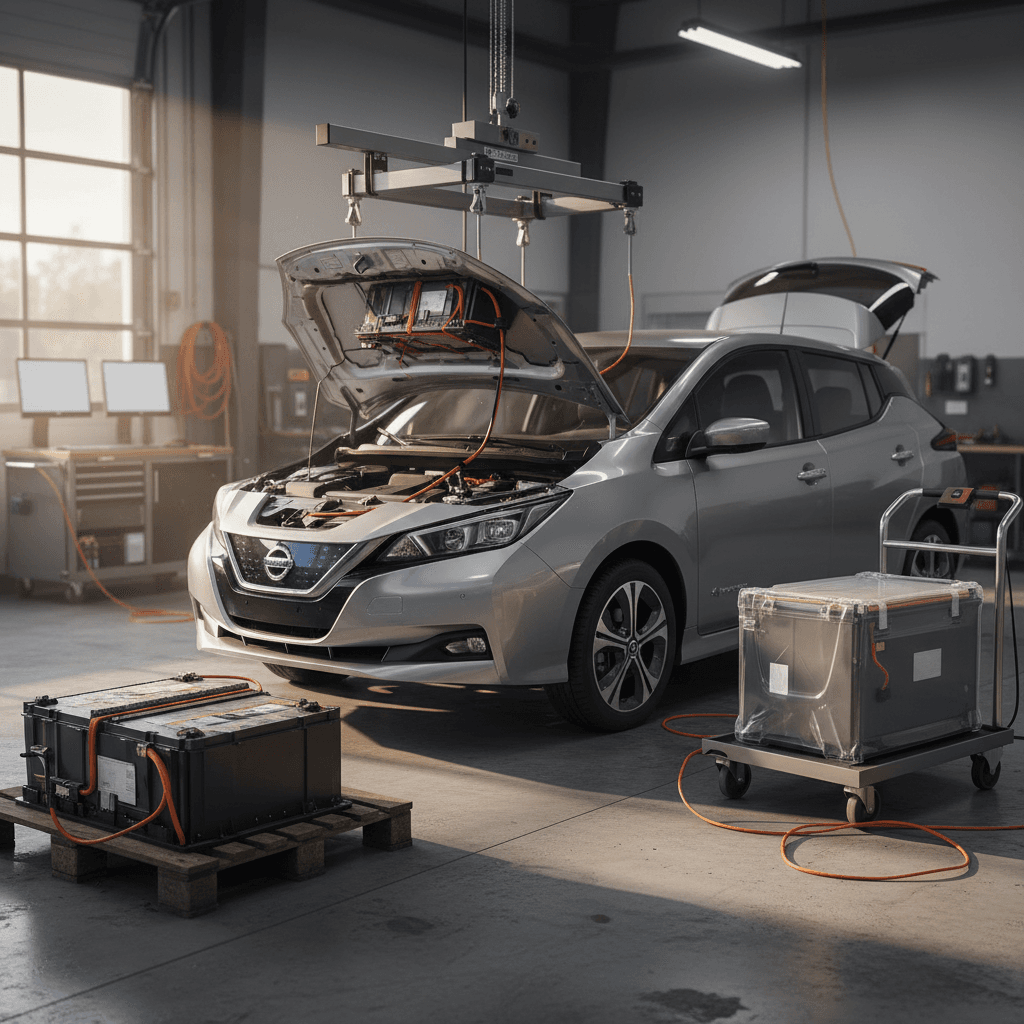
If you own a Nissan Leaf, the phrase “battery replacement cost” lands like a piano from a great height. In 2026, the Leaf is still one of the most affordable ways into EV ownership, but a tired pack can turn a cheap hatchback into a five‑figure decision. This guide breaks down real‑world Nissan Leaf battery replacement cost in 2026, by pack size, model year, and warranty, then helps you decide if it’s smarter to replace the pack or move into a different EV, especially a used one with verified battery health.
Quick answer: 2026 Nissan Leaf battery replacement cost
Overview: Nissan Leaf battery replacement cost in 2026
Nissan never meant the Leaf’s traction battery to be a routine wear item, like tires or brakes. But time, heat and miles don’t care about the original business plan. By 2026, many first‑generation Leafs are well past a decade old; even some second‑gen cars are dropping capacity bars. When range falls into double‑digit territory, owners start asking the hard question: Do I put a new pack in this car, or walk away?.
Nissan Leaf battery replacement at a glance (2026, U.S.)
Add those numbers up and a full job in 2026 usually lands in the $5,500–$17,000 band. That’s real money in a world where an entire used Leaf with a decent battery can often be bought for less, especially through a marketplace like Recharged that actually measures and discloses verified battery health in a Recharged Score Report.
Typical 2026 Nissan Leaf battery costs by pack size
Let’s break the 2026 cost picture down by the three big Leaf eras you actually see on the road: early 24/30 kWh cars, the 40 kWh second‑gen Leaf, and the 62 kWh Leaf Plus. These are ballpark U.S. estimates for out‑of‑warranty cars; your quotes will vary by region and parts availability.
Estimated 2026 Nissan Leaf battery replacement cost by pack size (U.S.)
Approximate out‑of‑warranty pricing ranges for a full traction battery replacement in 2026. All prices are for guidance only, not quotes.
| Pack size / era | Typical model years | Pack source | Estimated pack cost (2026) | Typical installed total (pack + labor) |
|---|---|---|---|---|
| 24 kWh (Gen 1) | 2011–2016 | Used/refurbished | $4,500–$7,000 | ~$5,500–$9,000 |
| 30 kWh (late Gen 1) | 2016–2017 | Used/refurbished or 40 kWh “upgrade” | $4,500–$8,000 | ~$6,000–$10,000 |
| 40 kWh (Gen 2) | 2018–2024 | New OEM or quality reman | $8,000–$13,000 | ~$9,500–$15,000 |
| 62 kWh Leaf Plus | 2019–2024 | New OEM, limited used | $12,000–$16,000 | ~$13,500–$17,000+ |
Pack prices are volatile; supply and regional labor rates can swing these figures by several thousand dollars either way.
Prices move fast
One wild card in 2026 is supply: good used and remanufactured Leaf packs are in demand not only for cars, but also for home‑storage projects. That keeps a firm floor under pricing even as newer EVs with larger, more robust packs hit the used market.
What actually drives Nissan Leaf battery replacement cost?
Four big levers that change your Leaf battery quote
Understanding these will make dealer and indie‑shop quotes far less mysterious.
1. Pack size & chemistry
2. New vs used vs refurbished
• Used packs pulled from wrecked Leafs can be cheaper but vary wildly in health.
• Refurbished packs replace bad modules and rebalance the rest, sitting in the middle price‑wise.
3. Installer type
4. Region & labor rates
One more subtle factor is time. In 2026, the Leaf’s CHAdeMO DC fast‑charging port is a shrinking island in a sea of CCS and NACS. That doesn’t directly change pack pricing, but it absolutely changes the value proposition of throwing $10,000–$15,000 at a Leaf that will never charge as flexibly as newer EVs.

Leaf battery warranty: when a replacement is (mostly) free
Before you price out a replacement pack, you need to know where you stand with Nissan. For most U.S. Leafs sold in the last decade, the lithium‑ion traction battery has two overlapping warranties: one against outright failure and one against excessive capacity loss.
- Most modern U.S. Leafs (roughly 2013½ onward) carry 8‑year / 100,000‑mile coverage against battery defects.
- Capacity‑loss coverage (losing bars on the 12‑segment gauge) started shorter on early cars, then moved to 8 years / 100,000 miles on later 40 and 62 kWh models.
- The capacity warranty typically triggers when the battery drops to 8 capacity bars or fewer on the dash gauge before the time/mileage limits are up. That’s roughly two‑thirds of original usable capacity.
- Some 30 kWh packs have their own service campaigns and recalls; depending on your VIN, you may still be eligible for a no‑cost replacement even in 2026.
Don’t guess, check your booklet and your bars
If Nissan replaces your pack under warranty, you’re generally on the hook for little or nothing beyond your time and perhaps incidental fees. Some replacements get their own limited warranty period; others inherit the remainder of the original term. Either way, it’s a radically different conversation than paying five figures out of pocket.
Is a Leaf battery replacement worth it, or is it time to switch cars?
This is where the rubber meets the road. You’ve got a quote, say $10,000, to put a healthier pack into an aging Leaf. Now you have to compare that against the market reality: what else you could drive for the same money, and how long you plan to keep the car.
When a battery replacement can make sense
- Low‑mileage, well‑kept car: If your Leaf is cosmetically clean, mechanically sound, and rust‑free, a fresh pack can give it another 5–8 years of useful life.
- Unique use case: Short urban commute, second car, or fleet role where 100–150 miles of range is plenty, even after some future degradation.
- Compelling upgrade: Swapping a worn 24 kWh pack for a 40 kWh unit can radically transform daily usability.
- Very low pack cost: You scored a good used pack locally at a steep discount, and labor is reasonable.
When you’re better off changing cars
- Quote rivals the car’s value: If the installed cost approaches or exceeds the private‑party value of a healthy used Leaf, that’s a red flag.
- You road‑trip or DC fast charge often: CHAdeMO is fading in North America; a newer CCS or NACS‑equipped EV will age more gracefully.
- Car has other big issues: Accident history, heavy rust, worn suspension or interior, no sense bolting a new pack to a tired platform.
- You’d rather finance than write a check: A used EV with strong battery health can often be financed through a retailer like Recharged, spreading payments with far more future‑proof tech.
A sanity‑check rule of thumb
Real‑world scenarios: older vs newer Nissan Leaf owners
It’s easier to see the logic when you plug in rough numbers. Here are a few 2026‑style scenarios Recharged sees all the time, simplified for clarity.
Three common Leaf battery dilemmas in 2026
1. 2013 Leaf, 24 kWh, 8 bars, 90k miles
Your early Leaf is out of most capacity warranty windows and barely manages 50–60 miles of real‑world range. A refurbished 24 kWh pack installed might run $6,000–$8,000. Meanwhile, a later‑model used Leaf with a 40 kWh pack and good health might sell in the $10,000–$14,000 range. In many cases, owners in this situation are better off moving into a newer used EV instead of re‑powering the oldest one.
2. 2018 Leaf, 40 kWh, 9 bars, 70k miles
You’re around eight years old in calendar terms and flirting with the 8‑year/100k battery warranty cliff. If the car drops to 8 bars while still in coverage, Nissan may replace the pack at little cost to you. If not, a new 40 kWh pack installed could realistically land between about $10,000 and $14,000. The right call depends on how attached you are to the car versus what a newer EV would cost.
3. 2020 Leaf Plus, 62 kWh, high miles, 9 bars
You drive a lot, maybe ride‑share, maybe sales territory, and your Leaf Plus already has big mileage but only moderate capacity loss. Here the economics are tricky: the car’s resale value is high <em>because</em> it has the big pack, but replacing that pack out of warranty could run $13,000–$17,000 installed. If you’ll rack up another 100,000 miles in a few years, a replacement might pencil out. Casual drivers, on the other hand, may be better served trading into a different EV while values are still decent.
Managing Leaf battery degradation before you replace
There’s a middle ground between “ignore it” and “drop fifteen grand” on a new pack. Even if your Leaf’s battery isn’t what it used to be, you can extend its useful life, and keep options open, with a few simple habits.
Practical ways to stretch your Leaf’s battery life
None of these are magic, but together they can delay the replacement decision.
Avoid extreme heat when you can
Charge more gently day‑to‑day
Favor Level 2 over frequent DC fast charge
Don’t chase the last bar with risky hacks
How Recharged helps with used Leafs and battery decisions
The hardest part of this whole topic is that Leaf battery health is invisible until you know how to look. Odometer mileage is a weak proxy; two 2017 Leafs with 80,000 miles can have radically different real‑world ranges depending on climate and charging history. That’s exactly the problem Recharged was built to solve.
- Every vehicle on Recharged includes a Recharged Score Report with verified battery health, so you’re not guessing about remaining capacity.
- You can trade in your current Leaf, get an instant offer, or consign it, rather than trying to retail a low‑range EV privately.
- If you decide a different EV makes more sense than a battery swap, Recharged can help you finance a used electric with stronger range and still deliver it to your driveway.
- For shoppers still considering a Leaf, the combination of transparent battery data and fair‑market pricing means you can intentionally choose an older, short‑range Leaf as a budget city car, or step up to a healthier, longer‑range example without roulette.
Use the numbers to your advantage
FAQ: Nissan Leaf battery replacement cost in 2026
Frequently asked questions about 2026 Leaf battery costs
Bottom line: the 2026 Leaf battery replacement math
The Nissan Leaf has been the people’s EV for more than a decade, a democratic little hatchback that made electric transport genuinely affordable. But batteries are where the economics get serious. In 2026, a full Leaf battery replacement is a four‑ or even five‑figure decision that you should weigh against the value of the car and the alternatives available on the used‑EV market.
If you’re lucky enough to be inside the warranty window and under 8 capacity bars, push hard on that path first; a factory‑supported replacement is in a different universe from spending $10,000–$15,000 of your own money. If you’re out of warranty, run the numbers honestly: quotes from dealers and indie shops, the resale value of your current car as‑is, and the price of a healthier, more modern EV you could step into instead.
The good news is that you don’t have to guess anymore. With tools like Recharged’s Recharged Score and expert EV‑specialist support, you can see battery health in black and white before you buy or sell. That transparency is your best defense, whether you decide to give your Leaf a second life with a new pack, or let it gracefully bow out while you move on to an EV that fits your next decade just as well as the Leaf fit your last.