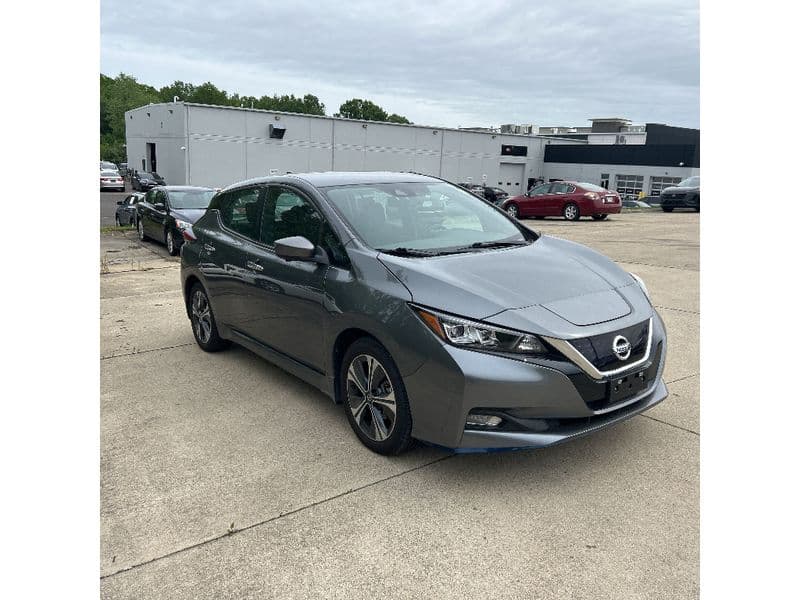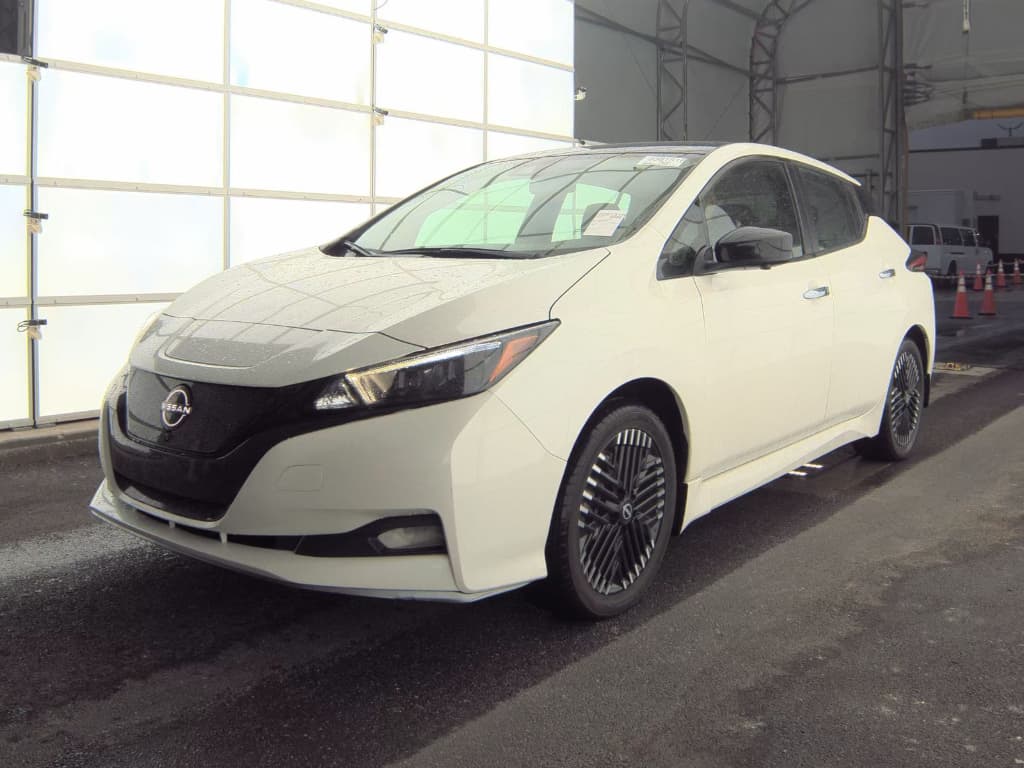
If you’re eyeing a Nissan Leaf, especially a used one, the first question in your head is usually some version of: “Nissan Leaf battery lifespan: how long does it really last?” Not the brochure answer, but the years-and-miles answer that decides whether you glide past gas stations or white‑knuckle it to work on 8% state of charge.
Quick answer
Nissan Leaf battery lifespan at a glance
Nissan Leaf battery lifespan snapshot
Those big ranges (8–15 years, 80,000–150,000 miles) aren’t hedging. The Nissan Leaf is uniquely sensitive to climate and charging habits, more so than many newer EVs with liquid‑cooled packs. A pampered Leaf in coastal Oregon is a different animal from a DC‑fast‑charged commuter in Phoenix.
- Early 2011–2015 24 kWh Leafs in hot climates: noticeable loss of range by year 5–7 is common.
- 2016–2017 30 kWh packs had known degradation issues and can age faster than expected.
- 2018+ 40 kWh and 62 kWh packs generally hold up much better when not abused.
- Cooler climates and mostly Level 2 charging dramatically improve lifespan.
Heat is the real villain
How the Nissan Leaf battery works (and why it ages)
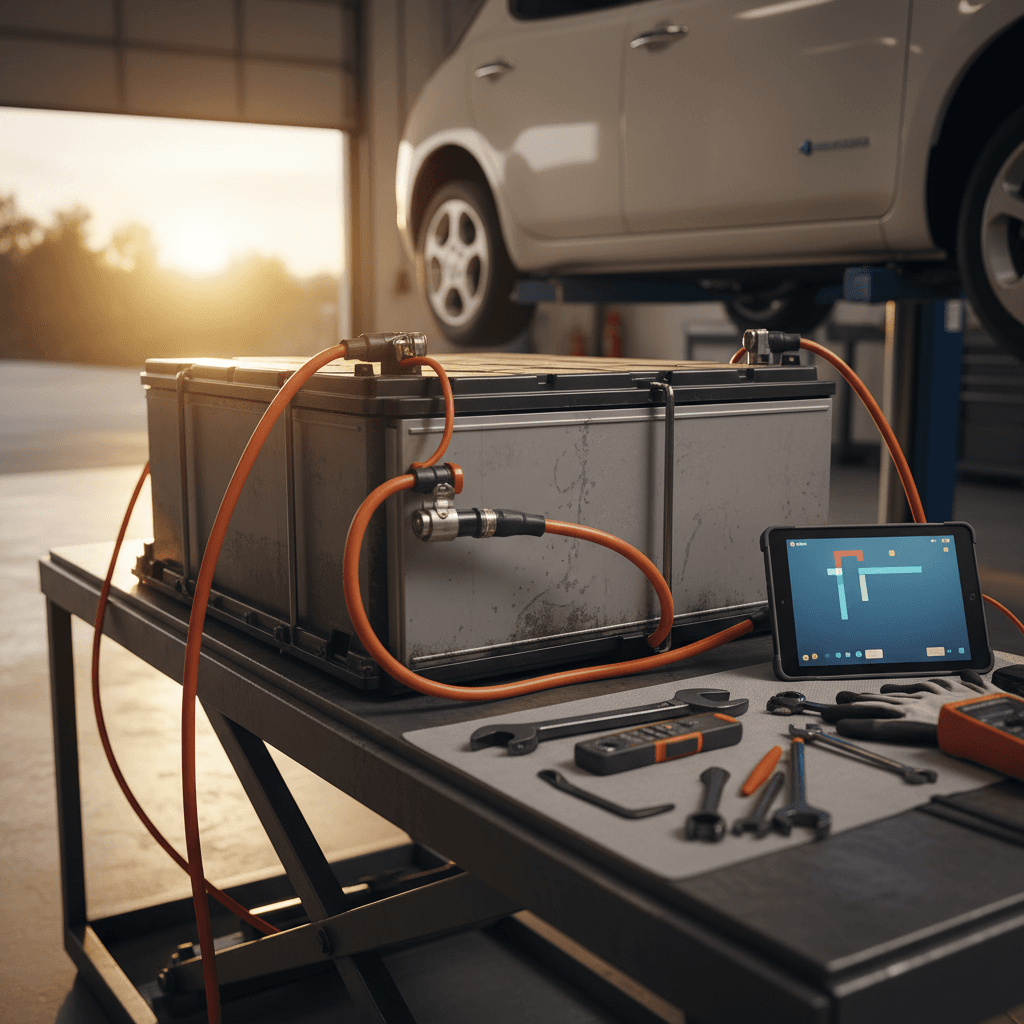
Every Nissan Leaf uses a pack of lithium‑ion cells under the floor. Think of them as a choir: hundreds of individual singers that need to stay in tune. As the years go by, some singers get hoarse. That’s degradation, a slow, permanent loss of maximum capacity.
What’s inside a Leaf battery pack?
Understanding the basics makes lifespan much less mysterious.
Lithium‑ion cells
Battery management system (BMS)
Onboard charging hardware
The Leaf’s biggest quirk is what it doesn’t have: no liquid cooling for the traction battery. Instead, it relies on ambient airflow and the vehicle structure to shed heat. That design kept costs down and helped make the Leaf the first mass‑market EV, but it also means the pack can run hot in summer or during repeated fast‑charges, especially on earlier cars.
Aging gracefully vs. aging badly
Battery lifespan by Nissan Leaf generation & model year
Typical Nissan Leaf battery behavior by era
These are broad patterns, not guarantees. Individual cars can be better or worse depending on climate and care.
| Model years & pack | Typical real‑world pattern | What to watch for |
|---|---|---|
| 2011–2015 (24 kWh) | Fastest degradation, especially in hot climates. Many cars lose 20–30% capacity in 5–7 years. | Missing capacity bars, short real‑world range, cars from hot states with lots of DC fast‑charge use. |
| 2016–2017 (24 & 30 kWh) | Slightly better cells, but 30 kWh packs had a reputation for accelerated loss in some markets. | 30 kWh cars with low capacity bars; check SOH carefully and assume more degradation than odometer suggests. |
| 2018–2019 (40 kWh) | Noticeably better longevity for most owners; 150‑mile EPA range new. Still heat‑sensitive but more robust. | Cars from very hot regions or with heavy fast‑charge history; SOH below mid‑80s% by ~80k miles merits a closer look. |
| 2019+ (62 kWh "PLUS") | Largest Leaf pack with much more buffer; many owners report modest degradation in the first 5–6 years. | Tires, brakes, and age may be more of a concern than the pack, but verify SOH if buying used. |
How long a Nissan Leaf battery lasts depends heavily on model year, pack size, and environment.
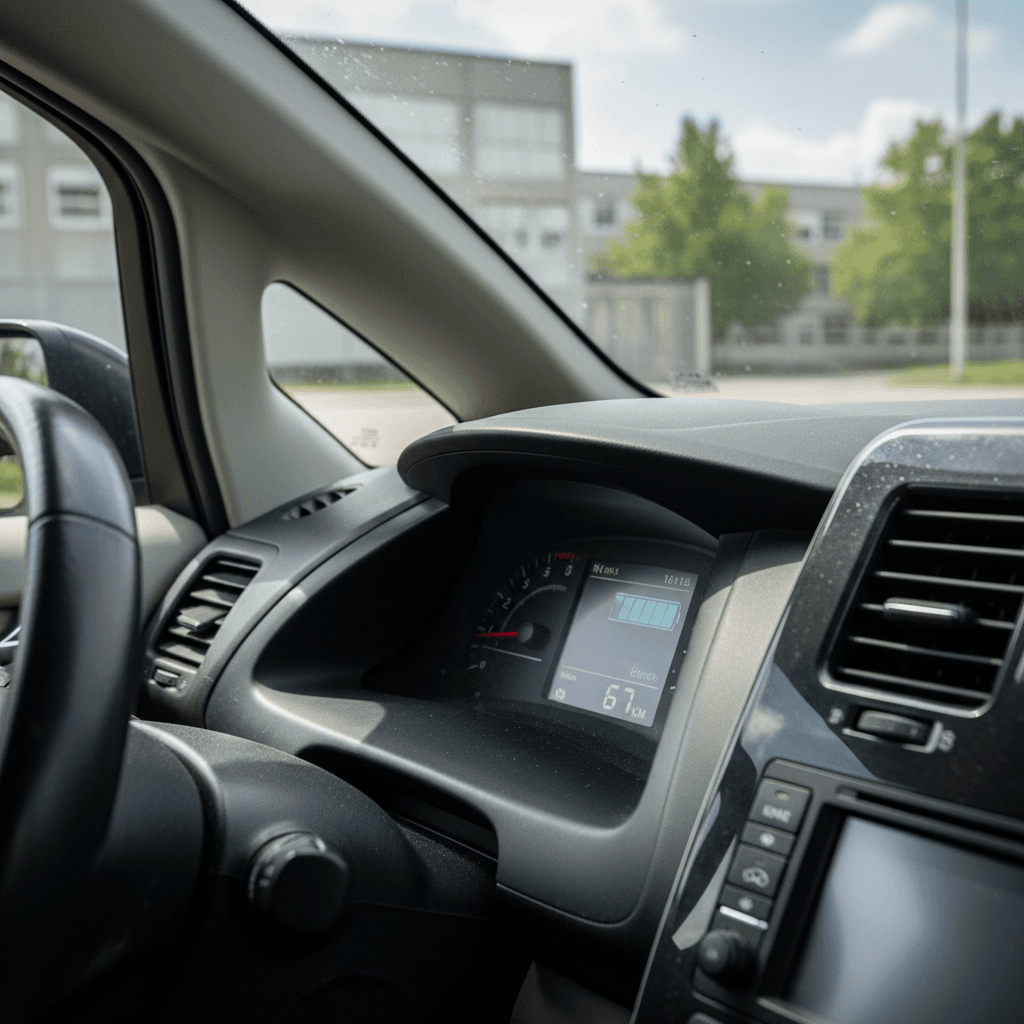
Capacity bars vs. State of Health
Real-world range loss: what owners actually see
So what does Nissan Leaf battery lifespan look like in your right‑seat reality? It helps to translate capacity loss into miles. Early Leafs shipped with roughly 73–84 miles of EPA range; later 40 kWh cars landed around 150 miles, and 62 kWh models around 215+ miles.
- A typical, well‑cared‑for 24 kWh Leaf might drop from ~75 miles when new to 55–60 miles by 7–8 years old.
- A 40 kWh Leaf that started around 150 miles might still show 120–135 miles after 6–8 years if not abused.
- A 62 kWh Leaf with careful ownership may still comfortably cover 180+ miles years into its life, enough that most drivers barely notice the loss day‑to‑day.
When range becomes a real problem
Best‑case scenario
- Daily driving: <40 miles
- Overnight Level 2 charging at home
- Mild climate, mostly garaged
- Occasional DC fast‑charging on trips
In this world, a Leaf battery can feel perfectly usable well past 10 years, even if the numbers say you’ve lost 15–20% capacity.
Worst‑case scenario
- Daily driving: 70–90 miles
- Heavy use of DC fast‑charging
- Hot climate, parked in sun
- Regularly charged to 100% and left sitting
Here, the pack can age quickly enough that the car feels "shrunk" within 5–7 years, long before it fails outright.
Signs your Leaf battery is nearing the end of its useful life
Batteries rarely die overnight. They fade into obscurity like a once‑great rock band playing county fairs. With the Nissan Leaf, there are clear telltales that the pack is shifting from "aged" to "annoying" to "I need to do something about this."
Common warning signs of an aging Leaf battery
1. Missing capacity bars
If you’re down several capacity bars on the dash, especially below 9–10, it’s a visible sign that the pack has lost a meaningful chunk of its original capacity.
2. Commute gets uncomfortably tight
Trips you used to finish with 40% charge left now end in the teens, or you’re planning charging stops for drives that used to be one‑and‑done.
3. Big range swings with temperature
Cold weather always saps range, but in a heavily degraded pack, winter can turn the car into a short‑hop only machine.
4. Rapid drop from 100% to 80%
You see the gauge fall faster in the first few miles after a full charge, then slow down later, a sign the BMS is working around reduced capacity at the top of the pack.
5. Warranty capacity bars reached
For many Leafs, falling below 9 of 12 capacity bars within the warranty period triggers coverage. If you’re close, it’s time to talk to a dealer.
Don’t confuse a weak 12V battery
How to extend your Nissan Leaf battery lifespan
You can’t stop lithium‑ion chemistry from aging, but you can absolutely decide whether your Leaf ages like a marathoner or a three‑pack‑a‑day jazz musician. The rules are simple, if slightly inconvenient.
Habits that make your Leaf battery last longer
Every little bit helps. Together, they can add years of useful life.
Favor Level 2 over DC fast
Keep it cool
Charge for your routine, not your ego
Think "battery miles," not odometer miles
- Avoid repeatedly running the pack down to single digits if you can; shallow cycles are easier on the cells.
- Use scheduled charging if your Leaf supports it, so the car finishes charging closer to the time you leave, not hours before.
- If you store the car for weeks, aim to leave it around 40–60% state of charge in a cool place, not full in a hot driveway.
Repair vs. replace: what to do when the battery is tired
At some point, every Leaf owner with a long enough time horizon faces the existential question: Do I replace this battery or move on? The good news is you have more options today than early adopters did, from OEM packs to third‑party refurbishers to simply trading into a newer EV.
Options when your Leaf battery is worn out
Each path has a different balance of cost, hassle, and long‑term value.
| Option | Typical cost (USD) | Pros | Cons |
|---|---|---|---|
| New OEM replacement pack | ~$8,000–$10,000 installed | Restores full range; new warranty; car feels "like new" again. | High cost vs. vehicle value on older Leafs; availability can vary by region. |
| Refurbished / reconditioned pack | ~$4,000–$7,000 | Lower cost; can upgrade early 24 kWh cars; reduces waste. | Quality and warranty vary; not available everywhere; range may not match a brand‑new pack. |
| Module‑level repairs | Highly variable, often $1,000–$3,000 | Targets specific bad modules; can be cost‑effective short‑term fix. | Doesn’t reset the clock on the rest of the pack; requires a very skilled shop. |
| Sell or trade the car | N/A (value received) | No repair risk; lets you move into a newer EV with better tech and range. | You lock in the value hit from degraded range; may still be attractive to short‑range city drivers. |
You don’t have to scrap a Leaf just because the battery is tired, but the smart move depends on age, condition, and your budget.
When replacement does make sense
Warranty, resale value, and buying a used Leaf
Battery lifespan isn’t just an engineering curiosity; it’s baked directly into resale value and risk. A late‑model Leaf with a healthy pack and remaining warranty is a very different bet from a decade‑old city runabout showing eight capacity bars.
- Most U.S. Leafs carry an 8‑year / 100,000‑mile battery warranty against excessive capacity loss, usually defined as dropping below 9 capacity bars.
- If a car is still under that window and already flirting with the warranty threshold, you may inherit a free battery replacement, if you’re patient and documented.
- On older, out‑of‑warranty Leafs, the pack’s health is the single biggest driver of value; two similar‑looking cars can differ by thousands of dollars based on range alone.
Why a test drive isn’t enough
How Recharged helps you shop a used Nissan Leaf confidently
If you like the Leaf’s compact‑hatch practicality but worry about getting stuck with a tired pack, this is exactly the kind of problem Recharged was built to solve. Battery health is not a footnote on a used EV; it’s the headline.
What you get with a Leaf from Recharged
Battery health, pricing, and support built around EVs, not gas cars with a plug.
Recharged Score battery report
Fair market pricing
EV‑specialist support & delivery
Ready to find your next EV?
Browse VehiclesYou can shop entirely online, lean on EV‑specialist guidance, or even visit the Recharged Experience Center in Richmond, VA to get hands‑on with vehicles. Either way, the goal is the same: no guessing games about the battery.
Nissan Leaf battery lifespan: FAQ
Frequently asked questions about Nissan Leaf battery life
Bottom line: how long a Nissan Leaf battery really lasts
When people ask, "Nissan Leaf battery lifespan, how long?" they’re really asking, "Can I trust this car with my life rhythm?" The honest answer is that a Leaf battery can be either a long‑lived workhorse or a shrinking violet, depending on model year, climate, and how it’s been treated.
If you want the calm, long‑horizon version of Leaf ownership, your best odds come from newer 40 kWh and 62 kWh models in milder climates, driven and charged like a piece of precision electronics instead of a rental car. If you’re shopping used, the smartest money move is to treat battery health as the main event, not the fine print.
That’s where a platform like Recharged earns its keep: by surfacing real battery data through the Recharged Score, aligning price with pack condition, and backing it with EV‑specialist support, financing, trade‑in options, and nationwide delivery. You end up with a Leaf whose lifespan isn’t a mystery, it’s a known quantity you can plan your life around.