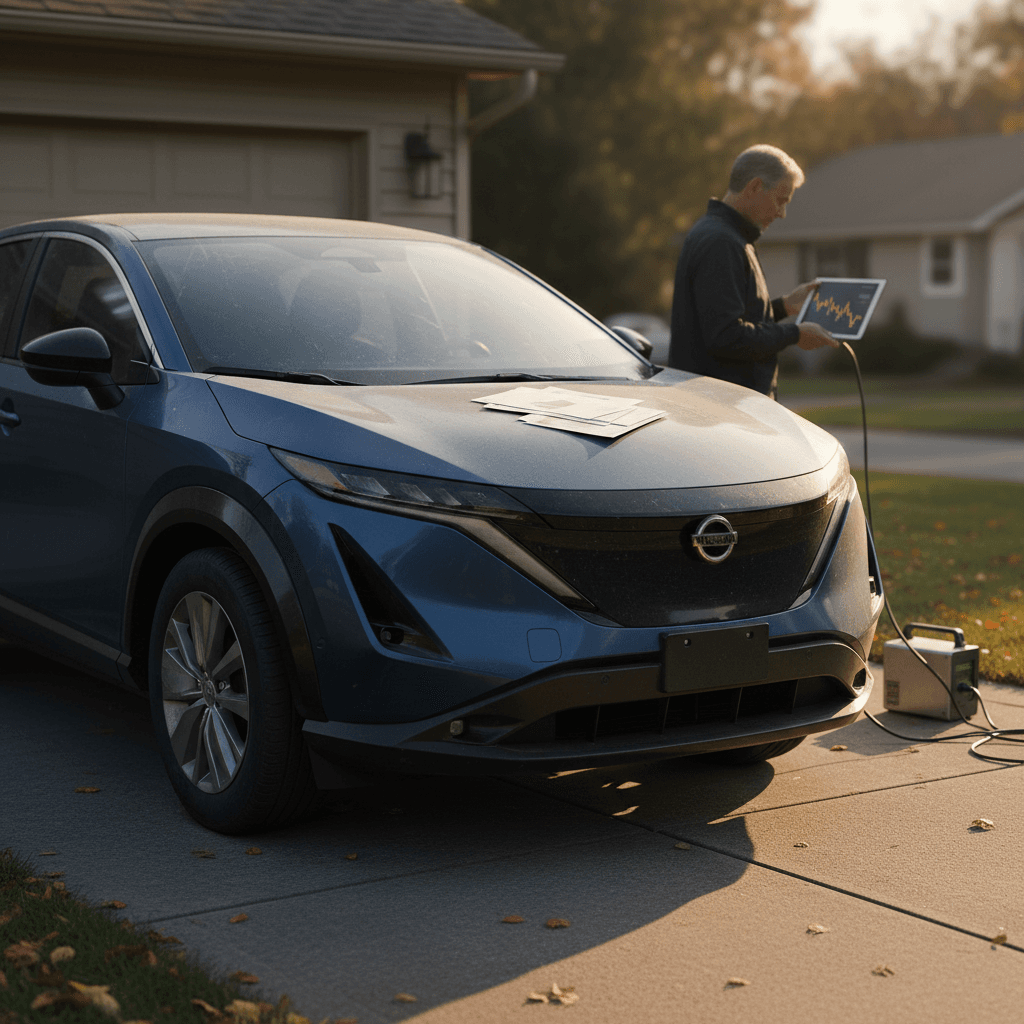
You don’t buy an electric SUV just for the first owner’s honeymoon period. If you’re looking at a Nissan Ariya, or already driving one, you’re probably wondering what Nissan Ariya value after 5 years really looks like. Will it still feel like a smart buy, or an expensive science project? Let’s walk through the numbers, the battery science, and the market mood so you can plan your next move with clear eyes.
Why 5 years matters for EVs
Nissan Ariya value after 5 years: the short version
5‑year Nissan Ariya value at a glance
In plain English: new Ariyas are depreciating hard, but that’s exactly why they can be quietly brilliant buys on the used market. By year 5, many Ariyas will be trading at roughly a third of their original MSRP, yet still have plenty of range, warranty coverage on the battery, and very modern tech. If you buy new and sell at 5 years, you’ll feel that hit. If you buy 2–3 years old and hold another 5, you’re surfing the bottom of the curve instead of riding off the cliff.
How much does a Nissan Ariya depreciate in 5 years?
Multiple resale trackers and ownership‑cost tools converge on a similar story: the Nissan Ariya is a relatively high‑depreciation EV over 5 years. One widely cited depreciation model estimates that an Ariya will lose about 63% of its value over 5 years, leaving a 5‑year resale value around $18,000–$19,000 for a typical, well‑kept example that started in the mid‑$40,000s MSRP range.
That 63% loss isn’t a cosmic punishment; it’s a reflection of a few overlapping realities: - The Ariya was priced ambitiously when new. - Nissan lacks the brand heat, and waiting lists, that stabilize Tesla resale. - Generous new‑EV discounts and lease deals push used prices down. - Rapid EV tech progress makes yesterday’s range and charging speeds feel older, faster.
Illustrative 5‑year Nissan Ariya depreciation
Approximate example for an Ariya with a $46,000 original MSRP; actual values vary by trim, incentives, and mileage.
| Age | Estimated value | Share of original MSRP | Comment |
|---|---|---|---|
| New (Year 0) | $46,000 | 100% | Original MSRP before taxes/fees and after typical discounts. |
| Year 3 | ≈ $21,000–$24,000 | ≈ 46–52% | Reflects current used listings and 3‑year projections. |
| Year 5 | ≈ $17,000–$20,000 | ≈ 37–43% | In line with ~63% depreciation expectation. |
| Year 8 | ≈ $13,000–$16,000 | ≈ 28–35% | Battery warranty near expiry; values hinge on pack health. |
Use this as a directional guide, not a prediction down to the dollar.
Depreciation isn’t linear
Real‑world Nissan Ariya prices and what they imply for year 5
Right now in the U.S., it’s common to see 1–2‑year‑old Ariyas listed from the high‑$10,000s to the mid‑$20,000s, depending on trim, mileage, and equipment. Plenty of cars that stickered in the mid‑$40,000s when new are trading in the low‑to‑mid‑$20,000s just a few years later.
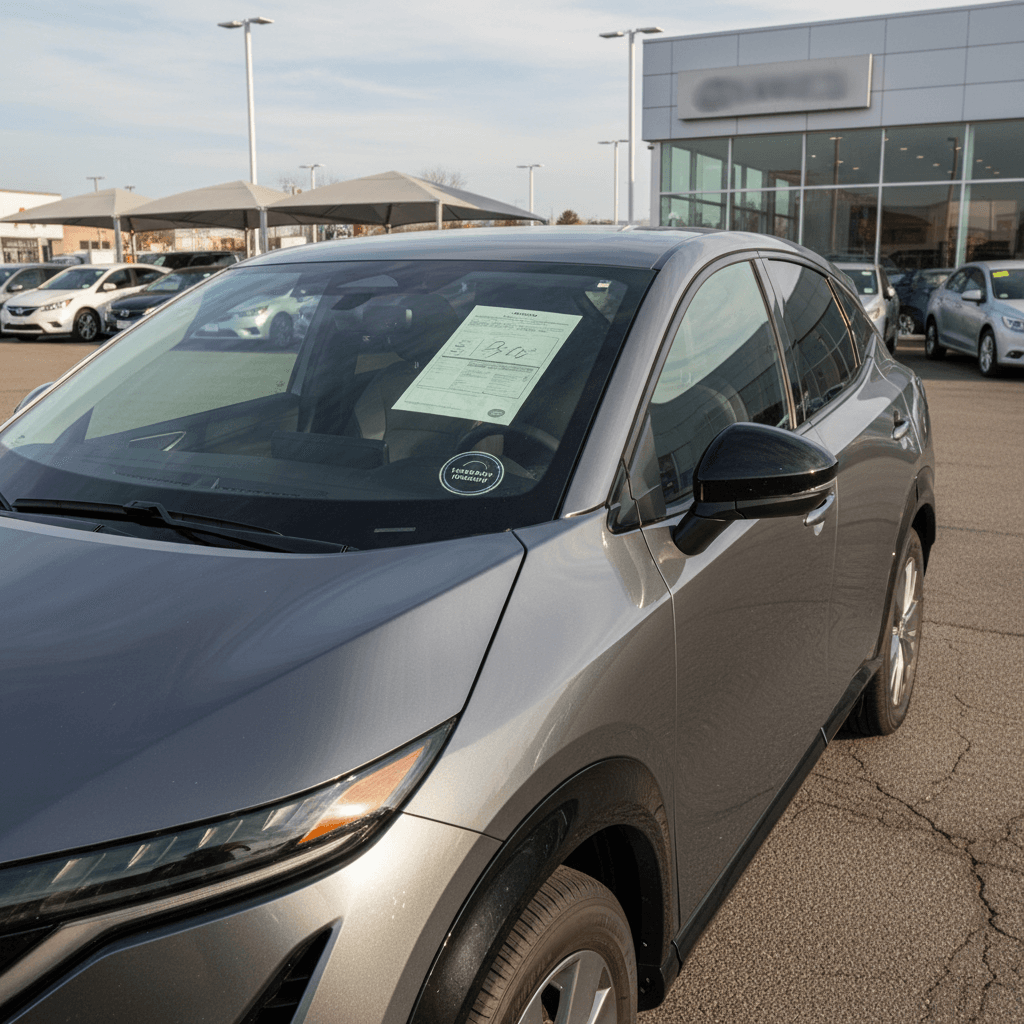
If a 2023 Ariya with, say, 25,000 miles is already selling in the low‑$20,000s in 2026, the market is effectively telling you where year‑5 values are headed: likely the high‑teens to around $20,000, assuming normal mileage and no battery drama. That’s not a flaw in the car so much as a combination of soft new‑car pricing and a crowded EV crossover segment.
Where Recharged fits in
Ready to find your next EV?
Browse VehiclesBattery health, warranty, and their impact on 5‑year value
Under the skin, the Ariya uses a modern, liquid‑cooled lithium‑ion pack that’s far closer in philosophy to the best new EVs than to early experiments like the first‑gen Leaf. In the U.S., Ariya batteries are covered by an 8‑year/100,000‑mile high‑voltage warranty that includes capacity retention, meaning Nissan expects the pack to stay above a certain usable‑capacity threshold for that period.
For 5‑year value, that’s crucial. A buyer in year 5 doesn’t want to be the crash‑test dummy for unproven battery chemistry. They want two things: 1. **Evidence the pack is aging gracefully**: consistent real‑world range and charging behavior. 2. **Paper backing**: transferable battery warranty coverage that still has years and miles left.
Battery health is the new odometer
Unlike an engine that gives you a quaint mechanical death rattle, a weak battery tends to show up as mysteriously shrinking range, finicky DC fast‑charging performance, or both. A documented pack that still holds, say, 85–90% of its original capacity at year 5 is a major selling point. That can be the difference between an Ariya that sells quickly at the top of the market and one that sits until the seller takes a haircut.
6 factors that move your Nissan Ariya’s 5‑year value up or down
What really shapes 5‑year Ariya value
These six levers matter more than the sticker on day one.
1. Trim & range
2. Mileage & usage
3. Charging history
4. Warranty status
5. Service & recalls
6. Market & brand
Two 5‑year mistakes to avoid
Nissan Ariya 5‑year value vs Tesla Model Y and others
No EV lives in a vacuum, especially not a compact SUV competing with the Tesla Model Y, Hyundai Ioniq 5, Kia EV6, and Ford Mustang Mach‑E. When you look at 5‑year value, the Ariya generally depreciates a bit more than the segment leaders but not catastrophically so.
Projected 5‑year depreciation: Ariya vs key rivals
High‑level comparison of typical 5‑year depreciation expectations in the U.S. market for mainstream compact EV SUVs.
| Model | Typical 5‑year depreciation | 5‑year resale story |
|---|---|---|
| Nissan Ariya | ≈ 63% | High incentives and softer demand push used prices down, but create strong value for second owners. |
| Tesla Model Y | ≈ 60–62% | Huge volume and price cuts have dented resale but demand remains strong; brand pull helps residuals. |
| Hyundai Ioniq 5 | ≈ 58–62% | High demand and distinctive styling support values, though heavy leasing can soften used prices. |
| Kia EV6 | ≈ 60–65% | Similar story to Ioniq 5; performance trims with limited supply fare better. |
| Ford Mustang Mach‑E | ≈ 60–65% | Fluctuating MSRPs and incentives make for choppy used values; still competitive in the segment. |
Percentages are directional; your local market and specific trim will move the numbers.
The takeaway: the Ariya isn’t a resale rock star, but it’s not a pariah either. It’s a nicely made, comfortable EV crossover in a segment dominated by louder personalities. That modest anonymity shows up in 5‑year values, and that’s exactly why savvy used‑EV shoppers sniff around Ariyas when everyone else is bidding up Model Ys.
For the first owner, heavy depreciation feels like gravity. For the second owner, it feels like a subsidy.
If you own an Ariya: how to protect its 5‑year value
Treat the battery like the engine
- Favor Level 2 home charging over daily DC fast charging.
- Avoid sitting for days at 100% state of charge, especially in heat.
- Don’t panic‑charge from 5% to 100% every day; live in the middle when you can.
None of this is exotic; it’s the EV equivalent of regular oil changes and not bouncing off the rev‑limiter every commute.
Document everything a future buyer cares about
- Keep service records, software update notes, and recall letters.
- Run a battery‑health test before you sell and keep that report.
- Note your typical charging routine ("mostly Level 2 at home, road trips on DCFC").
Selling an Ariya with a clean Recharged‑style report and a tidy folder of paperwork is the difference between haggling at the bottom and getting top‑of‑market money.
Thinking of selling? Time the market and the warranty
If you’re buying used: exploiting the 5‑year depreciation curve
From a used‑EV shopper’s perspective, the Ariya is a bit of a sleeper hit. Early depreciation has already done the unglamorous work of chopping tens of thousands off the price. Your job is to pick the point on the curve where price, remaining warranty, and battery confidence intersect in your favor.
Smart ways to buy into the Ariya value story
Target 2–4‑year‑old cars
This is where you often see 40–55% of original value wiped out, yet you still have years of battery warranty and very current tech.
Prioritize range and charging hardware
A longer‑range Ariya with decent DC fast‑charging performance will be easier to live with in year 5 and beyond, and easier to resell.
Demand a real battery‑health report
Don’t settle for "it feels fine." Use tools like the <strong>Recharged Score battery diagnostics</strong> to see actual capacity and charging behavior.
Check incentives & tax credits
In the U.S., the federal used‑EV tax credit and state programs can lop thousands off the effective price of the right Ariya, further softening 5‑year depreciation.
Compare total cost, not just price
Use an ownership calculator (insurance, energy, maintenance, and depreciation) to see how an Ariya stacks against other EVs and hybrids over 5–8 years.
Buy from EV‑literate sellers
A seller who can explain charging habits, software updates, and tire rotations is usually a seller who took care of the car.
How Recharged can help you buy the dip
Checklist: is this Ariya a good 5‑year value bet?
Pre‑purchase checklist for 5‑year Ariya value
1. Battery warranty math checks out
Count forward 5 years from today. Will the Ariya still be within the 8‑year/100,000‑mile battery warranty at the end of your ownership window?
2. Verified battery health, not vibes
You’ve seen a recent, professional battery‑health report with clear metrics, not just a salesman’s assurance that it "charges fine."
3. Range fits your life with margin
Even if the pack loses a few percent over time, the rated and real‑world range still cover your commute, climate, and occasional trips without stress.
4. Clean service & software history
No unresolved warning lights, no open recalls, and evidence that prior owners kept up with recommended software updates and maintenance.
5. Realistic exit value
You’ve sanity‑checked year‑5 values against current 3‑ to 5‑year‑old EVs and run numbers on sites like Recharged, not just trusted a payment quote.
6. You’re not banking on appreciation
You’re buying an Ariya to drive, not to flip. If values surprise to the upside, great, but your plan works even if depreciation follows the textbook.
FAQ: Nissan Ariya value after 5 years
Frequently asked questions about 5‑year Ariya value
Bottom line: what Nissan Ariya value after 5 years really means
If you buy a Nissan Ariya new and drive it for 5 years, you should walk into the deal assuming above‑average depreciation. That’s the tax for being an early adopter in an aggressively priced, fast‑moving EV segment. But if you’re stepping in as the second owner, especially around the 2–4‑year mark, the story flips. The market has already done the expensive part for you.
A well‑chosen Ariya with verified battery health, remaining warranty, and the right trim and range can be one of the smarter 5‑year plays in the used‑EV universe: a quiet, comfortable electric SUV that cost someone else a fortune to depreciate. Use the data, insist on transparency, and, if you like, let Recharged’s depreciation guides and Recharged Score Reports do the heavy lifting. In a market this volatile, information is the one asset that doesn’t depreciate.