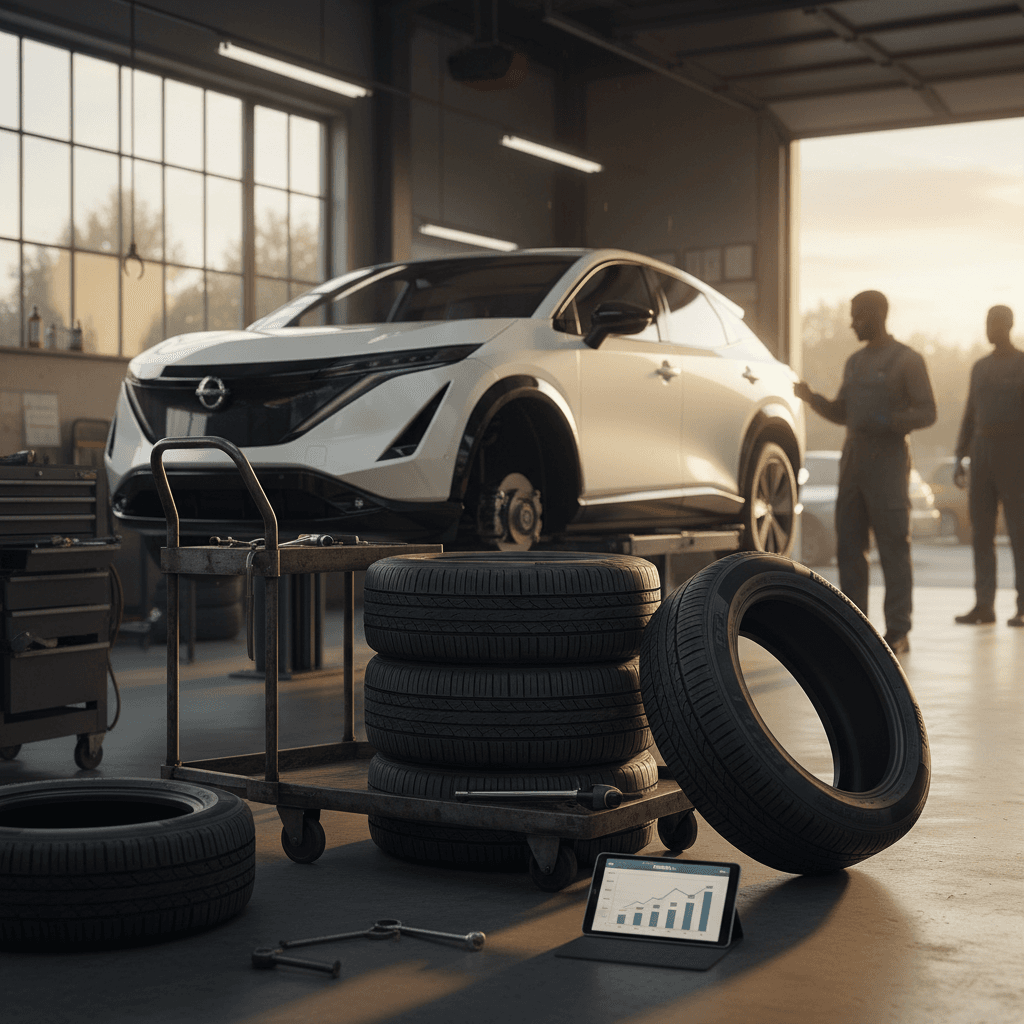
If you’re shopping for a Nissan Ariya, or already have one in your driveway, you’ve probably heard that EV tires can be pricey. The good news: once you understand Nissan Ariya tire replacement cost, tire sizes, and how long they typically last, it’s a predictable line item in your ownership budget, not a nasty surprise.
Quick takeaway
Nissan Ariya tire replacement cost at a glance
Typical Nissan Ariya tire costs
Those numbers are ballparks, not promises. A front-wheel drive Ariya Engage on 18-inch wheels can often be shod with a solid set of touring all-seasons for under $1,000 out the door. A top-trim e-4ORCE model with 20-inch performance-oriented rubber can easily land at the upper end, or above, especially if you opt for a premium EV-specific tire.
Factory Nissan Ariya tire sizes and options
Before you can estimate Nissan Ariya tire replacement cost, you need to know what size rubber your Ariya actually wears. Nissan offers several wheel and tire combinations depending on trim and package.
Common Nissan Ariya wheel and tire sizes
Always confirm the exact tire size on your driver’s door jamb sticker or existing tire sidewall.
| Trim/Configuration (typical) | Wheel size | Likely tire size (example) | Type |
|---|---|---|---|
| Engage / Venture-style FWD | 18-inch alloy | 235/60R18 | All-season touring |
| Mid-trim (Engage+, Evolve, Venture+) | 19-inch alloy | 235/55R19 | All-season touring |
| e-4ORCE higher trims | 19-inch alloy | 255/50R19 | All-season/performance |
| Top trims with appearance package | 20-inch alloy | 255/45R20 | Performance all-season or summer |
Representative factory-style sizes for U.S. Nissan Ariya models.
Double‑check before you shop
Those extra inches of wheel diameter that make an Ariya look so sharp in photos also push tire costs up. An 18-inch all-season in an Ariya-friendly size might start around $160 per tire from a mainstream brand, while a 20-inch ultra-high-performance option can run well north of $300 per tire.
What you’ll actually pay for Nissan Ariya tires
Let’s translate those numbers into real-world ranges you’re likely to see on quotes in the U.S. in 2025. These estimates assume four new tires, mounting, balancing, standard shop fees, and taxes, but not deep discount promotions.
Typical Nissan Ariya tire replacement price ranges
Ballpark pricing for a full set of four tires plus basic installation.
Budget / value tires
Estimated out-the-door: $700–$1,000
- Usually lesser-known brands or entry-level lines.
- 18- or 19-inch sizes more common at this price.
- Shorter treadwear warranties, may ride noisier.
Mid-range name brands
Estimated out-the-door: $950–$1,400
- Michelin, Continental, Goodyear, Bridgestone, etc.
- Better wet braking and ride comfort.
- Often 50k–65k mile treadwear warranties.
Premium / EV-specific
Estimated out-the-door: $1,300–$1,800+
- Top-tier lines tuned for EVs.
- Lower rolling resistance for range and efficiency.
- Reinforced construction for heavy battery weight.
Where you buy matters, too. A dealer quote for a set of OEM-spec Michelin or Bridgestone tires on a 20-inch e-4ORCE Ariya can easily start around $1,600–$1,900 with shop fees. A big-box tire retailer or trusted independent shop may come in a couple hundred dollars lower for similar quality rubber.
Get at least three quotes
Services that increase your Nissan Ariya tire bill
When you look at a quote, don’t just eye the tire price. The line items around it can quietly add 20–30% to your final Nissan Ariya tire replacement cost.
- Mounting and balancing: Often built into the per-tire quote, but can run $20–$35 per tire on their own.
- Tire disposal / recycling fees: A few dollars per tire, varying by state and shop policy.
- TPMS service kits: New valve stems and seals to keep your tire-pressure monitoring system happy, typically $8–$15 per wheel.
- Four-wheel alignment: Commonly $100–$200; smart to do if you see uneven wear, hit a big pothole, or are installing tires after suspension work.
- Road-hazard protection: Optional, usually $15–$25 per tire; can pay off if you drive in construction zones or pothole country.
Don’t skip an alignment if wear looks odd
How long Nissan Ariya tires last, and warning signs
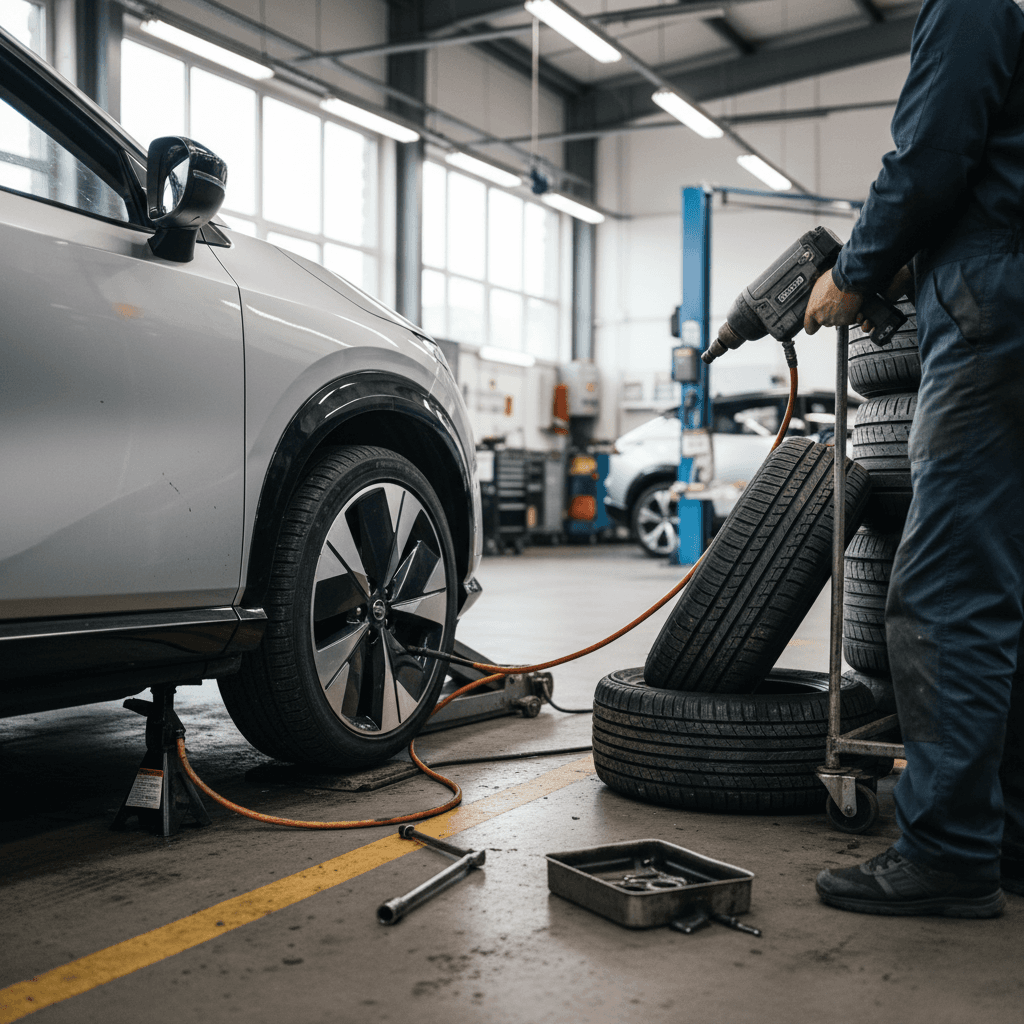
Electric SUVs like the Nissan Ariya ask a lot of their tires. Instant torque, extra battery weight, and regenerative braking all add up. Still, with sane driving and regular rotation, most Ariya owners can expect 25,000 to 40,000 miles from their factory-style all-season tires.
Signs your Nissan Ariya needs new tires
1. Tread depth below 4/32"
At 4/32 of an inch, wet and snow traction start to fall off quickly. Use a tread-depth gauge or the wear bars molded into the tire grooves as a guide.
2. Cracks or bulges in the sidewall
Any bulge, bubble, or deep cracking in the sidewall is a red flag. Replace that tire immediately, especially on a heavier EV like the Ariya.
3. Cupping or scalloped wear
Uneven, patchy wear around the tire often points to worn suspension components or poor alignment. New tires without addressing the cause will wear prematurely.
4. Increased road noise or vibration
If your Ariya suddenly sounds like it’s on off-road tires, or the steering wheel starts to shimmy, have a shop inspect balance and tread condition.
5. Age over six years
Even if you don’t drive much, rubber ages. If your tires are more than six years old, check the DOT date code, it’s time to start planning a replacement.
Rotation buys you mileage
OEM vs aftermarket tires for the Ariya
Your Ariya likely left the factory on a low-rolling-resistance all-season tire from a big-name brand. When it’s time to replace them, you face a classic choice: stick with what Nissan picked, or switch to an aftermarket option tailored to your priorities.
Sticking with OEM-style tires
- Pros: Familiar ride and handling, predictable range, often quiet and efficient.
- Best for: Drivers who like how their Ariya feels now and prioritize range and refinement over ultimate grip.
- Cost: Usually in the mid-range to premium price band.
Choosing aftermarket alternatives
- Pros: Choice of longer-wear touring tires, grippier performance rubber, or dedicated winter tires.
- Best for: Drivers in harsh climates, spirited drivers, or those unhappy with OEM tire life.
- Cost: Can be cheaper or more expensive; you control the trade-offs.
Match the tire to how you drive
How to save money on Nissan Ariya tire replacement
The cost of four quality EV-ready tires will never be pocket change, but Ariya owners have plenty of levers to pull to keep the bill sane, without cutting corners on safety.
Smart ways to control your Ariya tire budget
Practical strategies that don’t compromise safety.
Shop sales and manufacturer rebates
Tire makers frequently run seasonal promotions that can knock $70–$150 off a set. Ask shops what rebates are active and whether a different (but comparable) tire qualifies.
Skip unnecessary add-ons
Lifetime wheel balancing or expensive nitrogen fills rarely change your day-to-day driving experience. Put that cash toward better-quality tires instead.
Maintain tire pressure and alignment
Running 3–5 psi low doesn’t just eat range, it wears the shoulders of the tire faster. Check pressures monthly and after big temperature swings, and get an alignment if the steering wheel isn’t straight.
Checklist before you approve a tire quote
Confirm the exact tire size and load rating
The Ariya is heavy. Make sure replacement tires meet or exceed the load index printed on your original tires and door jamb label.
Compare at least two equivalent brands
If your first quote is for a premium brand, ask for a comparable mid-tier option with a similar treadwear warranty and performance rating.
Ask about road-hazard vs. prorated warranty
Understand whether you’re getting true road-hazard coverage (for punctures and pothole damage) or just a prorated treadwear warranty.
Get a line-item breakdown
Insist on a written breakdown of tire price, installation, TPMS service, alignment, and fees so you can compare quotes apples to apples.
Plan the visit around your schedule
If a shop charges less for weekday appointments or off-peak times, you might save money, and time, by avoiding Saturday rush hours.
Thinking about a different EV?
All-season, winter, and EV-specific tires: what’s worth it?
The Nissan Ariya ships with all-season tires in the U.S., but many owners face a choice at replacement time: stick with generalist all-seasons, add a dedicated winter set, or move to an EV-marketed tire that promises better range and longevity.
Tire type comparison for Nissan Ariya owners
How different tire categories affect cost, performance, and range.
| Tire type | Strengths | Trade-offs | Typical cost impact |
|---|---|---|---|
| All-season touring | Balanced ride, quiet, decent tread life. | Not great in deep snow or ice; performance just "okay" at everything. | Baseline pricing, usually the least expensive option. |
| Performance all-season / summer | Sharper steering, shorter dry/wet stopping distances. | Can ride firmer, wear faster, and often poorer snow traction. | 10–25% more than basic all-season in the same size. |
| Dedicated winter (snow) tires | Excellent traction on snow and ice, shorter cold-weather stops. | Noisy and less efficient on warm pavement; need a second wheel set or seasonal swaps. | Adds a second set of tires, but each set lasts longer since it’s used half the year. |
| EV-specific low-rolling-resistance | Better efficiency and range, often quieter, tuned for EV weight. | Sometimes slightly firmer ride; can cost more up front. | Typically 10–30% more than generic all-seasons but can save energy over time. |
Which tire type makes sense depends on your climate, driving style, and budget.
Winter tires beat all-wheel drive
Tire cost tips if you’re shopping for a used Nissan Ariya
Tires are one of the biggest wear-item expenses on any used EV, and the Nissan Ariya is no exception. A great price on a used Ariya can feel less sweet if you need $1,200 in rubber six weeks after you sign.
What to look for on a test drive
- Run your fingers across the tread, does it feel smooth, or are there flat spots and scallops?
- Listen at freeway speeds: a roaring or droning sound can mean cupped tires.
- Check build dates on the tire sidewalls; anything older than six years is on borrowed time.
How Recharged helps you budget
- Every used EV on Recharged includes a Recharged Score Report that covers battery health and major wear items.
- Our EV specialists can help you estimate upcoming tire and brake costs for specific vehicles you’re comparing.
- Because Recharged is a fully digital experience with transparent pricing, it’s easier to fold realistic tire replacement costs into your total ownership budget.
Use needed tires as a negotiation lever
FAQ: Nissan Ariya tire replacement cost & maintenance
Frequently asked questions
Bottom line: Budgeting for Ariya tire replacement
When you look at the whole picture, Nissan Ariya tire replacement cost is less of a mystery and more of a planning exercise. Expect to spend about $900–$1,600 on a full set every 25,000–40,000 miles, depending on wheel size, brand, and how, and where, you drive. Rotate them on schedule, keep an eye on pressures, and spring for an alignment when the wear pattern looks suspicious, and those dollars stretch further.
If you’re weighing an Ariya against other electric SUVs, or shopping used, remember that tires, brakes, and battery health all feed into your true cost of ownership. That’s exactly why platforms like Recharged bundle a Recharged Score battery health report, fair market pricing, and EV-specialist guidance into every used EV they list. Whether you end up in an Ariya or a different EV altogether, understanding your tire costs now means fewer surprises later.