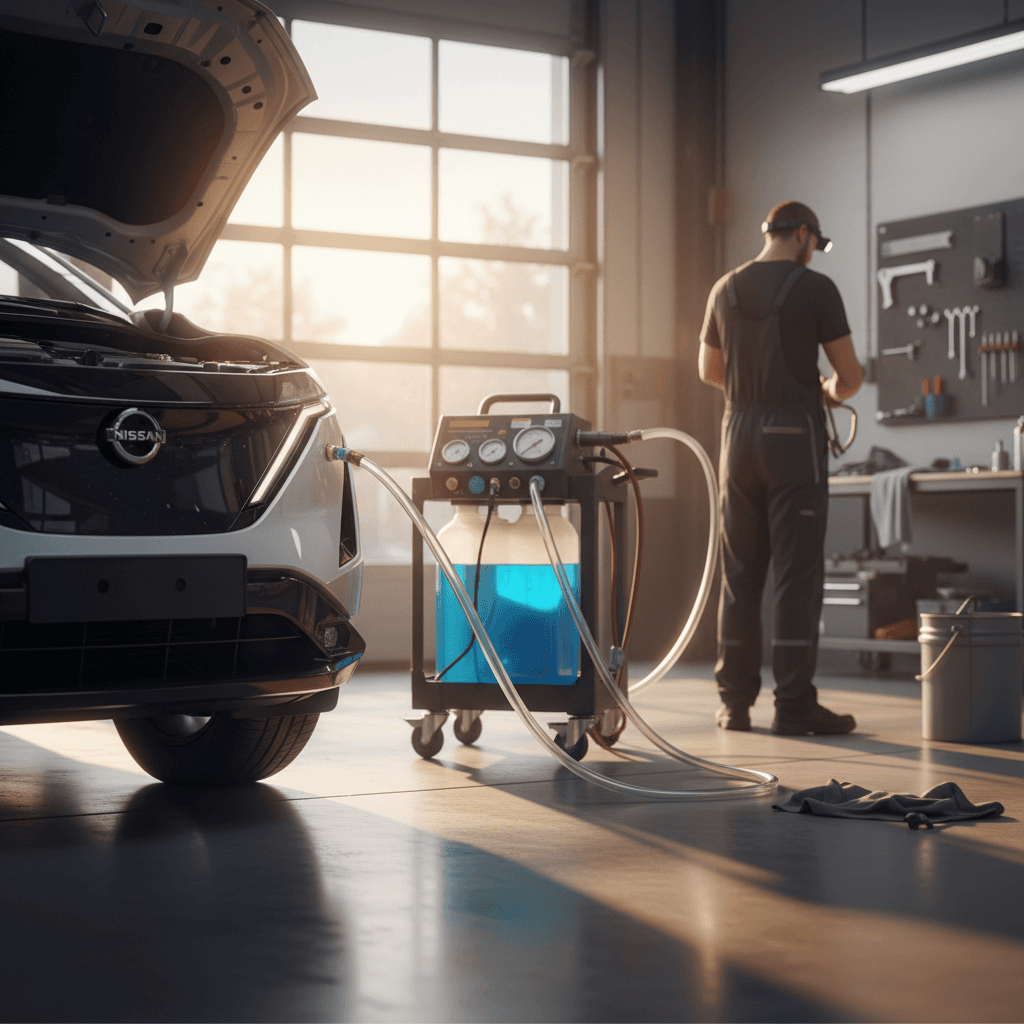
If you drive a Nissan Ariya or you’re shopping for one used, it’s natural to wonder what a Nissan Ariya coolant flush costs and how often you’ll have to pay for it. EVs don’t need oil changes, but they still rely on coolant to keep the battery, inverter, and onboard charger in their ideal temperature window.
Quick answer
Why coolant matters on an EV like the Ariya
On a modern EV such as the Nissan Ariya, coolant isn’t about protecting a traditional engine. Instead, the vehicle uses one or more liquid cooling loops for the high‑voltage battery pack, the drive motor and inverter, and sometimes the onboard charger and DC fast‑charging components. Keeping these parts in the right temperature range helps preserve battery health, supports repeat fast‑charging, and maintains performance in hot or cold weather.
- The battery pack generates heat under acceleration and DC fast charging.
- The inverter and motor electronics need temperature control for reliability.
- Heat pumps and cabin HVAC often share components with the thermal system.
Don’t mix coolant types
How much does a Nissan Ariya coolant flush cost?
Typical U.S. pricing for Ariya coolant service
Because Nissan is still evolving maintenance guidance for newer EV models, you may see different terminology, “coolant replacement,” “coolant service,” or “coolant flush.” For the Ariya, you’re typically paying for three things: factory‑spec coolant, technician labor, and any special procedures to bleed air from the EV’s thermal circuits.
Rough price tiers for Nissan Ariya coolant service
These estimates assume U.S. pricing and average dealer labor rates. Always confirm an itemized quote with your service center.
| Service scenario | Where it’s done | Estimated price | What’s typically included |
|---|---|---|---|
| Standard coolant replacement | Nissan dealer | $250–$400 | Drain and refill of applicable coolant loop(s), bleed procedure, system checks. |
| Extensive coolant flush (heavy contamination or repair) | Nissan dealer | $350–$500+ | Multiple fill‑and‑drain cycles, more labor time, additional parts if contamination is found. |
| Routine replacement at EV‑savvy independent shop | Independent EV specialist | $180–$350 | Drain and refill, bleed, health check of hoses, clamps, and visible components. |
| Coolant top‑off only (no flush) | Dealer or shop | $40–$120 | OEM coolant top‑off, leak inspection; usually done only if level is low. |
Actual pricing will vary by region, dealer, and model year. Use this as a planning baseline, not a formal quote.
EV cooling systems are not DIY playgrounds
Cost breakdown: dealer vs. independent shop
What drives dealer pricing
- Higher labor rates – Many Nissan dealers bill $150–$220 per hour in metro areas.
- Factory training and diagnostic tools – Especially important as Ariya software and thermal strategies evolve.
- OEM coolant only – Dealers typically use the exact Nissan‑branded coolant, which can cost more per liter.
For a new Ariya still under basic warranty, sticking with the dealer can also simplify documentation if a future battery or inverter concern is reviewed under warranty or goodwill.
Why an independent shop may cost less
- Lower hourly labor – Many well‑equipped independents run $100–$160 per hour.
- Flexible parts sourcing – Some use OEM‑equivalent coolant that meets Nissan specs at a lower cost.
- Focused EV expertise – A growing number of independent shops specialize in EV thermal systems and high‑voltage work.
If you go this route, make sure the shop is high‑voltage certified and familiar with late‑model Nissan EVs. Ask directly whether they’ve worked on Ariya cooling loops before.
Get the quote in writing
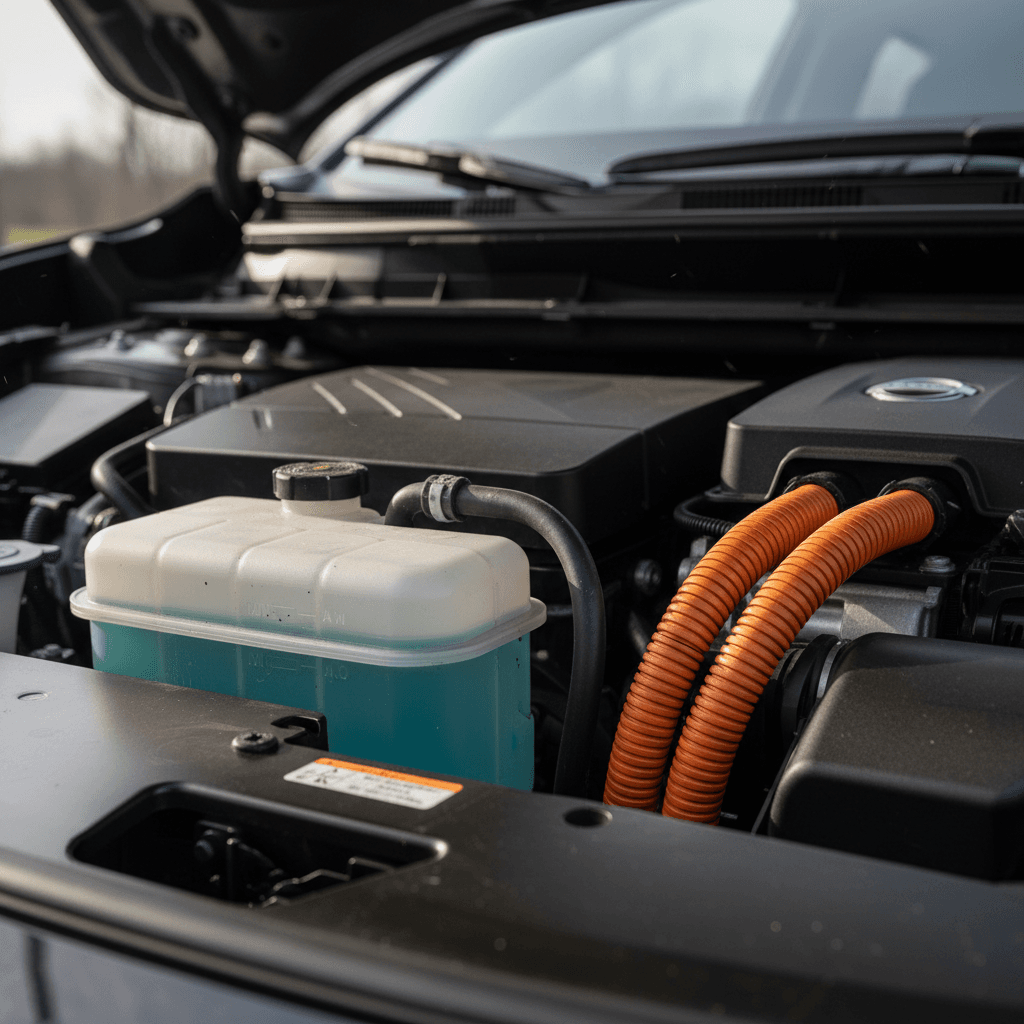
Service intervals: When does the Ariya need coolant service?
Because the Ariya is still relatively new, many owners haven’t hit the first scheduled coolant replacement yet. Nissan’s guidance for its newer EVs generally points toward long‑life coolant intervals, often in the 5–10‑year or high‑mileage range for the first change, with shorter intervals after that. Exact numbers can vary by model year and market, so your owner’s manual and maintenance booklet are the final word.
How to confirm your Ariya’s coolant service interval
1. Read the maintenance schedule
Open the Ariya owner’s manual or maintenance booklet and look for sections labeled “coolant,” “long‑life coolant,” or “EV system coolant.” Note mileage and time intervals.
2. Check for separate battery vs. cabin intervals
Some EVs treat the cabin/auxiliary loop separately from the battery/inverter loop. Verify whether there are multiple coolant services listed.
3. Ask your Nissan service advisor
If anything in the schedule is unclear, ask a Nissan EV‑trained advisor to explain which item corresponds to the Ariya’s main high‑voltage coolant system.
4. Consider severe‑use conditions
If you tow frequently, live in extreme heat, or fast‑charge often, ask whether Nissan recommends a more conservative interval for your usage pattern.
Manuals win over hearsay
Signs your Ariya might need coolant attention
Most Ariya owners will hit the time or mileage interval long before they notice drivability changes. Still, there are red flags you shouldn’t ignore, because they can point to coolant problems or thermal‑system issues that deserve a closer look.
- Warning messages about battery temperature, motor temperature, or EV system overheating.
- Repeatedly slower DC fast‑charging speeds in similar conditions, while other EVs at the same station charge normally.
- Unusual fan noise that runs much longer than usual after you park.
- Visible coolant leaks under the car or around coolant hoses and reservoirs.
- Coolant level consistently dropping between inspections, which can indicate a slow leak.
Battery temperature warnings are a stop sign
How a coolant flush on an Ariya actually works
Under the skin, the Ariya’s thermal system is more complex than a gasoline crossover’s radiator and hoses. That’s why the procedure takes longer than a simple drain‑and‑fill on a traditional vehicle, and why labor dominates the bill on your coolant service invoice.
Typical steps in an Ariya coolant service
Exact procedures vary by shop and by which loop is being serviced, but the flow is similar.
Isolate and secure the EV system
Technicians power down the vehicle correctly, apply safety lockouts, and confirm the high‑voltage system is safe to work around before touching coolant lines.
Drain and capture old coolant
Coolant is drained from service points and captured for proper disposal or recycling. Some shops may do multiple drain cycles if contamination is present.
Refill, bleed, and test
Fresh, spec‑correct coolant is added. The system is bled of air and monitored while the EV system runs through warm‑up and cooling cycles to verify proper operation.
Ask for a post‑service test drive
Ways to save on Ariya coolant flush costs
You can’t avoid coolant service forever, but you do have levers you can pull to keep the bill under control, without cutting corners on safety or battery health.
Smart ways to trim your coolant service bill
1. Bundle maintenance visits
If your Ariya is due for cabin filters, tire rotation, or brake fluid inspection, try to schedule them with your coolant service. Some service departments discount combined work.
2. Use coupons and loyalty programs
Many Nissan dealers run seasonal specials on fluid services. Check their website or email list for coolant or EV service coupons before you book.
3. Shop multiple quotes
Call at least one Nissan dealer and one independent EV specialist. Provide the same VIN and mileage so you’re comparing apples to apples.
4. Confirm what’s actually required
If a service advisor recommends a coolant flush earlier than the manual suggests, ask them to explain why in writing. Sometimes “recommended” items are more about revenue than engineering.
5. Stay ahead of leaks and damage
Regular visual inspections let you spot seepage or hose wear before they turn into major leaks that require more extensive flushing and parts replacement.
Good news for your budget
How coolant service fits into used Ariya ownership
If you’re shopping for a used Nissan Ariya, coolant service is one of several maintenance items that reveal how the previous owner treated the vehicle. Documentation matters, especially as more Ariyas reach the secondary market and buyers become more educated about EV thermal systems.
What to ask the seller or dealer
- “Has the coolant ever been changed or flushed?”
- “Can I see service invoices that list coolant work?”
- “Has the vehicle ever had battery or inverter thermal‑system repairs?”
Solid paperwork shows that the cooling system hasn’t been ignored, and that any prior leaks or component replacements were handled properly.
How Recharged looks at coolant and battery health
When you browse used EVs on Recharged, every vehicle comes with a Recharged Score Report that focuses on verified battery health and real‑world performance, not just a basic fluid checklist.
We look at charge behavior, range, and diagnostic data to understand how the Ariya’s thermal management has been treating the pack over time. That helps you see how a specific used Ariya stacks up before you commit, and our EV specialists can walk you through how coolant and other maintenance items fit into your long‑term ownership costs.
Thinking about a used Ariya?
Nissan Ariya coolant flush FAQ
Frequently asked questions about Ariya coolant service
Key takeaways on Nissan Ariya coolant flush costs
A Nissan Ariya coolant flush or full coolant replacement is one of the few fluid services you’ll face with this electric SUV, and it’s usually an occasional rather than annual expense. Plan on roughly $250–$450 at a dealer or $180–$350 at a qualified independent EV shop, depending on your market and the exact scope of work. Follow the maintenance schedule in your manual, fix leaks quickly, and keep detailed records to protect both your battery and your resale value.
If you’re weighing a used Ariya against other electric crossovers, zoom out and look at the total cost of ownership: battery health, range, charging behavior, and long‑term maintenance, not just one fluid service. That’s where tools like the Recharged Score Report, EV‑specialist support, and transparent pricing can give you a clearer picture of what you’ll really spend, and save, over years of ownership.