If you’re eyeing a Hyundai Kona Electric, you’re probably wondering not just what it costs to buy, but how much it costs to own per year. Between electricity, insurance, maintenance, and depreciation, the numbers can feel fuzzy, especially if this is your first EV. Let’s put real U.S. dollars to the Kona Electric so you can decide if it fits your life and your budget.
Quick answer
Hyundai Kona Electric at a glance
Kona Electric efficiency and basics
Why does this matter for cost? Because efficiency and battery size directly drive your electricity bill. The Kona Electric is one of the most efficient EVs on sale, which means it’s a strong choice if you want low running costs without a huge, expensive battery.
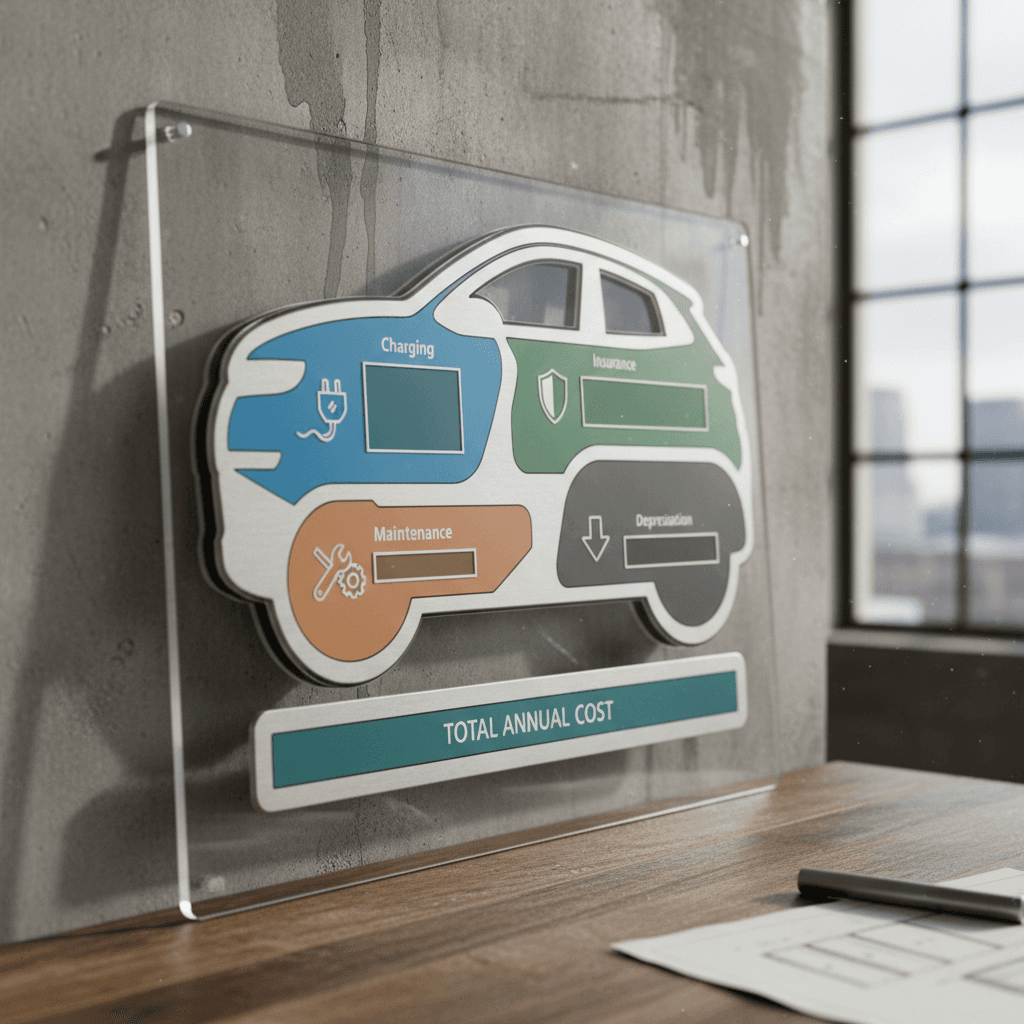
Typical annual cost to own a Kona Electric
Let’s start with a high‑level picture for a typical U.S. driver covering 12,000 miles per year. We’ll assume average 2024–2025 U.S. electricity and insurance prices, and a mix of home and occasional public fast charging.
Estimated annual Hyundai Kona Electric ownership costs (U.S. average)
Approximate yearly costs for a recent‑model Kona Electric driven 12,000 miles per year. Actual numbers vary by state, driving style, and whether you buy new or used.
| Cost category | New Kona Electric (approx./year) | Used Kona Electric (approx./year) | Notes |
|---|---|---|---|
| Electricity (charging) | $800 | $800 | Assumes mostly home charging at average U.S. rates and 12,000 miles/year. |
| Public fast charging premium | $150 | $150 | Occasional road trips and DC fast charging; heavy road‑trippers could spend more. |
| Insurance | $1,800 | $1,700 | Many drivers fall between $1,600–$2,000 for full coverage; varies heavily by state and driver profile. |
| Registration & property/EV taxes | $300 | $300 | Higher in some EV‑heavy states or where EV road‑use fees apply. |
| Routine maintenance & repairs | $350 | $450 | Cabin filters, brake service, wipers, software updates; used cars may need minor repairs. |
| Tires (averaged yearly) | $350 | $350 | A set of quality all‑season tires every 3–4 years. |
| Depreciation | $3,500–$4,500 | $1,800–$2,500 | New car loses value fastest in first few years; used has much gentler depreciation. |
| Financing interest (if financed) | $800–$1,200 | $500–$900 | Depends on rate, term, and down payment. |
| Estimated total per year | ≈ $8,000–$8,800 | ≈ $6,000–$7,200 | Excludes parking/garaging costs and tolls. |
Use this as a planning baseline, then adjust for your own electricity rate, commute length, and insurance profile.
These are averages, not promises
What you’ll spend on charging each year
This is where the Kona Electric quietly shines. Because it’s so efficient, your annual charging cost is often lower than you’d spend on gas for a similarly‑sized hybrid, let alone a traditional SUV.
Step 1: Understand the Kona Electric’s efficiency
Recent Hyundai Kona Electric models are rated around 29 kWh per 100 miles of driving, which works out to roughly 3.4–4.0 miles per kWh in mixed use. Many real‑world owners report 3.5–4.5 mi/kWh depending on climate, speed, and how gently they drive.
- At 3.8 mi/kWh, 12,000 miles a year uses about 3,160 kWh of electricity.
- At 3.5 mi/kWh, 12,000 miles a year uses about 3,430 kWh.
- Heavy highway driving in winter may push you closer to 3.0 mi/kWh; summer city driving can bump you past 4.0.
Step 2: Plug in your electricity rate
In 2024–2025, the average U.S. residential electricity rate has been hovering around 16–17¢ per kWh. Some states are dramatically cheaper (single‑digit cents), while others are north of 25¢. The math is simple:
Example: 12,000 miles a year on home charging
1. Estimate your energy use
Assume your Kona Electric averages 3.6 mi/kWh. At 12,000 miles a year, that’s about 3,333 kWh (12,000 ÷ 3.6).
2. Multiply by your rate
At 17¢/kWh, 3,333 kWh costs about $566 a year. At 25¢/kWh, it’s around $833. At 10¢/kWh, it’s a rock‑bottom $333.
3. Add charging losses
Energy lost in the charging process typically adds ~10–15%. Budget an extra 15%, bringing the U.S.‑average example to roughly $650 per year.
Shortcut for quick math
Step 3: Don’t forget public fast charging
If you road‑trip often or rely on DC fast charging, add a little on top. Public fast charging is usually more expensive per kWh than your home rate, especially at branded highway stations.
- Light road‑tripper (a few weekends a year): add about $100–$150/year.
- Frequent road‑tripper or apartment dweller relying heavily on public DC fast charging: your total annual “fuel” bill can climb into the $1,000–$1,300/year range even with an efficient car like the Kona Electric.
- Plan ahead: apps like PlugShare, ChargePoint, and network apps show prices before you plug in so you can avoid the most expensive stations.
Insurance, registration and taxes
Insurance costs for the Hyundai Kona Electric
Insuring a Hyundai Kona Electric is often cheaper than insuring a luxury EV, but slightly more than a basic gas subcompact. Industry data puts the Kona Electric’s average annual full‑coverage premium in roughly the $1,600–$2,200 range, with many quotes landing around $1,800 per year for a clean‑record driver.
- Younger drivers, dense metro areas, and high‑theft ZIP codes can push premiums over $2,500.
- Older drivers with clean records in low‑risk states can see numbers closer to $1,400–$1,600.
- Higher trims with more options can cost a bit more to insure than base models.
Ways to cut Kona Electric insurance costs
Registration, EV fees and property tax
State and local fees are the part of ownership nobody brags about, but they’re real. Many states now charge extra annual EV registration fees to make up for lost gas‑tax revenue, which the Kona Electric is obviously not paying.
- Basic registration/title/plate fees: $100–$200 per year in many states when averaged.
- EV‑specific road‑use fees: commonly $100–$300 per year, depending on your state.
- Vehicle property tax/personal property tax (where applicable): this can add a few hundred dollars a year, especially on newer, higher‑value cars.
A safe planning number for a Kona Electric in many parts of the U.S. is around $250–$350 per year in registration, road‑use fees, and property tax combined, but it’s worth checking your DMV or state revenue site for exact numbers.
Maintenance, tires and unexpected repairs
One of the biggest perks of an EV like the Kona Electric: there’s no engine oil, no transmission fluid changes, no timing belts. But that doesn’t mean maintenance is free. You still have a vehicle weighing roughly two tons rolling on rubber.
Where Kona Electric owners actually spend money on upkeep
Less time at the shop than a gas Kona, but not zero.
Routine service
Expect cabin air filters, brake fluid checks, alignment checks, and the occasional software update.
Budget: $150–$250 per year averaged out.
Wear items
Brake pads usually last a long time thanks to regen braking, but you’ll still replace wiper blades, bulbs, and maybe a 12V battery down the road.
Budget: $100–$200 per year averaged.
Tires
EVs are heavier and torque‑y. Expect to replace tires about every 30,000–40,000 miles, sometimes sooner if you drive hard.
Budget: $300–$400 per year averaged for decent all‑season tires.
Cold climates change the math
What about big repair surprises?
Major mechanical failures are much rarer on EVs, but things can still happen: on‑board chargers, HVAC heat pumps, infotainment screens, suspension components. Buying used from a seller who understands EVs, and who can show you objective battery health, goes a long way toward avoiding land mines.
Battery health is the big one
Depreciation and financing costs
Depreciation, the invisible cost of your car losing value every year, is often the single biggest line item in ownership cost, especially for new EVs. The Kona Electric is relatively affordable upfront, but like most small EVs it still drops in value fastest in its first 3–4 years.
New Kona Electric depreciation
Third‑party cost‑to‑own analyses suggest that a new Hyundai Kona Electric can easily shed well over $3,500–$4,000 of value per year in its early years. Over a five‑year span, that’s $18,000–$22,000 in depreciation, depending on incentives, mileage, and market conditions.
- Drive more than average miles per year? Depreciation per year tends to be higher.
- Plan to keep the car 8–10 years? Annualized depreciation looks flatter, but you’ll be owning it well past the warranty window.
- Lease instead of buy? Your monthly payment already hides that depreciation; you just feel it as a bigger payment instead of a resale‑value surprise.
Used Kona Electric depreciation
If you buy a 3–5‑year‑old Kona Electric, the steepest part of the curve is usually behind you. Annual depreciation often drops into the $1,800–$2,500 per year range, depending on mileage and condition. That’s a big reason EV shoppers with a cost focus gravitate to the used market.
Financing costs
Interest is another quiet cost. With today’s rates, many buyers see $800–$1,200 per year in interest for a new Kona Electric loan (less for used, assuming a lower loan amount). A bigger down payment and shorter term reduce this, but raise your monthly payment.
Use pre‑qualification to see the whole picture
New vs. used Kona Electric: how costs change
Buying new
- Pros: Full warranty, latest tech and safety features, your choice of color and trim, potential access to new‑car EV incentives.
- Costs: Highest depreciation, higher loan amounts and interest paid, higher insurance premiums, and higher property tax (where applicable).
Buying used
- Pros: Lower purchase price, flatter depreciation curve, lower insurance, often similar efficiency and performance to new.
- Costs/risks: Shorter remaining warranty or out of warranty, unknown battery history if not properly documented, potential for prior collision damage.
If you’re focused on minimizing yearly cost, a well‑vetted used Kona Electric is often the sweet spot. You trade a few cutting‑edge features for thousands of dollars in saved depreciation over the next several years.
Ways to lower your Hyundai Kona Electric costs
Practical ways to trim your annual Kona Electric bill
1. Charge smart at home
Use your utility’s off‑peak or EV time‑of‑use plan if available. Shifting most of your charging to cheaper overnight hours can shave <strong>20–40%</strong> off your electricity cost.
2. Keep tires properly inflated
Under‑inflated tires hurt efficiency and wear faster. A simple monthly pressure check helps preserve range and extends tire life, two birds, one gauge.
3. Use eco modes and smooth driving
The Kona Electric rewards gentle throttle and smart regen settings. Even moving from 3.2 to 3.8 mi/kWh over a year is meaningful money at today’s electric rates.
4. Limit DC fast charging to when you need it
Fast charging is great for trips, but it’s pricier and harder on the battery than Level 2 home charging. Treat it as a convenience, not your default.
5. Shop insurance aggressively
Get quotes from multiple insurers before and after you switch to the Kona Electric. EV‑friendly carriers sometimes rate these small crossovers surprisingly well.
6. Consider buying used with verified battery health
A used Kona Electric with a strong battery and good history can deliver nearly the same driving experience as new, at a far lower annual cost, especially if you avoid the worst of early depreciation.
How Recharged makes Kona Electric ownership more predictable
Most of the stress in EV ownership cost comes from the unknowns, What’s the real state of the battery? Am I overpaying? What happens if I need help? Recharged was built to strip away those question marks, especially for used EVs like the Kona Electric.
Why consider a used Hyundai Kona Electric through Recharged?
More transparency up front, fewer surprises later.
Recharged Score battery health report
Every vehicle comes with a Recharged Score Report that measures real battery health, driving behavior, and charging history. You’re not guessing about the heart of the car.
Fair market pricing
Recharged benchmarks prices against national data and current market trends, so the Kona Electric you’re eyeing is priced to reflect its actual condition and battery health, not just mileage.
Financing, trade‑in, and delivery
From financing and trade‑ins to nationwide delivery and an EV‑savvy support team, Recharged handles the heavy lifting. You can shop digitally or visit the Recharged Experience Center in Richmond, VA if you prefer to see vehicles in person.
Ready to find your next EV?
Browse VehiclesTurn yearly cost into a plan, not a surprise
Hyundai Kona Electric ownership cost FAQ
Frequently asked questions
The bottom line: what to budget per year
When you strip away the mystery, a Hyundai Kona Electric looks less like a science experiment and more like what it actually is: a very efficient, very practical subcompact SUV whose yearly cost lives or dies on depreciation, not electricity. If you buy new, plan on something in the neighborhood of $7,000–$8,500 per year all‑in for a typical U.S. driver. If you buy used, especially from a seller who can prove battery health, you can often knock that down into the $5,000–$7,000 per year range without giving up much in everyday comfort or capability.
The key is to run your own numbers: plug in your electricity rate, insurance quotes, and whether you’ll buy new or used. If a Kona Electric is on your shopping list, a vetted used example with a Recharged Score Report and fair, data‑driven pricing can make the difference between owning an EV that quietly drains your wallet and one that simply does its job, cheaply, predictably, and with a lot less drama than a gas tank and oil changes ever offered.