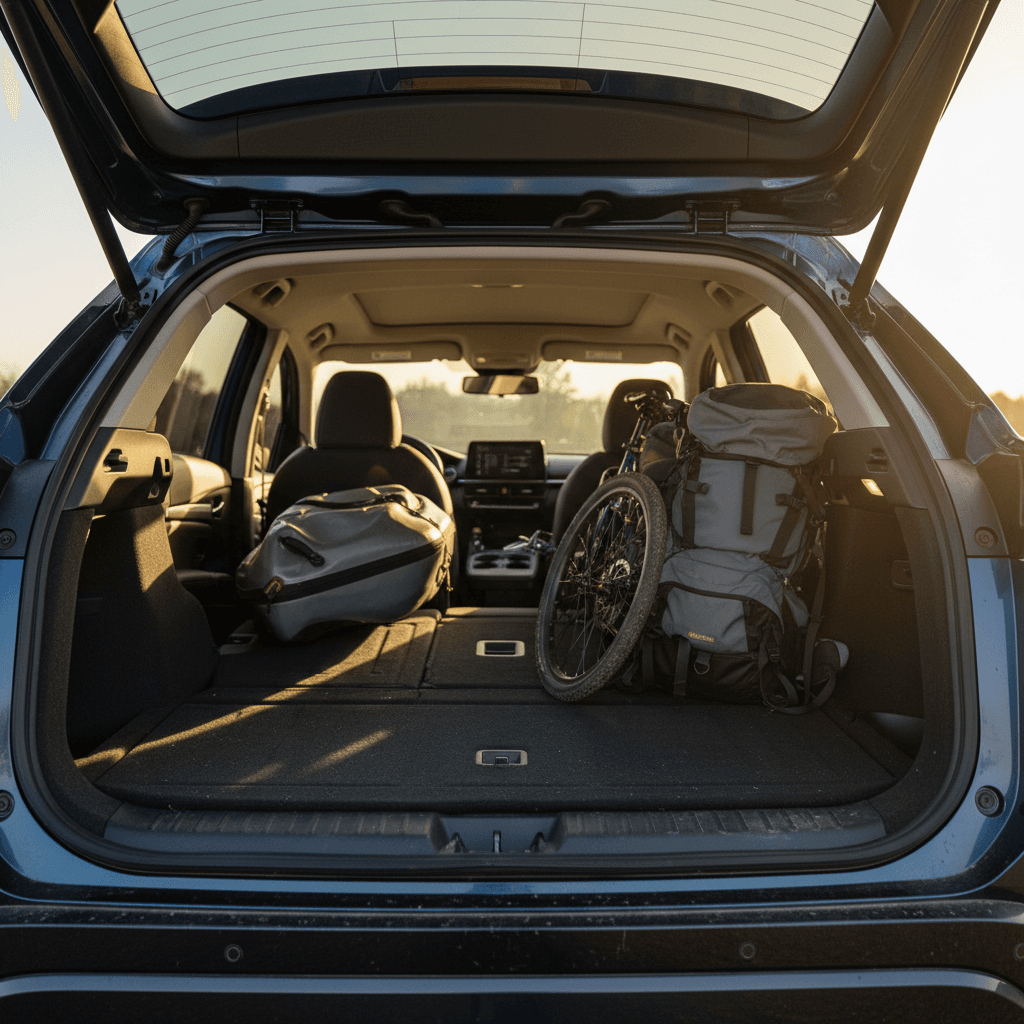
If you’re cross‑shopping electric SUVs, you’ve probably asked a very specific question: how much cargo space does the Nissan Ariya have with the seats down, and what can you realistically fit back there? On paper, the Ariya offers up to about 59.7 cubic feet of cargo volume with the rear seats folded, but the story gets more interesting once you look at the layout, dimensions, and real‑world use cases.
Quick answer
Nissan Ariya cargo space with seats down: key numbers
Nissan Ariya cargo space at a glance
Nissan’s own materials and early launch info put the Ariya’s cargo volume at about 22.8 cubic feet behind the rear seats and roughly 59.7 cubic feet with the second row folded. Some recent documentation re‑measures volume slightly differently (for example, with or without the cargo cover installed), but for shopping and packing purposes you can treat “about 60 cubic feet” as the maximum usable cargo space figure.
Mind the measurement methods
Official Nissan Ariya cargo specs with seats up and down
Here’s how the Nissan Ariya’s official cargo numbers break down for U.S.‑market models. These apply broadly to 2023–2025 model years; trims with all‑wheel drive, moonroofs, or premium audio can vary slightly in usable shape but not drastically in volume.
Nissan Ariya cargo volume by configuration
Approximate cargo volume figures for the Nissan Ariya with seats up and folded.
| Configuration | Cargo volume (cu ft) | What it means day‑to‑day |
|---|---|---|
| Behind second row | 22.8 | Groceries, a stroller, or several carry‑on suitcases with all seats in use. |
| Max with rear seats down | ≈59.7 | Full cargo mode for trips to IKEA, bikes, camping gear, or moving boxes. |
| Under‑floor storage | ~1–2 | Hidden space for charging cables and small items to keep the main floor flat. |
Use these numbers as a guide when comparing the Ariya to other electric crossovers.
FWD vs. e‑4ORCE cargo differences
How the Nissan Ariya’s cargo space is laid out
Cubic‑foot numbers only tell part of the story. The shape of the Nissan Ariya’s cargo area matters just as much, especially when you’re sliding in furniture, bikes, or dog crates. The Ariya is built on a dedicated EV platform, so its floor is relatively low and flat compared with some gasoline crossovers that had to package around exhaust and fuel tanks.
Load floor and seat fold
- 60/40 split‑folding rear seat lets you carry long items and still keep one or two rear passengers.
- When folded, the backs form a nearly flat extension of the cargo floor, especially with the floor panel in its upper position.
- The flat floor makes it easier to slide heavy objects in instead of lifting them high over a lip.
Width, height, and opening
- Wide hatch opening and tall roofline make it simple to load bulkier items like dog crates and boxed TVs.
- Wheel‑well intrusions slightly narrow the space in the middle, which you’ll notice with wider furniture or two bikes side by side.
- The liftover height (from ground to bumper lip) is friendly enough for groceries but you’ll still want two people for very heavy loads.
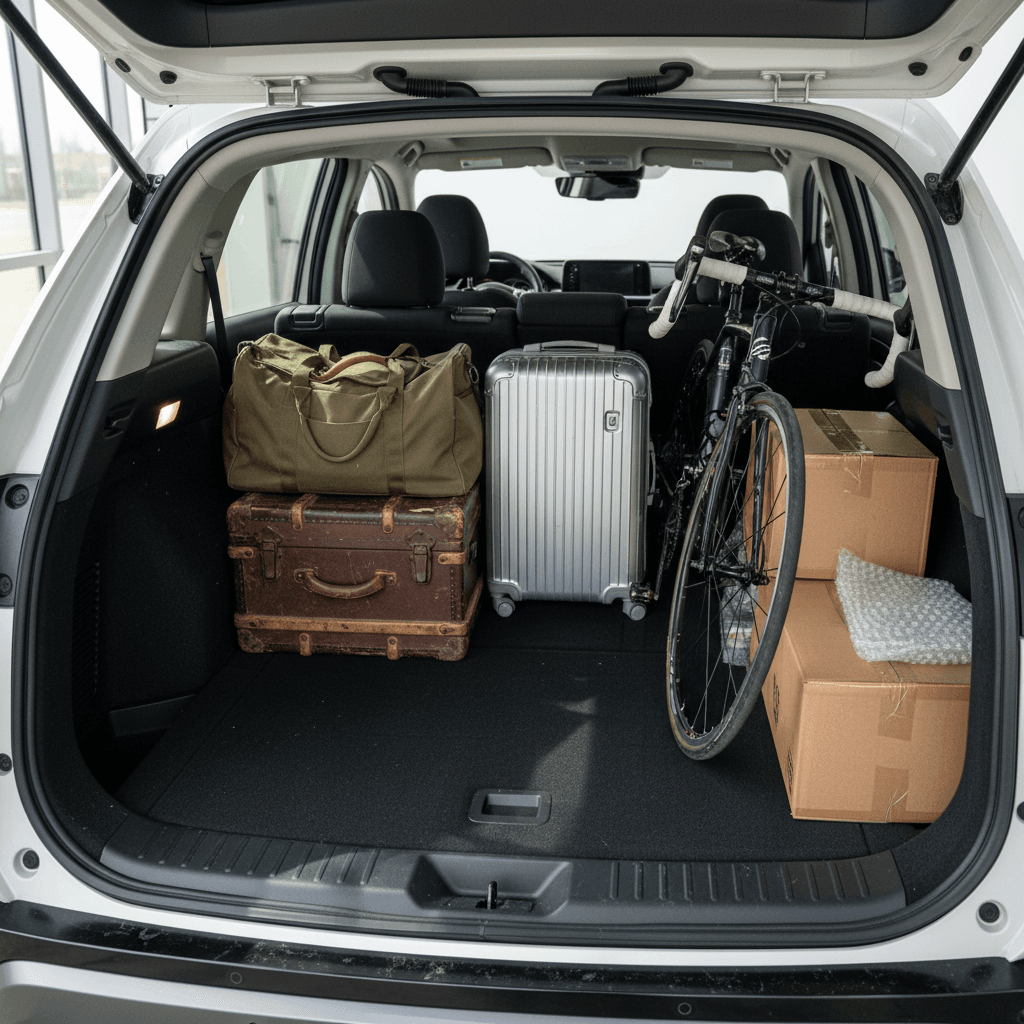
Use the adjustable floor to your advantage
Real‑world examples: What fits in an Ariya with seats folded?
It’s one thing to say “about 60 cubic feet.” It’s another to know whether that means you can handle a weekend ski trip, a run to Costco, or a DIY move without renting a van. Here’s how the Nissan Ariya’s cargo space with seats down translates into everyday hauling.
Everyday packing scenarios for an Ariya
Approximate, real‑world examples of what you can carry with the rear seats down.
Family road trip
- 2–3 large checked‑size suitcases
- 2–3 carry‑on suitcases or duffel bags
- Miscellaneous soft bags, toys, and a travel stroller
You’ll still have some rearward visibility if you keep the biggest bags low.
Big box store run
- Several medium moving boxes stacked two high
- One or two flat‑pack furniture boxes (bookshelf, TV stand, etc.)
- Bulk items like paper towels, dog food, and cases of water
For very tall wardrobes or extra‑long items, you may need to angle them diagonally.
Outdoor and sports gear
- 1–2 bicycles with front wheels removed
- Camping gear for 2–3 people (tents, bags, coolers)
- Skis/snowboards (using the full diagonal length)
If you carry muddy gear, consider an all‑weather cargo liner to protect the carpeting.
Quick fit‑check: common items in an Ariya
1. Strollers and baby gear
Most full‑size travel systems and jogging strollers fit easily with the seats folded, and many will still fit with one seatback up. Use the wider 60% side for bulkier gear.
2. Dog crates and pet gear
Medium and many large dog crates will slide in with the rear seats folded. Measure your crate height against the hatch opening and roof height; soft‑sided crates are the easiest fit.
3. TVs and flat‑pack furniture
Ariya’s load length makes it friendly for 55–65‑inch TVs (boxed) and long furniture cartons. Lay them flat and secure them so they don’t slide into the hatch glass.
4. Home improvement supplies
Lumber up to roughly 6–7 feet can fit diagonally with the front passenger seat moved forward. Use blankets and straps to protect the interior and keep boards from shifting.
Safety reminder when fully loaded
Nissan Ariya cargo space vs. other electric SUVs
The Ariya isn’t the absolute cargo champ among electric crossovers, but it lands in a useful middle ground. Behind the rear seats, it trails some boxier rivals, yet its maximum cargo space with the seats down is competitive with other midsize EVs.
Ariya cargo space compared with key EV rivals
Approximate maximum cargo volumes with rear seats folded for similarly sized electric crossovers.
| Model | Max cargo (seats folded) | How it compares to Ariya |
|---|---|---|
| Nissan Ariya | ≈59.7 cu ft | Baseline: competitive, but not class‑leading. |
| Hyundai Ioniq 5 | ≈59–60 cu ft | Very similar overall room; boxy shape helps with taller items. |
| Kia EV6 | ≈50–51 cu ft | Less overall cargo room than Ariya despite sporty styling. |
| Volkswagen ID.4 | ≈64–65 cu ft | A bit more maximum volume than Ariya, especially behind the second row. |
| Tesla Model Y | ≈76 cu ft | Significantly more overall cargo volume, especially in height and under‑floor bins. |
These numbers are rounded and can vary slightly by model year and trim, but they’re accurate enough for cross‑shopping.
Where the Ariya shines
Practical tips to maximize Ariya cargo space
You bought (or are considering) an EV crossover because you need flexibility. The Ariya delivers that, but a few simple habits can squeeze more usefulness out of its cargo area, especially on long trips or when you’re hauling awkward items.
- Use soft bags instead of hard suitcases when you’re close to max capacity; they’re easier to stuff around wheel wells and under the hatch glass.
- Fold only the side you need. The 60/40 seat split lets you carry skis or lumber on one side while keeping a rear passenger or child seat on the other.
- Take advantage of under‑floor storage for charging cables, emergency kits, and smaller items so the main floor stays flat for larger cargo.
- Remove the cargo cover when carrying tall items. It’s easy to unclip and frees up valuable vertical space above the window line.
- If you’re frequently moving bikes or very bulky gear, consider pairing the Ariya’s interior space with a hitch‑mounted rack or small cargo carrier.
Pack by zones, not by item
Shopping used? How to evaluate Ariya cargo space in person
If you’re looking at a used Nissan Ariya, especially online, it’s worth going beyond the spec sheet. Cargo needs are personal, and the same 59.7‑cu‑ft figure feels very different to a solo commuter than to a family of five with a big dog.
Cargo‑space checks for used Ariya shoppers
1. Bring your actual gear
Show up with a stroller, golf bag, bike, or a couple of suitcases you travel with often. Fold the seats and test how they fit, lengthwise, height‑wise, and with the hatch closed.
2. Test both seat split sections
Fold the 40% and 60% sections independently. Make sure your everyday long items (skis, boards, lumber) fit while you still have the seating you need for kids or car seats.
3. Check for adjustable floor panels
Not every used Ariya will still have its load‑floor panels or cargo cover. Confirm they’re present, intact, and functional; they’re surprisingly valuable for daily usability.
4. Inspect the cargo area for wear
Look for torn carpet, crushed seatbacks, or broken tie‑downs, signs the previous owner overloaded the vehicle. That doesn’t have to be a dealbreaker, but it can be a negotiation point.
5. Try visibility with a full load
Pack the cargo high (safely) and sit in the driver’s seat. Make sure you’re comfortable with rear visibility, or plan on relying more heavily on the Ariya’s camera systems.
Respect weight limits, not just volume
How Recharged helps you pick the right Ariya for your needs
Cargo volume is only one piece of the puzzle when you’re choosing a used EV. At Recharged, every used Nissan Ariya comes with a Recharged Score Report that covers battery health, pricing, and condition, so you can focus on whether the vehicle’s space and seating layout fit your life.
See the vehicle, not just the number
Recharged listings highlight interior and cargo photos so you can visually assess how the Ariya’s space will work for your family, gear, or commute. You can compare multiple used Ariya examples, and even cross‑shop with roomier EVs, without leaving your couch.
Because all sales are fully digital, you can take your time comparing cargo layouts before you click “buy.”
From trade‑in to delivery
- Trade‑in or sell your current vehicle with an instant offer or consignment option.
- Finance online with transparent terms and no showroom haggling.
- Get nationwide delivery or visit the Recharged Experience Center in Richmond, VA if you’d rather see vehicles in person.
If cargo flexibility is a top priority, our EV specialists can help you compare the Ariya’s space to models like the Model Y, Ioniq 5, or ID.4 before you commit.
Frequently asked questions about Nissan Ariya cargo space
Nissan Ariya cargo space FAQ
Bottom line: Is the Nissan Ariya big enough for you?
If you need a calm, upscale electric crossover that still pulls its weight on errand duty and road trips, the Nissan Ariya’s cargo space with the seats down is more capable than its behind‑the‑seats figure suggests. Around 60 cubic feet of maximum volume, a long and mostly flat load floor, and smart under‑floor storage make it easy to live with, so long as you’re not expecting minivan‑level space.
The smart move is to treat the spec sheet as a starting point and then test it against your own life: your luggage, your dog crate, your weekend projects. Whether you’re browsing used Ariya listings on Recharged or comparing it to other EVs at a local lot, taking a few minutes to actually pack the cargo area will tell you more than any brochure number ever will.