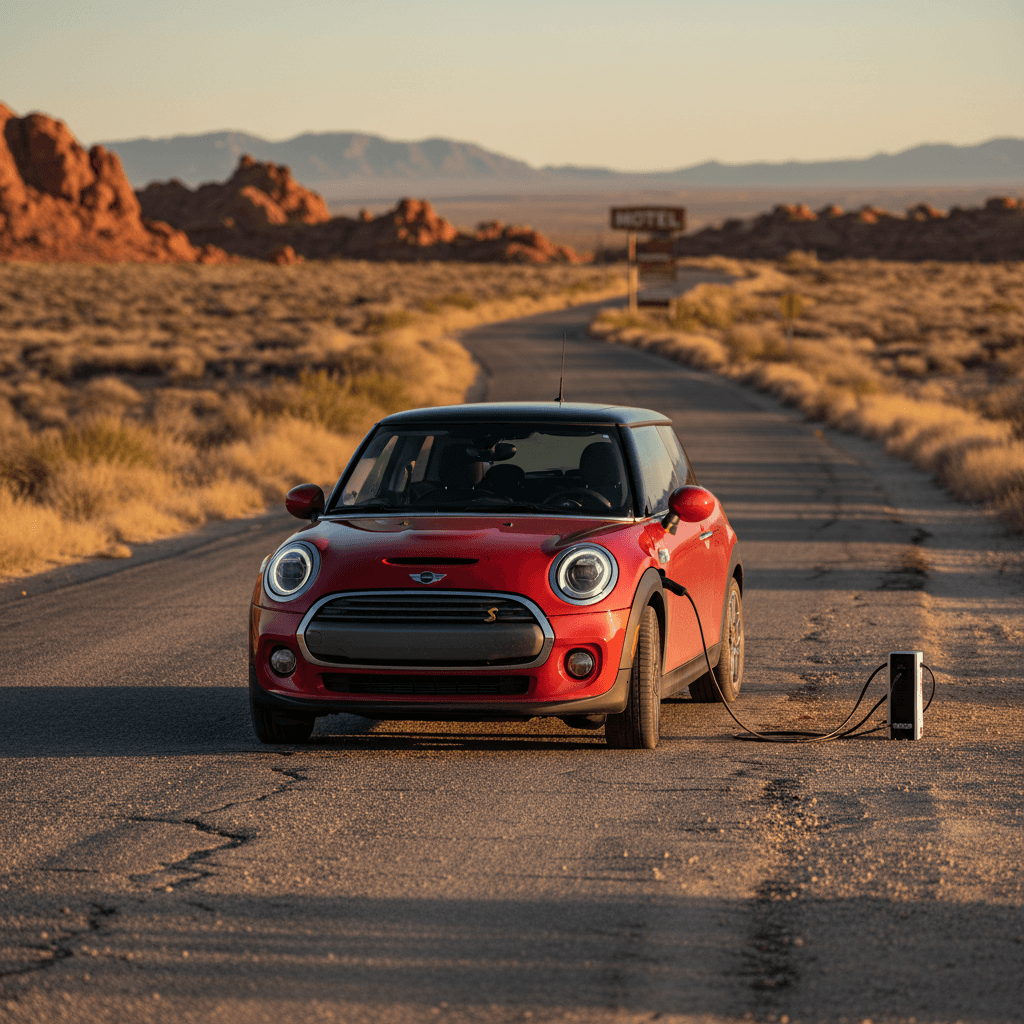
If you’re eyeing a Mini Cooper SE, you probably already know its big limitation: range. On paper, this short‑range city EV doesn’t scream "road‑trip hero." But plenty of owners still take their Minis beyond the city limits. This Mini Cooper SE road trip review walks through what it’s really like to travel in one, how far you can go between fast chargers, how long you’ll wait, what kind of trips make sense, and when you should borrow the other car instead.
Two different "Mini Cooper SE" generations
Mini Cooper SE road trip at a glance
Mini Cooper SE road‑trip reality in numbers
Who this car is *not* for on the road
Know your Mini Cooper SE: battery, range, and what that means on the highway
Before you point a Mini SE at the horizon, you need to understand its hardware. The 2020–2024 U.S. Mini Cooper SE uses a **32.6 kWh gross battery** with around **28–29 kWh usable** capacity. That underpins an **EPA rating of roughly 110–114 miles** per charge, depending on model year and wheel/tire combo. In normal mixed driving, many owners see 3.5–4.0 mi/kWh, which lines up with those numbers.
- In mild weather around town, 85–110 miles per charge is realistic if you’re not hammering it.
- On the highway at 70–75 mph, expect closer to **2.7–3.2 mi/kWh**, which means 75–90 miles if you use most of the pack.
- In winter or heavy rain at highway speeds, you may see **60–75 usable miles** before you really want to recharge.
That’s the core truth of any Mini Cooper SE road trip review: you’re not working with a big battery. The car is happiest as a short‑range sprinter, not a long‑legged endurance runner. The trick is to stop pretending it’s a 250‑mile EV and instead treat it like a zippy electric hot hatch with carefully spaced pit stops.
Know your buffer
Planning a Mini Cooper SE road trip that actually works
You can absolutely road‑trip a Mini Cooper SE, but only if you choose the *right* kind of trip and plan more carefully than you would in a long‑range EV. Think **regional adventures** instead of cross‑country odysseys.
What the Mini SE is good at on the road
Play to its strengths and you’ll have more fun than frustration
Weekend getaways (100–200 miles each way)
Beach towns, mountain cabins, or a city a couple of hours away can work well.
- 1–2 fast‑charge stops each way
- Destination charging overnight
Day trips with a clear charging anchor
Visiting friends, an outlet mall, or amusement park with Level 2 on site?
- Arrive low, charge while you play
- Head home with a full battery
Scenic two‑lane drives
The Mini is made for twisty roads.
- Lower speeds boost efficiency
- Plan a lunch stop at a DC fast charger
Trips that usually don’t make sense
Mini Cooper SE road trip planning checklist
1. Map DC fast chargers first, not destinations
Open PlugShare, Chargeway, or your preferred app and plot **50 kW DC fast chargers** roughly 50–70 miles apart along your intended route. If you see big gaps, rethink the plan.
2. Verify chargers and back‑ups
Tap through to see recent check‑ins and photos. Make sure each key stop has **multiple stations or a nearby backup** in case one is down or occupied.
3. Reserve Level 2 at your destination if possible
If you’re staying at a hotel, rental, or friend’s house, confirm you can plug in. Even a 32–40 amp Level 2 overnight makes the next leg easy.
4. Plan around meals and breaks, not the car
Align your longer DC fast‑charge sessions with **meals, coffee, or a walk** so the time doesn’t feel like “waiting on the car.”
5. Account for weather and speed
Add **extra margin** if you’ll be running 75–80 mph, climbing hills, or driving in cold or wet weather. A headwind or 35°F temps can easily shave 20–30% off your range.
6. Have a "bail‑out" option
On new routes, identify a spot where you can turn back, switch to a parallel highway with more chargers, or shorten the loop if things aren’t going smoothly.
On the road: real‑world highway range and energy use
On a typical U.S. interstate run at 70–75 mph in mild weather, many Mini SE drivers report **2.7–3.2 mi/kWh**. With roughly 28–29 kWh usable, that gives you somewhere in the neighborhood of **75–90 miles** if you’re willing to arrive at the charger with a low state of charge. For road‑trip sanity, most people don’t push that far.
How speed hurts range
- At 65 mph, you might hang around **3.2–3.5 mi/kWh**, especially on flat ground.
- At 75–80 mph, that can fall into the **2.4–2.8 mi/kWh** range.
- Above 70 mph, aerodynamic drag climbs quickly; the little Mini is no exception.
On a short‑range pack, those differences translate into **10–20 fewer miles** between fast‑charge stops.
How weather changes the math
- Cold (below ~40°F): The heater and denser air can knock you down into the **2.0–2.5 mi/kWh** neighborhood at highway speeds.
- Heat (above ~90°F): A/C is less painful but still a hit. Figure a mild reduction unless you’re also driving fast.
- Rain or headwinds: Add another 10–15% penalty, especially with standing water on the road.
A realistic target for most drivers
Charging stops: how long you’ll wait and how often you’ll stop
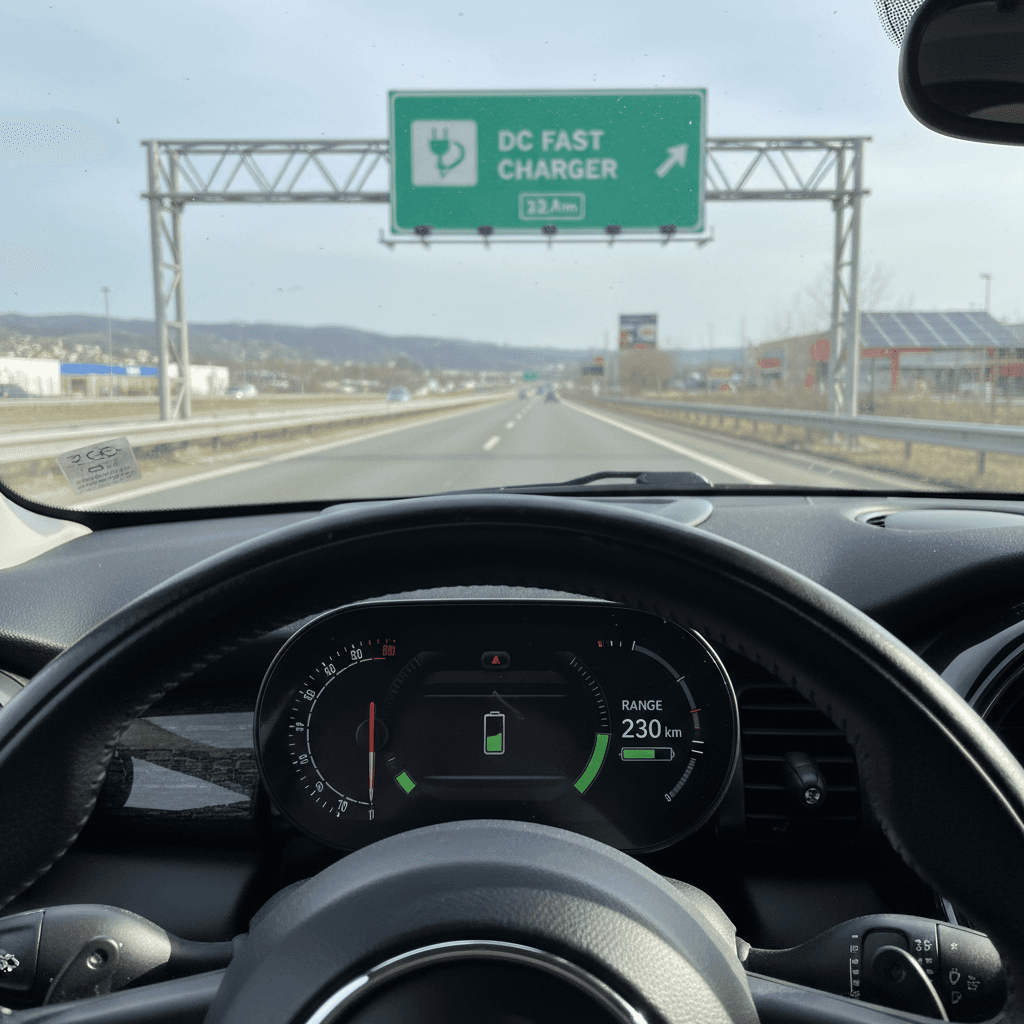
The Mini Cooper SE can DC fast charge at up to **50 kW** on the outgoing generation. That’s not cutting‑edge today, but the battery is small, so in theory you don’t need 150 kW speeds to get back on the road. In practice, what matters is how long it takes to get from a low state of charge back up to your next comfortable buffer.
Typical Mini Cooper SE charging times on a road trip
Assumes a 50 kW DC fast charger delivering close to rated power. Real‑world times vary by station, temperature, and battery state of charge.
| From / to | Approx. time | Energy added | Rough highway miles gained |
|---|---|---|---|
| 10% → 60% | ~25–30 minutes | ~14–15 kWh | ~40–45 miles |
| 10% → 80% | ~40–45 minutes | ~20–21 kWh | ~55–70 miles |
| 20% → 80% | ~30–35 minutes | ~16–17 kWh | ~45–55 miles |
| 80% → 100% | Often 20+ extra minutes | ~6–7 kWh | Only ~15–20 additional miles |
Use these numbers as planning ballparks, not promises from the car or network.
Don’t chase 100% unless you truly need it
On a 250–300 mile day, that pattern often looks like **two or three 25–40 minute DC fast‑charge stops**, each aligned with a bathroom break, snack, or meal. It’s perfectly livable if you plan around it, but it does add **an extra hour or two** compared with the same drive in a long‑range EV or gas car.
Comfort, storage, and driving experience on longer drives
Here’s where the Mini Cooper SE redeems itself. Once you accept the range limitations, it’s a **genuinely delightful car to spend time in**, for the right number of people and the right amount of luggage.
How the Mini SE feels on a road trip
Small car, big personality, plus a few compromises
Front‑seat comfort
The front buckets are supportive enough for **2–3 hour stints**, especially in higher trims with better upholstery.
Taller drivers fit fine, but this is still a small hatch, try before you buy if you’re over 6'2".
Cargo and passengers
Think of it as a **two‑person road‑trip car with bonus rear seats** for kids or short hops.
- Trunk fits a couple of carry‑ons and soft bags
- Folding the rear seats expands space for longer gear
Driving fun vs fatigue
The Mini’s quick steering and low center of gravity make it **playful on back roads** and stable on the highway.
It’s not a quiet luxury cocoon, but for a compact hatch it’s engaging rather than tiring.
Where the Mini SE shines on the road
Sample itineraries: what trips work, and which don’t
Let’s ground this Mini Cooper SE road trip review in a few concrete scenarios. These aren’t precise nav routes, but they illustrate the kinds of trips that pair well, or poorly, with the car’s capabilities.
Trip 1: 140‑mile weekend, city to nearby lake town
Example: 70 miles each way, mostly highway, with DC fast chargers near both ends and Level 2 at your hotel.
- Depart at ~90–100% after overnight home charging.
- Arrive with 20–30% at the lakeside charger, top up to 80% while you grab lunch or check in.
- Use Level 2 overnight and leave again at or near 100%.
Verdict: Perfect Mini SE territory. One quick DC top‑up each way, no range stress, and plenty of time to enjoy the car.
Trip 2: 230‑mile family visit, limited DC fast charging
Example: 230 miles one‑way, chargers clustered near big cities but a 90‑mile gap in the middle.
- First leg: 70 miles to a DC fast charger; charge 15–80% (~35–40 minutes).
- Second leg: another 70 miles; repeat the process.
- Final leg: 90‑mile stretch raises nerves, especially if it’s cold or hilly.
Verdict: Borderline. Doable in perfect conditions with careful planning, but any hiccup, bad weather, a down charger, or traffic, can turn the day into an anxiety exercise.
Trip 3: 320‑mile vacation, charger‑rich corridor
Example: Major interstate with 50 kW DC fast chargers every 40–60 miles.
- Plan three DC stops at roughly 60–70 mile intervals.
- Charge 15–70% each time, 25–35 minutes per stop.
- Total extra time vs gas: ~90–120 minutes over the full day.
Verdict: Feasible, but you MUST be charger‑flexible. Great if you like stopping frequently and don’t mind padding your schedule.
Trip 4: 500‑mile single‑day push
Example: Crossing multiple states in one day, even on a well‑served highway.
- You’re looking at perhaps five or more DC stops.
- Even well‑optimized, you could easily add **3+ hours** of charging time.
- Any delay or derated charger stretches things further.
Verdict: Wrong tool for the job. Borrow or rent a long‑range EV or gas car and let the Mini SE stay in its urban and regional sweet spot.
Used Mini Cooper SE buyer tips for occasional road‑trippers
If you’re considering a **used Mini Cooper SE** and want to keep occasional road trips on the menu, you’ll want to look a little deeper than price and color. Battery health, wheel choice, and your own travel habits matter more with a short‑range EV than with a 250‑mile car.
Key checks if road trips are part of your Mini SE plan
1. Verify real battery health
Ask for a battery health report, such as a <strong>Recharged Score</strong> if you’re buying through Recharged. A Mini SE that’s lost noticeable capacity will shrink your already modest highway legs.
2. Look at wheel and tire setup
Bigger, stickier wheels may look great but can cost you efficiency. If you’re planning regular highway trips, consider trims with more efficiency‑oriented wheels and tires.
3. Test a full charge and real drive
On a test drive, fully charge the car, reset the trip computer, and drive a **mixed route**. Compare the predicted range with what you actually get over 20–30 miles.
4. Match the car to your actual travel patterns
Pull up your calendar or location history. How often do you truly drive more than **150 miles in a day**? If that’s rare, the Mini SE can still be the right call with a second car as backup.
5. Consider charging access at home
A Mini SE is so easy to live with if you have **overnight Level 2**. If you’ll rely on public charging every day, the added friction plus short range can wear thin quickly.
6. Use expert guidance
If you’re unsure whether the Mini SE fits your lifestyle, talk with an EV specialist. At Recharged, our team can walk through your commute, travel habits, and budget to see if a Mini SE, or maybe a longer‑range EV, makes more sense.
How Recharged can help
FAQ: Mini Cooper SE road trip questions
Frequently asked Mini Cooper SE road trip questions
Bottom line: should you road‑trip a Mini Cooper SE?
The honest Mini Cooper SE road trip verdict is this: **it’s a fantastic car that happens to be a mediocre long‑distance tool.** If your life is mostly city and suburb miles with the occasional 100–200 mile adventure, and you’re willing to plan charging stops around meals and sightseeing, the Mini SE can turn those trips into something fun and memorable.
If, on the other hand, your idea of travel is back‑to‑back 300–500 mile days, the Mini’s small battery and modest fast‑charging will feel like a straightjacket. In that case, you’re better off with a longer‑range EV or keeping a gas car for the big hauls.
Looking at a used Mini Cooper SE and wondering whether it fits your real life, not just your Instagram feed? That’s exactly the kind of trade‑off a Recharged Score battery report and EV‑savvy guidance are designed to illuminate. With clear range expectations and a little planning, the Mini Cooper SE can be a brilliant, character‑packed EV that still sneaks in the occasional road trip, on its own terms.