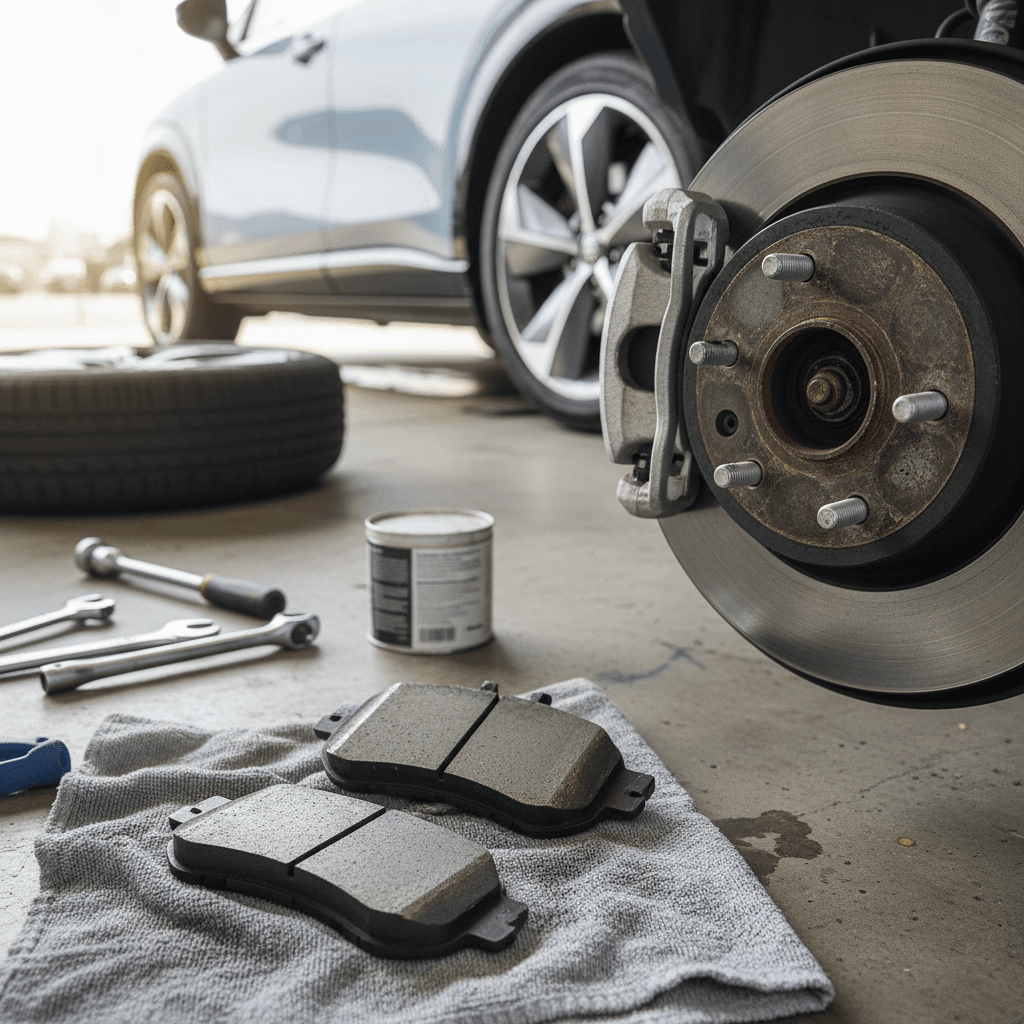
You bought an electric crossover to escape oil changes, timing belts, and the usual dealership shakedowns. But your Nissan Ariya still has old‑fashioned brake pads, and eventually they’ll need attention. When that day comes, what does Nissan Ariya brake pad replacement cost actually look like, and how often will you be paying it?
Quick cost snapshot
Nissan Ariya brake pad replacement cost overview
Typical U.S. Ariya brake service ranges
Unlike a GT‑R or Z, the Ariya isn’t a track toy shredding pads for fun. It’s a heavy, quiet family EV that leans hard on regenerative braking, which does most of the slowing before the friction brakes even wake up. That’s why many EVs go 60,000 to 90,000+ miles before the first pad job, and why the bill, when it finally arrives, tends to be less frequent but not necessarily cheaper per visit.
Real‑world estimates specific to the Ariya put an average brake pad replacement around the low‑$200s per axle for simple pad swaps with no surprises, with dealer quotes often higher thanks to OEM parts and labor rates. Once rotors enter the chat, the number climbs into the mid‑hundreds per axle, similar to a comparable Nissan Rogue or Murano.
How much are Nissan Ariya brake pads per axle?
Typical Nissan Ariya brake pad replacement costs (U.S.)
Approximate price ranges per axle based on mainstream U.S. shop rates. Actual quotes vary by region and parts choice.
| Service type | Where | What’s included | Typical cost (per axle) |
|---|---|---|---|
| Front or rear pads only | Independent shop | Pads, hardware, labor | $200–$300 |
| Front or rear pads only | Nissan dealer | OEM pads, labor, inspection | $250–$350+ |
| Pads + rotors | Independent shop | Pads, rotors, hardware, labor | $350–$500 |
| Pads + rotors | Nissan dealer | OEM pads & rotors, labor | $450–$600+ |
| Brake fluid flush (all wheels) | Either | Fluid, bleed system | $100–$180 |
Use these as ballparks, not promises, always get a written estimate before authorizing work.
Watch the full quote, not just the pads
Ariya parts pricing is more about being a modern crossover than an exotic EV. The pads themselves aren’t unobtainium, aftermarket vendors already list front and rear Ariya pad sets alongside pads for Nissan’s gas SUVs. What pushes the total bill up is labor time and whether the shop insists on new rotors instead of resurfacing or reusing within spec.
Dealer brake service
- Pros: Genuine Nissan parts, technicians trained on Ariya, software updates and recalls can be handled in the same visit.
- Cons: Usually the highest labor rate in town, less flexibility on using aftermarket pads or rotors.
- Who it suits: Newer Ariya owners still under warranty or those who prefer one-stop, OEM-only service.
Independent or mobile shop
- Pros: Often $50–$150 less per axle, wider choice of pad compounds, more willing to reuse rotors if safely within spec.
- Cons: Not every shop is fluent in EV jack points or high-voltage safety; you have to choose carefully.
- Who it suits: Out-of-warranty owners or used Ariya buyers looking to keep costs sane.
Factors that change your Ariya brake pad bill
What makes one Ariya brake job $220 and another $600?
Same car, wildly different invoices. These are the levers.
Driving style & terrain
Regenerative braking does its best work if you lift early and coast. If you’re hard on the pedal, live in steep hills, or tow, the friction brakes step in more often and wear faster.
Climate & corrosion
In salty, humid climates, rotors can rust before pads wear out. That turns what should be a simple pad job into a pads + rotors bill.
Parts quality
Ceramic pads cost more than basic semi‑metallics, but they’re quieter and make less dust, nice in a silent EV where every squeak is obvious.
Shop type & labor rate
Nissan dealers typically sit at the top of the price spectrum. An honest independent or mobile tech can often do the same work for 15–30% less.
Inspection findings
Sticky caliper slides, torn boots, or uneven pad wear add labor. EVs are heavy; when something binds, components can heat up and degrade quickly.
Add‑on services
A brake job quote may quietly include a brake fluid flush, alignment, or tire rotation. Some are smart to bundle, others are pure upsell. Ask what’s truly required today.
Ask this before you say yes
How long do Nissan Ariya brake pads last?
In a typical gasoline crossover, front pads are a 25,000–40,000‑mile consumable. In an EV like the Ariya, regenerative braking radically rewrites that math. Powertrain drag slows the car and sends energy back to the battery, so the friction brakes mostly sit on the bench until you really need them.
- For mainstream EVs, pads commonly last 60,000–90,000 miles or more with gentle driving.
- Some owners report well over 100,000 miles on original pads, especially in mild, non‑rusty climates.
- Rural, hilly, or aggressive driving can still chew through pads in far less mileage, particularly on the front axle.
- Even if pads look nearly new, brake fluid ages with time, which is why Nissan calls for time‑based fluid changes in the Ariya maintenance schedule.
Why EV brakes fail “from the outside in”
If you drive a typical American mix, roughly 12,000–15,000 miles per year, it’s reasonable to expect your first Ariya brake pad replacement somewhere in the 5–8 year window, assuming normal conditions and no early corrosion surprises. High‑mileage commuters or mountain‑road warriors may get there sooner.
Signs your Ariya needs brake pads sooner, not later
Don’t ignore these Ariya brake warning signs
1. Squealing or grinding when you brake
A light squeal can be a pad wear indicator telling you it’s time to inspect. A metallic grinding noise usually means the pads are gone and the backing plate is eating the rotor, expect a pads + rotors bill then.
2. Longer stopping distances
If your Ariya suddenly needs more real estate to stop, or the pedal feels weak and spongy, get it inspected immediately. Pads, rotors, or fluid could be the culprit.
3. Pulsation or vibration in the pedal
A steering‑wheel shake or pulsing pedal under braking often points to <strong>warped or rust‑pitted rotors</strong>. At that point, a pad‑only service is rarely enough.
4. Car pulling to one side
If the Ariya dives left or right when you brake, one side can be doing more work than the other due to uneven pad wear or a sticking caliper. That accelerates wear and hurts safety.
5. Dash warnings or ABS/ESC lights
Modern EVs are chatty. If the brake warning light or multiple stability/ABS warnings join the party, don’t procrastinate, have a shop pull codes and inspect the hardware.
6. Burning smell after light driving
If you smell hot brakes after an easy trip, a pad may be dragging. In an EV that barely uses its friction brakes in normal driving, that’s a red‑flag worth checking immediately.
Safety first, savings second
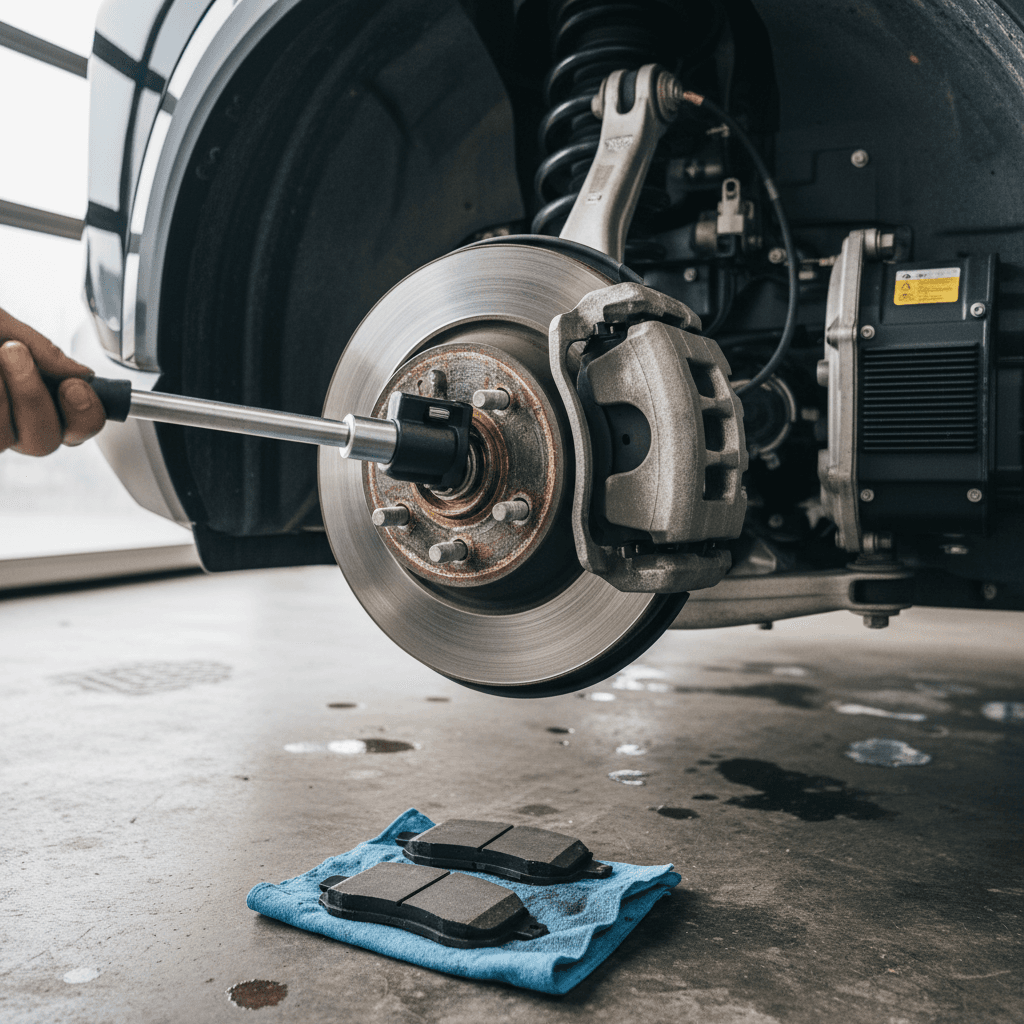
Saving money on Nissan Ariya brake pad replacement
By the time your Ariya needs pads, the car may be out of its free maintenance window or even out of basic warranty, especially if you bought it used. That’s when the difference between a thoughtful plan and a panicked visit to the closest dealer can be hundreds of dollars.
Smart ways to keep Ariya brake costs in check
You don’t control the weight of the car or the price of copper, but you do control where and how you service it.
Get multiple quotes
Call at least two independent shops and one Nissan dealer. Ask for a written estimate that breaks out pads, rotors, hardware, and fluid. The pattern will reveal itself quickly.
Choose the right pads
For everyday Ariya duty, quiet ceramic pads are usually worth the small price bump over rock‑bottom semi‑metallics. Less dust, less noise, longer life.
Prioritize safety items
If the budget is tight, do pads and any dangerously thin rotors now. Cosmetic rotor rust or mild glazing can sometimes wait, but down‑to‑metal pads can’t.
Avoid lazy upsells
If a shop pitches a full caliper replacement without measurements or proof, push back. Often, a cleaning and new hardware fix the issue for far less money.
Time fluid with pads
When your Ariya is due both for pads and a brake fluid flush, doing them in the same visit saves labor and one more trip to the shop.
Use coupons & loyalty
Dealers and chains often run seasonal brake specials. Just be sure the loss‑leader price still uses quality parts and doesn’t bundle work you don’t need.
How Recharged can help
Ready to find your next EV?
Browse VehiclesBrake pads on a used Nissan Ariya: what to watch for
A lot of Ariyas entering the used market in 2025–2026 will be ex‑leases and early adopters trading into the next shiny thing. Many of those cars will still be on their original pads, and that can be good news or bad, depending on where and how they were driven.
- Ask for pad measurements by millimeter, not vague words like "good" or "fine".
- Inspect the inner pads as well as the outer ones; inner pads often wear faster if slides stick.
- Look closely at the rotor surface through the wheel spokes. Deep grooves, heavy rust flaking at the edges, or obvious scoring suggest a pads + rotors job is coming.
- If the test drive includes any pulsation, squeal, or pulling, negotiate the price with that future brake work in mind.
- Review the maintenance history. An Ariya that has had regular brake inspections and fluid changes is far less likely to surprise you later.
Fold future brakes into the deal
FAQ: Nissan Ariya brake pad replacement cost
Common questions about Ariya brake pad costs
Bottom line on Ariya brake pad costs
The Nissan Ariya’s brakes live a much easier life than the hardware on a comparable gas SUV, which means you’ll probably buy pads less often over the life of the car. When you do, expect something like $200–$350 per axle for pads and $350–$600 per axle for pads plus rotors, depending on where you go and what they find.
The smart move is to treat brakes as part of your total EV ownership strategy, not an emergency expense: keep up with inspections, say yes to fluid changes on schedule, and choose shops that understand both EVs and modern brake systems. If you’re still shopping for your Ariya, or looking to trade into one, Recharged can help you see exactly where the pads, rotors, and battery stand before you ever click “buy.” That’s the difference between guessing at future bills and making a clear‑eyed decision about the EV in your driveway.