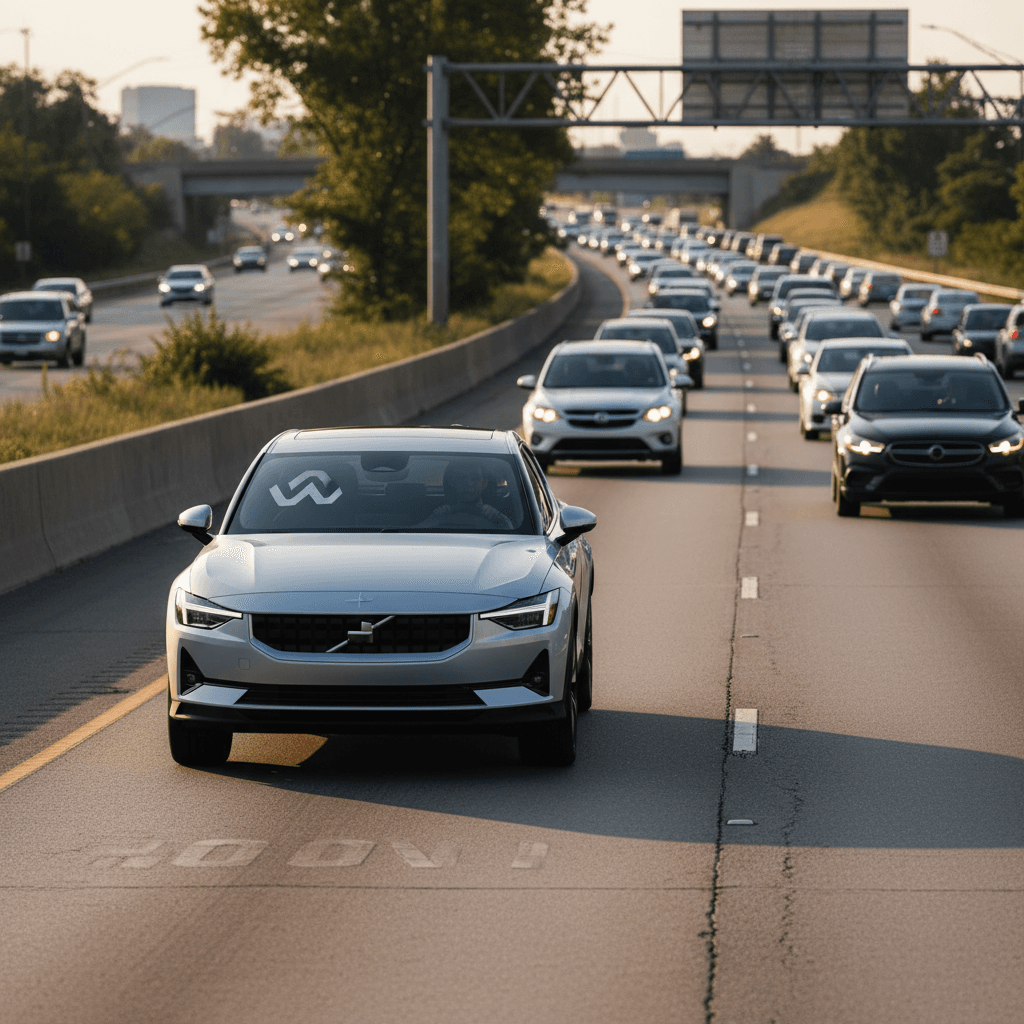
If you drive an electric vehicle in the Garden State, you’ve probably wondered how New Jersey EV HOV lane rules work, and whether your EV earns you a free pass into the carpool lane the way it does in California or New York. The short answer: in New Jersey, the diamond lane still cares more about people than propulsion.
Quick takeaway
Overview: New Jersey EV HOV lane rules in 2025
New Jersey has taken EV adoption seriously, with rebates, sales tax exemptions on zero‑emission vehicles in many cases, and growing public charging. But when it comes to HOV (high-occupancy vehicle) lane access, the state takes a different approach than some EV‑heavy neighbors: it does not currently offer a blanket “green pass” that lets a single driver in an EV use HOV lanes.
- HOV eligibility in New Jersey is based on occupancy and sometimes vehicle type (e.g., buses), not on whether the vehicle is electric.
- There is no statewide decal, plate, or sticker program that gives solo EV drivers automatic carpool lane access.
- Existing HOV lanes are limited to specific highway segments and hours, and rules can differ by facility.
Don’t copy California rules
Where HOV lanes actually exist in New Jersey
Before you worry about EV‑specific access, it helps to understand where HOV or carpool lanes actually operate in New Jersey. The state doesn’t have a wall‑to‑wall HOV network like some western states; instead, HOV lanes are concentrated on a few busy commuter routes.
Key New Jersey HOV and carpool lane corridors
This table summarizes major New Jersey corridors where you’ll encounter carpool-style restrictions. Always defer to real-world signage, which can change over time.
| Roadway / Facility | Typical Direction | Type of Lane | What to Watch For |
|---|---|---|---|
| I-495 approach to Lincoln Tunnel | Eastbound AM / Westbound PM (historically) | HOV/carpool lane | Signs near approach to the tunnel indicating occupancy and hours; rules can be adjusted for construction. |
| New Jersey Turnpike (select segments) | Varies by section | Dual-dual setup (cars-only vs cars+trucks) | This is a roadway separation, not a classic HOV lane, EVs follow the same rules as any passenger car. |
| Garden State Parkway (select areas) | Peak commuting directions | Bus / shoulder or carpool-style lanes | Look for diamond symbols and "buses only" or occupancy signs, these are not EV‑only lanes. |
| Port Authority facilities (bridges/tunnels) | NYC commuter directions | Carpool programs, HOV approaches | Rules may be governed by Port Authority of NY & NJ, not the State of New Jersey alone. |
Actual hours, rules, and even existence of individual lanes can change with construction or policy updates. Use this as a directional overview, not a live rulebook.
Who sets the rules?
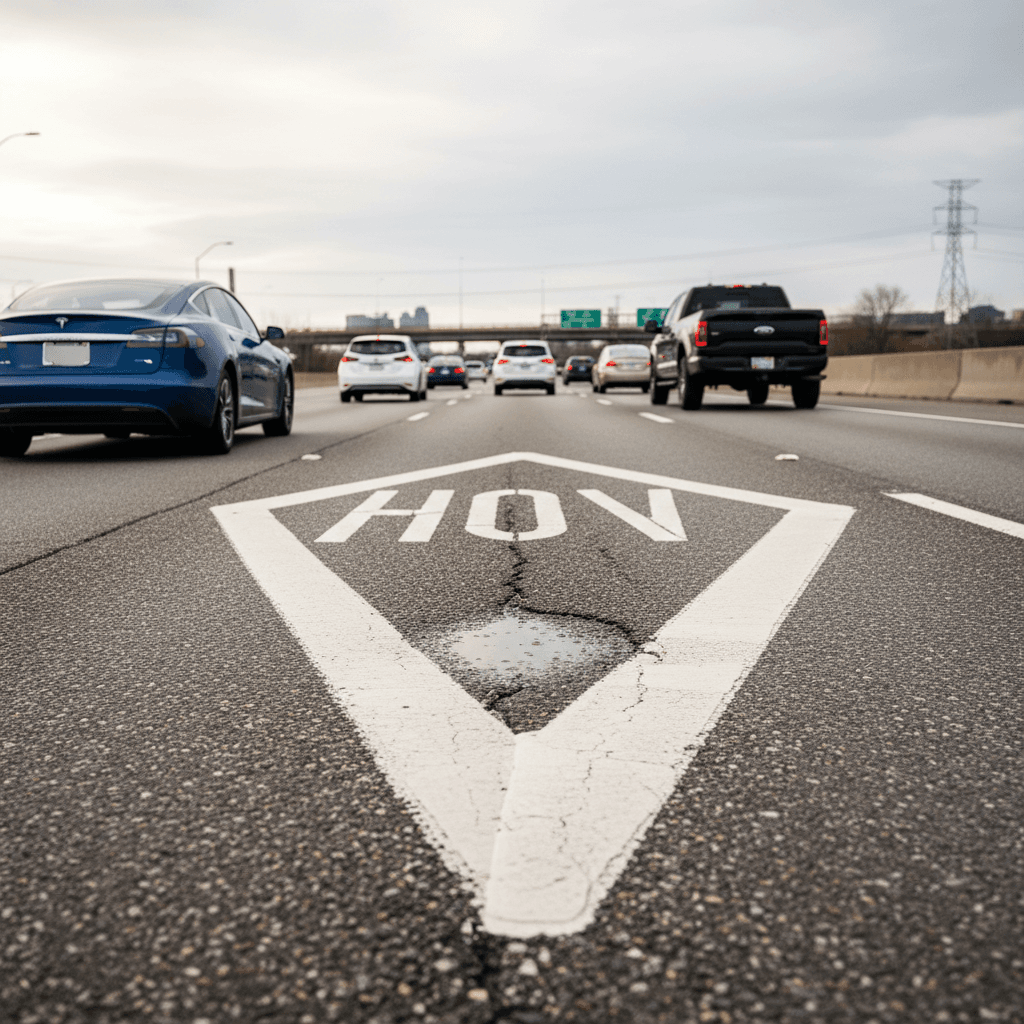
Does driving an EV qualify you for New Jersey HOV lanes?
This is the heart of the matter. As of early 2025, New Jersey does not grant single-occupant EVs special access to HOV lanes. Whether you’re in a Tesla Model 3, a Chevy Bolt, or a plug‑in hybrid, the police officer checking the lane cares about how many people are in the car, not whether you plug in at night.
How New Jersey treats EVs vs gasoline cars in HOV lanes
Same basic rules, different ownership experience
Eligibility
EVs and gas vehicles are treated the same for HOV eligibility. To use the lane legally:
- You must meet the posted minimum occupancy (often 2+ or 3+).
- You must follow time-of-day restrictions.
Where EVs are different
Your EV can save you money and emissions, but it doesn’t override HOV rules. New Jersey supports EVs with incentives and infrastructure, not with single‑occupant carpool access, at least not yet.
No green stickers, no special plates
Occupancy, signage, and enforcement basics
If you’re commuting daily on the Turnpike, Parkway, or I‑280 in a used EV you just picked up, the rules you live with are surprisingly traditional. Here’s how to think about HOV use so you stay on the right side of enforcement.
Checklist: Can I use this HOV lane right now?
1. Read the overhead and roadside signs
Before you merge, look for signs that list <strong>minimum occupancy</strong> (such as 2+ or 3+), vehicle type (buses only, for example), and effective hours. If the sign doesn’t mention EVs, assume there is <strong>no special EV exception</strong>.
2. Count heads, not cylinders
HOV enforcement in New Jersey is based on how many people are physically in the vehicle. Kids count, but pets don’t. One person in a Tesla = still a solo driver for HOV purposes.
3. Watch for time-of-day limits
Some HOV restrictions only apply during peak commute hours. Outside those times, the lane may open up to all passenger vehicles. Again, follow the posted times, not an app or old memory.
4. Know who controls the road
On bridges and tunnels into New York City, rules may shift based on Port Authority or New York State policies. The sign at the plaza, not your license plate, decides whether you’re good to go.
5. Err on the side of caution
If you’re unsure whether your EV qualifies as an HOV or whether the rules are active, <strong>stay in the general-purpose lanes</strong>. The few minutes you might save usually aren’t worth a ticket or points on your license.
A better way to save time
How New Jersey compares to EV-friendly HOV states
If you’ve driven in California, New York, or Virginia, you may have seen special plates or decals that grant low‑emission vehicles HOV access even with a solo driver. It’s natural to wonder why New Jersey doesn’t do the same thing when it’s otherwise pushing hard on electrification.
EV HOV access: New Jersey vs other states
A simplified snapshot of how New Jersey’s EV HOV rules stack up against a few familiar examples.
| State | Solo EV HOV access?* | How it typically works | What it means for NJ drivers |
|---|---|---|---|
| New Jersey | No dedicated statewide program | Standard HOV rules based on occupancy and facility-specific programs. | Your EV won’t unlock HOV; plan for normal traffic conditions. |
| California | Historically yes, now more limited | Clean Air Vehicle decals (now being phased and retargeted). | Many Californians are used to EV HOV perks that don’t carry over to NJ. |
| New York | Limited, location-specific | Special rules on some facilities, including NYC approaches. | Don’t assume New York rules apply once you’re back on the New Jersey side. |
| Virginia | Yes, on select HOT/HOV corridors | Clean special-fuel license plates allow certain HOV/HOT access. | An EV with VA plates may have options at home that disappear on NJ roads. |
Policies in other states change over time, but the pattern is clear: New Jersey currently focuses EV policy on incentives and infrastructure, not HOV access.
New Jersey’s tradeoff
The future of EV HOV access in New Jersey
Could New Jersey eventually introduce a sticker or plate program for zero‑emission vehicles in HOV lanes? It’s possible, but there are a few realities working against a simple "EVs welcome" announcement.
1. Traffic and capacity concerns
New Jersey’s core commuter routes are already heavily loaded. Adding thousands of solo EV drivers to HOV lanes could erase the time savings that make those lanes worthwhile for carpools and transit.
2. Policy focus is elsewhere
Right now, state and regional policy is heavily focused on building charging infrastructure, electrifying fleets, and cutting emissions from the highest‑impact sources (like buses and trucks). Those priorities often rank higher than tweaking HOV rules.
If HOV‑lane EV perks do come to New Jersey in the future, expect them to be tightly targeted and heavily signed, think limited corridors, specific times, and clear visual identifiers like special plates. Until there’s an official announcement and visible, updated signage, assume today’s occupancy‑based rules still apply.
Stay current, not hopeful
Smart commuting strategies for New Jersey EV drivers
If you can’t count on EV‑only HOV access, how do you make your New Jersey commute in an electric vehicle as painless as possible? The answer is to lean into the advantages EVs already provide instead of chasing a perk that doesn’t exist, at least not yet.
Four ways to “win rush hour” in an EV without HOV access
Practical tactics you can use with any modern electric vehicle
Charge at home
Overnight Level 2 charging means you start each day with a full battery. You can leave earlier or later than the peak window without worrying about fuel stops.
Shift your schedule
Many knowledge‑workers can slide their day forward or back 30–60 minutes. In New Jersey traffic, that can matter more than a carpool lane sticker.
Use smart routing
Most EV navigation systems, plus apps on your phone, can reroute you around slow‑downs. Combine this with reliable home charging to keep options open.
Build a real carpool
If HOV access is mission‑critical, form a carpool. Two or three riders in your EV is still the only guaranteed way to use the carpool lane legally.
EV advantage: Predictable costs
Buying a used EV in New Jersey: What to consider
New Jersey’s lack of solo EV HOV access shouldn’t scare you away from going electric, especially if you’re looking at the value in the used EV market. Instead of chasing a carpool‑lane perk, focus on the things that will matter every single day you drive.
Key questions before you buy a used EV in New Jersey
1. What’s the real battery health?
Range matters more than HOV access. A used EV with a healthy pack will get you through your commute year‑round. Every vehicle sold through Recharged comes with a <strong>Recharged Score report</strong> that includes verified battery diagnostics, so you’re not guessing.
2. How will I charge at home?
In a state built around driving, convenient home charging is golden. Check whether you already have (or can add) a 240‑volt outlet in your garage or driveway. If you rent, talk to your landlord about options before you buy.
3. Does my commute fit this EV’s range?
Add up your typical daily mileage, factor in winter weather and HVAC use, and aim for a used EV that comfortably exceeds that number. This gives you flexibility to run errands or detour around traffic without range anxiety.
4. What incentives and fees apply?
New Jersey has offered generous EV incentives over the past few years, but programs change. Check current state and utility offers, and be sure you understand registration fees and insurance costs on the used EV you’re considering.
5. Am I buying from an EV‑savvy seller?
Used EVs aren’t just gas cars without tailpipes. Look for a seller, like <strong>Recharged</strong>, that specializes in electric vehicles, offers clear battery‑health data, and can walk you through real‑world ownership questions.
How Recharged can help New Jersey shoppers
FAQ: New Jersey EV HOV lane rules
Common questions about New Jersey EV HOV lane rules
Bottom line for New Jersey EV drivers
In New Jersey, the rule of thumb is simple: HOV lanes reward people, not powertrains. Your EV doesn’t unlock special carpool privileges today, and that shouldn’t be the deciding factor in whether you go electric. What matters far more for most Garden State drivers is choosing the right EV for their mileage, budget, and charging situation.
If you’re shopping for a used EV, focus on verifiable battery health, realistic range for your commute, and a seller who understands EVs as more than just another used car. That’s where Recharged comes in, with transparent Recharged Score reports, expert guidance, and nationwide delivery so you can enjoy the benefits of electric driving in New Jersey, HOV sticker or not.