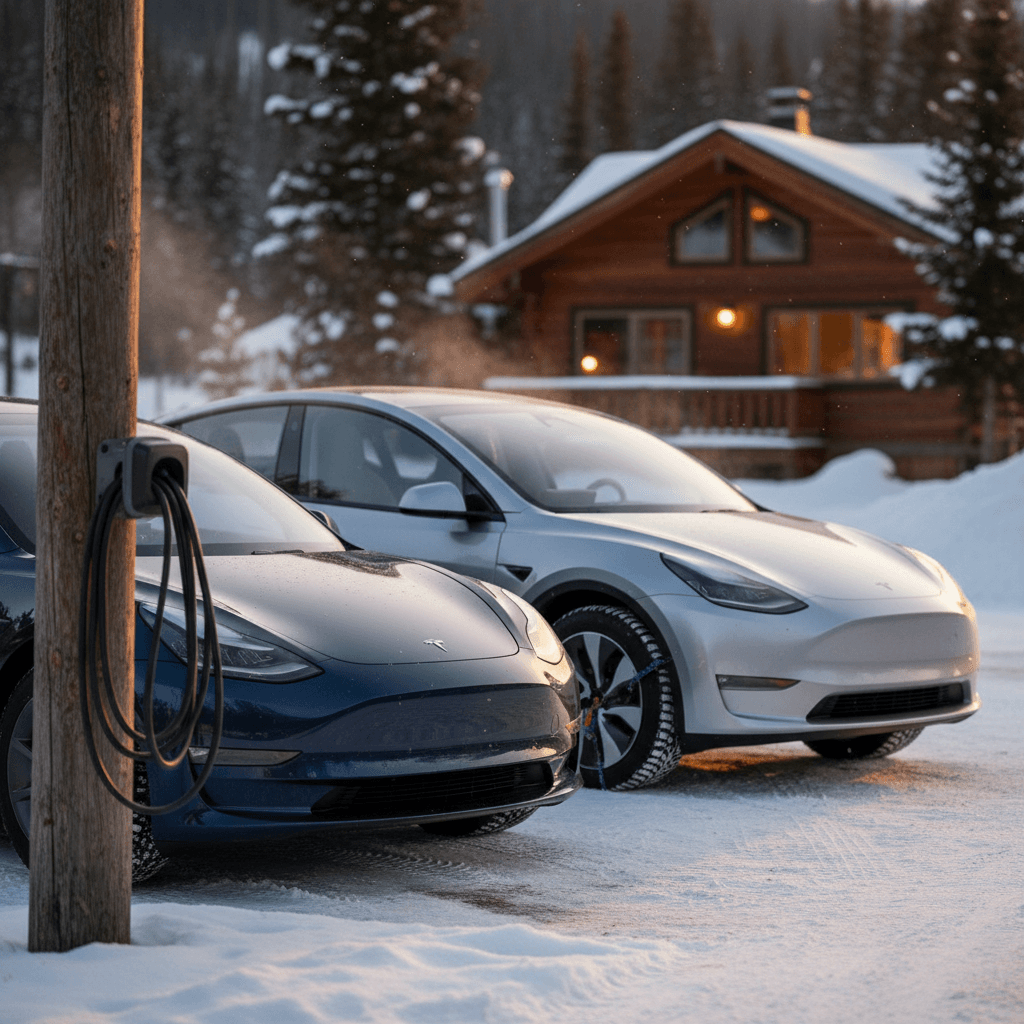
Cold weather is tough on every electric vehicle, and Teslas are no exception. If you’ve noticed your Tesla’s winter range dropping faster than you expected, or you’re getting ready for your first snowy season with a Model 3, Y, S, or X, there are specific Tesla winter driving tips that can keep you moving confidently when the temperature plunges.
Key takeaway
Why winter hits Tesla range so hard
To understand Tesla winter driving tips, it helps to know what’s actually stealing your range. Three main factors are at work: the battery chemistry itself, the extra energy needed to heat the cabin, and tougher road conditions like snow, slush, and higher air density.
What’s draining your Tesla battery in winter?
Three forces working against range when it’s cold outside
Cold battery chemistry
Lithium-ion cells don’t like the cold. At low temperatures, internal resistance increases, so the pack can’t release or accept energy as efficiently. That means less available power and slower charging until the pack warms up.
Cabin & battery heating
Unlike a gas car, your Tesla can’t reuse engine heat. It runs electric heaters or a heat pump to keep the cabin and battery warm. That’s great for comfort and safety, but it pulls energy directly from the pack.
Winter road conditions
Snow, slush, cold air, and winter tires all add rolling resistance and drag. Climbing grades in a storm or fighting a headwind at 70 mph can eat into the rated range faster than you’d expect.
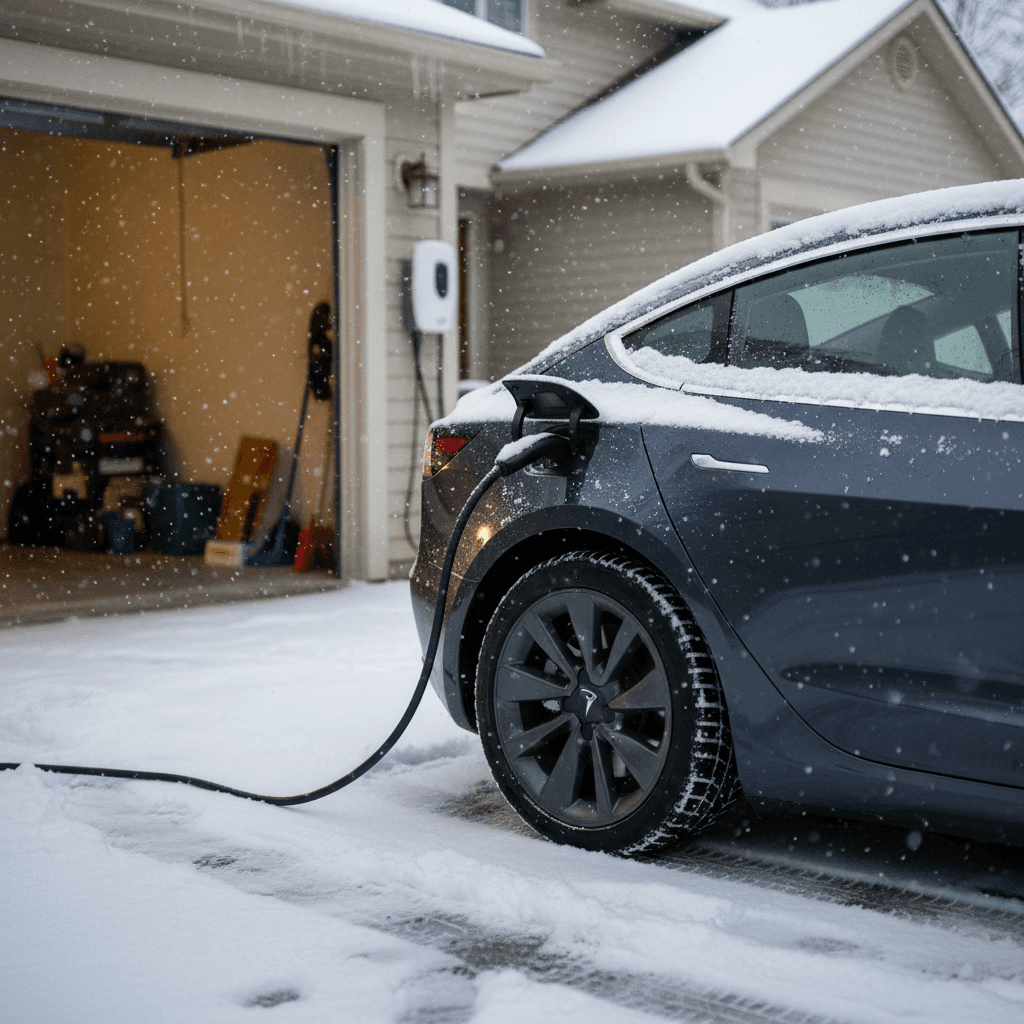
How much range loss to expect in cold weather
Real-world tests and owner data show that modern EVs, including Teslas, typically retain around 80% of their rated range in freezing conditions, with some models doing better. Independent testing has found average winter range losses in the 20–30% range at highway speeds around 16–20°F, and even more on short trips with frequent stops where the cabin has to be reheated each time.
Typical Tesla winter range loss at a glance
Don’t panic about permanent loss
Preconditioning your Tesla: battery and cabin
If you only follow one Tesla winter driving tip, make it this: precondition while plugged in. Warming the battery and cabin from the grid instead of the pack gives you more usable range once you hit the road and protects the battery from fast charging while it’s still ice-cold.
How to precondition your Tesla in winter
1. Turn on cabin preconditioning from the app
Open the Tesla app, tap “Climate,” and start preconditioning 15–30 minutes before you leave. The car will warm the cabin and, when it’s cold enough, the battery, too. Aim to do this while the car is still plugged in.
2. Use scheduled departure
In your car’s settings or the app, set a <strong>Scheduled Departure</strong> time for weekday mornings. Tesla will automatically time charging and preconditioning so the battery is warm and near your target state-of-charge when you leave.
3. Watch for the blue snowflake icon
If you see a blue snowflake next to your battery icon, part of the pack is too cold to deliver full power or allow fast charging. Preconditioning or simply driving gently for the first 10–15 minutes will warm it up and restore performance.
4. Precondition before Supercharging
When you navigate to a Supercharger, your Tesla will automatically start warming the battery on the way. In winter, give it extra time, start navigation earlier so the pack reaches the right temperature before you plug in.
5. Keep the car plugged in overnight
Tesla recommends leaving your car plugged in when temperatures drop. The onboard systems can then <strong>maintain battery temperature and state-of-charge</strong> without chewing through your usable driving range.
Heat the seats, not the air
Smart charging habits for winter
A few small tweaks to how and when you charge can make winter with a Tesla much easier. You’re not just filling the battery; you’re also managing temperature and giving yourself a buffer for storms, traffic jams, or closed roads.
Winter charging strategies for your Tesla
Simple settings that pay off in cold weather
Time charging to finish before departure
Instead of charging right after you park, use Scheduled Departure or delayed start so charging finishes shortly before you leave. The pack will be warm from charging and you’ll lose less energy to warming it back up.
Avoid deep discharges in the cold
Try not to run the battery down into the low single digits when it’s freezing. Aim to arrive at your destination or charger with 15–20% state-of-charge as a safety margin, especially on highways.
ABC: Always Be Charging (within reason)
In winter, topping up more often is smart. If you have access to Level 2 charging at home or work, plug in whenever possible. You’re trading a few extra minutes on the cable for much less range anxiety.
Fast charging on a cold battery
Driving techniques to save range in the cold
Once you’re on the road, how you drive matters just as much as how you charge. The same habits that help in summer, smooth inputs, reasonable speeds, matter more in winter because the battery has less margin to work with.
- Keep speeds reasonable. Aero drag rises dramatically with speed, and cold dense air makes it worse. Dropping from 75 to 65 mph can save double-digit percent of range in freezing conditions.
- Use Chill mode and smooth acceleration. Snappier acceleration feels great, but it wastes energy and can break traction on slick surfaces. Chill mode makes it easier to drive smoothly.
- Coast when you can. Regenerative braking is powerful, but constant speeding up and slowing down wastes energy. Maintain steady speeds and look far ahead to avoid hard braking.
- Use navigation energy predictions. Tesla’s Energy app and route planner will show projected state-of-charge at your destination and adjust for elevation and temperature. Treat those predictions as guardrails and add buffer in storms or high winds.
- Limit short, back-to-back trips. Multiple cold starts in a row force the car to heat the cabin again and again. When possible, chain errands into a single warm run instead of three separate short drives.
Good news for traction and control
Tires, brakes, and traction settings
Range is only part of the winter story. Grip, stopping distance, and how your Tesla’s software behaves on snow and ice are just as important. Tesla’s stability and traction control systems are always watching wheel slip, but they still depend on having the right rubber on the road.
Choose the right tires
- If you face regular snow and ice, dedicated winter tires are worth the range hit. They dramatically shorten stopping distances and improve traction.
- All-season tires are fine for milder climates but will still lose grip and add rolling resistance compared with summer tires.
- Check tire pressures monthly. Cold air drops pressure, which can hurt efficiency and stability. Use the pressure spec on your door jamb as your target when tires are cold.
Dial in regen and traction settings
- In very slippery conditions, some drivers prefer lower regenerative braking to avoid abrupt weight transfer mid-corner. Test this in a safe, open area before you need it in traffic.
- Rely on Tesla’s built-in traction and stability control. Avoid disabling safety assists on public roads, even if you consider yourself an expert winter driver.
- Remember that even with AWD, all four tires can slide. AWD helps you go; winter tires help you stop and steer.
Clear sensors and door handles
Protecting your Tesla’s battery health in winter
There’s a difference between temporary winter range loss and long-term battery wear. Cold by itself is not harmful, if anything, heat is the bigger long-term enemy, but certain winter habits can accelerate degradation if you’re not careful.
Winter habits that keep Tesla batteries healthy
Slow degradation, even if you drive in snow half the year
Avoid living at 0% or 100%
Short exposures to very high or low state-of-charge are fine, especially when you’re road-tripping. But don’t make 0–100% a daily routine. In winter, try to stay roughly in the 20–80% band for everyday driving unless you truly need more.
Let the car manage itself when parked
Leaving your Tesla plugged in with a sensible charge limit (say 70–80%) is ideal. The car will top up as needed, manage temperatures, and you won’t notice small winter vampire losses as much.
Don’t worry about parking outside
Cold overnight parking won’t permanently hurt the pack. You may see the blue snowflake icon and reduced regen in the morning, but performance will come back as the battery warms.
Watch trends, not single days
Rated range on the screen can jump around with temperature and software updates. For a used Tesla, focus on long-term trends and third-party battery health tools, not one cold morning’s reading.
Planning winter road trips in a Tesla
A winter road trip in a Tesla is absolutely doable, but the playbook looks a little different than it does in July. Your main job is to add realistic buffer, lean on Tesla’s route planning tools, and stay flexible when weather or traffic throws a curveball.
Winter vs. summer trip planning in a Tesla
How to adjust your assumptions when the forecast turns blue
| Planning choice | Summer approach | Winter approach |
|---|---|---|
| Arrival state-of-charge at charger | Often 5–10% is fine on familiar routes | Target 15–25% to allow for wind, detours, or lane closures |
| Leg length between fast chargers | Closer to rated range if weather is ideal | Plan legs at 50–65% of rated range, depending on temps |
| Charge stops | Fewer, longer sessions to high SOC | More, shorter sessions in the 10–60% sweet spot |
| Preconditioning | Nice-to-have for comfort | Essential for good fast-charge speeds |
| Overnight charging | Optional at destination hotels | Highly recommended if temps are near or below freezing |
Plan conservatively in winter, arrive with more battery and allow more time at chargers.
Use real data, not hope, for estimates
Used Teslas and winter performance
If you’re driving, or shopping for, a used Tesla, winter is actually a revealing time to see how a car has aged. A well-maintained, older Model S or Model 3 can still be an excellent winter tool, but you’ll want to understand both normal cold-weather loss and permanent battery degradation.
How to sanity-check a used Tesla in winter
- Compare displayed rated range at 90–100% charge on a mild day to typical values for that model and battery size.
- Expect temporarily worse numbers when it’s close to freezing; don’t confuse this with permanent wear.
- Take a longer test drive on your normal mix of roads to see real-world consumption, not just EPA range.
Where Recharged fits in
- Every EV at Recharged comes with a Recharged Score Report that includes verified battery health, so you can separate winter effects from actual degradation.
- Our EV specialists can walk you through what range to expect in your climate, not just in perfect test cycles.
- Nationwide delivery and digital paperwork mean you can shop for a winter-ready used Tesla from your couch.
Tesla winter driving checklist
Quick Tesla winter driving checklist
Precondition while plugged in
Start cabin preconditioning from the app 15–30 minutes before you leave, and use Scheduled Departure on workdays so the battery is warm and topped off.
Keep a healthy buffer
In freezing weather, plan trips so you arrive at chargers or home with at least 15–25% battery, not 2–3%.
Dial back speed and hard acceleration
Use Chill mode and keep highway speeds reasonable. Slower, smoother driving pays big dividends in cold dense air.
Use seats and wheel heaters first
Set the cabin a bit cooler and lean on heated seats and steering wheel; they use far less energy than blasting hot air.
Watch tire pressures and tread
Check tire pressure on cold mornings and consider dedicated winter tires if you regularly drive on snow or ice.
Clear snow, ice, and sensors
Brush snow off the roof, lights, cameras, and radar before driving; verify door handles and windows aren’t frozen shut.
Navigate to fast chargers
Always navigate to a Supercharger so your Tesla can automatically preheat the pack for faster charging.
Leave it plugged in when parked at home
Let the car maintain its own temperature and state-of-charge; vampire drain hurts less when the outlet, not the pack, is doing the work.
FAQ: Tesla winter driving
Frequently asked questions about Tesla winter driving
Bottom line: driving a Tesla all winter long
Winter exposes every EV’s weak spots, but it also highlights Tesla’s strengths: efficient drivetrains, strong software, and a charging ecosystem that bakes cold-weather logic into its route planning. If you precondition while plugged in, plan conservative legs between chargers, and drive with winter conditions in mind, your Tesla can handle snow season just as capably as a gas car, often more so.
If you’re evaluating a used Tesla for winter driving, pairing these Tesla winter driving tips with a data-backed battery health report makes all the difference. That’s exactly what Recharged’s Recharged Score Report is designed to do: take the guesswork out of range, in January as well as in June, so you can shop, and drive, with confidence.