If you’re trying to plan your next electric vehicle purchase, knowing which **new EVs are coming in 2027** is just as important as understanding what’s on dealer lots today. Automakers are reshaping their lineups around larger family SUVs, more affordable trucks, and a handful of halo sports cars, while quietly canceling or delaying others.
2027: A “second wave” EV year
Why 2027 Matters for EV Buyers
The EV market in the U.S. is in a correction phase. Automakers overbuilt capacity for expensive early EVs while demand cooled. As a result, many 2025–2026 projects have been canceled, delayed, or re-scoped. The **2027 model year** is the first where we’re seeing revised plans: fewer moonshots, more practical family vehicles and workhorses, and more focus on profitability. For you, that means better packaging and more realistic pricing, but also fewer wild concepts making it to showrooms.
2027 EV Market Snapshot (What Automakers Are Aiming For)
Below, we’ll walk through the most notable **EVs confirmed or strongly expected for 2027**, grouped by segment. Then we’ll connect the dots to what this means for **used EV shoppers**, including when it might make more sense to grab a low-mileage 2024–2025 model instead of waiting.
Quick Overview: New EVs Coming in 2027
Headline 2027 EVs at a Glance
A mix of family haulers, work trucks, and niche sports cars
Family & Daily Drivers
- 2027 Toyota Highlander EV – three-row electric SUV for U.S. families.
- 2027 Mercedes-Benz C-Class EV – compact luxury sedan.
- Additional compact and midsize EVs from mainstream and luxury brands.
Pickups & Vans
- Ford mid-size electric pickup – new affordable EV truck platform targeted for 2027.
- Continuing launches from startups like Slate Auto feeding the compact EV truck space.
Sports & Niche Performance
- Caterham Project V – lightweight electric sports coupé.
- Longbow Roadster – low-volume EV sports car from a British startup.
Important note on "complete" lists
2027 EV SUVs and Crossovers
2027 Toyota Highlander EV
Toyota has finally shown its hand on a **three-row all‑electric SUV**: the **2027 Highlander EV**. Unveiled in February 2026, it’s larger than the current gas Highlander, with a wider body and a wheelbase stretched by almost eight inches, exactly the sort of proportion change you’d expect when packaging a big battery under the floor rather than a V6 under the hood.
- Two battery options: around 77 kWh (~270 miles) or 95.8 kWh (~320 miles) of estimated range.
- DC fast charging from 10–80% in roughly 30 minutes under ideal conditions.
- Front‑wheel drive and all‑wheel drive configurations expected, tuned for family use rather than headline acceleration.
- Two main trims at launch, positioned above the current bZ4X in price and size.
How this affects used EV shoppers
2027 Mercedes-Benz GLC-Class EV & Crossover Family
Mercedes is in the middle of an EV platform transition built around its new MB.EA architecture. A **GLC-Class EV**, an electric counterpart to its popular compact SUV, is expected to debut in late 2026 and reach U.S. buyers as a **2027 model year** vehicle, joining or replacing the current EQE/EQC approach in the lineup.
Expect a battery in the roughly mid‑90 kWh range, an 800‑volt electrical system for rapid DC charging, and single‑ and dual‑motor configurations around 370–480 horsepower. The design language leans smoother and more aero‑optimized than today’s GLC, with the now‑familiar illuminated grille treatment up front.
Other likely 2027 EV SUVs
- Lexus three-row EV crossover: Toyota’s luxury arm is expanding its EV footprint around 2026–2027; a Lexus‑branded three‑row EV related to the Highlander EV is widely expected for North America even if final naming is TBD.
- Additional mid‑cycle updates: Several EV SUVs that launch in 2024–2025 (from Hyundai, Kia, GM, and Volkswagen) are scheduled for **2027 refreshes** with improved range and charging, even if they don’t count as all‑new nameplates.
2027 EV Pickups and Vans
Ford’s Affordable Mid-Size Electric Pickup (2027 Launch)
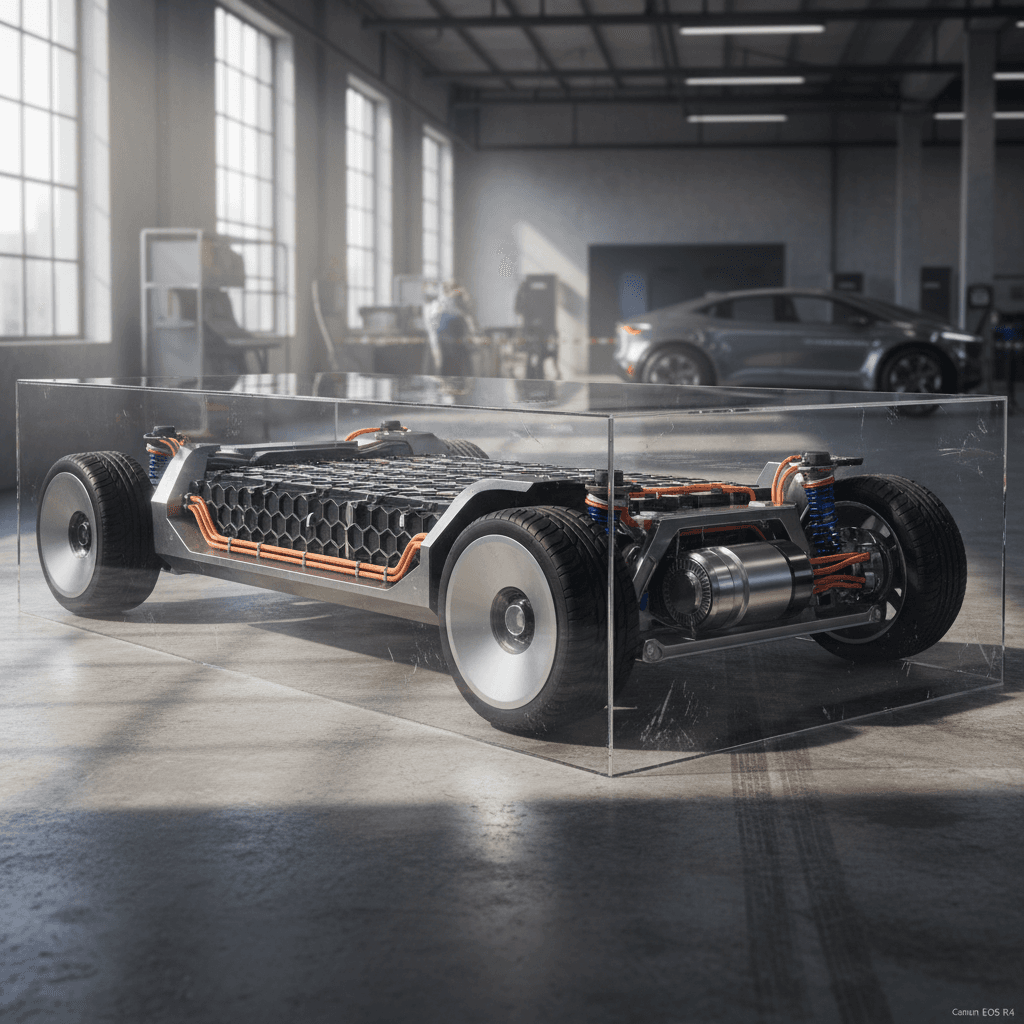
Ford has been explicit: its next big EV bet is a **mid‑size electric pickup truck**, positioned below the F‑150 Lightning and targeted at more attainable pricing. The company has said this truck will be the first model on a new cost‑optimized EV platform, with a U.S. launch planned for **2027**.
What to Expect from Ford’s 2027 Electric Pickup
Reading between the lines of Ford’s roadmap
Size & Positioning
- Similar footprint to today’s Ranger or Maverick.
- Aimed at fleets and value‑focused buyers.
- Likely built in high volume to drive battery costs down.
Range & Capability
- Ford has talked about focusing on usable range at lower cost, not chasing 500‑mile specs.
- Expect ~250–300 miles of EPA range with towing‑friendly cooling and software.
Why this truck matters
Other Trucks and Vans in the 2027 Window
- Startup compact trucks: Brands like Slate Auto are targeting production around 2026–2027 for simple, low‑cost compact electric trucks. Even if volumes are modest, they’ll put additional price pressure on used Rivian R1Ts and larger electric pickups.
- Electric commercial vans: Several automakers, including Ford and Mercedes, have **announced new electric commercial vans for 2026–2027**, optimized around urban delivery and last‑mile logistics rather than personal use. These may show up in the used market quickly as large fleets cycle inventory.
2027 EV Sedans, Hatchbacks, and Compact Cars
2027 Mercedes-Benz C-Class EV
Mercedes plans to pair a refreshed gas C‑Class with a **new fully electric C‑Class EV**, expected to debut in 2026 and reach the U.S. as a **2027 model**. It will share much of its technology with the GLC EV: 800‑volt architecture, rapid recharging, and a choice between single‑motor rear‑drive and dual‑motor all‑wheel‑drive powertrains in the roughly 370–480 horsepower range.
Inside, expect a dashboard‑spanning display and the latest driver‑assist suite, positioning the C‑Class EV against the BMW i4/i5, Tesla Model 3, and Hyundai Ioniq 6 with a more traditional luxury‑sedan feel.
Updated Compact EVs and Return of Budget Models
By 2027, the first wave of affordable compact EVs, cars like the Chevrolet Bolt and various sub‑$35,000 crossovers, will be in their second or third iteration. Some will get full redesigns; others will see major battery and software updates without a name change. Either way, this is when **EVs under $30,000** start to become more than press‑release promises.
Why this matters for range and batteries
2027 EV Sports Cars and Performance Models
While the bulk of 2027 EV volume will be family SUVs and work trucks, a handful of **sports and performance EVs** are scheduled to arrive, some as low‑volume enthusiast specials, others as technology showcases that eventually inform mainstream products.
Caterham Project V (2027)
Caterham, famous for featherweight track toys, is bringing its philosophy to the EV age with the **Project V**, an electric sports coupé expected to enter production in **late 2027**. The car targets a curb weight around 1,190 kg (about 2,600 pounds), significantly lighter than most current EVs, and an estimated **WLTP range of about 250 miles** from a relatively modest‑sized battery pack.
- Single electric motor with roughly 270 PS (around 268 hp).
- Rear‑wheel drive, 2+1 seating layout, and minimalist interior.
- Focus on agility and driver engagement rather than luxury or raw straight‑line speed.
Longbow Roadster (Expected 2027)
Startup **Longbow** plans a family of lightweight electric sports cars, with the **Roadster** expected around **2027**. Early specs point to a rear‑mounted motor making about **321 hp**, 0–60 mph in under four seconds, and roughly **230 miles of range**. Pricing is projected in the mid‑$80,000s with limited production runs.
Treat niche EV sports cars as speculative
Spec Comparison: Key 2027 EVs at a Glance
Selected 2027 EVs – High-Level Specs (Estimated/Announced)
Think of these as ballpark numbers. Final EPA ratings and pricing will land closer to launch.
| Model | Segment | Est. Range | Battery / Architecture | Drive | Notes |
|---|---|---|---|---|---|
| Toyota Highlander EV (2027) | 3-row SUV | ~270 or ~320 mi | 77 or 95.8 kWh; fast charge 10–80% ~30 min | FWD / AWD | Family-first packaging, Toyota’s first 3-row BEV SUV |
| Ford Mid-Size EV Pickup (2027) | Mid-size pickup | ~250–300 mi (target) | New cost-optimized Ford EV platform | RWD / 4x4 likely | Designed as a more affordable work truck than F-150 Lightning |
| Mercedes GLC-Class EV (2027) | Compact luxury SUV | ~325–375 mi (target) | ~94 kWh; 800V architecture | RWD / AWD | Shares MB.EA tech with C-Class EV |
| Mercedes C-Class EV (2027) | Compact luxury sedan | ~300+ mi (target) | MB.EA; 800V architecture | RWD / AWD | Traditional luxury sedan alternative to Model 3/i4 |
| Caterham Project V (2027) | Sports coupé | ~250 mi WLTP | Lightweight pack; immersion-cooled tech | RWD | Sub-2,600 lb target curb weight, driver-focused |
| Longbow Roadster (2027) | Roadster | ~230 mi (target) | Single rear motor, ~321 hp | RWD | Low-volume enthusiast EV, 0–60 mph < 4 sec |
All ranges are manufacturer estimates or WLTP conversions where noted and may differ from final EPA figures.
How 2027 EV Launches Will Shape the Used Market
1. Three-row EVs go mainstream
Today, three-row electric options are limited and expensive. As the Highlander EV and likely Lexus counterparts arrive, **supply of family-sized EVs will grow**. That tends to:
- Pull transaction prices down on early three-row EVs.
- Make two-row crossovers (ID.4, Ioniq 5, Model Y) more affordable on the used market.
2. Second-gen trucks pressure first-gen pricing
Affordable EV pickups arriving in 2027 give fleets and early Lightning/R1T adopters a compelling reason to **rotate out of first-gen hardware**. Expect:
- More used F-150 Lightnings and Rivian R1Ts hitting the market.
- Discounts on lightly used trucks as buyers chase better efficiency and software.
How Recharged fits into this picture
Should You Wait for a 2027 EV or Buy Used Now?
Key Questions to Decide: Wait for 2027 or Buy Sooner?
1. Do you specifically need a three-row EV or a work truck?
If your next vehicle must be a **three-row family hauler** or a **hard‑working pickup**, 2027 will bring more and better options. In that case, it can be rational to wait, especially if your current vehicle is paid off and reliable.
2. Are you range-sensitive beyond 250–275 miles?
If you road‑trip frequently and want **300+ miles of range with fast charging**, 2027 models will increasingly treat that as table stakes. But if your daily driving is under 60 miles, a 2023–2025 EV with 230–260 miles of range is likely more than enough.
3. How important is price vs tech?
Used EV prices have corrected sharply from 2022 peaks. If you prioritize **lowest total cost of ownership** over the latest interface or 800‑V charging, a well‑priced used EV today often beats waiting for shinier 2027 tech.
4. Do you plan to finance, lease, or pay cash?
Financing a used EV through a platform like Recharged can smooth the price advantage further. If you’re leasing, it might make sense to take a **shorter term now** so you naturally roll into the 2027 wave when it arrives.
5. How flexible is your timing?
If your current car is on its last legs, gambling on exact 2027 arrival dates is risky. Programs slip; supply is constrained; early allocations go to priority customers. A **proven 2024–2025 used EV** may be the safer play.
A practical strategy
Frequently Asked Questions: New EVs Coming 2027
FAQ: 2027 Electric Vehicles
Thinking about **new EVs coming in 2027** is useful, not because you should pin everything on a concept car’s promised launch date, but because it shows where the market is headed. More three‑row SUVs, more practical work trucks, and more cost‑optimized platforms mean the EV landscape in 2027 will look very different from today’s.
If you’re ready to move sooner, the correction in EV pricing means there has **never been a better time to explore the used EV market**. At Recharged, every vehicle comes with a Recharged Score battery‑health report, fair‑market pricing, and expert guidance so you can buy confidently now, and still be perfectly positioned to take advantage of the 2027 wave when it hits the used market a few years down the road.