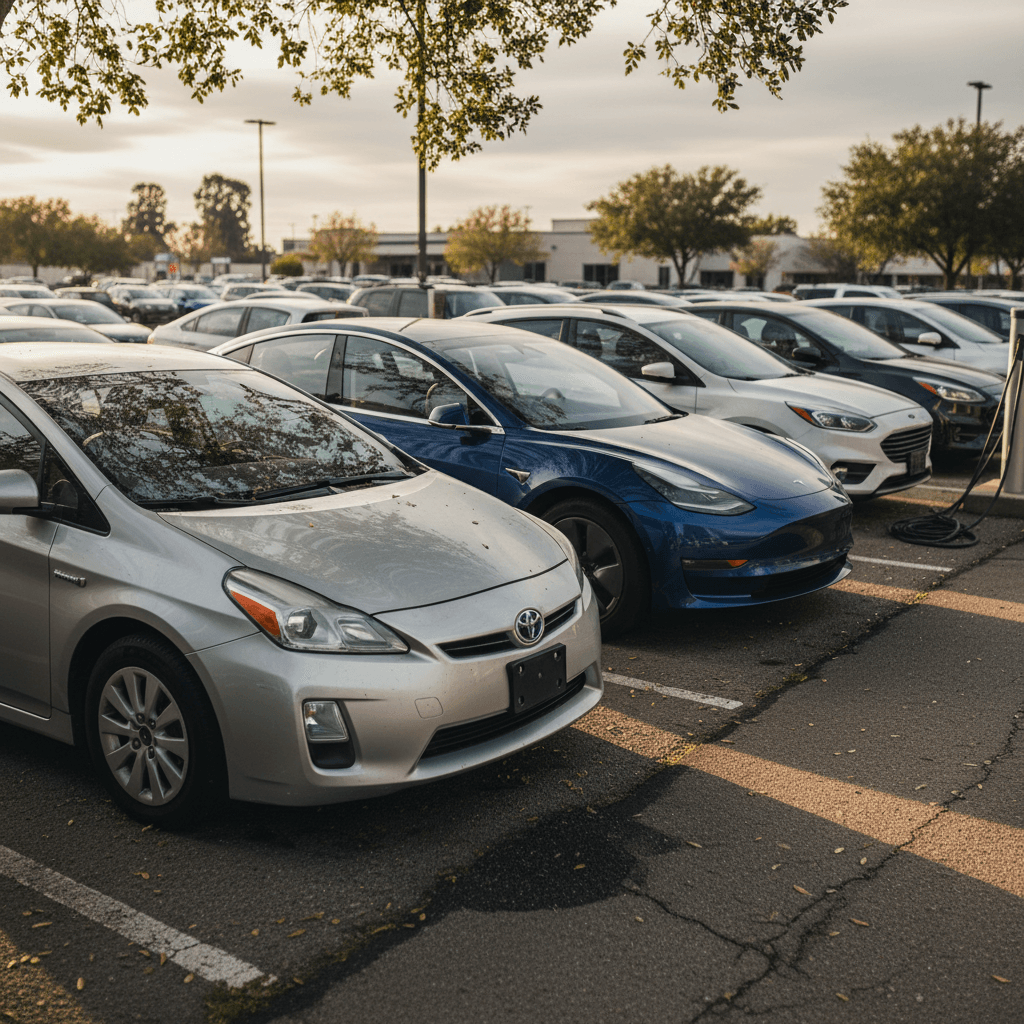
If you’re shopping for a used car in 2025, chasing the most fuel efficient used vehicles is one of the easiest ways to lower your total cost of ownership. The good news: today’s used market is packed with super‑efficient hybrids, plug‑in hybrids, and full battery‑electric vehicles (EVs) that can dramatically cut your fuel bill compared with an older gas-only car.
MPG isn’t the full story anymore
Why fuel efficiency still matters in a used vehicle
How much efficiency really saves you
Fuel is one of the few ownership costs you can partly control. When you pick a highly efficient used car, you lock in lower operating costs for years, whether that’s fewer stops at the pump or a home charger quietly refilling your battery overnight. And unlike some tech features that age quickly, good efficiency ages well, a 50+ mpg hybrid from a few years ago is still excellent today.
How to compare efficiency: MPG vs MPGe vs kWh/100 mi
For gas & hybrid vehicles
- MPG (miles per gallon) – The classic measure. Higher is better.
- Look at combined MPG for a fair comparison across city and highway.
- A 50+ mpg hybrid can use less than half the fuel of a 22‑mpg crossover.
For plug‑in hybrids & EVs
- MPGe – Miles per gallon equivalent. Lets you compare electricity use to gasoline.
- kWh/100 mi – How many kilowatt‑hours of electricity the car uses to go 100 miles. Lower is better.
- As a rule of thumb, 25 kWh/100 mi ≈ 135 MPGe on the EPA scale.
Simple rule of thumb
Most fuel efficient used hybrids (gas-sippers)
If you can’t or don’t want to plug in, a conventional hybrid is the simplest way to slash fuel use without changing your routine. These are some of the most fuel efficient used vehicles you’ll actually find in U.S. classifieds today, with EPA combined ratings typically in the high‑40s to high‑50s mpg depending on trim and year.
High‑MPG used hybrids to target
Representative models and their approximate EPA combined fuel economy when new. Exact figures vary by trim, model year, and wheels.
| Model | Typical Used Model Years to Target | EPA Combined MPG (approx.) | Body Style | Why it’s a standout |
|---|---|---|---|---|
| Toyota Prius (5th gen) | 2023–2024 | 56–57 mpg | Compact hatchback | Iconic hybrid; latest generation finally looks sharp and drives well while sipping fuel. |
| Hyundai Elantra Hybrid Blue | 2021–2025 | 50–54 mpg | Compact sedan | One of the most efficient sedans on sale, often more affordable than a Prius. |
| Kia Niro Hybrid | 2019–2024 | 49–53 mpg | Subcompact crossover | Crossover practicality with Prius‑like efficiency and an easy driving experience. |
| Toyota Corolla Hybrid | 2020–2024 | 47–50 mpg | Compact sedan | Conventional look and feel with excellent MPG and Toyota reliability. |
| Honda Accord Hybrid | 2018–2024 | 44–48 mpg | Midsize sedan | Roomy and comfortable; great if you want efficiency without a small car. |
| Lexus UX 300h / ES 300h | 2019–2025 | 43–44+ mpg | Compact / midsize luxury | Delivers real‑world mid‑40s mpg with a premium interior and Lexus refinement. |
All of these hybrids commonly show up on the used market and deliver outstanding gasoline efficiency.
Watch for high-speed highway bias
Most fuel efficient used plug-in hybrids
Plug‑in hybrids (PHEVs) can be incredibly efficient if you plug in regularly. You might do most daily driving on electricity and let the gas engine handle long trips, which is why their MPGe ratings can look almost unreal on paper.
Efficient used plug‑in hybrid all‑stars
Great if you have a place to plug in but want gasoline backup.
Toyota Prius Prime
Why it’s efficient: Compact, slippery shape and a strong hybrid system.
- Outstanding MPGe when charged regularly.
- Gas‑only combined mpg is typically low‑50s.
- Ideal for commuters under ~30–40 miles/day.
Hyundai Ioniq Plug‑In Hybrid
Why it’s efficient: A champion of low energy use.
- High MPGe and excellent gas mpg once the battery is empty.
- Often overlooked, so used prices can be attractive.
Kia Niro Plug‑In Hybrid
Why it’s efficient: Small crossover footprint with genuinely useful EV range.
- Great city efficiency when plugged in.
- Flexible cargo space for families or active lifestyles.
You’ll also see plug‑in versions of popular sedans and crossovers, like the Toyota RAV4 Prime, Ford Escape Plug‑In Hybrid, and Chrysler Pacifica Hybrid, that pair family‑friendly packaging with 30–40 miles of EV range and excellent MPGe for shorter trips.
Don’t ignore the gas-only MPG
Most efficient used electric vehicles
Full EVs are where efficiency gets dramatic: no gasoline, far fewer moving parts, and the lowest cost per mile when you can charge at home. If you’re comfortable with public charging for road trips, these are among the most fuel efficient used vehicles you can buy.

Energy‑sipping used EVs to look for
Approximate EPA efficiency when new. Numbers vary slightly by wheel size and drivetrain.
| Model | Typical Used Model Years to Target | kWh/100 mi (approx.) | EPA MPGe (approx.) | Notes |
|---|---|---|---|---|
| Hyundai Ioniq Electric / Ioniq 6 | 2019–2024 | 24–25 | Up to ~140 MPGe | The original Ioniq Electric and the newer Ioniq 6 sedan are both at the top of the EPA efficiency charts. |
| Tesla Model 3 RWD / Long Range | 2017–2024 | 25–27 | ~120–132 MPGe | Widely available used; newer cars are especially efficient on highway trips. |
| Chevrolet Bolt EV / EUV | 2017–2023 | 28–29 | ~115–120 MPGe | Compact hatch with excellent efficiency and solid DC fast‑charging on 2020+ models. |
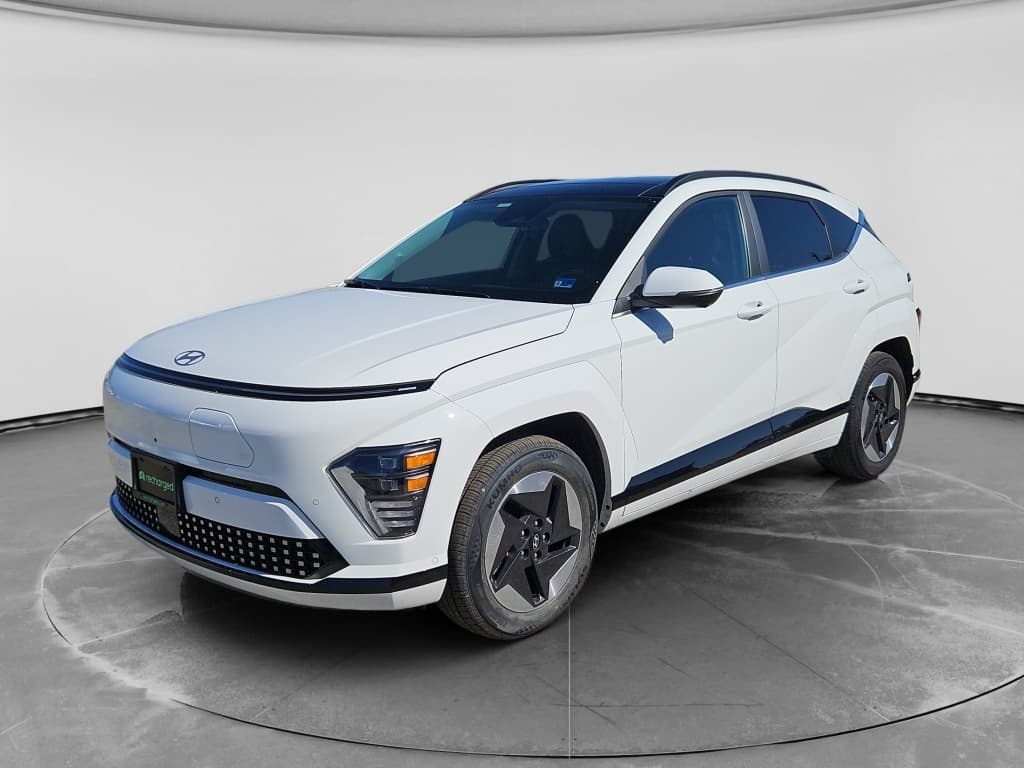
| Hyundai Kona Electric | 2019–2024 | 27–29 | ~116–120 MPGe | Small crossover format with frugal energy use and good real‑world range. |
| Kia Niro EV | 2019–2024 | 29–30 | ~112–120 MPGe | Practical and efficient; a good bridge for anyone coming out of a small crossover. |
| BMW i3 (BEV) | 2014–2019 | 25–27 | ~113–124 MPGe | Older but extremely efficient; quirky design, tight rear seat, but great city car. |
These EVs stand out for low energy use (kWh/100 miles), which directly translates into lower electricity costs.
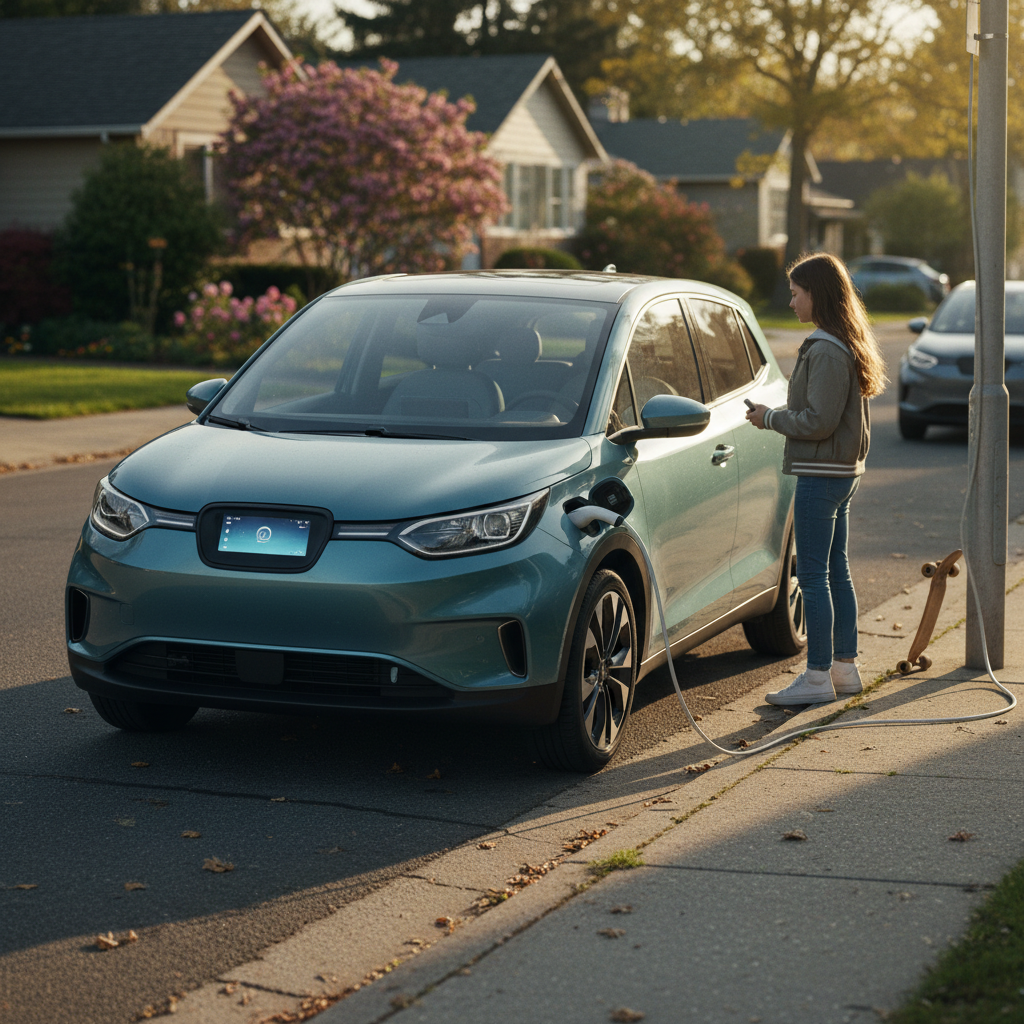
Home charging is half the magic
Cost-per-mile showdown: hybrid vs PHEV vs EV
To make efficiency more concrete, it helps to translate MPG and MPGe into rough cost per mile. Exact numbers depend on your local gas and electricity prices, but the pattern is consistent: EVs are usually cheapest per mile, followed by plug‑in hybrids (if you charge them), then conventional hybrids.
Illustrative fuel cost per 100 miles
Assumes U.S. average prices around late 2025: gasoline ~$3.50/gal and residential electricity ~$0.16/kWh. Your numbers will vary, but the order of magnitude usually holds.
| Vehicle Type & Example | Efficiency Assumption | Energy Needed for 100 mi | Approx. Cost per 100 mi |
|---|---|---|---|
| Efficient hybrid (e.g., Toyota Prius) | 50 mpg | 2.0 gallons of gas | ≈ $7.00 |
| Efficient PHEV, mostly electric (e.g., Prius Prime) | ~120 MPGe equivalent | ~28 kWh | ≈ $4.50 |
| Efficient EV (e.g., Hyundai Ioniq 6 / Tesla Model 3) | 25 kWh/100 mi | 25 kWh | ≈ $4.00 |
| Typical older gas crossover (for comparison) | 22 mpg | 4.5 gallons of gas | ≈ $15.75 |
Comparing typical efficient models in each category.
Remember the "other" savings
Real-world factors that change your fuel economy
Four things that can wreck (or boost) efficiency
EPA ratings are a starting point, not a guarantee.
Temperature & climate
Cold weather thickens fluids, increases rolling resistance, and, for EVs, forces the battery to spend energy on heating. Expect winter efficiency to drop 10–30% depending on how extreme your climate is.
Speed & driving style
Driving 80 mph instead of 65 can dramatically increase consumption in any vehicle. Smooth acceleration and using cruise control on open highways typically improve efficiency.
Trip length & terrain
Short trips don’t give hybrids or EVs time to warm up or stabilize, so they’re less efficient. Hilly terrain hurts range on the way up and helps a bit on the way down thanks to regenerative braking.
Load & accessories
Extra cargo, roof boxes, bike racks, big wheels, and aggressive tires all add drag or weight. They can cut range and mpg by 5–20% depending on how extreme you go.
Good news: you have leverage
How to shop smart for an efficient used vehicle
Your efficient used-vehicle shopping checklist
1. Start by defining your daily pattern
Write down your typical daily mileage, how often you take long trips, and whether you have access to a regular outlet or 240‑volt power. This determines whether a hybrid, PHEV, or EV is the best fit.
2. Decide your acceptable fuel or charging routine
If you hate gas stations and can plug in nightly, lean toward an EV. If you can plug in sometimes but need unlimited range, a plug‑in hybrid is compelling. If you have zero charging options, target a 45–55 mpg hybrid.
3. Check EPA ratings, but read the fine print
Use the window‑sticker data as a baseline, but pay attention to footnotes about wheel size, AWD vs FWD, and city vs highway splits. These details materially affect real‑world efficiency.
4. For EVs, focus on battery health and fast charging
Two used EVs with identical EPA ratings can behave very differently if one has a tired battery or slow DC charging. A proper battery health report and a quick test at a public fast charger are worth the time.
5. For hybrids & PHEVs, listen for engine and transmission issues
Hybrids are generally robust, but they’re still complex gas cars. Look for maintenance records, software updates, and smooth transitions between electric and gas operation on a test drive.
6. Run a total cost of ownership comparison
Include purchase price, expected fuel/charging costs, insurance, taxes, and likely maintenance. A used EV can look expensive upfront but win decisively over five years once you factor in energy and maintenance savings.
How Recharged makes efficient used EVs lower-risk
Battery health is the elephant in the room for used EV shoppers. You might find a super‑efficient model on paper, but if the pack has degraded or been abused, real‑world range and efficiency suffer, and replacement isn’t cheap.
What you get with Recharged
Because Recharged is built specifically around used EVs, the team can help you match a car’s efficiency profile to your real driving, not just the EPA label. That includes things like whether a particular model’s DC fast‑charging curve fits your road‑trip patterns, or whether a slightly less efficient EV with a healthier pack might actually be the smarter buy.
You can browse, finance, arrange trade‑ins or consignment, and set up nationwide delivery fully online. If you want to see and feel vehicles in person, Recharged’s Experience Center in Richmond, VA gives you a place to test‑drive and ask detailed questions without the traditional dealership pressure.
FAQ: Most fuel efficient used vehicles
Frequently asked questions
Bottom line: Choose the right kind of efficiency
There’s no single “most fuel efficient used vehicle” that fits everyone. The right answer depends on how far you drive, where you can charge, how often you road‑trip, and how much you want to spend upfront. What’s changed in 2025 is that you now have real choice: from 55‑mpg hybrids to 120‑MPGe EVs, you can align your next used car with both your budget and your values.
If you’re leaning toward a used EV or plug‑in hybrid and want help translating specs into real‑world efficiency, a curated marketplace like Recharged can give you the battery data, pricing transparency, and expert support that traditional dealerships typically don’t. That way, when you finally sign for your next car, you’ll know you’re getting efficiency that shows up not just in the brochure, but in your monthly budget.