Handing over keys to a first car is a big moment, and it feels even bigger when that car is electric. The **best electric car for first-time drivers in 2026** isn’t just the one with the longest range or flashiest screen. It’s the one that keeps them out of trouble, fits your budget, and makes day‑to‑day driving feel easy, not intimidating.
Who this guide is for
Why first-time EV drivers need a different checklist
When you’re choosing a first car, especially an EV, you’re not building a dream‑garage fantasy. You’re trying to stack the odds in favor of **safety, predictability, and low drama**. That means an electric car that forgives clumsy parking, handles bad weather with confidence, and doesn’t tempt a brand‑new driver into trouble with crazy acceleration.
- Safety and visibility trump horsepower and 0–60 bragging rights.
- Simple, intuitive controls matter more than the biggest touchscreen.
- Moderate range that covers daily life beats huge batteries that cost more to buy and replace.
- Lower insurance and repair costs can be more important than fancy features.
Fast EVs and new drivers
What makes a great first electric car in 2026?
First-time EV priorities at a glance
Key traits of a beginner-friendly EV
Use these to evaluate any model you’re considering
Crash safety
Look for strong crash-test scores and **standard automatic emergency braking** with pedestrian and cyclist detection. Good headlights and solid side-impact ratings are non‑negotiable for night driving and intersections.
Visibility & size
New drivers need to see out. Favor vehicles with **large windows, simple body lines, and a compact footprint** over big SUVs with tiny rear windows.
Calm performance
You want smooth, predictable acceleration, not neck‑snapping launches. **Single‑motor, lower‑output trims** are usually best for first‑time drivers.
Easy charging
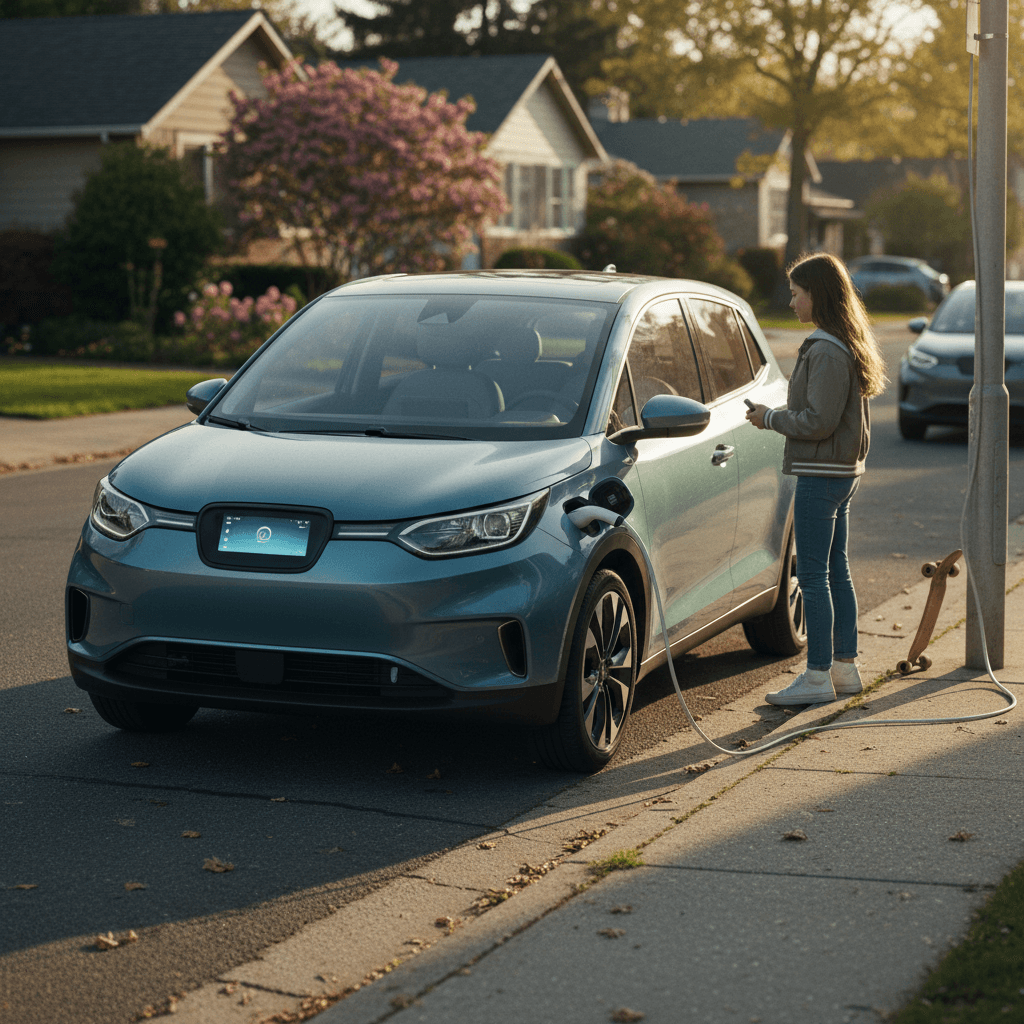
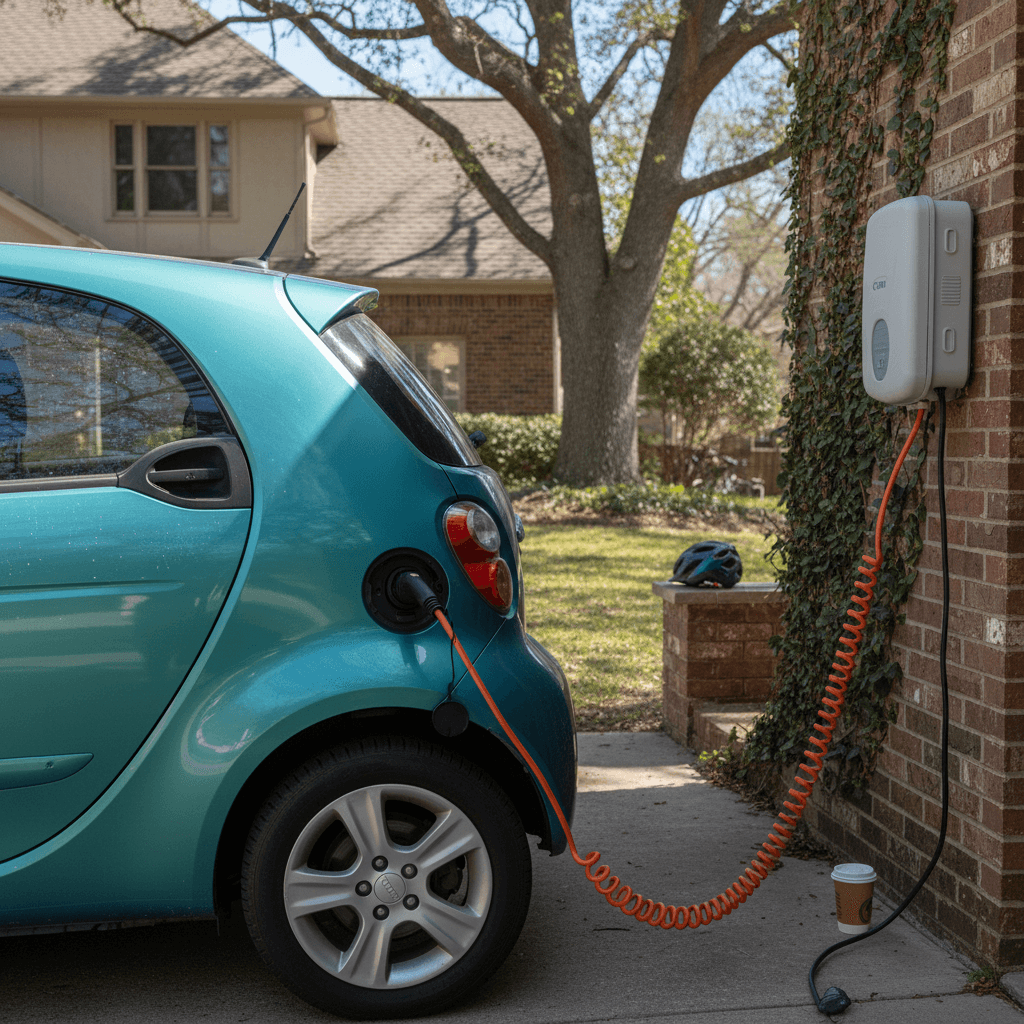
Home Level 2 charging or reliable local public chargers make ownership calmer. A clear charging interface and phone app help first‑time drivers build good habits.
Total cost
Include **insurance, maintenance, electricity, and tires**, not just the loan payment. Smaller, lighter EVs tend to be cheaper to run and insure.
Weather & range
Make sure the car’s rated range still works for your needs in **cold weather**, when range can drop, and that it has traction control and, ideally, available all‑wheel drive if you live with snow.
Best new electric cars for first-time drivers in 2026
If you’re shopping brand‑new in 2026, you’ll see a wave of new EVs promising massive screens, hands‑free driving, and supercar acceleration. For a first‑time driver, ignore the circus. These models hit the sweet spot of **safety, comfort, and value**, with powertrains that won’t scare anybody.
New 2026 EVs that work well for first-time drivers
Representative examples of beginner‑friendly new EVs. Always verify exact safety ratings, pricing, and equipment for the trim you’re considering.
| Model (2026 MY) | Type | Why it suits new drivers | Typical role |
|---|---|---|---|
| Nissan Leaf (all-new) | Compact electric crossover | Expected to be one of the **cheapest EVs in the U.S.**, with improved range, a friendlier cabin, and modern safety tech. | Budget‑minded first EV, city & suburban use |
| Hyundai Kona Electric | Subcompact SUV | Small, easy to park, comfortable ride, and well‑tuned driver‑assist tech; feels approachable, not intimidating. | Daily commuter, college‑town runabout |
| Kia EV3 (expected late 2026 availability) | Compact SUV | Designed as a more affordable EV sibling to the EV6/EV9, with a tall driving position and friendly tech. | Small family car or upgrade from a subcompact |
| Chevrolet Equinox EV (lower trims) | Compact SUV | Mainstream size and price target, simple interior, and family‑oriented tuning make it a solid first EV if you want something slightly larger. | Shared family car for teens and parents |
| Fiat 500e | Mini city car | Tiny footprint, fun personality, and great efficiency. Best where parking is tight and trips are short. | Urban first car, college‑campus runabout |
Focus on the calmer trims with good safety tech, not the halo performance versions.
Trim and wheel choice matters
Best used electric cars for first-time drivers
For a lot of families, the math says **used EV**. That’s where depreciation and battery health become just as important as safety ratings. The good news: many early mainstream EVs were built exactly for the kind of calm, everyday driving a first‑timer will do.
Used EVs that make excellent first cars
Specific model years and trims will vary by what’s on the market near you.
Chevrolet Bolt EV / Bolt EUV
Why it works: Small footprint, punchy but manageable power, and a simple cabin. The Bolt’s upright seating and hatchback layout feel natural to new drivers.
- Look for: Later‑build models with updated battery packs.
- Watch for: Rear visibility; add a wide‑angle mirror if it feels tight.
Hyundai Kona Electric (2019–2024)
Why it works: Compact size, very efficient, and lots of standard safety tech. Earlier Konas give you long‑range EV capability without a huge price.
- Look for: Clean battery‑health reports and complete service records.
- Watch for: Tire wear; these cars can chew through cheap tires quickly.
Nissan Leaf (previous generation)
Why it works: Comfortable, familiar to drive, and often one of the **best‑priced used EVs**. Great for city and suburban commuting.
- Look for: Larger‑battery versions if you need more highway range.
- Watch for: Faster range loss in older, high‑mileage cars in hot climates.
Other small hatchbacks & compacts
Why it works: If it’s a small EV hatch with good safety scores and a calm single‑motor drivetrain, it can be a great first car.
- Look for: Solid crash ratings and an up‑to‑date infotainment system.
- Watch for: Exotic luxury models with huge repair bills.
Why the Recharged Score matters on a first EV
Safety tech explained, for parents and new drivers
You’ll see alphabet soup on every window sticker: AEB, ACC, LKA, BSD. For a new driver, these systems aren’t a crutch, they’re a **second set of eyes and a gentle right foot**. Here’s what to prioritize and how to explain it to the person behind the wheel.
Must-have systems
- Automatic emergency braking (AEB): Can hit the brakes if the driver doesn’t react to a stopped or slowing car, pedestrian, or cyclist.
- Forward collision warning: Warns about closing too fast on traffic ahead.
- Blind‑spot monitoring: Lights in the mirrors to warn about cars alongside, huge for lane‑change confidence.
- Rear cross‑traffic alert: Helps when backing out of crowded parking lots or driveways.
Nice-to-have, with coaching
- Lane keeping assist: Gently nudges the steering if they drift; make sure they understand it’s a helper, not an autopilot.
- Adaptive cruise control: Great for highway sanity, but teach them to stay fully engaged.
- Driver‑attention monitoring: Alerts if the system thinks they’re drowsy or distracted, use it as a teaching tool, not a nag.
What safety tech can’t do
Costs, range, and charging: a quick reality check
A first car has to fit real life: school runs, part‑time jobs, practice, and weekend trips. Take a breath and walk through three questions before you lock in a model.
3 questions to sanity-check a first EV
1. How many miles do they really drive?
Add up a typical week: school, work, sports, weekends. Many first‑time drivers fall under **30–50 miles a day**, which makes a 180–220‑mile EV perfectly adequate, even with winter range loss.
2. Where will the car live and charge?
A driveway or garage with a 240‑volt outlet makes EV life easy. Apartment parking with no charging? You’ll need a car that works with **reliable public chargers nearby**, and a driver willing to treat charging like planning gas stops.
3. What’s the true monthly cost?
Compare a gas car and an EV: loan or lease, insurance, expected electricity, and maintenance. EVs usually win on fuel and maintenance, but insurance can be higher on some models, especially sporty ones.
Teach charging early
How to choose the right EV for a new driver
So how do you actually narrow this all down? Think of choosing the **best electric car for a first‑time driver in 2026** as a short checklist, not a lifetime commitment. EVs are evolving quickly; you just need the right tool for the next few years.
Choosing a first EV: different paths for different families
Parent buying a car for a teen
Start with small hatchbacks and compact crossovers with top safety ratings and modest power.
Cap the budget and avoid luxury badges that can spike insurance.
Use tools like the Recharged Score to compare **battery health**, not just odometer miles.
Test‑drive with your teen in varied traffic so you can see where they struggle, parking, merging, or lane changes.
Young adult buying their first car
Be honest about budget, including moving, rent, and student loans.
Prioritize low running costs: efficient EV, smaller wheels, and tires that won’t bankrupt you.
Map your daily routes and find chargers you actually like using.
Consider a well‑priced used EV rather than stretching to the newest tech.
Family adding a shared EV for multiple drivers
Pick something everyone can get comfortable in, adjustable seats, clear sightlines, and simple controls.
Choose trims with standard safety features so every driver benefits.
Agree on charging rules: minimum state of charge, who plugs it in, and which apps you’ll all use.
Use driver profiles if available so mirrors and driver‑assist settings match each person.
Used EVs are perfect “practice cars”
How Recharged can simplify your first EV purchase
Shopping for a first EV can feel like learning a new language: kilowatts, kilowatt‑hours, Level 2 vs. DC fast, battery degradation. Recharged was built to strip out the guesswork and show you, in plain language, whether a car is a good fit for your new driver.
Why Recharged is a smart starting point for first-time EV drivers
Support from first search to driveway delivery.
Recharged Score battery health report
Every vehicle includes a **Recharged Score Report** with verified battery diagnostics, so you know how much usable range to expect today, not just what the window sticker claimed years ago.
EV-specialist guidance
Recharged’s EV specialists can help you compare models for **safety, range, and beginner‑friendliness**, and translate the tech jargon while you focus on what it’s like to live with the car.
Financing & trade-in options
You can finance, trade in an existing car, or get an instant offer or consignment help, all online. That makes it easier to fit the right EV into a first‑car budget without dealer‑lot pressure.
Nationwide delivery
Found the perfect first EV in another state? Recharged offers **nationwide delivery**, so you’re not limited to whatever happens to be on a single local lot this week.
Experience Center in Richmond, VA
If you’re near Virginia, you can visit the Recharged Experience Center in Richmond to see vehicles in person and talk through **battery health, charging, and ownership costs** with an expert.
Fully digital experience
From browsing to paperwork, the process is designed to be **straightforward and transparent**, which is exactly what you want when you’re buying a first EV for yourself or a new driver.
Ready to find your next EV?
Browse VehiclesFAQ: Best electric car for first-time drivers in 2026
Common questions about first EVs for new drivers
A first car sets the tone for a lifetime of driving. In 2026, the **best electric car for a first-time driver** is the one that quietly does its job: keeps them safe, fits your budget, and helps them build confidence without drama. Start with safety, size, and honest range needs, then let the tech and styling be the tie‑breakers, not the starting point. When you’re ready to look at real cars with real battery‑health data, Recharged can help you compare options, arrange financing or a trade‑in, and deliver the right first EV straight to your driveway.