If you own a Mini Cooper SE or you’re thinking about buying one used, 2026 is a pivotal year for resale value. New, longer‑range electric Minis are arriving, EV incentives have shifted, and used‑EV prices have come back to earth after the 2021–2022 spike. This Mini Cooper SE resale value guide for 2026 walks you through what your car is realistically worth, how depreciation works on this model, and the smartest ways to buy, sell, or trade one today.
Two generations, one confusing name
Why Mini Cooper SE resale value matters in 2026
Resale value isn’t just a trivia stat; it’s the single biggest cost of ownership for most vehicles. That’s doubly true for EVs. After a run‑up in prices during the pandemic, the EV market corrected hard in 2025 and early 2026, and many electric models now show steeper paper depreciation than comparable gas cars. The Mini Cooper SE sits in the middle of that pack: not a disaster, but not a resale rock star either. Understanding where it lands helps you decide whether to keep yours, sell now, or shop for a well‑priced used example.
Mini Cooper SE resale at a glance (2026)
Quick resale scorecard for the Mini Cooper SE in 2026
Mini Cooper SE resale value: the 2026 scorecard
How it stacks up against other used EVs
Resale strength
Grade: B–
- Better than many early short‑range EVs.
- Brand cachet and fun‑to‑drive feel support demand.
- But limited range caps the buyer pool and price ceiling.
Depreciation pattern
Early hit, then steadier
- New‑to‑3‑year drop can look harsh on paper, especially if original buyers didn’t fully factor incentives.
- After that, values settle into a slower, more predictable decline.
Battery confidence
Generally solid
- 8‑year/100,000‑mile high‑voltage battery warranty on U.S. cars.
- Real‑world owners report modest degradation, not catastrophic loss.
Future demand
Niche but durable
- As a city‑range second car, the Mini SE fills a clear role.
- As longer‑range EVs get cheaper used, expect a slow drift downward, not a crash.
Current used Mini Cooper SE prices by model year
Let’s ground this guide in real‑world numbers. These are typical retail asking prices (not trade‑in values) seen on major U.S. used‑car sites and EV marketplaces in early 2026, for clean‑title cars with average mileage. Local supply, options, color, and mileage can swing your individual car above or below these bands.
Typical Mini Cooper SE used prices in early 2026
Approximate retail asking prices for U.S. Mini Cooper SE / Electric hardtop 2‑door listings, normalized for average mileage and condition.
| Model year | Original MSRP (approx.) | Typical 2026 asking price | Approx. depreciation from MSRP |
|---|---|---|---|
| 2020 | $30,000–$31,000 | $15,000–$19,000 | ≈35–50% drop |
| 2021 | $30,750 | $16,000–$20,500 | ≈33–48% drop |
| 2022 | $30,750 | $17,000–$22,000 | ≈28–45% drop |
| 2023 | Low‑$30Ks | $19,000–$23,500 | ≈25–40% drop |
| 2024 | Low‑$30Ks | $23,000–$27,000 | ≈10–25% drop |
Remember: these are asking prices. Actual sale prices and trade‑in offers will usually be lower.
Use price bands, not single values
How the Mini Cooper SE depreciates over time
Depreciation isn’t linear. With the Mini Cooper SE, you can think of it in three phases: the brutal first‑owner hit, the sweet‑spot years, and the late‑cycle value floor once the market has fully priced in its limited range.
Years 0–3: First‑owner pain
- EV pricing corrections in 2025–2026 pushed early used values down.
- If you bought new with modest discounts, your paper loss can look ugly.
- Many original buyers effectively lost 35–45% of MSRP within the first 3 years.
Years 3–6: Used‑buyer sweet spot
- Most steep depreciation is already baked in.
- Battery still within warranty for many cars.
- Prices hover in the mid‑teens to low‑$20Ks, depending on year and options.
Years 7+ : Niche “floor” value
- Assuming no major battery issues, values settle into a lower but more stable band.
- Car becomes a quirky city runabout rather than a do‑everything primary car.
- Range expectations drop as newer, longer‑range EVs dominate the market.
Why 5‑year percentages can mislead EV owners
What actually drives Mini Cooper SE resale value
Resale value is never about one number. It’s a messy interaction between national trends and the specific car you’re selling. For the Mini Cooper SE in 2026, several themes show up consistently in the data and in owner‑to‑owner sales.
Key factors that move Mini Cooper SE resale up or down
Most sellers underestimate how important use case and geography are.
Range vs. buyer expectations
The original Mini SE’s real‑world range (~110–120 miles when new in mixed driving) is fine for commuters but won’t satisfy road‑trip shoppers in 2026.
- In dense cities with short commutes, demand (and prices) hold up better.
- In suburban or rural markets, lower range narrows your buyer pool.
Local charging and city demand
Markets with strong urban demand and good public charging, think East Coast and West Coast metros, tend to support higher values.
In areas where every EV needs 250 miles of range to feel practical, the Mini SE is a tougher sell and prices fall faster.
Condition, accidents and cosmetic wear
The Mini’s styling and interior are part of the appeal; buyers pay for that.
- Clean history reports and undamaged wheels/trim fetch a premium.
- Obvious curb rash, aftermarket wraps, or accident history push offers down quickly.
Mileage and use pattern
EV drivetrains tolerate mileage well, but psychology still matters.
- Under ~40,000 miles is the sweet spot in 2026.
- High‑mile Minis can still be good buys, but expect steeper discounts.
Remaining warranty coverage
Cars still within the 8‑year battery warranty and base bumper‑to‑bumper coverage will always be easier to move.
Even once the basic warranty ends, the battery coverage remains a big psychological safety net for used buyers.
Spec and options mix
Certain wheels, colors, and trims simply sell faster.
- Premium packages, LED headlights, and driver‑assist options help.
- Odd color combos or heavily customized interiors can limit your audience.
Battery health, warranty and buyer confidence
For any used EV, the high‑voltage battery is the elephant in the room. The Mini Cooper SE benefits from a solid warranty structure and generally good real‑world reports, but 2026 buyers are more cautious than early adopters were, especially after a few high‑profile EV recall stories in the broader market.
- Most U.S. Mini Cooper SE models carry an 8‑year/100,000‑mile high‑voltage battery warranty that triggers if capacity falls below about 70% during that period.
- Independent testing and owner anecdotes suggest the SE’s relatively small battery pack is holding up well, with modest degradation when properly charged and driven.
- Because the car’s base range is short, every lost mile of range feels bigger to a buyer. A car that now shows 95 real‑world miles instead of 115 will raise more eyebrows than a long‑range EV that loses 20 miles off a 300‑mile rating.
- Range estimates shown on the dash (“guess‑o‑meter”) are not the same as an instrumented capacity test; informed buyers will want something more objective if they’re paying top‑of‑market pricing.
How Recharged de‑risks Mini SE battery questions
Battery‑health steps before you list your Mini SE
Document your charging habits
Buyers pay more when they see that you primarily used Level 2 charging and avoided frequent DC fast‑charging. If you have records from a home charger or app logs, keep them handy.
Get a battery health report
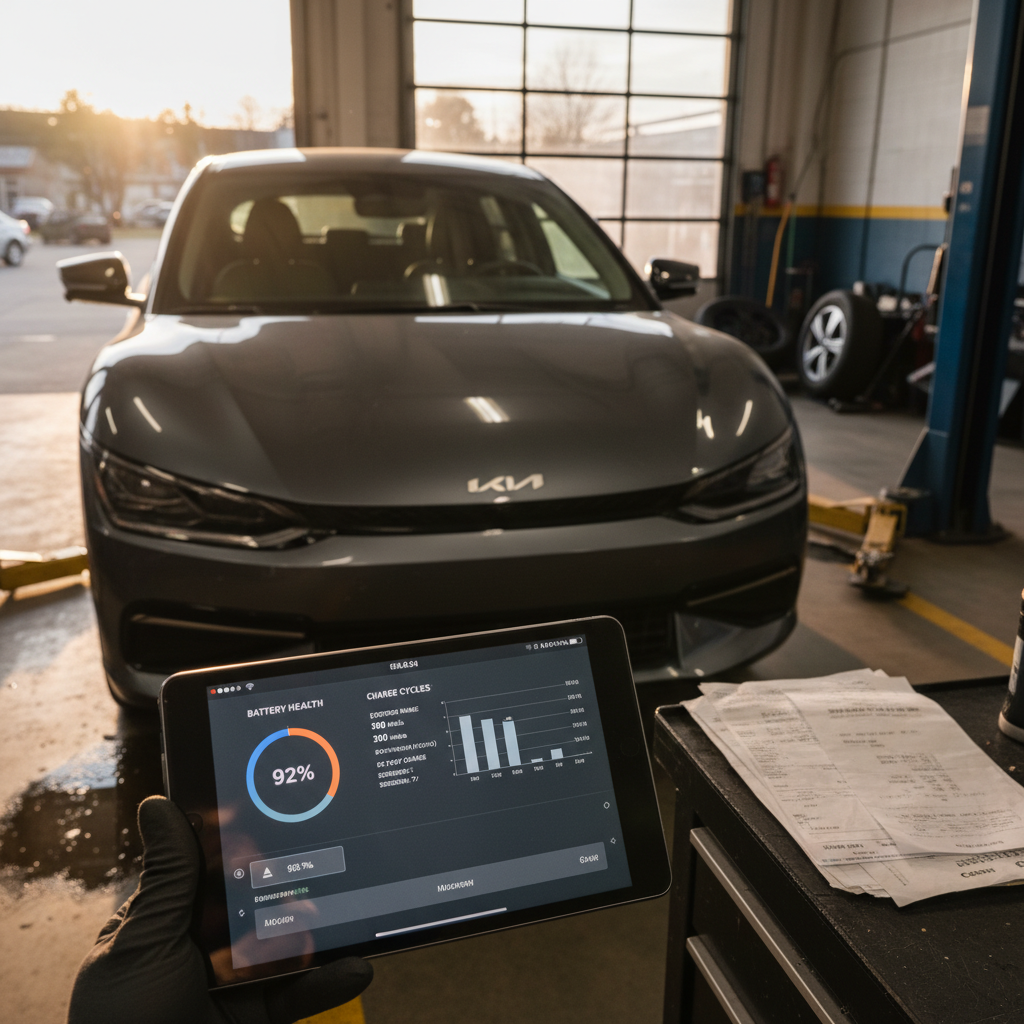
If possible, have a third‑party or dealership run a battery capacity check. On Recharged, the Recharged Score does this for you and packages the result in your listing.
Clarify warranty start date
Battery warranty runs from the original in‑service date, not just the model year. Get that date from your paperwork or a Mini dealer so buyers know exactly how much coverage remains.
Address any warning lights
If the car has thrown high‑voltage or charging‑system errors, sort them out before selling. Unresolved EV warning lights kill buyer confidence and resale value.
Specs and options that help (or hurt) your resale
Even within the same model year and mileage band, Mini Cooper SE values can vary by thousands of dollars based on trim, wheels, color, and equipment. Because the SE is an emotional purchase as much as a rational one, aesthetics matter more than they might on a purely utilitarian EV.
Mini Cooper SE options: resale boosters vs. drag factors
Common specs and choices that influence used‑market prices in 2026.
| Factor | Helps resale | Hurts resale | Why it matters |
|---|---|---|---|
| Exterior color | Classic Mini colors (British Racing Green, white, blue, gray) | Very loud or unusual wraps, heavily faded paint | Most used buyers want the “Mini look” without committing to niche colors. |
| Wheels | Undamaged OEM wheels, popular designs | Curb‑rashed, aftermarket, or very large wheels with thin tires | Visible wheel damage suggests hard use; custom wheels are tastespecific and narrow your audience. |
| Interior trim | Well‑kept leather or premium cloth, no tears or stains | Heavy wear, unusual aftermarket upholstery, pet damage | The cabin is a huge part of the Mini appeal; a tired interior drags prices down fast. |
| Packages | Driver‑assist features, LED headlights, heated seats | Missing basic comfort features, bare‑bones spec on higher price | Buyers assume a small EV will still feel premium; de‑contented cars are harder to sell. |
| Charging gear | OEM portable EVSE plus any useful accessories | Missing charge cable, damaged connectors | Including complete, working charging gear reassures buyers and saves them money day one. |
This table is directional; actual price impact depends on your local market and buyer preferences.
Spec strategy if you’re buying in 2026
Selling vs trading in your Mini Cooper SE
Once you have a ballpark sense of what your Mini is worth, the next call is how to convert that value into cash or equity for your next car. With EVs in particular, spreads between retail and trade‑in can feel bigger than with gas cars, because many conventional dealers are still uncertain about used‑EV pricing and battery risk.
Traditional trade‑in at a dealer
- Pros: Fast and convenient; you roll equity straight into your next car; no need to meet private buyers.
- Cons: Typically the lowest dollar outcome; some dealers undervalue EVs because they’re worried about future demand or battery issues; offers can be especially conservative on short‑range EVs like the Mini SE.
Trade‑ins make the most sense if time and simplicity are more important than squeezing out every last dollar.
Selling through a used‑EV marketplace
- Pros: You tap into a national pool of EV‑interested buyers; pricing is based on fresh EV data; marketplaces like Recharged can certify battery health and handle logistics.
- Cons: Takes a bit more time than handing a dealer your keys; you’ll need to coordinate photos, paperwork, and sometimes test drives.
For well‑kept Minis, this route often nets meaningfully more than a local trade‑in, especially if your car has desirable color and options.
Where Recharged fits into your options
How to maximize your Mini Cooper SE’s sale price
If you’re realistic about pricing and strategic about timing, you can be on the right side of the Mini SE’s depreciation curve. Here’s a practical, step‑by‑step playbook for 2026 sellers.
8‑step playbook to get top dollar for your Mini SE
1. Time your sale around warranty and season
Listing the car while it still has at least 2–3 years of battery warranty remaining reassures used buyers. In colder climates, values tend to be a bit stronger going into spring and early summer than in the dead of winter.
2. Benchmark realistically with multiple sources
Check recent sales and asking prices on several sites, not just one guide. If most 2021s like yours are listed at $18,000–$20,000, expect realistic offers a bit below the middle of that range, not at the very top.
3. Fix cheap, obvious issues first
Curb‑rashed wheels, burned‑out bulbs, badly worn tires, and minor cosmetic issues make buyers assume bigger problems. A few hundred dollars of reconditioning can easily support $1,000 or more in added resale value.
4. Gather service and charging records
Print out dealer service history, tire receipts, and any EV‑specific work. If you’ve mostly charged at home on Level 2 and rarely DC fast‑charged, note that up front, range‑sensitive buyers care.
5. Highlight the right use case in your listing
Aim your marketing at the buyers who actually benefit from a Mini SE: urban commuters, two‑car households, and people replacing an old gas commuter. Lean into low running costs and easy parking, not road‑trip fantasies.
6. Price into the band, not above it
If you want a quick, painless sale, list a clean car in the upper‑middle of the going range for similar Minis, not above every other listing. Overpricing a niche EV just leads to weeks of tire‑kickers and price drops.
7. Offer both cash‑sale and financing paths
Many used‑EV shoppers still want simple financing. Selling through a platform like Recharged allows buyers to arrange EV‑friendly financing, which can broaden your pool and support a higher effective sale price.
8. Be upfront about range and limitations
Don’t bury the real‑world range. Serious buyers already know the Mini SE is a short‑range car; honesty builds trust and reduces renegotiation after test drives.
Who a used Mini Cooper SE is perfect for
One of the most reliable ways to think about resale value is to ask: who is this car perfect for in 2026? The clearer and more durable that “perfect fit” scenario is, the better an EV tends to hold up on the used market. The Mini Cooper SE scores reasonably well here, provided you don’t ask it to be something it was never designed to be.
Best‑fit owners for a used Mini Cooper SE
If you’re selling, this is your target audience. If you’re buying, see if you fit one of these profiles.
Urban apartment dweller
You park in a garage, have access to Level 2 charging at home or work, and rarely drive more than 40–50 miles in a day. The Mini SE gives you premium feel and tiny‑car maneuverability with almost zero gas bills.
Two‑car household commuter
Your other car can handle road trips. The SE covers commuting, errands, and school runs. In this role, even a lightly used 2020 or 2021 model with some range degradation can be a terrific value.
Enthusiast downsizing from a hot hatch
You want something fun and characterful but don’t need long‑range. As more enthusiasts discover how entertaining the SE is to drive, that niche demand supports a “floor” for cleaner, well‑optioned examples.
Who probably shouldn’t buy your Mini SE
Mini Cooper SE resale FAQ (2026)
Frequently asked questions about Mini Cooper SE resale value
Bottom line: Mini Cooper SE resale outlook for 2026–2030
Looking ahead to 2030, the Mini Cooper SE is unlikely to be either a resale champion or a horror story. Its short range and the arrival of longer‑legged electric Minis will keep a gentle downward pressure on prices. At the same time, strong brand identity, entertaining driving dynamics, and solid battery durability should prevent values from falling to the rock‑bottom levels seen on some early compliance EVs.
If you already own one, the financially rational play in 2026 is usually to keep it until it no longer fits your life rather than panic‑selling after looking at raw depreciation charts. If you’re buying, focus on battery health, condition, and options rather than chasing the very cheapest example. And whether you’re on the buy or sell side, consider using a marketplace like Recharged that understands EVs, verifies battery health through the Recharged Score, and supports financing, trade‑ins, and nationwide delivery. That’s how you turn a quirky, short‑range EV into a smart long‑term decision.