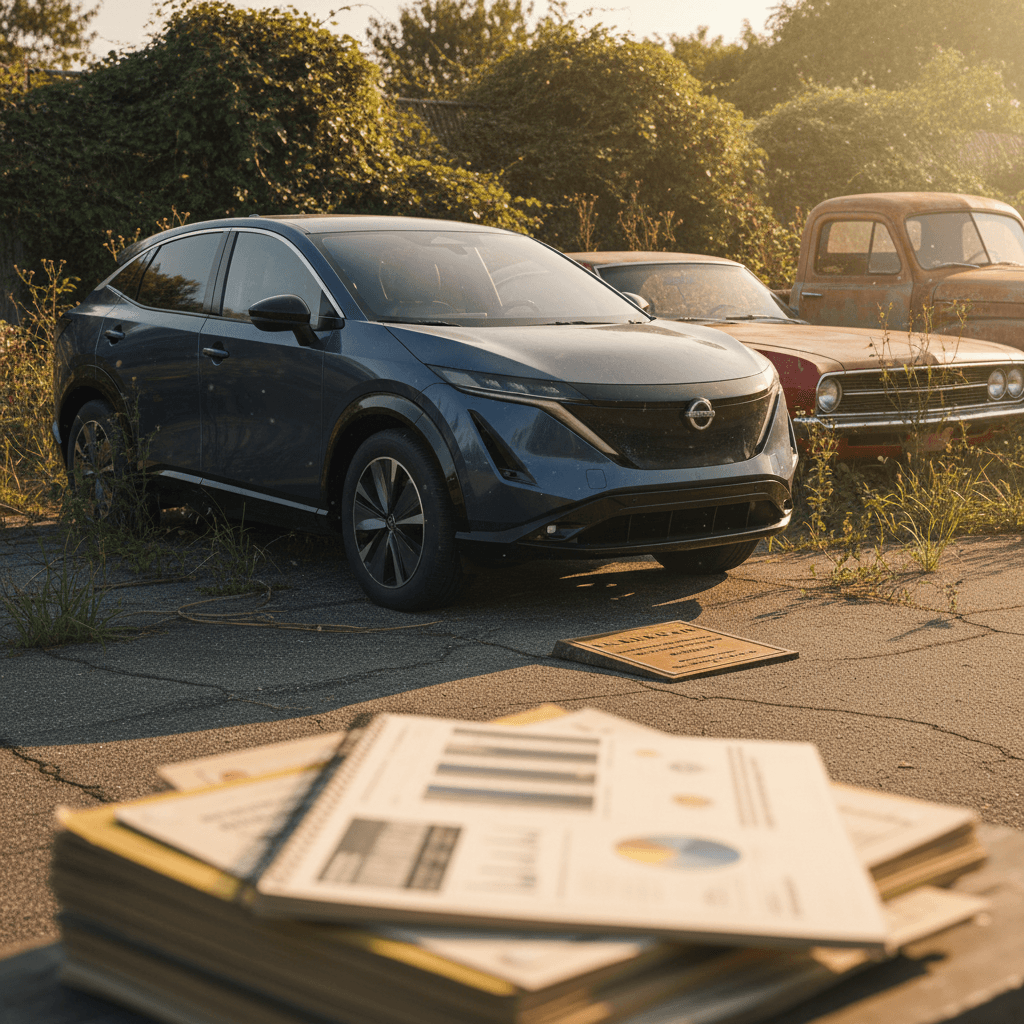
If you’re looking at a Nissan Ariya, depreciation rate should be high on your checklist. The Ariya has quickly earned a reputation for **steep value drops in its first few years**, which makes it painful for some original owners, but potentially a bargain for used EV shoppers. This guide breaks down exactly how the Nissan Ariya depreciates, how it compares with rivals like the Tesla Model Y and Hyundai Ioniq 5, and what today’s used prices mean if you’re buying or selling.
Key takeaway
Overview: How the Nissan Ariya Depreciates
Nissan Ariya Depreciation at a Glance
Depreciation isn’t unique to the Nissan Ariya, **all new vehicles lose value fastest in the first 3 years**. What makes the Ariya stand out is just how quickly that value falls compared with other battery‑electric SUVs. Pricing data from multiple valuation guides shows the Ariya giving up a much larger share of its MSRP over 5 years than segment leaders like the Tesla Model Y or Hyundai Ioniq 5.
Important context
How Fast Does the Nissan Ariya Depreciate?
Different sources will quote slightly different numbers depending on assumptions (trim, mileage, incentives, and region), but they all point in the same direction: **the Nissan Ariya depreciates faster than average** for both EVs and compact SUVs.
Estimated Nissan Ariya Depreciation Curve
Typical depreciation pattern for a Nissan Ariya based on aggregated market data and current used pricing trends. Actual results vary by trim, incentives, and mileage.
| Vehicle age | Estimated value retained | Estimated depreciation from MSRP | What it means |
|---|---|---|---|
| 1 year | ~51% | ~49% loss | A one‑year‑old Ariya is often priced around half of its original MSRP. |
| 3 years | ~43% | ~57% loss | By year three, many Ariya examples have lost well over half their sticker price. |
| 5 years | ~36% | ~64% loss | Five‑year‑old Ariya models are projected to keep only about a third of their original value. |
| 10 years | ~28% | ~72% loss | Long‑term, the Ariya ends up near the bottom of the pack for value retention among EVs. |
Think of this as a directional guide to how the Ariya’s value erodes over time, not a precise prediction for every vehicle.
Put simply, **a Nissan Ariya that cost around $50,000 new can plausibly be worth somewhere in the low‑to‑mid $20,000s within just a few years**, depending on trim and miles. That’s a dramatic reset in price, and it’s exactly why the Ariya now shows up on lists of Japanese vehicles with the weakest resale value.
3–5 Year Nissan Ariya Depreciation Projections
To understand the full Nissan Ariya depreciation rate picture, it helps to zoom in on the crucial 3‑ to 5‑year window. That’s when many first owners sell or trade, and when second owners can capitalize on lower prices without sacrificing too much remaining battery life.
3–5 Year Nissan Ariya Depreciation Snapshot
Illustrative example using a $50,000 MSRP Ariya to show what 3–5 year depreciation can look like in dollar terms.
| Year | Example original MSRP | Typical resale value range | Approx. value retained | Approx. depreciation |
|---|---|---|---|---|
| Year 1 | $50,000 | $25,000–$28,000 | 50–56% | 44–50% |
| Year 3 | $50,000 | $21,000–$24,000 | 42–48% | 52–58% |
| Year 5 | $50,000 | $17,000–$19,000 | 34–38% | 62–66% |
Numbers rounded for simplicity and based on current market patterns; your local market may be higher or lower.
How to use these numbers
Why Does the Nissan Ariya Depreciate So Much?
The Ariya isn’t a bad vehicle. It’s stylish, quiet, and well‑equipped, and owners often praise its comfort. But **resale value reflects market forces, not just product quality**. Several factors are working against the Ariya’s depreciation rate:
Main Drivers of Nissan Ariya Depreciation
Why this EV loses value faster than many rivals
1. Aggressive EV discounts & incentives
Over the last couple of years, mainstream EV prices have moved sharply downward. Tesla cut prices repeatedly, legacy brands started offering hefty discounts, and **new‑car incentives on EVs reset shoppers’ price expectations**. Ariya values had to follow the market down.
2. Slow brand momentum in EVs
Nissan was early to the EV game with the Leaf, but the Ariya entered a field dominated by Tesla and increasingly strong rivals from Hyundai, Kia, and Ford. **Lower awareness and demand for the Ariya** means used buyers don’t line up and bid prices back up.
3. Discontinuation in the U.S.
With Nissan planning to **pull the Ariya from the U.S. lineup after the 2025 model year**, some buyers worry about long‑term support and future parts availability. Even though Nissan will keep supporting existing owners, the headline alone can amplify depreciation in the short term.
4. Intense competitive set
The Ariya competes directly with hot models like the **Tesla Model Y, Hyundai Ioniq 5, Kia EV6, and Ford Mustang Mach‑E**. Those vehicles bring stronger charging networks, faster DC rates, or more brand cachet, keeping their resale values firmer.
What’s *not* the problem
Depreciation: Nissan Ariya vs. Tesla Model Y & Rivals
If you’re cross‑shopping EVs, you don’t just care about the Nissan Ariya depreciation rate in isolation. You want to know how it stacks up against the segment.
5‑Year Depreciation Comparison: Electric Compact SUVs
High‑level look at how the Nissan Ariya’s projected 5‑year depreciation compares with popular rivals.
| Model | Estimated 5‑year depreciation | Estimated 5‑year value retained | Resale‑value positioning |
|---|---|---|---|
| Nissan Ariya | ≈63–64% | ≈36–37% | Among the weakest resale values in the segment. |
| Hyundai Ioniq 5 | ≈59% | ≈41% | Stronger retention than Ariya; often cited for solid residuals. |
| Tesla Model Y | ≈50–55% | ≈45–50% | Typically one of the best‑retaining EVs thanks to demand and charging network. |
| Ford Mustang Mach‑E | ≈58–60% | ≈40–42% | Mid‑pack; better than Ariya but weaker than Model Y. |
Estimates vary by trim and incentive structure, but the pattern is consistent: the Ariya tends to lose more of its value than core competitors.
Upside for shoppers
What Current Used Nissan Ariya Prices Look Like
As of early 2026, U.S. listing data and anecdotal owner reports point to a clear pattern: **lightly‑used Nissan Ariya models are widely available in the low‑ to mid‑$20,000s**. That’s a striking drop from original MSRP, which commonly ranged from the low‑$40,000s into the $60,000s depending on trim and options.
- National pricing trackers peg the *average* used Ariya transaction price around the **low $20,000s**, with 2023 models often slightly cheaper than 2024s.
- Some 2023 Evolve+ and Empower+ trims with modest mileage have changed hands in the **mid‑$20,000s**, according to recent buyer reports.
- Higher‑spec all‑wheel‑drive e‑4ORCE trims still command more money, but even those can undercut their original sticker by $20,000 or more.
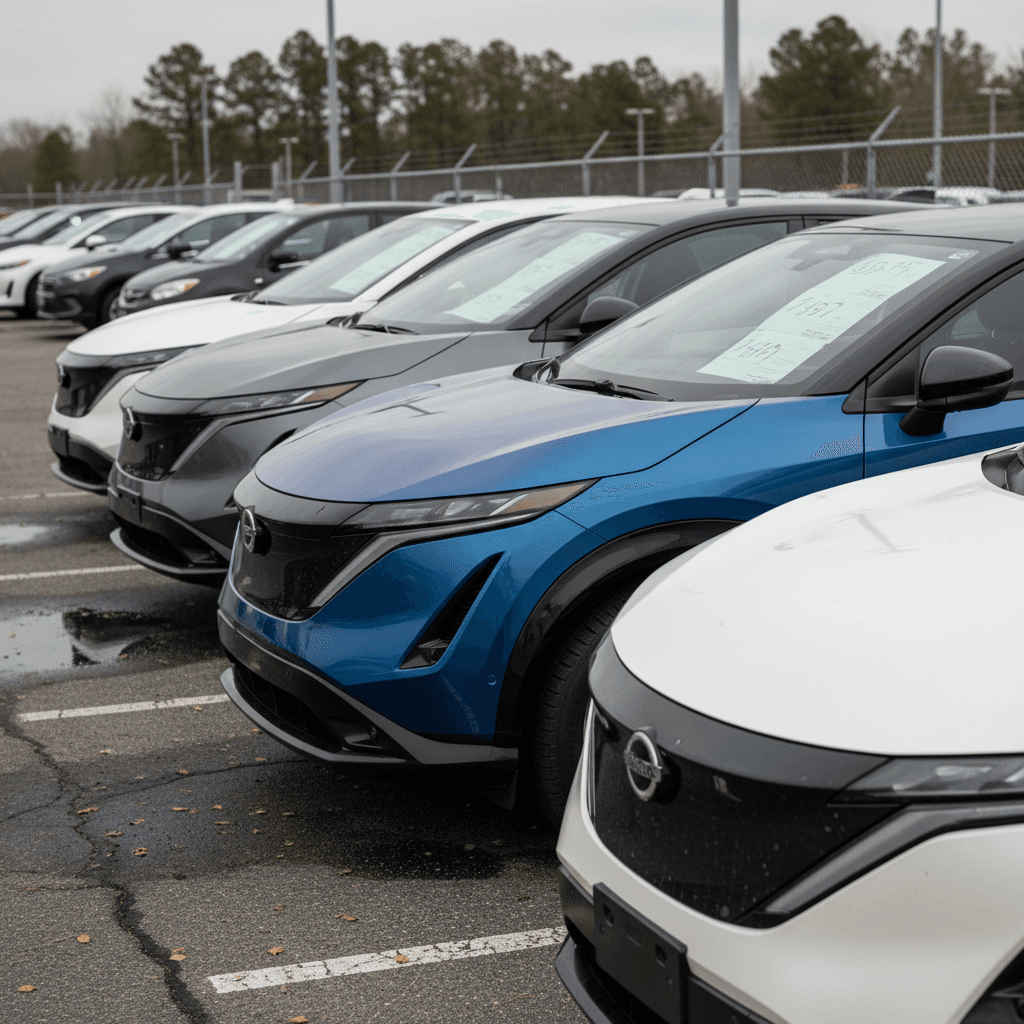
On Recharged and other used‑EV marketplaces, that means you can realistically cross‑shop a late‑model Ariya against **much older or higher‑mileage** examples of more expensive EVs, and still end up paying less while getting newer tech and fresher batteries.
What Nissan Ariya Depreciation Means for Owners
If you bought new
If you purchased a Nissan Ariya new in 2023 or 2024, you’re likely sitting on **significant paper losses** compared with your original sticker price, especially if you didn’t stack heavy incentives or rebates at the time.
- Trading out early (years 1–3) will probably lock in the steepest depreciation hit.
- Rolling negative equity into your next loan can make the next vehicle more expensive than it looks on paper.
- Holding the Ariya **longer term (7–10 years)** can help you “ride out” the steep part of the curve.
If you’re buying used today
For used buyers, the same depreciation that hurts first owners becomes a **pricing tailwind**.
- You can often get a 1–3‑year‑old Ariya for roughly half of its original MSRP.
- The remaining depreciation from here is likely to be **much more gradual** than the initial cliff.
- As long as battery health checks out, the Ariya can offer an unusually low cost of entry for a modern, well‑equipped EV SUV.
Watch your loan‑to‑value (LTV)
7 Ways to Reduce Your Ariya’s Depreciation Hit
You can’t control the broader market, but you *can* influence how your individual Ariya performs on the resale radar. These strategies apply whether you already own one or you’re thinking about buying new or used.
Practical Ways to Protect Your Ariya’s Value
1. Start with a fair (or great) purchase price
Depreciation is measured against **what you paid**, not just MSRP. If you negotiate well, capture rebates, or buy a competitively priced used Ariya, you’ve lowered your personal depreciation from day one.
2. Prioritize trims buyers actually want
Historically, EV shoppers gravitate to **mid‑ and high‑trim models** with larger batteries and more features. A well‑equipped Evolve+ or Empower+ often holds interest better than a base model with shorter range.
3. Protect and document battery health
Battery condition is central to EV value. Having a third‑party battery health report, like the Recharged Score on every vehicle we list, gives future buyers confidence and can support a stronger resale price.
4. Keep mileage reasonable
EV buyers still react to odometer readings. Staying close to or below **12,000 miles per year** makes your Ariya more competitive against similar‑year vehicles with higher usage.
5. Stay on top of maintenance and software
Even though EVs need less maintenance than gas cars, **documented service records and completed software updates** signal a cared‑for vehicle. Keep digital or paper records handy for resale time.
6. Time your sale thoughtfully
If possible, avoid selling just as a negative headline hits, like the discontinuation announcement, or right after a wave of heavy new‑car discounts. Waiting a few months for the market to rebalance can help.
7. Consider selling direct to EV‑savvy buyers
Shoppers who understand EVs are more likely to appreciate a clean Ariya with strong battery health. Platforms that **specialize in used EVs**, like Recharged, can expose your car to the right audience.
Is a Used Nissan Ariya a Smart Buy?
From a depreciation‑rate standpoint, **a used Nissan Ariya can be one of the smartest EV buys on the market** right now, provided you shop carefully. You’re effectively letting the first owner absorb an unusually large share of the value loss while you step into a relatively new, well‑equipped electric SUV for compact‑crossover money.
Used Nissan Ariya: Pros and Cons from a Depreciation Angle
Why some shoppers should jump in, and others should think twice
Upsides of buying used
- Exceptional value per dollar: You can often buy a low‑mile Ariya for the price of a much older or smaller EV.
- Modern tech and comfort: Premium interior, strong safety tech, and competitive range versus peers.
- Smoother future depreciation: Once the big initial drop is behind you, further value losses usually moderate.
Risks to keep in mind
- Uncertain long‑term resale: With the model leaving the U.S. lineup, values could remain under pressure.
- Charging and brand perception: Some buyers prefer Tesla’s network or Hyundai/Kia’s rapid charging, which can limit your future buyer pool.
- Financing exposure: If you put very little down, quick depreciation can create negative equity risk.
How Recharged can help
Ready to find your next EV?
Browse VehiclesFAQ: Nissan Ariya Depreciation Rate
Frequently Asked Questions About Nissan Ariya Depreciation
The bottom line: **the Nissan Ariya depreciation rate is steep, but it cuts both ways**. Original owners who paid near‑MSRP and try to exit early will feel real pain. But if you’re entering the market now as a used‑EV shopper, that same dynamic can turn the Ariya into one of the best‑value electric SUVs available, especially when you pair a fair purchase price with verified battery health and transparent market data. Approach it with eyes open, run the numbers carefully, and you can let someone else’s depreciation problem become your opportunity.