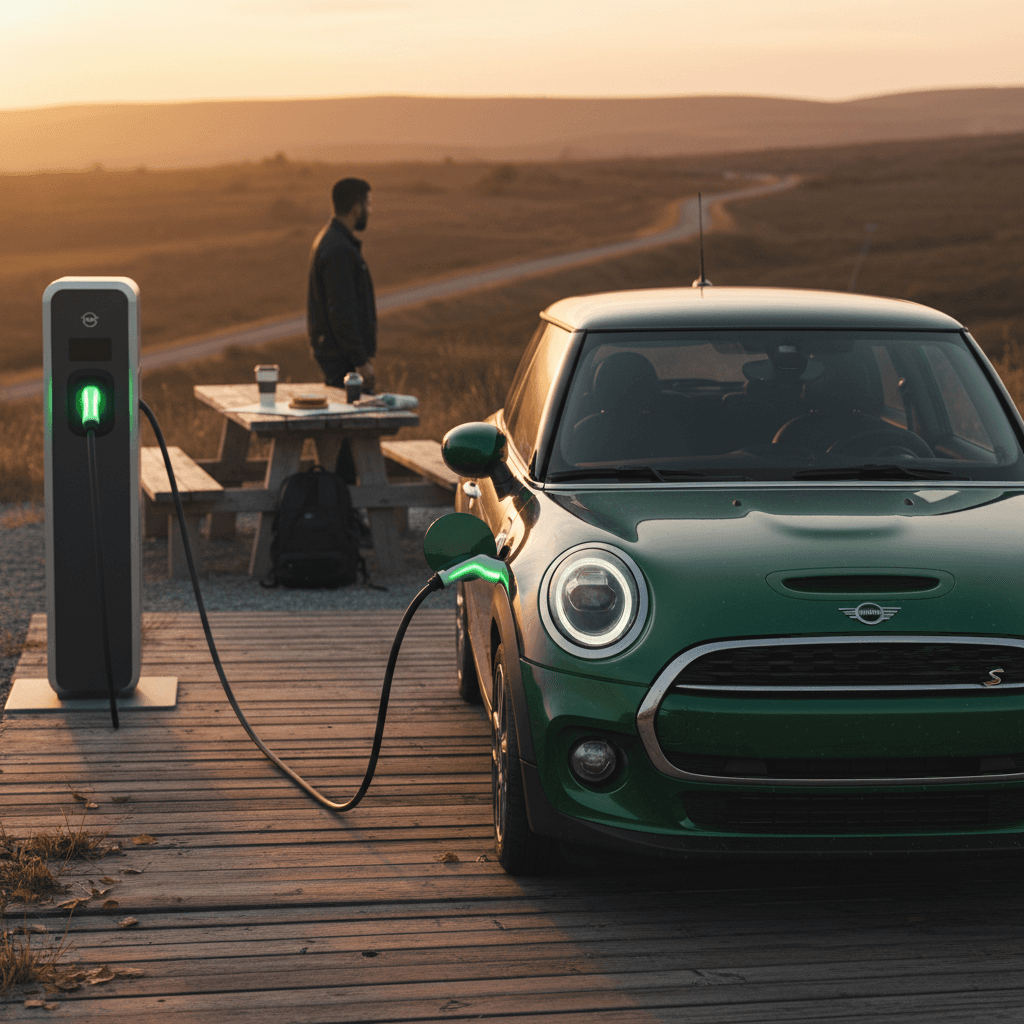
If you own a Mini Cooper SE, you already know it’s a brilliant city car. But what about long-distance driving? With an EPA estimate around 114 miles and real‑world highway range closer to 90–110 miles depending on conditions, you can’t treat the SE like a big‑battery highway cruiser, but you also don’t have to leave it parked for every trip out of town.
Quick take
Is the Mini Cooper SE good for long-distance driving?
Where the Mini Cooper SE shines
- Fun, low‑stress driving: The go‑kart feel actually makes frequent stops less annoying than in a heavier EV.
- Fast DC top‑ups for its size: With a pack around 32 kWh and DC fast charging up to ~50 kW, you can add a meaningful chunk of range in 20–30 minutes.
- Predictable efficiency: Once you learn your own car’s consumption at 60–70 mph, range planning becomes very repeatable.
Where you need to be realistic
- Modest highway range: Plan on ~90–110 miles per full charge at 65–70 mph in decent weather, less in winter.
- Slow vs. big‑battery EVs: You’ll stop more often than a 230–300 mile EV, so very long days (400+ miles) are possible but tiring.
- Limited comfort margin: You don’t have the luxury of skipping a charger because you “probably have enough.” Route discipline matters.
Set your expectations first
Know your real‑world Mini Cooper SE range
On paper, the F56 Mini Cooper SE’s battery is about 32–33 kWh gross and ~29 kWh usable, with an EPA combined range around 114 miles. In practice, what matters for long‑distance driving is how far you can go at your chosen highway speed, in your weather, with your passengers and cargo.
Rule-of-thumb Mini Cooper SE range estimates
These are planning numbers, not promises, test them with your own car before a big trip.
City / mixed driving
115–135 miles per full charge is common in mild temps at urban speeds where regen can work.
If your commute already beats the EPA number, that’s a good sign.
Typical highway day
At 60–70 mph in mild weather, plan around 90–110 miles per full charge.
Higher speeds, headwinds, and roof racks eat into this quickly.
Cold‑weather highway
In winter with heater use at 65–70 mph, it’s safer to plan on 70–90 miles per full charge.
Pre‑conditioning helps but doesn’t eliminate winter losses.
Do a “baseline” test before your trip
Plan routes around 50–75 mile driving legs
Because the Mini SE’s battery is small, it’s happiest when you avoid running it from 100% down to single digits. On road‑trip days, think in terms of shorter, more frequent stints between DC fast chargers rather than monster legs that run the pack nearly empty.
How to structure a 150–250 mile Mini SE day
1. Start near 100% at home or hotel
Use Level 2 charging overnight to leave with a full battery. That first leg is “free” time, you’re charging while you sleep instead of burning time on the road.
2. Aim for 50–75 mile first leg
At typical highway speeds, that usually lands you near 40–60% state of charge (SOC). This is a comfortable buffer and keeps you away from the slowest parts of the charging curve.
3. Stop where chargers are clustered
Choose highway stops with <strong>multiple CCS plugs</strong> from networks like Electrify America, EVgo, or others. Redundancy matters if one station is down or occupied.
4. Target 10–70% or 15–80% charging windows
Your Mini Cooper SE charges fastest from low SOC up to about 70–80%. Shorter, more frequent sessions in that band are usually faster overall than one big 10–100% stop.
5. Stack charging with meals and breaks
Plan DC fast‑charge stops where you can use the restroom, grab food, or walk around. With a small pack, you’ll often be ready to go before you finish a full sit‑down meal.
6. Keep a backup stop in your pocket
For each planned charger, know the next one up the road. If your first choice is offline, you won’t be scrambling to redo the route from the side of the highway.
Sample 210‑mile day in a Mini Cooper SE
Here’s what a realistic day might look like in mild weather at ~65 mph.
| Leg | Start SOC | End SOC | Miles Driven | Stop Type | Charge Target | Stop Time (approx.) |
|---|---|---|---|---|---|---|
| Home → Stop 1 | 100% | 45% | 70 | Drive | , | , |
| Stop 1 | 45% | 80% | , | DC fast charge | 10–80% | 25–30 min |
| Stop 1 → Stop 2 | 80% | 35% | 70 | Drive | , | , |
| Stop 2 | 35% | 80% | , | DC fast charge | 15–80% | 25–30 min |
| Stop 2 → Destination | 80% | 25% | 70 | Drive | , | , |
Real‑world times will vary by traffic, temperature, elevation, and charger performance, but this gives you a framework.
Think in time, not just distance
Optimize speed, climate control, and driving mode
In a short‑range EV like the Mini Cooper SE, efficiency is range. The difference between 65 mph and 80 mph can easily be the difference between making the next charger comfortably and arriving on virtual fumes.
Three big efficiency levers on long trips
You don’t have to hypermile, but small changes go a long way.
1. Moderate your speed
Above ~65 mph, aero drag ramps up quickly. Dropping from 75–80 mph to 65–68 mph can save 10–20% energy, which is huge in a 29 kWh usable pack.
2. Use climate smartly
In moderate weather, try Auto with a reasonable setpoint and heated seats/steering wheel instead of blasting the HVAC. In winter, pre‑condition while plugged in and avoid constantly changing settings.
3. Choose the right mode & regen
Many SE owners find Mid or Green mode plus strong one‑pedal regen gives the best balance of fun and efficiency. Use cruise control on flatter stretches to avoid speed drift.
Watch your consumption, not just predicted range
Use DC fast charging strategically
The Mini Cooper SE supports DC fast charging up to about 50 kW. That’s not headline‑grabbing by 2026 standards, but paired with a small battery it’s enough to keep you moving if you use it well.
Mini Cooper SE charging basics for trip planning
- Favor 50–150 kW DC fast chargers. The Mini SE can’t use the full output of a 350 kW unit, but higher‑power sites often have better uptime and more stalls.
- Arrive low, leave “medium.” For the best use of your time, start DC sessions between ~10–40% and unplug around 70–80% unless the next leg is unusually long.
- Avoid topping to 100% on DC unless necessary. Above ~80–90%, charge power tapers hard and you’re mostly babysitting the last few percent.
- Use Level 2 when you can stack hours. At a hotel, friend’s house, or long restaurant stop, plug into Level 2 and let the car climb to 90–100% while you do something else.
- Check pricing before plugging in. Per‑minute billing can favor small‑battery EVs like the Mini SE, but in some regions energy‑based pricing is cheaper on slower 50 kW units than 150+ kW stations.
Be picky about charger locations
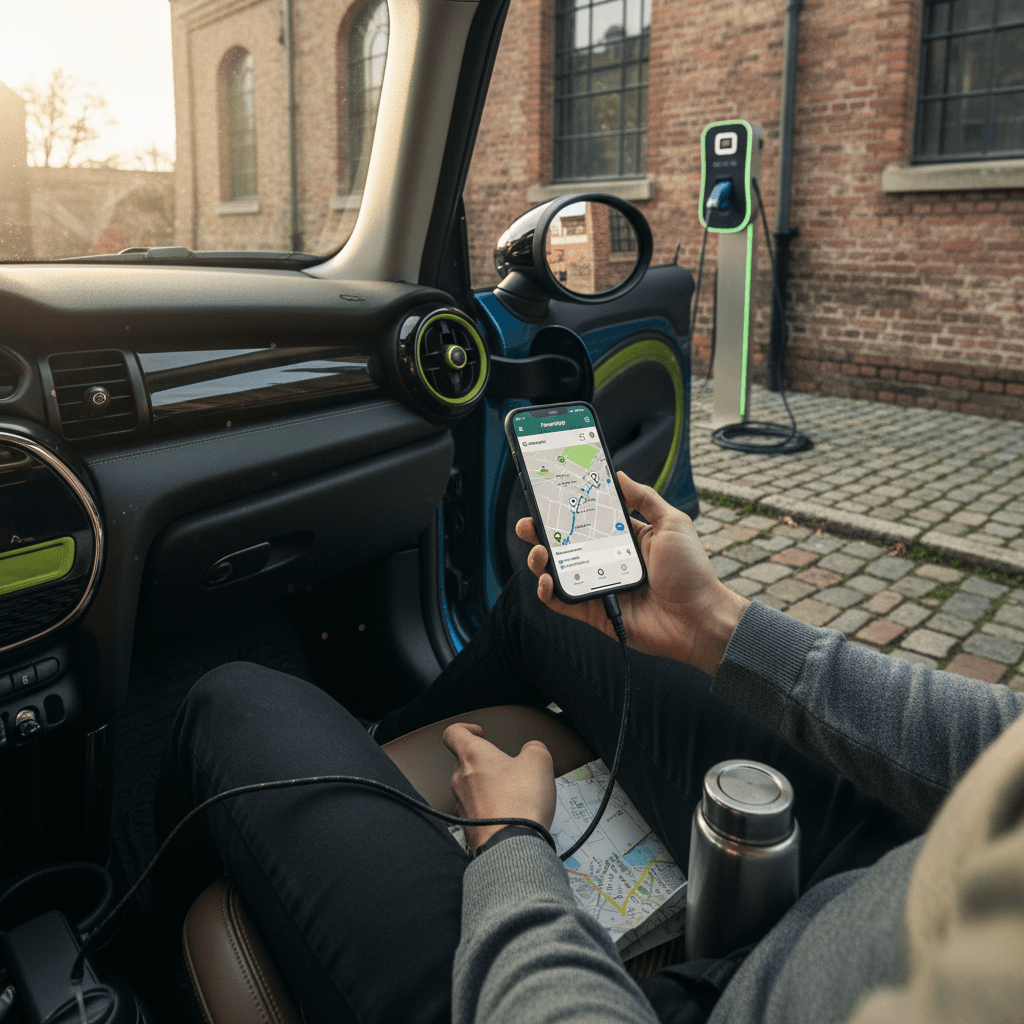
Apps and tools that make planning easier
You don’t need a spreadsheet to road‑trip a Mini Cooper SE, but a few good planning tools can turn guesswork into a predictable, low‑stress day.
Recommended planning tools for Mini Cooper SE owners
Mix a trip planner with live charger info for best results.
A better route planner (ABRP)
ABRP lets you select the Mini Cooper SE as a vehicle, adjust your reference consumption, and have it auto‑plan where and how long to charge.
- Great for first‑time long trips
- Shows SOC on arrival at each stop
PlugShare or Chargeway
These apps crowd‑source charger status, photos, and reviews.
- See if a site is busy or broken
- Filter for CCS and fast charging only
Network‑specific apps
Apps from Electrify America, EVgo, ChargePoint and others:
- Show real‑time stall availability
- Let you start/stop sessions from your phone
- Store payment and loyalty pricing
Save your “lifeboat” chargers
Packing and prep checklist for longer Mini SE trips
You don’t need a trunk full of gear, but a little preparation can turn a borderline trip into a confidently executed one, especially in less‑dense charging corridors.
What to do and bring before a long Mini SE drive
Confirm your charging hardware
Bring your included Level 1 EVSE, any portable Level 2 unit you own, and a J1772 adapter if you’re planning to use certain destination chargers. Check that cables and plugs are in good shape.
Update apps and payment methods
Install or update key charging apps, sign in, and add payment methods. Try a short local session ahead of time so you’re not debugging accounts at a highway charger.
Check tires and tire pressure
Under‑inflated tires hurt both safety and efficiency. Set pressures to spec (usually on the door jamb) before you leave; higher loads often call for higher pressures within the recommended range.
Pre‑condition before departure
While plugged in at home or your hotel, pre‑heat or pre‑cool the cabin so the pack stays as full as possible. This matters even more on winter trips.
Bring a simple charging “go bag”
Keep gloves, a flashlight or headlamp, glass wipes, a small towel, and a backup RFID card or two with your cables. You’ll thank yourself at a rainy, poorly lit station.
Print or save your key plan offline
Screens fail and cell service can be spotty. Save an offline map, write down a few critical chargers (addresses and networks), and screenshot your route plan just in case.
Battery care on road-trip days
The F56 Mini Cooper SE has earned a reputation for stable battery health when used normally, but road‑trip behavior is different from your weekday pattern. A few habits will keep both your pack and charging experience happy over the long haul.
- Try not to bounce between 0–100% daily. Occasional deep cycles on trip days are fine, but for everyday use, living mostly in the 20–80% band is gentler on the pack.
- Avoid repeated DC fast charges from a hot battery if you can. If you’re stacking multiple fast charges on a summer day, ease up on speed for a stretch and don’t insist on 90–100% each time.
- Don’t panic about the occasional 100% charge. Topping up to 100% overnight before a long day and leaving within an hour or two is normal use, not abuse.
- Use the car’s battery and range screens as early‑warning systems. If you start to see big changes in your usual efficiency at familiar speeds, it’s worth a closer look at tires, alignment, or driving style before assuming battery trouble.
Good news on Mini SE battery health
Ready to find your next EV?
Browse VehiclesWhen a Mini Cooper SE road trip doesn’t make sense
Even with the best planning, there are trips where the Mini SE simply isn’t the right answer. Knowing those edge cases up front saves frustration.
Trips that are poor fits for the Mini Cooper SE
Mis‑matching the car to the job is worse than just taking something less fun.
Sparse‑charger corridors
If your route includes 80–100 mile stretches with little or unreliable DC fast charging, and no practical detours, consider borrowing, renting, or swapping vehicles.
This especially applies in rural areas or extreme climates.
Aggressive same‑day mileage targets
Trying to cover 400–600+ miles in a single day on tight timing is possible on paper but mentally taxing with the SE’s stop cadence.
If you absolutely must arrive by a certain time with no slack, it’s not the ideal tool.
Extreme cold with highway speeds
Sub‑freezing temps plus 70–75 mph and strong winds can compound every weakness at once. If you can’t tolerate an extra stop or two, reschedule or choose another vehicle.
Fully loaded with passengers and cargo
Four adults and gear at highway speed increase consumption noticeably. Long mountain grades exacerbate that. It’s doable with more stops, but be honest about your group’s patience.
Don’t stretch range just to “prove a point”
Mini Cooper SE long-distance FAQ
Common questions about Mini Cooper SE long-distance driving
How Recharged can help if you love the Mini but need more range
The Mini Cooper SE wasn’t designed as a cross‑continent mile‑eater, but with realistic expectations and smart planning, it’s capable of far more than just weekday commuting. If you’re comfortable with 150–250 mile days and don’t mind weaving 20–30 minute stops into your schedule, the SE can turn regional trips into a fun, low‑drama routine rather than a math exercise.
If you’re shopping used or thinking about whether to keep your Mini or move into something with more range, Recharged can help you see the trade‑offs clearly. Every EV we sell comes with a Recharged Score Report that includes verified battery health, so you know exactly how much range you’re working with before your first big trip. You can shop used EVs online, get a trade‑in or instant offer for your current Mini, or talk with an EV specialist about which models fit your driving and road‑trip needs. If you love the Mini’s personality but your life demands longer legs, we’ll help you transition into the right next EV on your terms.