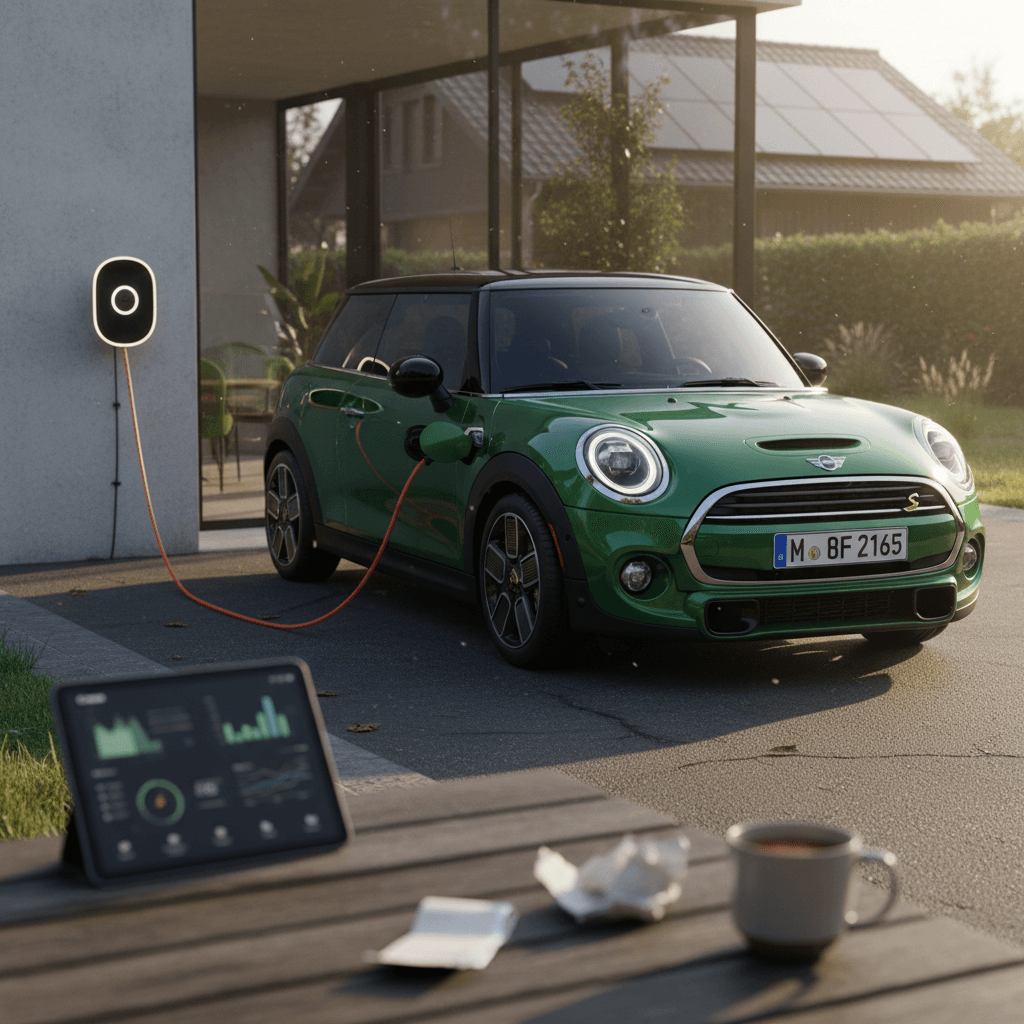
If you’re eyeing a quirky city EV, you’ve probably asked a simple question with a surprisingly fuzzy answer: what does it actually cost per mile to drive a Mini Cooper SE? With electricity prices climbing and gas still volatile, understanding true running costs matters more than ever, especially if you’re shopping the used Mini Cooper SE market.
Key takeaway up front
Mini Cooper SE cost per mile: quick overview
Mini Cooper SE cost-per-mile snapshot (U.S., 2025–2026)
We’ll walk through how those numbers are calculated, then show you best‑ and worst‑case scenarios, how the Mini Cooper SE compares to a gas Cooper, and what it all means if you’re considering a used EV purchase.
How much electricity does a Mini Cooper SE use?
Mini’s own data and independent testing put the Mini Cooper SE’s efficiency in a fairly tight band. The U.S. EPA rates the Cooper SE at about 31 kWh per 100 miles on the combined cycle for recent model years. Real‑world testing from outlets like Edmunds and long‑term owners often show slightly better numbers in mixed city driving, sometimes in the mid‑20s kWh/100 miles when driven gently.
- EPA combined rating: ~31 kWh/100 miles (≈3.2 mi/kWh)
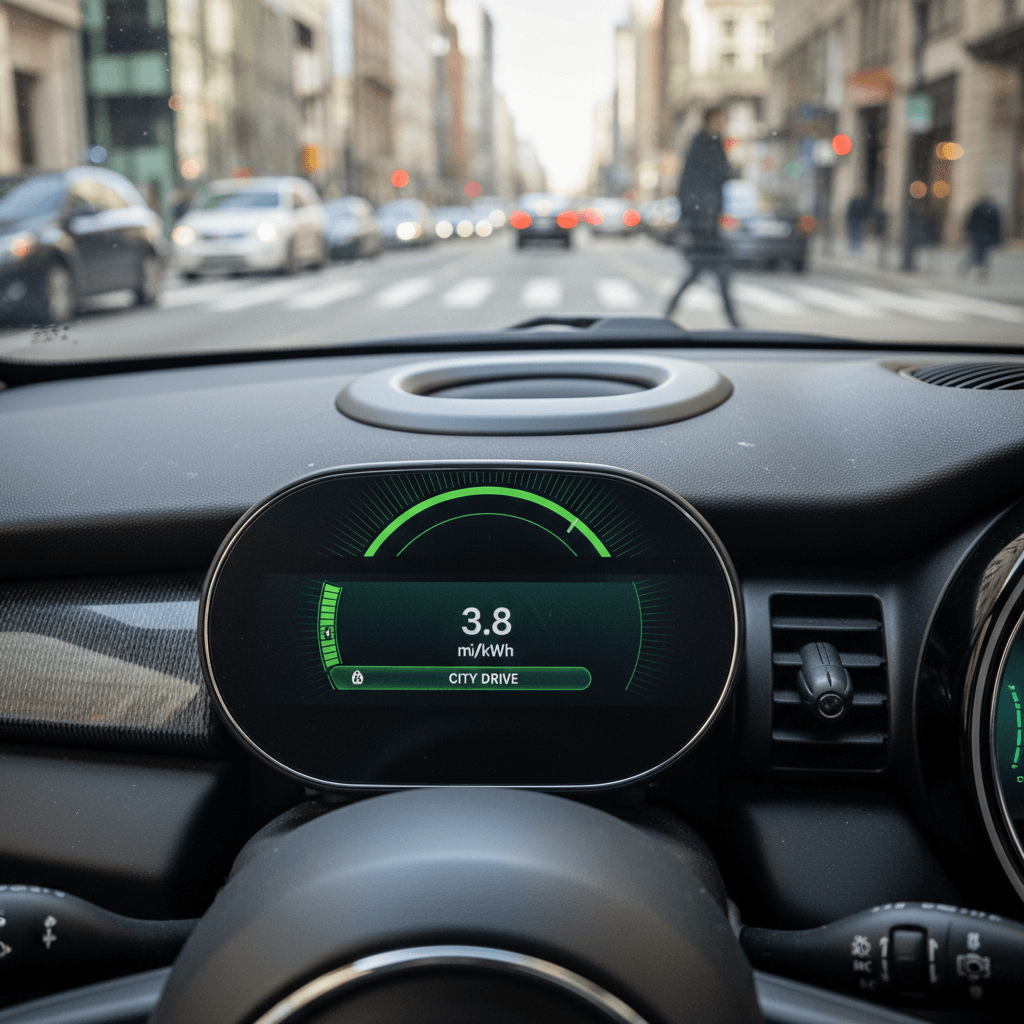
- Typical careful city driver: 25–28 kWh/100 miles (3.5–4.0 mi/kWh)
- Hard driving / cold weather / highway: 32–38+ kWh/100 miles (2.6–3.1 mi/kWh)
How to read those numbers
Average U.S. electricity prices in 2025–2026
The other half of the Mini Cooper SE cost‑per‑mile equation is electricity pricing. In the United States, residential electricity averaged roughly 18–19¢ per kWh through late 2025 and into early 2026, according to recent national data. But there’s huge regional spread: sub‑14¢ in some Midwest and Southern states, and well north of 30¢ in parts of California and the Northeast.
Where your rate likely falls
Use your own bill for precise math, but these ranges are a good starting point.
Low‑cost states (~12–15¢/kWh)
Parts of the Midwest, South and Pacific Northwest still see relatively low residential rates, often around 12–15¢ per kWh.
If you’re here, your Mini Cooper SE can be incredibly cheap to run.
Mid‑range states (~16–22¢/kWh)
Many U.S. states now fall into this middle band, roughly in line with the national average of ~18–19¢ per kWh.
Most Mini drivers will be in this range.
High‑cost states (23–30+¢/kWh)
Parts of California, New England and island grids can push well above 25¢ per kWh for residential customers.
Your per‑mile costs will be higher, but often still competitive with gas.
Don’t guess, check your bill
Step‑by‑step: calculating Mini Cooper SE cost per mile
Once you have efficiency and your electricity rate, the Mini Cooper SE cost per mile is just simple math. Here’s a step‑by‑step using realistic U.S. numbers.
How to calculate your Mini Cooper SE’s cost per mile
1. Find your actual electricity rate
Open a recent utility bill and note the total residential rate in $/kWh (including delivery and fees). For many households in 2025–2026, this is around $0.18–$0.19 per kWh, but your number may be higher or lower.
2. Note your real‑world efficiency
Reset the Mini’s trip computer and drive normally for a week or two. You’ll see average <strong>mi/kWh</strong>. Many owners report between 3.0 and 4.0 mi/kWh depending on climate and driving style.
3. Convert to kWh per 100 miles
Take 100 and divide by your mi/kWh. For example, 3.5 mi/kWh → 100 ÷ 3.5 ≈ 28.6 kWh/100 miles.
4. Multiply by your kWh price
If you use 28.6 kWh to go 100 miles and pay $0.18 per kWh, your 100‑mile electricity cost is 28.6 × $0.18 ≈ $5.15.
5. Divide by 100 for cost per mile
$5.15 ÷ 100 = <strong>$0.051</strong> per mile (about 5.1 cents). That’s your personalized Mini Cooper SE cost per mile.
EPA‑based shortcut
Best‑ and worst‑case Mini Cooper SE cost per mile
To make the Mini Cooper SE cost per mile more tangible, here’s a spread of scenarios combining efficiency and electricity prices that U.S. drivers are actually seeing in 2025–2026.
Mini Cooper SE electricity cost per mile: sample scenarios
Estimates based on recent U.S. electricity price bands and realistic efficiency figures. Your numbers will vary, but these benchmarks are a solid starting point.
| Scenario | Electricity price | Efficiency | Electricity used per 100 mi | Cost per 100 mi | Cost per mile |
|---|---|---|---|---|---|
| Best case (cheap power, efficient driving) | $0.13/kWh | 4.0 mi/kWh (~25 kWh/100 mi) | 25 kWh | $3.25 | $0.033 |
| Typical case (national average, mixed driving) | $0.18/kWh | 3.3 mi/kWh (~30 kWh/100 mi) | 30 kWh | $5.40 | $0.054 |
| EPA baseline (national average price) | $0.19/kWh | EPA ~31 kWh/100 mi | 31 kWh | $5.89 | $0.059 |
| Cold‑weather / spirited driving | $0.19/kWh | 2.7 mi/kWh (~37 kWh/100 mi) | 37 kWh | $7.03 | $0.070 |
| High‑cost power region | $0.30/kWh | 3.0 mi/kWh (~33 kWh/100 mi) | 33 kWh | $9.90 | $0.099 |
Assumes home charging. Public DC fast charging is typically more expensive per kWh and will raise these numbers.
Why fast charging changes the math
Mini Cooper SE vs. gas Cooper: cost per mile
Gas Mini Cooper fuel cost per mile
A gasoline Mini Cooper Hardtop typically returns around 30–32 mpg combined in real‑world use.
- At $3.50/gallon: 30 mpg → $3.50 ÷ 30 ≈ $0.117/mile
- At $4.00/gallon: 30 mpg → $4.00 ÷ 30 ≈ $0.133/mile
Even if you assume a thrifty 35 mpg and cheap $3.00/gallon gas, you’re still around 8.6 cents per mile.
Mini Cooper SE electricity cost per mile
From our earlier table, a typical U.S. Mini SE owner paying around $0.18–$0.19/kWh will land near 5–7 cents per mile on home charging.
- That’s often 40–60% cheaper per mile than the gas Cooper’s fuel.
- In very high‑electricity‑cost regions, the gap narrows but often doesn’t flip completely unless you rely heavily on DC fast charging.
Cost per mile isn’t the whole story
5 factors that change your real‑world cost per mile
What really moves your Mini Cooper SE cost per mile
Some you can control, some you can’t, but all are worth understanding.
1. Climate & cabin heat
Cold weather thickens battery chemistry and makes the heat pump or resistive heater work hard. Winter Mini SE drivers routinely see efficiency drop 20–30%, pushing cost per mile up.
2. Speed & driving mix
The Mini Cooper SE is happiest in the city. Sustained 70–80 mph highway runs can noticeably cut range and efficiency. More highway = more kWh per mile.
3. Driving style
Hard launches and late braking may be fun, this is a Mini, after all, but they cost energy. Smooth acceleration and strong one‑pedal regeneration can gain you 0.5–1.0 additional mi/kWh.
4. When you charge
If your utility offers EV or off‑peak rates, overnight charging can be dramatically cheaper than daytime. That turns a 7–8¢/mile car into a 4–5¢/mile car overnight.
5. Home vs public charging mix
Home Level 2 is usually cheapest. Public Level 2 is often similar. DC fast charging is typically the most expensive and should be reserved for road trips and emergencies.
6. Tire choice & load
Winter tires, roof boxes, and heavy cargo all hurt aerodynamics and rolling resistance. Expect a few extra kWh/100 miles when your Mini is dressed for ski season.
Lock in low‑cost charging
What this means if you’re buying a used Mini Cooper SE
For used‑EV shoppers, the Mini Cooper SE is increasingly attractive: low purchase prices, fun dynamics, and city‑friendly range. Understanding cost per mile helps you see past range anxiety headlines and into the day‑to‑day economics.
Operating cost advantages
- Urban daily drivers win big: If you drive 20–40 miles per day and charge at home, your monthly “fuel” bill can be lower than a single gas fill‑up.
- Lower maintenance: No oil changes, fewer fluids, and strong regenerative braking reduce routine service costs.
- Predictable energy spend: Electricity prices move, but generally less violently than gasoline. That can make budgeting easier.
What to watch on a used Mini SE
- Battery health: A degraded pack doesn’t directly raise per‑mile cost, but it does limit usable range. Look for a battery health report or third‑party diagnostic.
- Charging access: If you can’t install home or workplace charging, you’ll rely on pricier public networks, driving up cost per mile.
- Usage pattern: Lots of highway miles in cold climates may mean higher historical energy use and more DC fast‑charging sessions.
How Recharged fits in
Ready to find your next EV?
Browse VehiclesFAQ: Mini Cooper SE cost per mile
Frequently asked questions about Mini Cooper SE cost per mile
Bottom line: is the Mini Cooper SE cheap to drive?
If you’re primarily a city or suburban driver with reliable access to home or workplace charging, the Mini Cooper SE is one of the cheaper ways to move a car‑sized object around town. With a realistic Mini Cooper SE cost per mile of about 5–7 cents on home electricity, it undercuts most gas Minis on energy cost while delivering the same playful character the brand is known for.
The trade‑offs are well‑known: limited highway range and a reliance on charging infrastructure that’s still uneven in some regions. But if your daily use case fits inside its battery and you can tap into reasonably priced electricity, the running‑cost story is compelling, especially in the used market, where purchase prices have softened. When you shop through Recharged, you also get a Recharged Score battery health report, expert EV guidance, and flexible financing, so you can weigh upfront price and ongoing cost per mile with eyes wide open.