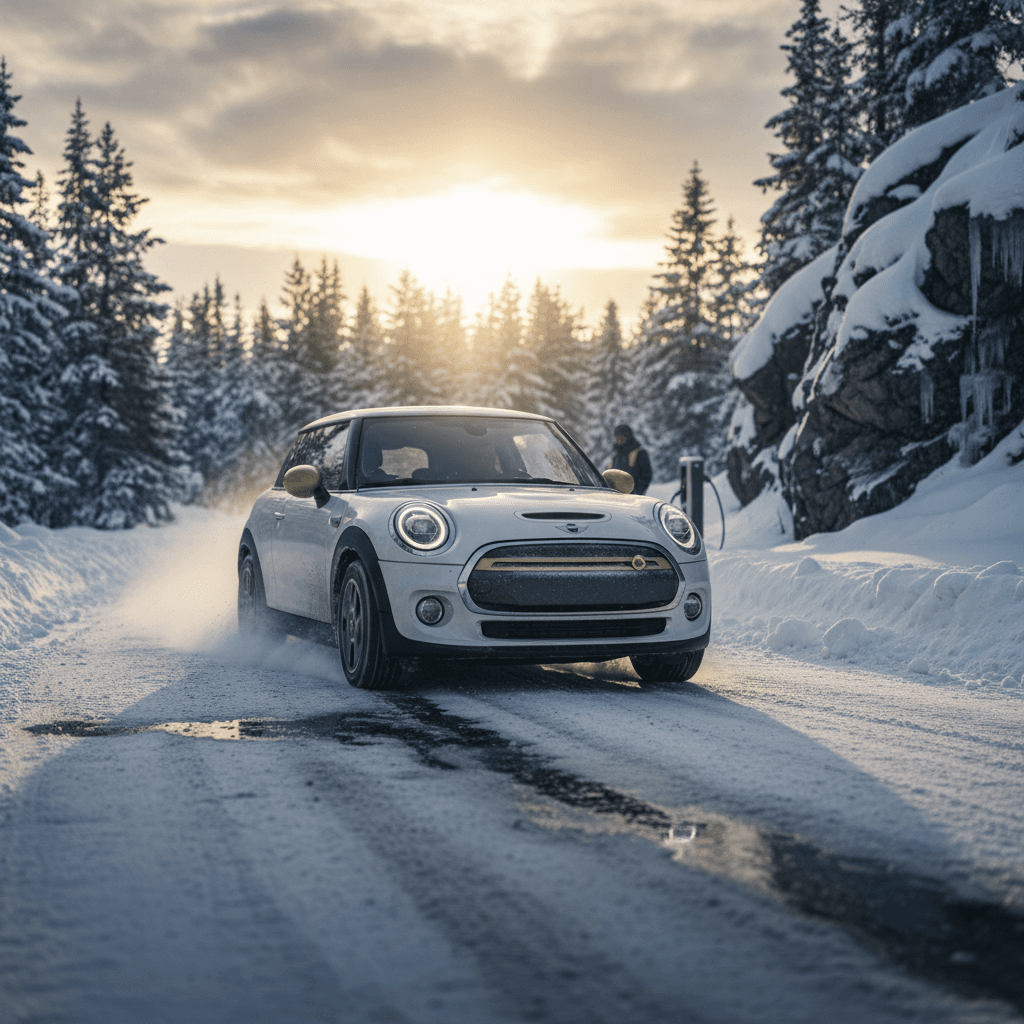
If you’re eyeing a Mini Cooper SE but live where the plows work overtime, you’re probably wondering: is the Mini Cooper SE actually good in snow and ice, or is it a three-season toy? The answer depends less on the badge and more on tires, snow depth, and your daily routine, and the Mini Electric gets some winter things very right.
Bottom line up front
Mini Cooper SE in snow and ice: the short answer
Let’s answer the main question head‑on: the Mini Cooper SE is not a snow beater in the sense of a tall Subaru with all‑wheel drive and knobby tires. It’s a low, front‑wheel‑drive hatchback with about 4.5 inches of ground clearance, a small battery, and a short wheelbase. But in the real world, plowed city streets, suburban commutes, and the occasional storm day, drivers report that a Mini SE on good winter tires tracks straight, stops predictably, and feels reassuringly solid on snow and ice.
- Front‑wheel drive with the weight of the battery over the driven wheels helps traction pulling away from lights and up mild hills.
- A low center of gravity makes the car feel planted when the road gets slick.
- Modern stability and traction control systems react quickly to wheel slip.
- Instant electric torque is easy to modulate, so you can ease onto power instead of waiting for an engine to spool up.
- Heated seats and, on many models, a heated steering wheel help you stay warm without cranking the cabin heat to max.
Where the Mini SE struggles
What the Mini Cooper SE does well (and not so well) in winter
Winter strengths vs. weak spots of the Mini SE
Know what you’re getting before the first big storm hits
Winter strengths
- Predictable FWD behavior that most drivers are used to.
- Low center of gravity from the battery pack calms body motions on slick surfaces.
- Fast, smooth traction control that can catch a slip before it becomes a slide.
- Excellent headlights on many trims for dark, stormy commutes.
- Small size that lets you pick cleaner lines between ruts and snow piles.
Winter weak spots
- Low ground clearance means it can beach itself in deeper drifts.
- No all‑wheel drive, you’re relying on the front wheels only.
- Short EPA range that shrinks noticeably in cold weather.
- Performance tires on some trims that are terrible on ice if you don’t swap them.
- Small cargo area if you’re hauling skis, gear, and people all at once.
Where the Mini SE shines
Traction, stability control, and regen: why the SE feels planted
Winter driving in an EV isn’t just about driven wheels, it’s about everything the car is doing in the background. The Mini Cooper SE borrows the same basic stability toolkit you’ll find across modern Minis, tuned for the instant torque and heavy battery pack of the electric model.
- Front‑wheel drive layout: Power goes to the front tires, which also steer. In low‑to‑moderate snow depths, FWD is usually easier to control than rear‑wheel drive, especially for less experienced drivers.
- Dynamic Stability Control (DSC): Sensors watch wheel speed, steering angle, and yaw. If the car starts to spin or slide, DSC cuts power and individually brakes wheels to straighten you out.
- Traction control: When a front wheel starts to slip on ice or packed snow, the system limits torque and can brake that wheel to send drive to the one with more grip.
- Regenerative braking management: In very slick conditions, strong regen can upset the car if you suddenly lift off the accelerator. Newer software versions automatically soften regen when they sense poor traction, and you can also switch to a lower‑regen mode for more conventional engine‑braking feel.
Pro tip: adjust regen for slick days
Because the battery lives low in the chassis, the SE doesn’t pitch and roll like a tall crossover. That makes mid‑corner corrections on snowy ramps and roundabouts feel calmer. Instead of a slow, weight‑shifting lurch, you get a quick, tidy response that’s easier to manage when grip is changing under you.
Ground clearance: how much snow is too much?
Here’s where we have to be honest: the Mini Cooper SE sits low. Official specs put ground clearance around 4.5 inches, similar to other Mini hatchbacks and much lower than a typical crossover. That’s great for handling, but it limits how much snow you can safely plow through before the car turns into its own snowplow.
- In 1–3 inches of fresh snow on pavement, the Mini SE is generally fine on good winter tires.
- In 3–6 inches, you’re relying heavily on whether the middle of the lane has been driven on or plowed, ruts and packed snow between the wheels can drag on the underbody.
- Above ~6 inches of heavy, wet snow, you risk high‑centering the car or packing snow under the battery tray and bumper. This is where a taller vehicle with AWD really earns its keep.
Don’t force it through deep drifts
Winter range loss in the Mini Cooper SE
Every EV loses range in cold weather. The Mini Cooper SE feels that more than larger‑battery rivals because it starts with a relatively small pack. Owners commonly report that in real winter driving, the Mini’s usable range can drop by 25–40% depending on temperature, speed, heater use, and tire choice.
How winter affects Mini Cooper SE range (rough guide)
Why range drops so much in the cold
None of this makes the Mini SE unusable in winter, it just means you should think in terms of usable winter range, not the rosy number on the window sticker. If your round‑trip is 20–40 miles with a place to plug in at home, you’re in the sweet spot. If you need 80–100 miles of highway driving at 10°F with no chance to charge during the day, you’re pushing the Mini Electric beyond its comfort zone.
Use preconditioning to your advantage
Best tires for Mini Cooper SE in snow and ice
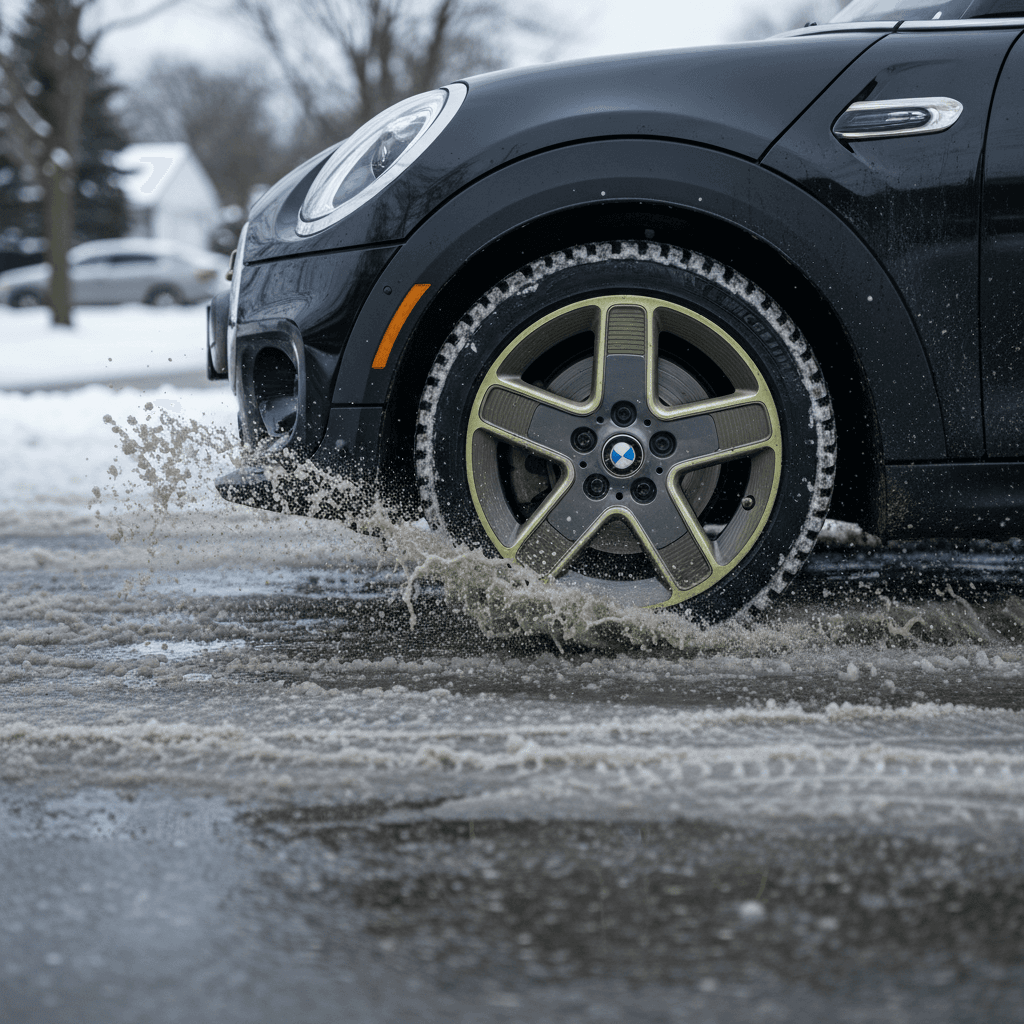
Ask any seasoned Mini driver and you’ll hear the same refrain: the car isn’t the problem in winter, the tires are. The stock tires on many Mini SEs are all‑season or even summer‑biased performance rubber, which can turn to hockey pucks on ice. If you want the Mini Cooper SE to be its best in snow and ice, a dedicated winter setup is non‑negotiable for serious climates.
Popular winter tire types for Mini Cooper SE
These examples show the kinds of tires that wake up the Mini SE’s winter capability. Always confirm exact size and load rating for your wheels and model year.
| Tire type | Examples often recommended for Minis | Best for | Trade‑offs |
|---|---|---|---|
| Performance winter | Michelin Pilot Alpin, Pirelli Sottozero | Milder winters, mostly wet/cold pavement with occasional snow | Sharper handling, but not as strong on glare ice as deep‑lug Nordic tires. |
| Studless ice & snow | Nokian Nordman, Bridgestone Blizzak, Continental VikingContact | Frequent snow and ice, hilly areas, true winter states and provinces | Outstanding grip on snow/ice, but softer feel and faster wear in warm temps. |
| All‑weather (3PMSF) | Michelin CrossClimate 2, Goodyear Vector 4Seasons | Mixed climates where snow is occasional but real when it comes | One‑set solution, but still not as capable as a true winter tire in harsh conditions. |
Brands and models change, but the pattern holds: look for the three‑peak mountain snowflake symbol and strong ice performance ratings.
Don’t rely on summers or basic all‑seasons
Depending on where you live, a studless ice‑and‑snow tire is usually the best match for the Mini SE’s torque and light weight. They let the car pull and stop with surprising authority on snowy side streets and icy intersections, exactly where a short‑range EV like the Mini will live most of its winter life.
How to set up your Mini SE for winter duty
Mini Cooper SE winter setup checklist
1. Choose the right tires and wheels
Pick a dedicated winter or all‑weather tire with the 3PMSF symbol in the correct Mini SE size. Many owners mount them on separate steel or alloy wheels so swapping is a 30‑minute job, not an all‑day tire‑shop visit.
2. Protect the battery with preconditioning
Use the car’s scheduling features so it warms the battery and cabin while plugged in. This improves range and keeps regen more available when you roll out.
3. Dial in your regen and drive mode
Experiment before the first storm. In light snow you may like high regen for one‑pedal driving. On slick, hilly routes, a lower‑regen or comfort mode can make the car feel more predictable when you lift off the accelerator.
4. Pack a compact winter kit
The Mini is small, but you can still stash an ice scraper, small shovel, gloves, a warm blanket, and charging cable adapters. If you’re venturing beyond town, add a portable jump pack for accessories and a phone charger.
5. Check underbody and seals before winter
Because the car rides low, make sure splash shields, wheel‑well liners, and door and hatch seals are secure. You don’t want slush working its way into wiring or packing under a loose undertray.
6. Plan realistic winter routes
Look at your winter driving as if the car has 60–80 miles of reliable range rather than its full rating. Favor routes with public charging, and know where nearby DC fast chargers are in case a storm detour eats up extra energy.
How Recharged helps with winter‑ready Minis
Ready to find your next EV?
Browse VehiclesDriving tips: getting the most from your Mini SE on slick roads
A well‑set‑up Mini SE on proper tires is a willing winter partner, but physics doesn’t care what you drive. How you use the car on snow and ice matters just as much as what it’s sitting on.
Throttle, braking, and steering
- Be gentle with the right pedal. Ease into the torque instead of stabbing at it. Let traction control work with you, not against a sudden surge.
- Straighten the wheel before you accelerate. Turning and powering hard at the same time is a great way to spin the inside tire on ice.
- Use smooth, early braking. The Mini’s ABS and regen will try to sort things out, but slowing earlier gives everything more time to work.
- Look where you want to go. On a slide, your hands will follow your eyes. Stare at the snowbank and that’s where you’ll end up.
Managing modes and assists
- Leave stability control on. It’s a safety net. Only very experienced drivers on empty roads should ever think about relaxing those aids.
- Use Eco or Mid modes in storms. Softer throttle mapping makes it easier to be smooth on slipperier days.
- Practice low‑regen driving. Find a quiet, snowy lot and feel how the car responds in different regen settings so there are no surprises on a real descent.
- Respect black ice. If you see a shiny patch with no texture, assume grip is near zero no matter how good the car feels elsewhere.
Snowbanks hide hazards
Is the Mini Cooper SE the right winter EV for you?
Whether the Mini Cooper SE is the best choice for snow and ice for you comes down to three questions: how far you drive in a day, how deep your typical snow is, and whether you have another vehicle in the household.
Who the Mini Cooper SE fits best in winter
Match your life to what the car actually does well when it’s cold
Urban & close‑in suburban drivers
Short commutes, frequent plowing, and lots of public charging? Here the Mini SE can be a winter rock star. On proper winter tires it’s nimble, easy to park, and range is more than enough.
Two‑car households
If you keep a taller, longer‑range vehicle for blizzards and road trips, the Mini SE makes an outstanding daily winter commuter, quiet, cheap to run, and fun even on slushy days.
Rural & mountain drivers
Regular unplowed roads, steep gravel drives, or 80‑mile winter highway round‑trips? The Mini SE becomes much more of a fair‑weather specialist. Consider a higher‑clearance EV or plug‑in hybrid, or run the SE as a secondary car.
How Recharged can help you decide
Set up correctly, the Mini Cooper SE is much more than a warm‑weather toy. With the right tires, realistic expectations about winter range, and a healthy respect for its low ride height, it’s a playful, efficient companion on snowy city streets and plowed backroads. If you match its strengths to your life, and let something taller handle the deep‑snow hero work, the Mini Electric can absolutely be one of the best small EVs for snow and ice in the right hands.