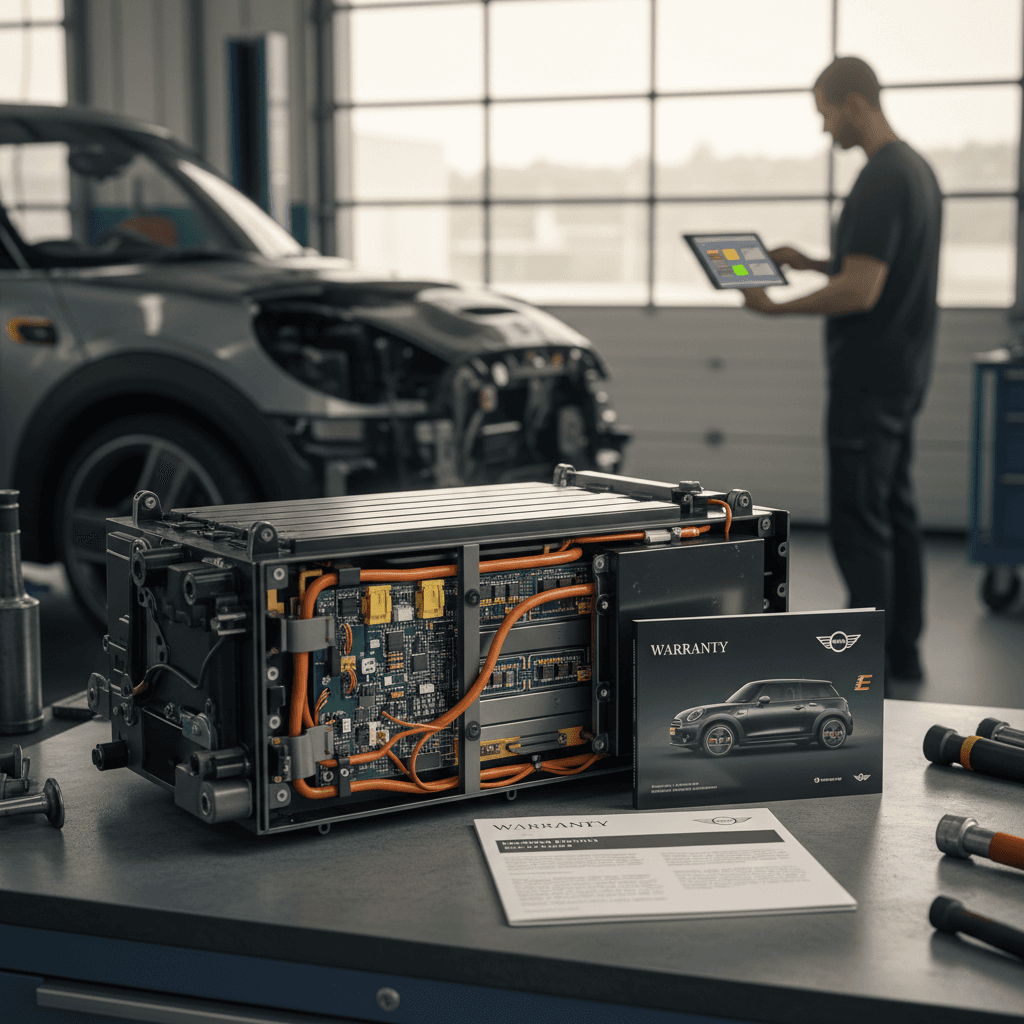
If you’re looking at a Mini Cooper SE, or already own one, the high‑voltage battery warranty is one of the most important pieces of fine print you can understand. The battery pack is the most expensive component in the car, and knowing exactly what the Mini Cooper SE battery warranty covers (and what it doesn’t) can make the difference between peace of mind and a five‑figure repair bill.
Quick snapshot
Mini Cooper SE battery warranty basics
The Mini Cooper SE (sold in many markets simply as the Mini Electric) uses a large high‑voltage lithium‑ion battery pack under the floor. Because that pack is so critical, and expensive, Mini backs it with a separate battery warranty on top of the normal bumper‑to‑bumper coverage.
- New‑vehicle limited warranty: typically 4 years / 50,000 miles, covering most non‑wear items on the car.
- High‑voltage battery limited warranty: covers the traction battery pack for defects in materials and workmanship, usually 8 years from in‑service date, with an 80,000–100,000‑mile cap depending on year and region.
- Rust‑perforation and emissions warranties: sit on top of those, but matter less for day‑to‑day EV ownership.
Know your "in‑service" date

How long the Mini Cooper SE battery warranty lasts
Mini has adjusted some details over the years and between models, but if you’re shopping a U.S. Mini Cooper SE Hardtop 2 Door, you’ll generally see the following coverage structure spelled out in the warranty booklet and window sticker.
Typical Mini Cooper SE warranty terms (U.S. market)
Approximate coverage for 2020–2024 Mini Cooper SE Hardtop models and similar Mini EVs in the U.S. Always confirm specifics for your VIN.
| Component | Time limit | Mileage limit | What it’s called |
|---|---|---|---|
| Whole vehicle (non‑wear items) | 4 years | 50,000 miles | New Passenger Car Limited Warranty |
| High‑voltage Li‑ion battery (Cooper SE) | 8 years | 80,000–100,000 miles | High‑Voltage Lithium‑Ion Battery Limited Warranty |
| Rust perforation | 12 years | Unlimited miles | Rust Perforation Warranty |
| Roadside assistance | 4 years | Unlimited miles | MINI Roadside Assistance |
Exact terms can vary by model year, state (California vs. federal emissions rules), and special programs, so treat this as a starting point, not a substitute for the official warranty booklet.
Federal vs. California states
A key nuance: Mini has issued special extended warranties for specific components on some electrified models, like a 15‑year / 150,000‑mile extension on a Countryman plug‑in hybrid battery valve. Those campaigns are narrowly targeted and don’t automatically apply to every Cooper SE, so don’t assume your car has bonus coverage unless a Mini dealer confirms it for your VIN.
What the Mini Cooper SE battery warranty covers
The high‑voltage battery warranty is focused on problems Mini considers their responsibility: defects in materials or workmanship. It’s not a blanket promise that your range will stay brand‑new forever, but it does protect you from the most expensive failures.
Core items typically covered under the Cooper SE battery warranty
Think of these as defect‑related failures within the warranty period, not wear‑and‑tear.
Battery modules & pack
The individual cell modules and the complete high‑voltage battery assembly (case, internal connections, and pack‑level electronics) if they fail due to a manufacturing defect.
Battery control electronics
Control units directly managing the high‑voltage battery, such as the battery management system (BMS), when they malfunction under normal use.
High‑voltage safety systems
High‑voltage contactors, sensors, and other safety‑critical parts inside the pack that keep the battery isolated and protected.
If a covered failure occurs within the time and mileage limits, Mini will typically repair or replace the affected battery components at no charge for parts and labor. In practice, that can mean anything from replacing a control module to swapping the entire pack if that’s the most efficient remedy.
Good news for used‑Mini shoppers
What isn’t covered (and what can void coverage)
Just as important as what the battery warranty covers is what it doesn’t. Mini’s language is similar to other automakers: they’ll stand behind defects, but not damage from misuse, neglect, or outside influences.
- Damage from collisions, flooding, fire, or other external events, even if your insurance company totals the car.
- Improper towing or lifting that crushes or punctures the battery pack.
- Modifications to the high‑voltage system, such as tapping into the battery for aftermarket accessories, non‑approved repairs, or unauthorized software changes.
- Consistently ignoring warning lights or continuing to drive with known faults until secondary damage occurs.
- Using non‑approved charging equipment that clearly damages the pack or high‑voltage electronics.
- Normal capacity loss within Mini’s stated limits (more on that below).
Abuse and neglect can cost you
You’ll also see routine wear‑and‑tear items, such as 12‑volt batteries, tires, and brake pads, called out as exclusions from the general new‑car warranty. Those don’t live under the high‑voltage battery warranty umbrella, even if they’re affected indirectly by EV use.
Battery warranty on used and CPO Mini Cooper SE models
With EVs, most shoppers see the sweet spot in the late‑model used market: you let the first owner eat the depreciation, but you still benefit from the remaining factory battery coverage. That logic absolutely applies to the Cooper SE.
Regular used Mini Cooper SE
- Sold by independent dealers, auctions, or private parties.
- Still keeps whatever remains of the original 8‑year battery warranty by time and miles.
- No additional Mini‑backed coverage beyond what’s already on the car.
- You may be offered a third‑party service contract, these vary widely in quality.
Mini Certified Pre‑Owned (CPO) Cooper SE
- Sold through a Mini dealer after passing a brand inspection.
- Gets extended Mini CPO coverage for many non‑battery components (often up to 5–6 years from in‑service, sometimes with unlimited miles).
- The high‑voltage battery usually continues under its original factory battery warranty rather than getting a separate CPO extension.
- Some CPO programs bundle roadside assistance and other perks that add peace of mind.
Battery warranty is "transferable"
How to check how much battery warranty you have left
Before you sign for a used Mini Cooper SE, or decide whether to keep your current car long‑term, it’s worth doing a quick, systematic check on remaining battery coverage.
Mini Cooper SE battery warranty check in 6 steps
1. Find the original in‑service date
Ask the seller or dealer for a copy of the original purchase paperwork or service history. A Mini dealer can pull the in‑service date from the VIN. This start date is what the 4‑year and 8‑year clocks use.
2. Confirm current odometer mileage
Note the mileage during a test drive or dealership visit. The battery warranty will read as something like “8 years or 100,000 miles, whichever comes first,” so your remaining coverage is the lower of the two.
3. Read the official warranty booklet
If the car still has its owner’s packet, flip to the warranty section and look for the <strong>High‑Voltage Lithium‑Ion Battery Limited Warranty</strong> page. If not, you can download the correct PDF by model year from Mini’s website.
4. Ask a Mini service advisor to run the VIN
Call a Mini dealer’s service department, give them the VIN, and ask them to verify battery warranty coverage and any relevant <strong>service campaigns or recalls</strong>. This is especially important on early model‑year Cooper SEs.
5. Check for aftermarket modifications
Look for non‑factory charging hardware, hacked wiring, or performance mods tied into the high‑voltage system. If anything looks suspicious, assume there’s risk to warranty coverage and have a dealer inspect it before buying.
6. Document what you’re told
Keep screenshots or PDFs of the warranty booklet pages and write down what the dealer confirms, including names and dates. If you ever need to make a claim, having that paper trail doesn’t hurt.
Real-world battery life vs. what the warranty promises
On paper, the Cooper SE’s battery warranty is there to catch defects and premature failures, not to guarantee a specific amount of range for life. In the real world, owners of 2020–2023 cars with tens of thousands of miles generally report modest degradation, similar to other well‑engineered EVs, rather than dramatic range loss.
Mini Cooper SE battery health: what owners report
You’ll sometimes see discussion of a capacity‑loss threshold (for example, if the battery’s usable capacity falls below a certain percentage within the warranty period). Mini’s public documents are less explicit than some rivals here, and the burden of proof often lands on the owner. If you believe your car has lost an abnormal amount of range, you’ll need a Mini dealer to perform official battery diagnostics and compare the results against Mini’s internal guidelines.
Don’t rely on the dash guess‑o‑meter
How to protect your Mini Cooper SE battery, and its warranty
The best battery warranty is the one you never need to use. A few habits will help keep your Cooper SE’s pack healthy, while also avoiding behaviors that can give Mini an excuse to push back on claims.
Battery‑friendly habits for Mini Cooper SE owners
Simple practices that support long‑term health and keep you squarely inside warranty expectations.
Charge gradually when you can
Rely on Level 2 AC charging at home or work for most use, and reserve frequent DC fast charging for trips. Slower charging is easier on the cells over time.
Watch temperature extremes
Avoid letting the car sit fully charged in very hot weather, and don’t store it at 0% for long periods in deep cold. Both extremes are hard on lithium‑ion chemistry.
Stick to recommended service
Follow Mini’s official maintenance schedule and keep records of all work. If you ever have a battery issue, a clean paper trail helps prove proper care.
Warranty‑safe ownership checklist
Use approved charging equipment
Charge primarily with the Mini‑supplied cord or reputable, safety‑certified Level 2 units. If you go aftermarket, choose UL‑listed gear and have a qualified electrician install any 240‑volt circuits.
Address warning lights quickly
If you see a high‑voltage system or battery warning, <strong>don’t ignore it</strong>. Schedule service promptly so Mini can capture fault codes before they clear and prevent secondary damage.
Skip DIY high‑voltage work
Never attempt to open the battery pack or tap into high‑voltage wiring yourself. Beyond the safety risk, this is one of the fastest ways to void coverage.
Document unusual behavior
If you notice sudden range loss, odd charging behavior, or repeated thermal‑management alerts, keep a log and mention it to your dealer. The more detail, the easier it is to build a warranty case if needed.
Where Recharged fits in
Mini Cooper SE battery warranty FAQ
Common questions about the Mini Cooper SE battery warranty
Bottom line: Is the Mini Cooper SE battery warranty good enough?
For most shoppers, the Mini Cooper SE’s high‑voltage battery warranty is competitive with the rest of the EV market. You get 8 years of defect coverage on the pack on top of a 4‑year bumper‑to‑bumper warranty, and that coverage follows the car to second and third owners. The fine print matters, especially around exclusions and any capacity‑loss thresholds, but you’re not flying blind.
If you’re weighing a used Cooper SE, the key is verification: confirm the original in‑service date, check remaining miles, and have a Mini dealer or a trusted EV‑focused retailer verify warranty status and battery health. That’s exactly the kind of due diligence Recharged bakes into every Mini EV we list, via detailed battery diagnostics, a transparent Recharged Score Report, and EV‑specialist guidance from first click to final delivery.
Do that homework up front, and the Mini Cooper SE’s battery warranty becomes less of a question mark and more of a safety net, letting you enjoy its playful dynamics and compact footprint without constantly worrying about what’s hiding in the pack under your feet.