If you’re shopping for a used Volkswagen ID.4 or thinking about selling yours, you’ve probably already typed “VW ID.4 KBB value” into a search bar. Kelley Blue Book is still the default yardstick in American driveways, but with EVs like the ID.4, the story behind that number is more complicated, and, if you’re smart about it, more negotiable.
Quick take
Why KBB value matters for the VW ID.4
Kelley Blue Book has been publishing vehicle values for nearly a century. For gas cars, its algorithms are reasonably in sync with reality. With EVs, and especially newer nameplates like the VW ID.4, the market is moving faster than the book. Tesla price cuts, tax credit rule changes, and rapid tech improvements have all shoved EV prices around in ways traditional models struggle to track.
That doesn’t mean you should ignore KBB. Dealers, banks, and many private sellers still use the KBB value for a VW ID.4 as a benchmark for trade‑ins, loan-to-value ratios, and negotiations. It’s a shared reference point, almost like the MSRP sticker on a new car. Your job is to understand where that number is helpful, and where you need more context.
How KBB calculates VW ID.4 value
- Recent wholesale auction transactions for comparable VW ID.4s
- Retail listing data (asking prices) from dealers and large classifieds sites
- Adjustments for trim, options (like AWD, Pro S, or Plus), mileage and condition
- Regional factors such as demand for EVs and fuel prices
- Seasonal patterns, SUVs tend to be stronger in fall/winter than in spring
The output is a set of familiar numbers: trade‑in value, private‑party value, and suggested retail. For a late‑model ID.4, these will often span several thousand dollars between “fair” and “excellent” condition. What KBB doesn’t see clearly are the EV‑specific variables that matter a lot for your ID.4: battery health, software history, fast‑charge behavior, and how aggressively your local market is discounting EVs this month.
Don’t confuse KBB with an offer
Real‑world used VW ID.4 prices vs. KBB
VW ID.4 used market snapshot (2024–2025 data)
Aggregated depreciation trackers and used‑listing data show that a 2021–2023 VW ID.4 Pro that originally stickered in the low‑$40Ks often sells used in the low‑ to mid‑$20Ks after just a few years on the road, depending on miles and options. That’s broadly in line with EV depreciation overall, where many models give up 40–60% of their value in the first five years.
The catch is volatility. When automakers drop new EV prices or federal credit rules change, used values can move thousands of dollars in a single quarter. KBB updates its numbers, but it’s looking in the rearview mirror. Marketplaces like Recharged, which price only used EVs, are typically closer to what buyers are actually paying this week.
VW ID.4 depreciation: what to expect
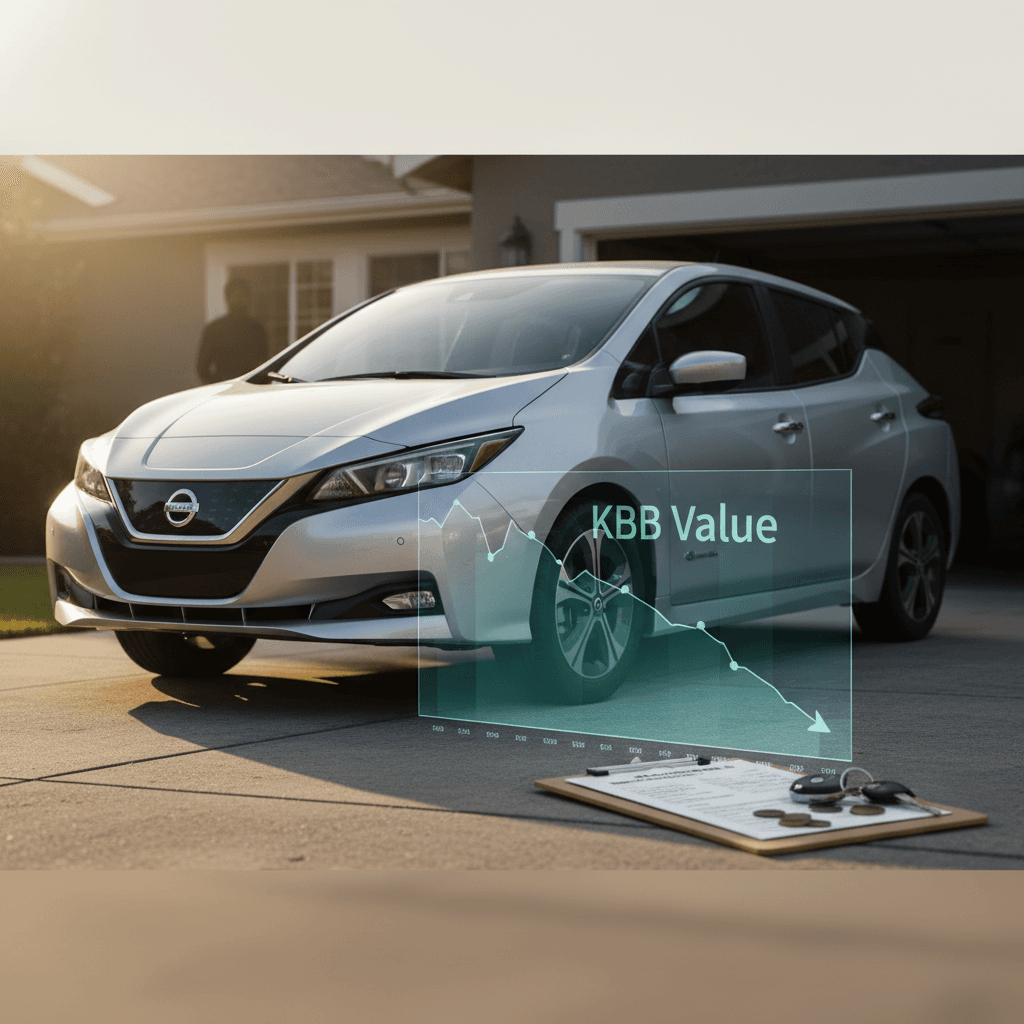
Illustrative VW ID.4 depreciation curve
Approximate retained value for a well‑kept VW ID.4 used as a daily driver in the U.S. This is directional, not a quote.
| Vehicle age | Approx. % of original MSRP | Illustrative resale value on $45,000 MSRP | What it feels like as an owner |
|---|---|---|---|
| 1 year | ~55–60% | $24,000–$27,000 | Sticker shock: the first year is where EVs, including the ID.4, shed value fastest. |
| 3 years | ~45–50% | $20,000–$23,000 | Stabilizing: still depreciating, but less violently; sweet spot for value‑minded buyers. |
| 5 years | ~35–40% | $15,000–$18,000 | Mature: tech isn’t cutting‑edge, but much of the early hit has already happened. |
Actual values vary by trim, mileage, incentives and battery health, but EV shoppers should be prepared for steeper early‑year drops than with comparable gasoline SUVs.
Depreciation isn’t all bad news
For sellers, the key is timing. Selling a VW ID.4 in year one will usually look painful compared with KBB’s optimistic starting point. Holding the car three to five years tends to flatten the curve, each additional year costs less in absolute dollars than that brutal first drop.
Factors that move your VW ID.4 KBB value up or down
What actually moves VW ID.4 KBB value
Some of these factors are in KBB’s model. Some are not, but buyers and dealers still care.
Trim & options
AWD, Pro S and Pro S Plus trims, larger battery packs, heat pumps, premium audio, and driver‑assist packages all push value higher, especially in colder climates or tech‑savvy markets.
Mileage & use pattern
EV shoppers still look at odometer readings, but 80,000 highway miles with regular charging can be easier on a pack than 40,000 miles of constant DC fast charging and heat‑soaked parking garages.
Zip code & EV culture
In markets like California, Colorado, the Pacific Northwest and the Northeast, used EV demand is brisk and charging is plentiful. The same ID.4 may be worth less in regions where infrastructure and incentives lag.
Charging & incentives
Availability of fast charging, HOV‑lane perks, and state incentives all influence what a buyer is willing to pay, and how conservative KBB is with its estimates.
Service history
A clean Carfax, documented software updates and recall work (including recent high‑voltage battery software recalls) help insulate your ID.4 from the lower end of KBB’s value range.
Software & features
Later‑model ID.4s have bigger screens, quicker infotainment and more power. Over‑the‑air updates can narrow the gap, but a 2024 Pro often feels noticeably more modern than a 2021, and buyers price that in.
Recent battery‑related recalls affect confidence
Battery health: the variable KBB can’t see well
For any used EV, battery state of health is the elephant in the garage. KBB models do not read your specific ID.4’s pack. They assume an average, usually that the battery has degraded within a normal band for its age and mileage.
But real life is messy. Two 2022 ID.4 Pros with 45,000 miles can behave very differently. One might still comfortably pull close to its original EPA range and accept fast‑charge rates near new. The other might have seen hard DC‑fast‑charging use, lots of time baked in hot parking lots, and degraded into noticeably shorter range and sluggish DC charging.
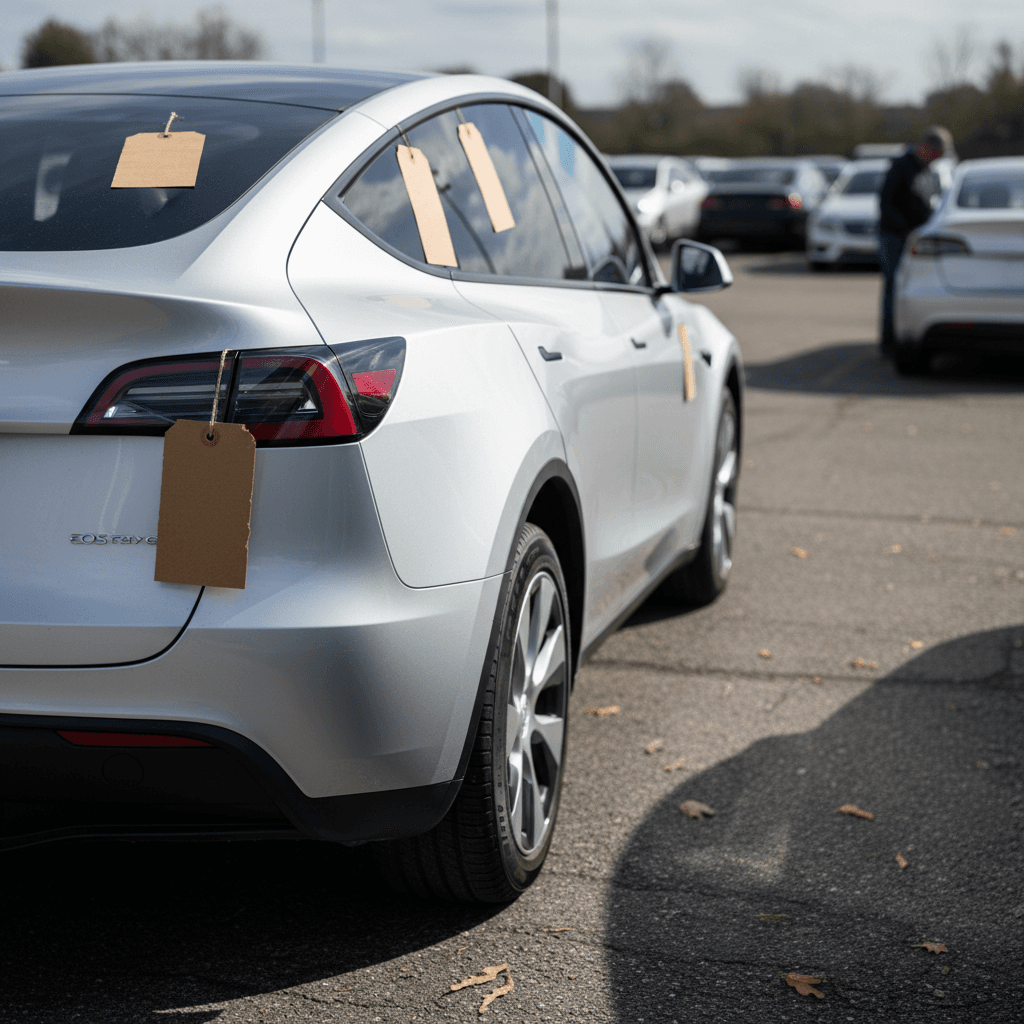
Where Recharged comes in
Using KBB value when you buy a used VW ID.4
How to sanity‑check a used VW ID.4 price with KBB
1. Start with the right trim and options
On KBB, be precise: choose the exact ID.4 year, drivetrain (RWD vs AWD), and trim (Standard, Pro, S, Pro S, Pro S Plus). A mis‑selected trim can move the value by thousands.
2. Be honest about condition
Most used cars are not truly "excellent." Select "good" or "very good" for a realistic baseline KBB value, then compare it to actual listings in your region.
3. Compare to live listings
Look at several similar ID.4 listings within a few hundred miles. If everything is 10–15% below KBB’s suggested retail, the market has already moved, and that’s your real benchmark.
4. Ask for battery health proof
Request documentation: dealership diagnostic printouts, third‑party battery tests, or a marketplace‑backed report like the Recharged Score. Treat this like you would a compression test on a performance engine.
5. Check recall and service history
Verify that outstanding recalls, especially any related to the high‑voltage battery, have been addressed. A clean, fully updated car deserves to sit near the upper end of the KBB range.
6. Adjust for incentives and financing
If your state offers EV rebates or cheap EV‑only financing, factor that into what "fair" value means for you. A slightly higher purchase price can still pencil out if ownership costs are lower.
How Recharged simplifies this step
Using KBB value when you sell or trade your ID.4
Strategy A: Use KBB as your floor
Run your ID.4 through KBB with realistic mileage and condition. Treat the trade‑in value as your floor, not your target. If a local dealer or instant‑offer site lands below that, you know you’re being penalized either for risk they see or for an overly conservative bid.
With documentation of clean battery health and recent recall work, you’re in a much stronger position to push closer to private‑party value, especially in EV‑savvy regions.
Strategy B: Shop multiple offers
Don’t stop at the first number. Collect offers from a local VW dealer, online buyers, and marketplaces like Recharged that specialize in EVs. Be explicit that you know your VW ID.4 KBB value and have supporting documentation.
If your car has a strong battery report and desirable spec (AWD Pro S, for instance), you’ll often find at least one buyer willing to live closer to, or even above, the KBB midpoint.
Think in net value, not just price
How Recharged values a used VW ID.4 differently
Recharged vs. a simple KBB lookup
Why EV‑only data and real battery diagnostics matter for a VW ID.4.
Battery‑first valuation
Recharged runs every ID.4 through our Recharged Score diagnostics, measuring usable battery capacity and charging behavior. A stronger‑than‑average pack meaningfully improves the price we’re willing to pay or list at.
Live EV market data
Instead of quarterly book updates, we track real transaction and listing data across the used EV universe. When ID.4s suddenly get cheaper, or scarcer, our prices move with the market.
Transparent condition grading
You see the same condition and battery data we use, so there’s no mystery gap between your car and its "book" value. That’s especially useful if you’re trading out of your ID.4 into a different EV.
Nationwide reach
Recharged can source ID.4s from, and deliver to, most of the U.S. That means a clean, well‑specced ID.4 in a soft local market can still find a buyer where demand is stronger.
Flexible ways to sell
Choose an instant offer, a trade‑in toward another EV, or consignment where we handle the marketing and sale while you keep more of the upside.
EV‑savvy financing
Whether you’re buying another EV or just cashing out, Recharged helps with financing options tailored to electric vehicles, including structuring deals around estimated battery life and running costs.
Ready to find your next EV?
Browse VehiclesBecause Recharged focuses exclusively on EVs, a VW ID.4 is not a strange new animal to us. It’s a known quantity with known quirks, software updates, charging curve behavior, depreciation patterns, and we price it accordingly instead of just throwing it into the same spreadsheet as a Tiguan.
FAQ: VW ID.4 KBB value, resale and pricing
Frequently asked questions about VW ID.4 KBB value
Bottom line: making KBB work for you on a VW ID.4
KBB is still a powerful reference point in any car deal, and the VW ID.4 KBB value is no exception. But an electric SUV is not a Corolla. Depreciation hits earlier, incentives move the goalposts, and battery health quietly rules the whole kingdom.
If you’re buying, use KBB to frame the conversation, then lean on real‑time market data and a proper battery report to decide what an individual ID.4 is truly worth to you. If you’re selling, treat KBB as the floor and let documentation, condition and EV‑specialist offers pull you upward.
Recharged was built for exactly this puzzle: making used EV ownership simple and transparent. Whether you’re comparing ID.4s, trading out of yours, or just trying to understand where your KBB value fits into today’s market, you can use Recharged to see real prices, real battery health, and clear options for financing, trade‑ins and nationwide delivery.