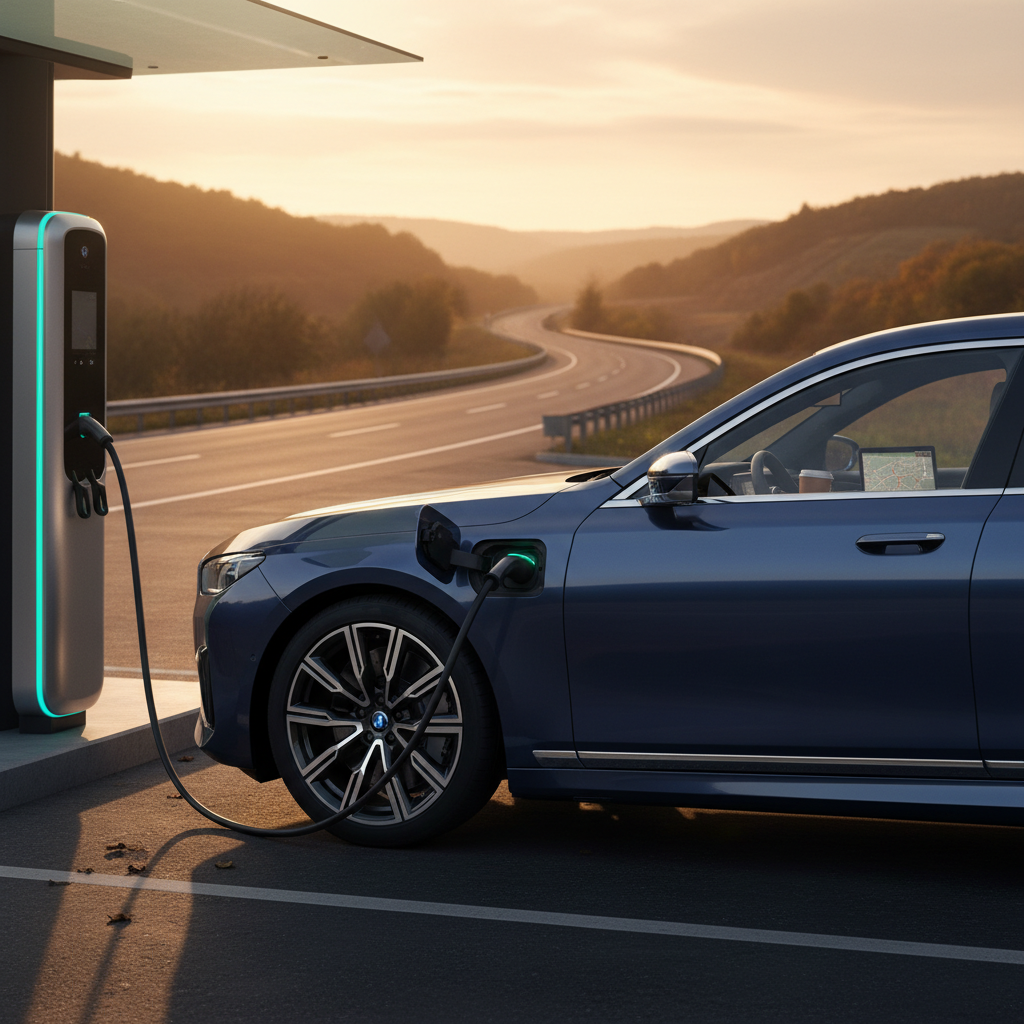
If you’re considering this fun-sized EV, a natural question is: how much does it cost to own a Mini Cooper SE per year? The purchase price is only part of the story. Electricity, insurance, maintenance, tires, and depreciation all add up, and they look different for a new Mini SE versus a used one. This guide walks through the numbers with realistic U.S. assumptions so you can see what owning a Mini Cooper SE will likely cost you each year.
What this article covers
Mini Cooper SE annual cost overview
Typical Mini Cooper SE annual ownership cost (U.S.)
For a typical U.S. owner driving 12,000–15,000 miles per year, the Mini Cooper SE usually costs something in the neighborhood of $5,000–$7,500 per year all-in, depending on whether you bought new or used, your insurance profile, and your local electricity rates. A lightly used Mini SE with lower depreciation and slightly cheaper insurance can land toward the bottom of that range, especially if you shop carefully on the used market.
Key assumptions: mileage, energy use, and electricity price
Any estimate of how much it costs to own a Mini Cooper SE per year depends heavily on three things: how much you drive, how efficient the car is in real-world use, and what you pay for electricity. To keep the math transparent, here are the assumptions we’ll use (which you can adjust for your own situation).
- Annual mileage: We’ll use 12,000 miles per year as the baseline, with side notes for 10,000 and 15,000 miles.
- Mini Cooper SE efficiency: EPA data and owner reports suggest around 31 kWh/100 miles (about 3.2 miles per kWh) in mixed driving, recognizing that aggressive driving, winter weather, and highway speeds can push consumption higher.
- Electricity price: Recent U.S. residential averages are around 17¢ per kWh. Many states fall between 13–22¢, so you’ll want to plug in your own rate if it’s higher or lower.
- Ownership age: For depreciation and maintenance, we’ll distinguish between a new Mini SE (years 1–5) and a used one (say, 3–7 years old).
Quick way to customize the numbers
How much does electricity cost per year for a Mini Cooper SE?
Let’s start with the part EV owners feel every week: what you spend to charge. Using 31 kWh/100 miles and a 17¢/kWh electricity price, we can estimate the Mini SE’s annual electricity expense at different mileages.
Mini Cooper SE annual electricity cost estimates
Assuming 31 kWh/100 miles and an average residential electricity price of 17¢/kWh. Real-world results will vary with driving style, climate, and charging mix.
| Annual miles | kWh used | Cost at $0.13/kWh (cheap power) | Cost at $0.17/kWh (U.S. avg) | Cost at $0.25/kWh (expensive power) |
|---|---|---|---|---|
| 8,000 | ~2,480 | $322 | $422 | $620 |
| 10,000 | ~3,100 | $403 | $527 | $775 |
| 12,000 | ~3,720 | $484 | $632 | $930 |
| 15,000 | ~4,650 | $605 | $791 | $1,162 |
You can adjust the table by swapping in your own electricity rate or efficiency number.
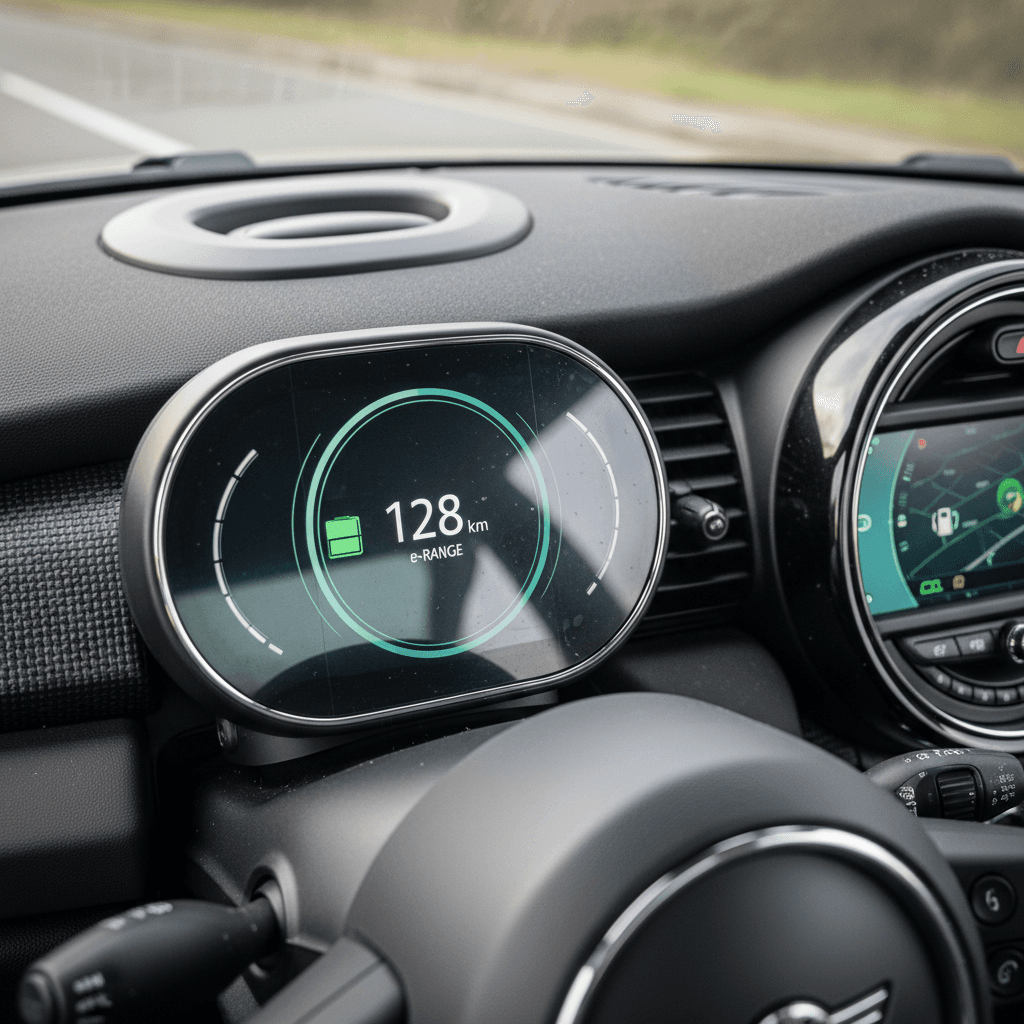
Public fast charging vs home charging
Insurance, registration, and taxes
After electricity, insurance is often the biggest year‑to‑year cost you’ll see with a Mini Cooper SE. Like any car, rates depend on your age, driving record, ZIP code, and credit profile, but we can outline realistic ranges.
Typical annual Mini Cooper SE fixed costs
These are the expenses you pay whether you drive 5,000 or 15,000 miles.
Insurance
$1,200–$1,800 per year for full coverage is a common range in many U.S. markets for a subcompact EV, with clean driving history. Urban, youthful, or high‑risk profiles can see $2,000+.
Registration & fees
Expect around $150–$400 per year including registration, plate fees, and local taxes, depending on your state. Some states add small EV surcharges instead of gas taxes.
Property & excise taxes
A few states and localities charge vehicle property taxes based on value. For a Mini SE, that might add $100–$300 per year if it applies where you live.
Watch for EV-specific fees
Maintenance, tires, and repairs
The Mini Cooper SE eliminates oil changes, spark plugs, and a complex exhaust system, but it’s still a premium small car. That means fewer line items than a gas Mini, not zero maintenance. Over a full year you’re mostly paying for inspections, brake fluid, cabin filters, and tires, especially if you drive it the way Mini encourages you to.
Scheduled maintenance (service items)
- EVs need far fewer routine services than gas cars. No oil changes, timing belts, or emissions repairs.
- Expect $200–$400 per year on average over several years for inspections, brake fluid, cabin filters, and alignment checks.
- Some years will be “light” (almost nothing), others may include a bigger service visit; the average is what matters.
Tires and wear items
- The Mini Cooper SE’s torque and weight can be hard on its sporty tires. Depending on how you drive, a set may last 25,000–35,000 miles.
- A decent set of performance all‑season tires plus mounting and balancing might run $700–$1,000. Spread over 3 years at 12,000 miles/year, that’s roughly $230–$330 per year.
- Because of regenerative braking, brake pads can last much longer than in gas Minis, further reducing annual costs.
Consider an EV-savvy shop
Depreciation and financing costs
Depreciation, the loss of value as the car ages, is usually the single largest cost of owning any vehicle, including the Mini Cooper SE. This is where the difference between buying new and buying used becomes stark.
How Mini Cooper SE depreciation typically behaves
Exact numbers vary by market, but the pattern is predictable.
New Mini Cooper SE
A new Mini SE can lose 35–45% of its value in the first 3 years, especially as newer EVs with longer range arrive. That can translate to $3,000–$4,500 per year in depreciation early on.
If you finance, part of this is hidden in your monthly payments rather than a single visible line item.
Used Mini Cooper SE
A 2–4‑year‑old Mini SE has already absorbed the steepest part of the depreciation curve. From there, you might see $1,500–$2,500 per year in value loss, depending on mileage and condition.
This is where a used EV marketplace like Recharged can help you understand fair pricing and expected value retention.
If you finance your Mini Cooper SE, add finance charges. On a typical 60‑month loan with today’s interest rates, many owners effectively pay around $800–$1,200 per year in interest during the early years, tapering down as the balance shrinks. Paying cash avoids interest but doesn’t change the underlying depreciation reality.
Sample Mini Cooper SE annual cost scenarios
Pulling all these pieces together, here are realistic annual cost examples that answer the question: how much does it cost to own a Mini Cooper SE per year? These are not precise quotes; they’re model scenarios to help you benchmark your own situation.
Mini Cooper SE annual ownership cost examples
Three simplified scenarios for a U.S. driver. All assume 12,000 miles/year.
| Cost line item | New Mini SE, financed | 3-year-old Mini SE, financed | 5-year-old Mini SE, paid cash |
|---|---|---|---|
| Electricity | $630 | $630 | $630 |
| Insurance | $1,600 | $1,400 | $1,200 |
| Registration, taxes, EV fees | $300 | $275 | $250 |
| Maintenance & repairs (avg) | $300 | $400 | $500 |
| Tires (averaged) | $275 | $275 | $275 |
| Depreciation | $4,000 | $2,000 | $1,500 |
| Finance interest | $1,000 | $800 | $0 |
| Estimated total per year | $8,105 | $5,780 | $4,355 |
Your numbers will differ, but the relative relationship between new and used is what really matters.
Key takeaway from the scenarios
Mini Cooper SE vs gas Mini: annual cost comparison
To understand whether the Mini Cooper SE is “expensive” or “cheap” to own, you have to compare it to a realistic alternative, often a gas-powered Mini Cooper or other small hatchback. The biggest delta is fuel cost.
Energy cost: Mini Cooper SE vs comparable gas car
1. Mini Cooper SE electricity cost
At around 31 kWh/100 miles and 17¢/kWh, you’re paying about <strong>5.3¢ per mile</strong> for energy at home. Even with some public fast charging mixed in, many owners land in the <strong>5–7¢/mile</strong> range.
2. Comparable gas Mini fuel cost
A gasoline Mini Cooper that averages 30 mpg, at $3.75/gallon, costs about <strong>12.5¢ per mile</strong> in fuel. At $4.25/gallon, that’s <strong>14.2¢ per mile</strong>.
3. Annual fuel vs electricity spend
At 12,000 miles/year, that’s roughly <strong>$1,500–$1,700 in gasoline</strong> versus <strong>$600–$800 in electricity</strong>. The Mini SE is often saving you around <strong>$800–$1,000 per year</strong> in energy alone.
4. Maintenance tilt in favor of EV
Add in fewer oil changes and engine‑related repairs, and the Mini SE can easily save another <strong>$200–$400 per year</strong> compared with a similar-age gas Mini, especially after year 4 or 5.
So is a Mini Cooper SE cheaper overall?
How buying a used Mini Cooper SE changes the math
EVs like the Mini Cooper SE depreciate quickly from new, but that’s an opportunity if you’re buying used. Once a Mini SE is a few years old, you can often get the same driving experience and low operating costs for thousands less than new, while letting the first owner take the heaviest depreciation hit.
Financial upside of used Mini SE
- Purchase price is meaningfully lower while electricity and insurance costs are similar.
- Depreciation can drop from $3,000–$4,500 per year on a new car to $1,500–$2,000 per year on a 3–5‑year‑old one.
- Total annual cost (for the same miles) can move from the $7,000–$8,000 range into the mid‑$4,000s or low‑$5,000s.
What to watch on a used Mini SE
- Battery health: Range depends on usable battery capacity. Having a verified battery report matters more than odometer alone.
- Warranty status: High‑voltage components often have longer warranties than the rest of the car; know what’s still covered.
- Previous charging habits: Heavy DC fast‑charging doesn’t automatically ruin a pack, but it’s worth understanding prior usage.
How Recharged helps with used Mini SE costs
Ready to find your next EV?
Browse VehiclesPractical tips to lower your Mini Cooper SE ownership costs
Ways to keep Mini Cooper SE annual costs in check
1. Charge smart at home
If you have time‑of‑use (TOU) rates, schedule charging overnight when electricity is cheapest. Dropping from 22¢ to 12¢ per kWh can save <strong>$200+ per year</strong> if you drive a lot.
2. Limit expensive public fast charging
Use DC fast charging when you need it, but don’t treat it like your primary “fuel station” if it’s priced well above local residential rates. Relying mostly on home or workplace Level 2 keeps your cost per mile low.
3. Shop insurance aggressively
Quotes vary wildly by company, especially for EVs. Re‑shopping every 1–2 years and adjusting deductibles can shave <strong>$200–$400 per year</strong> off your bill without sacrificing coverage.
4. Choose sensible tires
Sticking with efficiency‑oriented or OE‑equivalent tires, rather than ultra‑sticky performance rubber, can extend tread life and keep replacement costs predictable, without sacrificing the Mini’s character on normal roads.
5. Buy used with verified battery health
A well‑priced, low‑mileage used Mini SE with a strong battery report often delivers <strong>80–90% of the new‑car experience</strong> for a much lower annual cost. This is exactly the slice of the market Recharged is built to make transparent.
6. Keep the car longer
If you like the Mini SE, stretching ownership from 3 years to 6 or 7 turns those early depreciation hits into a lower annual average. The longer you keep a healthy EV, the more its <strong>low running costs</strong> stand out.
Mini Cooper SE ownership cost FAQ
Frequently asked questions about Mini Cooper SE annual costs
When you zoom out, the Mini Cooper SE is a classic EV story in miniature: very low fuel and maintenance costs, offset by depreciation that looks worst if you buy brand new and flip cars quickly. For many drivers, especially those who mostly commute in cities or suburbs, a well‑chosen used Mini SE with verified battery health can deliver a lively driving experience for roughly $4,000–$5,500 per year of total ownership cost. If you’re comparing specific used Minis, or want a clearer picture of battery health and fair pricing, shopping through a dedicated used‑EV platform like Recharged can turn those rough estimates into real, car‑by‑car numbers.