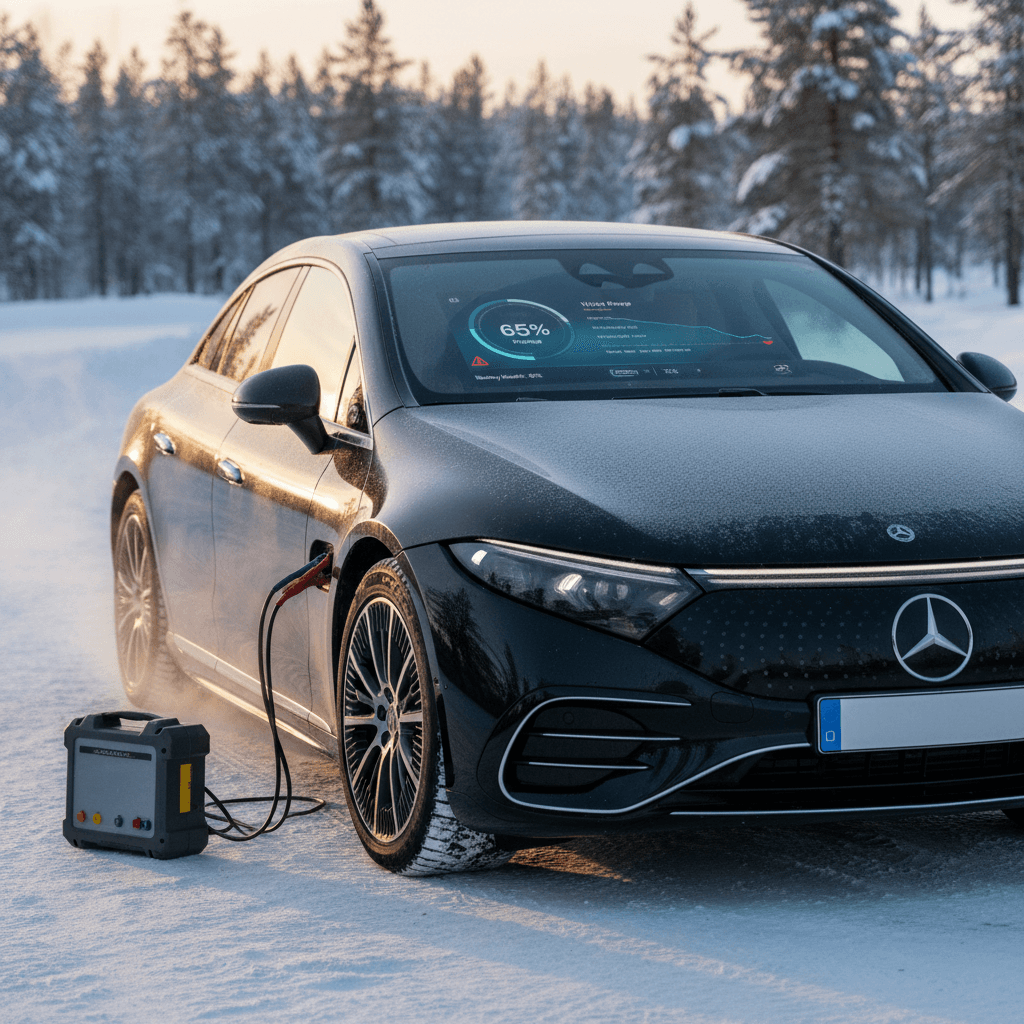
You don’t buy a Mercedes EQS to white‑knuckle your way through January wondering if you’ll make it home. Yet if you live anywhere that freezes, you’ve probably heard horror stories about EV winter range loss and you’re now asking: what’s the real Mercedes EQS winter range loss percentage?
Quick answer
Mercedes EQS winter range loss at a glance
Typical Mercedes EQS winter range impact
Those are wide bands on purpose. The Mercedes EQS winter range loss percentage depends heavily on which EQS you have (450+ sedan vs 580 SUV), how fast you drive, whether you precondition, your tire choice, and just how ugly the weather really is.
Don’t compare your worst day to the EPA sticker
How much range do EVs lose in winter generally?
Before we zoom in on the EQS, it helps to know where the broader EV herd sits in cold weather. Large‑scale telematics and fleet studies over the last few winters show a fairly consistent story: modern EVs, on average, keep about 75–80% of their normal range in freezing conditions. In other words, a typical EV loses around 20–25% of its range when temperatures hover around 20–30°F.
- In light cold (around 40°F), many EVs lose closer to 10–15% range.
- Around freezing (20–32°F), 20–25% loss is now pretty normal for newer designs with good thermal management.
- In severe cold (single digits and below), it’s not unusual to see 30–40% losses, especially on the highway.
EQS vs the pack
Mercedes EQS winter range loss percentage: sedan vs SUV
Let’s talk concrete numbers. These are synthesized from independent road tests, owner data, and what we know about similar big‑battery luxury EVs. They’re not lab‑perfect, but they’re realistic expectations for an EQS in North American winters.
Approximate Mercedes EQS winter range loss by variant
Ballpark winter range loss percentages for common EQS models in typical freezing conditions, assuming normal highway‑heavy use and no hyper‑miling.
| Model | EPA rated range (mi) | Mild / mixed temps (≈70°F) real‑world | Typical winter range (20–32°F) | Approx. loss % |
|---|---|---|---|---|
| EQS 450+ sedan (RWD) | 350–360 | 320–340 | 240–270 | ≈20–25% |
| EQS 450 4MATIC sedan (AWD) | 330–340 | 300–320 | 225–255 | ≈20–25% |
| EQS 580 4MATIC sedan | 325–340 | 290–310 | 215–245 | ≈25–30% |
| EQS 450+ SUV (RWD) | 300–305 | 270–285 | 190–220 | ≈25–30% |
| EQS 450 4MATIC SUV | 280–285 | 250–265 | 175–210 | ≈30–35% |
| EQS 580 4MATIC SUV | 270–285 | 245–260 | 170–205 | ≈30–35% |
EPA ranges are illustrative for context; your exact model year and wheel/tire package will vary.
How to read this table
A few patterns stand out. The EQS sedans generally do a little better than the SUVs, their sleeker shape and slightly lighter mass help. All‑wheel drive versions lose a bit more than single‑motor cars, especially if you ask them to claw through slush all winter. And as always in EV land, highway speed is the silent range killer, winter or not.
City vs highway: how driving style changes EQS winter range
Stop‑and‑go / urban driving
In town, the EQS’s big battery and strong regen can actually make winter feel surprisingly manageable.
- Lower speeds mean less aerodynamic drag, so the cold penalty is smaller.
- More braking means more energy recaptured through regen.
- Cabin heat load is still there, but you’re not constantly pushing against wind resistance at 75 mph.
Result: it’s realistic for an EQS sedan in city‑heavy driving at 20–30°F to lose closer to 15–20% range, especially on shorter trips after preconditioning.
Steady‑state highway driving
On the interstate in winter, the EQS shows its mass and comfort bias.
- At 70–80 mph, aero drag and rolling resistance spike, so every mile costs more energy.
- The HVAC is fighting a constant battle to hold a warm cabin against a frozen windshield.
- Snow, slush, and winter tires can easily push consumption far above summer levels.
Result: on a long winter highway day, an EQS can burn through 25–35% more energy than on a mild day, exactly the kind of 70–100 mile winter hit owners report on road trips.
The upside of a big battery
Why the EQS loses range in cold weather
Cold‑weather range loss isn’t a Mercedes thing; it’s a lithium‑ion thing. But the EQS, with its luxury‑first mission, puts a few extra fingers on the scale.
Key drivers of EQS winter range loss
Same physics as any EV, turned up by weight, comfort, and speed.
Cold battery chemistry
At low temperatures, the battery’s internal resistance rises. It can’t deliver energy as efficiently, and the car has to waste energy warming the pack to a healthy operating window, especially if you skip preconditioning.
Cabin heat is expensive
Unlike gas cars that get “free” cabin heat from engine waste, EVs must spend battery energy to keep you warm. A big cabin with plenty of glass, hello, EQS, costs extra watt‑hours to keep cozy.
Weight and rolling resistance
The EQS sedan is heavy. The SUV is heavier. Add winter tires, snow‑packed roads, and cold, stiff rubber, and the car has to shove a lot of mass through a lot of resistance every mile.
Aero drag at speed
Highway driving multiplies winter losses. Thick, cold air has more density, and your EQS has the frontal area of a small condo. At 75 mph in freezing air, the aero bill adds up quickly.
Road surface & conditions
Snow, slush, and standing water on winter roads increase rolling resistance dramatically. Even wet, cold pavement on a clear day is measurably worse than warm, dry asphalt.
Driving profile & climate control
Short, repeated cold starts with the cabin set to sauna mode are about the worst way to treat winter range. Aggressive acceleration and high speeds only amplify the loss.
Real-world EQS winter range examples
Real owners fill in the gaps between the glossy brochure and the anxiety‑inducing headlines. Sift through EQS forums and social discussions and a few consistent winter patterns show up:
- EQS 450+ sedans in cold‑but‑reasonable climates (Northeast, Midwest shoulder seasons) often report winter mixed‑driving ranges in the mid‑200s from a car that will show 320–340 miles on a good summer day.
- All‑wheel‑drive EQS sedans and SUVs driven at 70–80 mph through 20–30°F weather commonly end up around 200 miles of comfortable highway range between charges, even when the EPA sticker suggests something like 270–300 miles.
- Owners running genuine winter tires, doing short trips with no preconditioning, and cranking the heat are the ones who see the “where did half my range go?” moments. The car itself isn’t broken, the usage pattern is just worst‑case.
"Temps in the 20s, my EQS 450 sedan drops from close to 400 miles in the summer to around 300 in winter. It sounds dramatic until you remember the starting point was huge."
Sedan vs SUV in the real world
How to reduce winter range loss in your EQS
You can’t opt out of physics, but you can make physics work a little harder for you. Here’s how to pull your Mercedes EQS winter range loss percentage down toward the lower end of the spectrum.
Practical ways to shrink EQS winter range loss
1. Always precondition while plugged in
Use the Mercedes app or in‑car scheduler to warm the cabin and battery while the car is still on shore power. That way, most of the heating energy comes from the grid, not your pack, and the battery starts your trip in its happy temperature zone.
2. Use seat and wheel heaters first
Heated seats and steering wheels sip energy compared to blasting hot air through the whole cabin. You can often drop the HVAC setpoint a couple of degrees and stay just as comfortable, saving meaningful range over a long drive.
3. Dial back highway speed
Going from 80 mph down to 68–70 mph sounds minor, but the aerodynamic load drops sharply. In winter, where drag and heat are already hurting you, this can be the difference between a 25% and a 35% loss day.
4. Check your tire choice and pressure
True winter tires are great for traction but often worse for range. If you run them, keep pressures at manufacturer spec (checked cold). Underinflated winter tires are a perfect storm for wasted energy.
5. Avoid lots of short, cold starts
If you make a dozen 2‑mile trips from a frozen start, the EQS will spend a disproportionate amount of energy reheating the cabin and battery again and again. Batch errands when you can, so the car stays warm once it’s warm.
6. Plan fast‑charge stops realistically
On a very cold road trip, assume you’ll only get about <strong>65–75% of your best‑case summer highway range</strong>. Use that for planning stops so you aren’t banking on a perfect‑conditions number in imperfect weather.
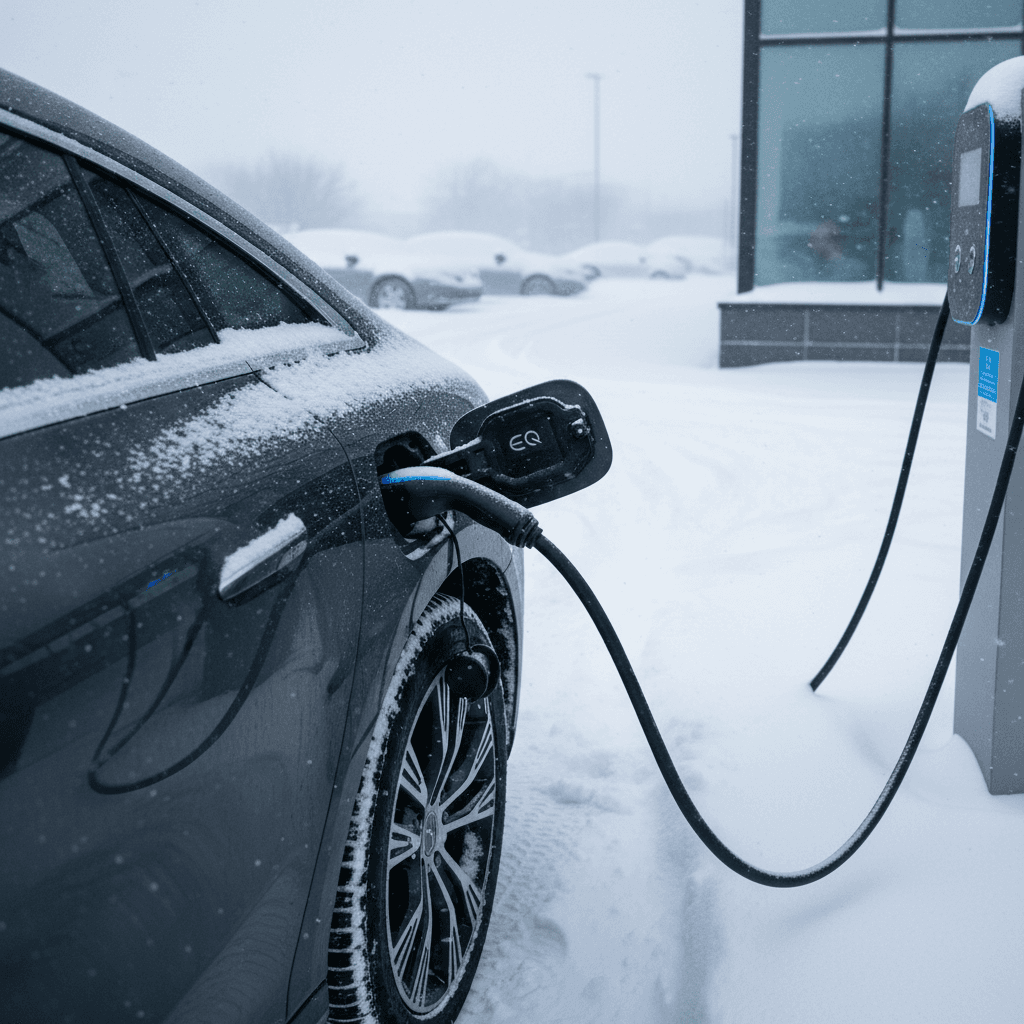
Cold pack = slow fast‑charging
Shopping used: how winter range and battery health fit together
If you’re eyeing a used EQS, winter range anxiety can sound like a two‑for‑one problem: cold weather and battery age. The good news is that modern liquid‑cooled packs, including the EQS, tend to lose capacity slowly, think single‑digit percentages over the first few years for well‑cared‑for cars. The bigger swings you feel from summer to winter dwarf the quiet, gradual march of long‑term degradation.
Winter loss vs battery wear
It helps to separate two ideas:
- Seasonal loss – temporary, comes and goes with temperature and driving style.
- Degradation – permanent, slow reduction in total usable capacity over the lifetime of the pack.
A 3‑year‑old EQS that’s lost, say, 7% of capacity but is driven smartly in winter can feel better than a brand‑new car driven hard in the cold with no preconditioning.
How Recharged measures this
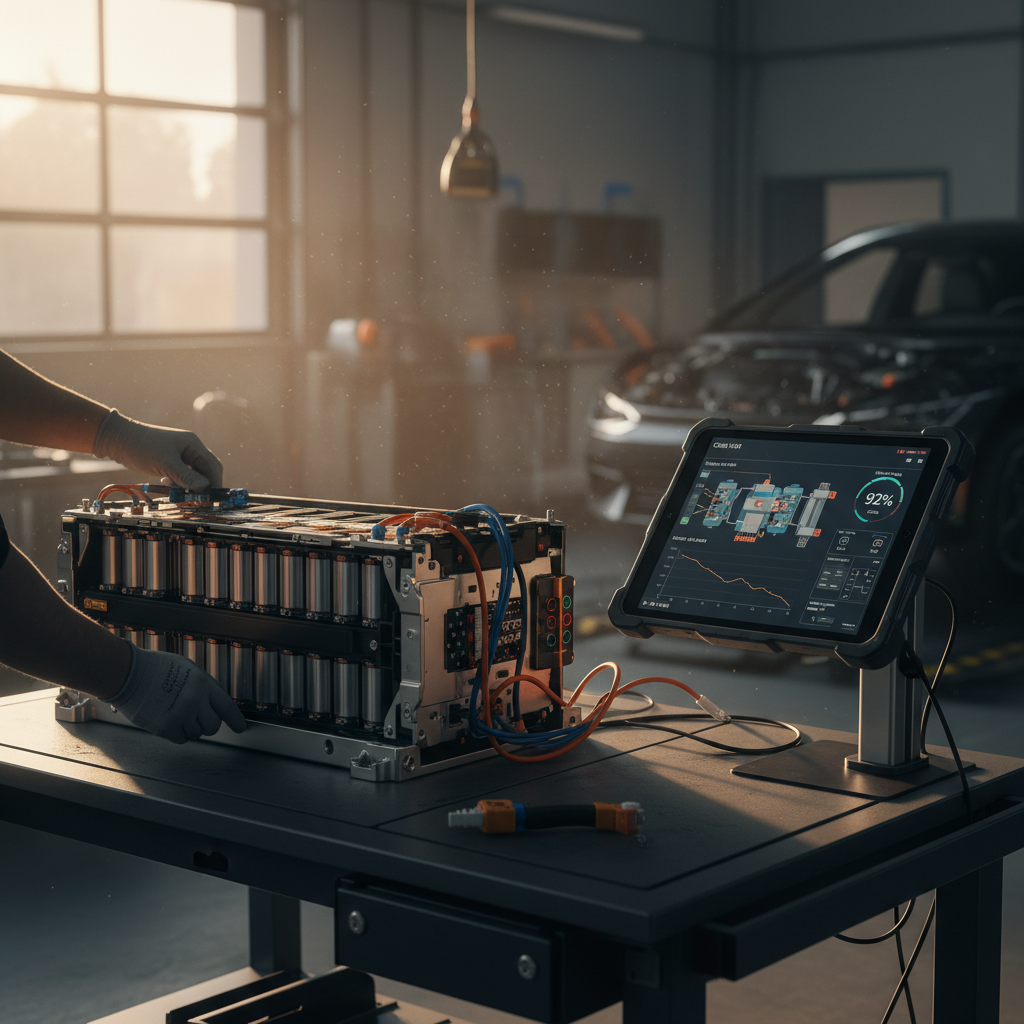
At Recharged, every used EQS we list comes with a Recharged Score Report that includes battery health diagnostics, charging history signals where available, and real‑world range insight.
Instead of guessing whether winter performance will be acceptable, you can see how the pack has aged, how its current capacity compares to when it was new, and get expert guidance on what kind of winter range you should realistically expect for that specific car.
Why this matters for a used EQS
Ready to find your next EV?
Browse VehiclesFAQ: Mercedes EQS winter range loss
Common questions about Mercedes EQS winter range
Bottom line: what percentage of winter range loss is normal for an EQS?
If you strip away the drama, the Mercedes EQS winter range loss percentage turns out to be neither catastrophic nor magical. In realistic freezing conditions, driven by a normal human rather than a lab robot, most EQS sedans will land in the 20–25% loss band, while the SUVs hover in the 25–35% range on highway‑heavy use.
You can’t cheat winter, but you can choose how you lose that range: slowly, with thoughtful preconditioning and sane speeds, or rapidly, with short un‑preheated trips and 80‑mph sprints through slush. If you’re shopping used, tools like the Recharged Score Report give you an honest look at battery health and help you pick the EQS that will still feel genuinely luxurious when the thermometer heads for the bottom of the dial.
Get the expectations right, buy a car with a verified healthy pack, and the EQS can still do its party trick in January: making a miserable day outside feel suspiciously like first‑class inside.