If you drive an electric car in Maryland, or you’re thinking about buying a used EV, you’ll quickly run into a tangle of terms: **safety inspection**, **VEIP**, **emissions exemption**, new‑vehicle grace periods, and more. Maryland’s electric car inspection requirements are actually pretty logical once you separate **safety** from **emissions**, and understand how battery‑electric vehicles differ from hybrids in the state’s eyes.
Two Different Inspections, Two Different Goals
Overview: How Maryland Treats Electric Cars for Inspection
- **Safety inspection:** Required for *all* used vehicles (gas, diesel, hybrid, or electric) when they’re first titled/registered in Maryland or when ownership changes. No broad EV exemption here.
- **Emissions (VEIP) inspection:** Recurring test, usually every two years, for vehicles registered in certain counties. **Battery‑electric vehicles are exempt** from VEIP, while **hybrids and most plug‑in hybrids are not.**
- **New‑vehicle grace period:** Newer vehicles, including many EVs and hybrids, often get several years before the first VEIP test notice, but the exact timing depends on model year and registration history.
Maryland EV & Inspection Landscape at a Glance
Think of It as Two Checklists
Do Electric Cars Need Emissions Testing in Maryland?
Here’s the short version: **battery‑electric vehicles (BEVs) do not need Maryland VEIP emissions inspections.** The state defines these as vehicles powered **exclusively by electricity**, with no gasoline or diesel engine on board. They don’t burn fuel, they don’t produce tailpipe emissions, and they are explicitly exempt from VEIP.
- Tesla Model 3, Model Y, Model S, Model X (battery‑electric versions)
- Nissan LEAF
- Chevrolet Bolt EV and Bolt EUV
- Hyundai Ioniq 5, Kona Electric
- Kia EV6, Niro EV
- Ford Mustang Mach‑E
- Volkswagen ID.4
- Rivian R1T and R1S
- Lucid Air, and similar fully electric models
Good News for BEV Owners
You *might* still see VEIP language on generic MVA mailings or online forms because those notices are mass‑generated. The critical thing is how your vehicle is coded in the MVA system. If the fuel type is wrong or missing, the system can mistakenly schedule emissions tests for a car that doesn’t need one.
How to Confirm Your EV’s Emissions Exemption
1. Check your registration card
Look for the **fuel type** line. It should say something like "E" or "Electric" for a battery‑electric vehicle. If it shows gasoline or hybrid by mistake, call MVA.
2. Log into your myMVA account
In your online profile, confirm that your EV doesn’t show a **pending VEIP test date**. If it does, verify that the fuel type is set correctly.
3. Correct errors promptly
If your EV is mis‑coded, contact the MVA with your VIN, title, and a copy of the window sticker or manufacturer documentation that clearly identifies it as a battery‑electric vehicle.
Don’t Ignore VEIP Notices Without Checking
What About Plug‑In Hybrids and Other EV Types?
Maryland draws a firm line between cars that are **only electric** and cars that burn **any** fuel. That’s where plug‑in hybrids and conventional hybrids come in. Even though they can drive on electricity part of the time, they still have an internal combustion engine, so they’re treated much more like gasoline vehicles for emissions purposes.
How Maryland Handles Different Electrified Vehicle Types
Use this as a quick reference before you buy or register
Battery‑Electric Vehicle (BEV)
Examples: Tesla Model 3, Bolt EV, Ioniq 5.
- No gas engine at all.
- Exempt from VEIP emissions inspections.
- Still subject to safety inspections when ownership changes.
Plug‑In Hybrid (PHEV)
Examples: Chevy Volt, Toyota RAV4 Prime, Hyundai Tucson PHEV.
- Electric motor + gasoline engine.
- Must complete VEIP tests on the standard cycle.
- Newer models may get a grace period before the first test.
Conventional Hybrid
Examples: Toyota Prius (non‑plug‑in), Honda Insight.
- Engine + small battery, can’t plug in.
- Maryland treats them like gas vehicles.
- Required to participate in VEIP testing.
Why Hybrids Are Treated Differently
Maryland Safety Inspection Rules for Electric Vehicles
Now let’s talk about the **other half** of Maryland electric car inspection requirements: the **Maryland State Safety Inspection**. This is a one‑time inspection (per change of ownership or out‑of‑state move) that applies to **almost every vehicle**, including fully electric cars.
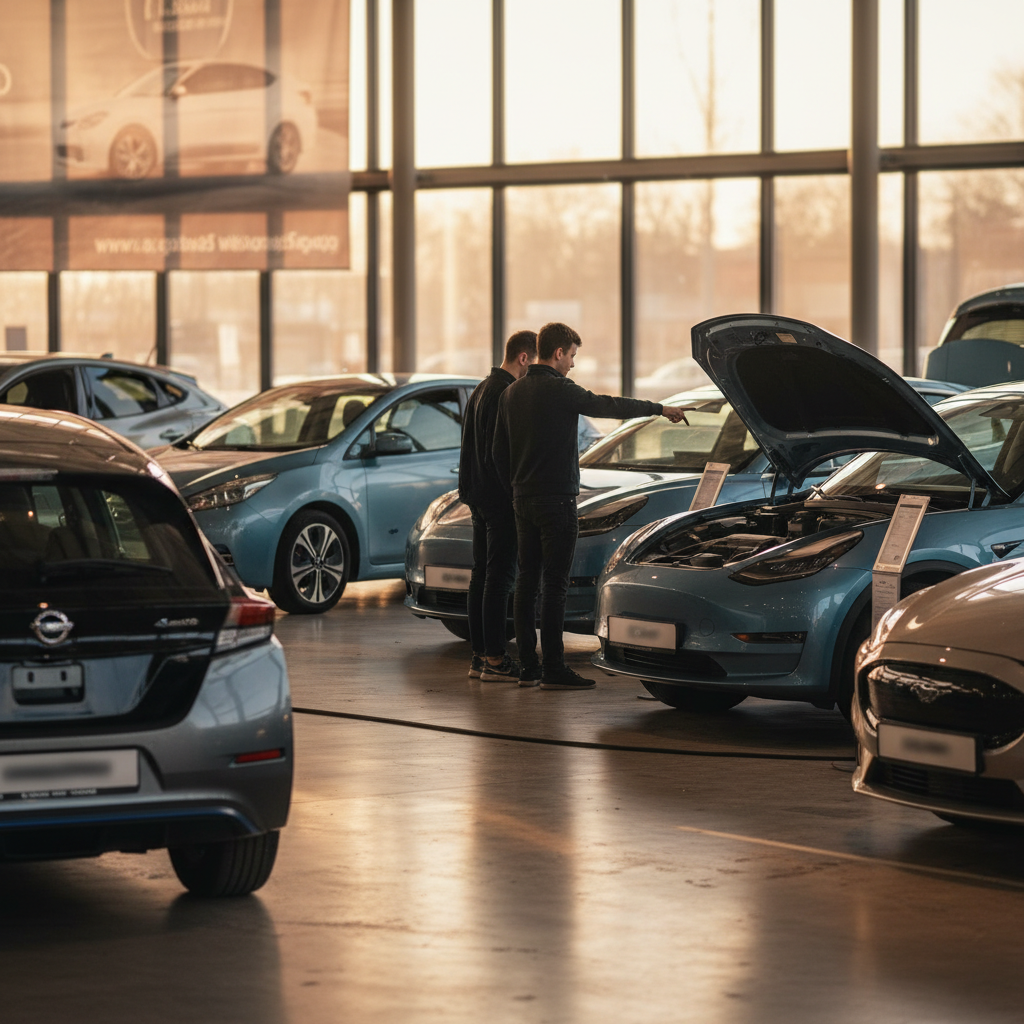
Any time you **buy a used vehicle from a private seller**, **bring a car in from another state**, or otherwise need to newly title and register a used vehicle in Maryland, you must have it inspected at an authorized safety inspection station and present a valid inspection certificate to the MVA. EVs don’t skip this step just because they’re cleaner.
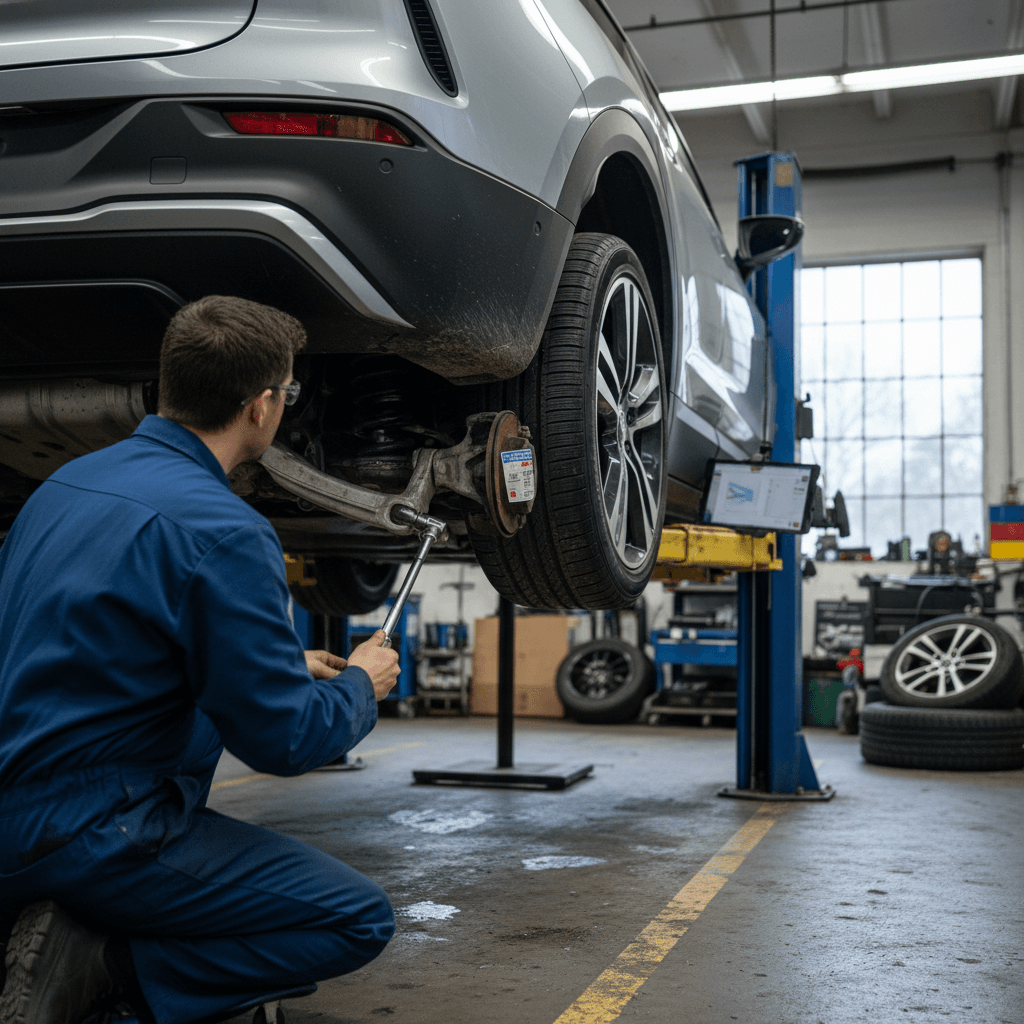
What the Maryland Safety Inspection Looks At
- Brakes: pads, rotors, lines, and parking brake operation.
- Steering & suspension: ball joints, tie rods, shocks, struts.
- Tires & wheels: tread depth, sidewall condition, wheel integrity.
- Lights & signals: headlights, brake lights, turn signals, hazards.
- Glass & wipers: windshield, mirrors, wiper blades, defrosters.
- Seatbelts & safety items: latches, belts, horn, airbag warning lights.
What’s Different for Electric Vehicles
- No engine emissions or exhaust checks, there’s no tailpipe test.
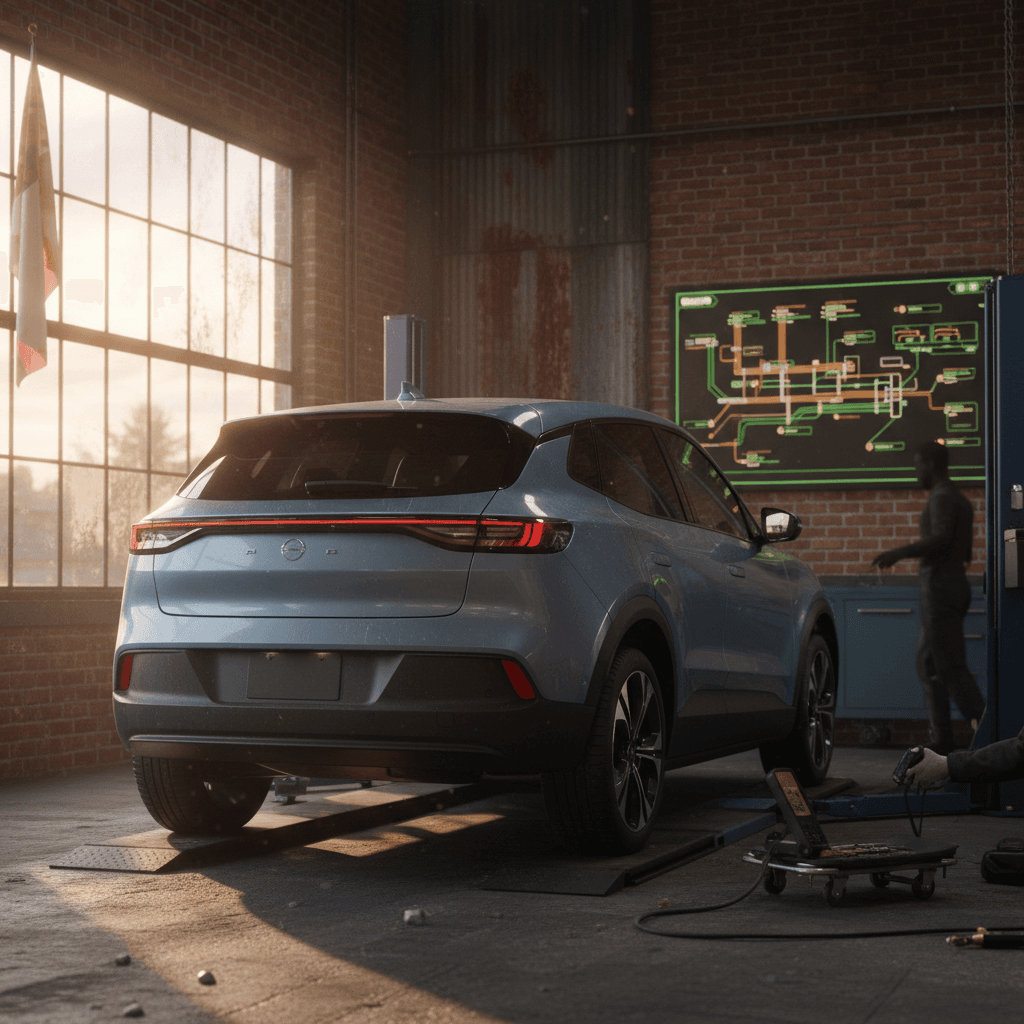
- Inspectors may pay close attention to high‑voltage cabling routing and protection.
- Some shops will note EV‑specific items like regenerative braking feel, even though the legal checklist is still focused on safety.
- Repairs, if needed, might involve EV‑specialist shops for items like electric parking brakes or advanced driver‑assist systems.
No Safety Inspection, No Title Transfer
Inspection Costs and Timing for EV Owners
Costs can vary by station, but understanding the basic structure keeps you from being surprised at the counter, and helps you compare EV ownership costs with gasoline cars more honestly.
Maryland Inspection Costs: How They Typically Break Down
Approximate 2026 costs for common inspection scenarios affecting electric and electrified vehicles. Actual shop prices vary.
| Scenario | What’s Required | Who It Applies To | Typical Out‑of‑Pocket Cost |
|---|---|---|---|
| Buy used BEV in Maryland from private seller | Maryland State Safety Inspection only | Any used battery‑electric vehicle changing owners | Shop‑set fee (often $80–$120+ depending on shop and vehicle). |
| Buy used plug‑in hybrid in Maryland from private seller | Safety inspection now; VEIP emissions test later | Plug‑in hybrids and conventional hybrids | Safety inspection at purchase, then VEIP every two years once scheduled. |
| Move to Maryland with an out‑of‑state BEV | Maryland safety inspection upon registration | All used EVs being newly titled in Maryland | Same as other used vehicles; no separate VEIP cost. |
| Renew registration on BEV | No VEIP, no safety inspection | Battery‑electric vehicles already titled in Maryland | $0 inspection cost, just your normal registration renewal. |
Use this as a ballpark guide; always request a written quote from your inspection station.
Ask for Line‑Item Pricing
Buying a Used EV in Maryland: Inspection and Paperwork Tips
The cleanest way to buy a used electric car in Maryland is to have **safety, battery health, and pricing** all laid out before you sign. The state safety inspection is just one piece of that puzzle, it tells you whether the car meets minimum legal standards, not whether it’s a smart long‑term buy.
Used EV Inspection Considerations in Maryland
How to look beyond the bare‑minimum state safety checklist
1. Safety Inspection Certificate
- For private‑party sales, decide in writing who’s responsible for getting the **Maryland State Safety Inspection** done.
- Certificates are only valid for a limited time; an older one may not be accepted.
- If you’re uncomfortable, negotiate the sale as **“contingent on passing inspection.”**
2. Battery Health & Range
- State inspections don’t measure battery degradation or real‑world range.
- Ask for **battery health reports** or recent service paperwork.
- With Recharged, every car comes with a Recharged Score Report that includes independently verified battery health and range projections, so you’re not buying blind.
3. Fair Market Pricing
- Maryland inspections say nothing about whether the asking price is fair.
- Compare pricing against similar EVs, mileage, options, and battery health.
- Recharged bakes fair‑market pricing analysis into every used EV listing, so you can see how a car stacks up against the broader market.
4. Specialist Support
- Many traditional dealers and shops still treat EVs like exotic hardware.
- Working with an EV‑focused retailer gives you guidance on charging, incentives, and long‑term costs on top of inspection basics.
- Recharged’s EV specialists walk you through Maryland requirements, financing, and nationwide delivery, fully online or at our Experience Center in Richmond, VA.
How Recharged Simplifies It
New in Maryland: Inspections for Public EV Chargers
Here’s a twist you might not expect in an article about Maryland electric car inspection requirements: the state has started inspecting **EV chargers themselves**, not just vehicles. That matters if you rely heavily on public charging.
In 2025, Maryland’s Department of Agriculture (yes, the same group that checks gas pumps and grocery scales) began a statewide program to **inspect public EV charging stations for accuracy and reliability**. Technicians and chargers must be registered, and the state is rolling out standards to make sure when you pay for a kilowatt‑hour, you actually get a kilowatt‑hour.
- Public chargers will eventually need to be **registered and regularly inspected**, similar to gas pumps.
- The focus is on **measurement accuracy and uptime**, not on your specific car.
- As the program expands, you should see **more reliable billing and fewer “mystery slow” chargers** at Maryland stations.
What This Means for You
Practical Checklist Before Any Maryland EV Inspection
Whether you’re headed for a **safety inspection** on a newly purchased used EV or a **VEIP test** in a plug‑in hybrid, showing up prepared saves time, repeat visits, and sometimes real money.
Pre‑Inspection Checklist for Maryland EV and PHEV Owners
Confirm which inspection you actually need
If you’re changing ownership or moving to Maryland, you need a **state safety inspection**. If you’re renewing registration on a plug‑in hybrid in a VEIP county, you may need an **emissions test** instead, or as well.
Gather documents
Bring your registration or title, any MVA inspection or VEIP notices, and a photo ID. For newly purchased vehicles, have a clear copy of the bill of sale.
Do a basic walk‑around
Check all exterior lights, horn, wipers, windshield, mirrors, and tire condition. Many safety inspection failures are for simple issues you can fix in advance.
Check dashboard warning lights
Any illuminated brake, ABS, or airbag warning light can cause a safety inspection failure. For plug‑in hybrids, an illuminated **check engine** light can trigger VEIP issues as well.
Verify charging equipment (optional but smart)
If the car comes with a portable charger, make sure it operates correctly on a standard outlet. It’s not part of the state checklist, but it’s part of your day‑to‑day ownership experience.
Plan for repairs and retests
Ask your inspection station about their retest policy and fees. If issues are found, you’ll want clarity on how long you have to repair and retest without paying again.
Watch the Calendar
FAQ: Maryland Electric Car Inspection Requirements
Frequently Asked Questions
Key Takeaways for Maryland EV Drivers
Maryland’s electric car inspection requirements are simpler than they first appear once you separate **safety** from **emissions**. Fully electric vehicles are **exempt from VEIP** but must still clear a **one‑time safety inspection** when you bring them into the state or change ownership. Plug‑in hybrids and conventional hybrids stay in the **emissions testing pool**, even if they spend much of their time driving on electricity.
If you’re shopping for a used EV, think of Maryland’s inspection programs as the legal baseline, not a full health check. A valid safety inspection tells you the car is road‑legal; it doesn’t tell you how strong the battery is, whether the price is fair, or how it will feel to live with every day. That’s where **Recharged** steps in, with verified battery diagnostics, fair‑market pricing, EV‑savvy support, and a digital‑first experience that makes owning an electric car in Maryland as transparent as flipping on a light switch.