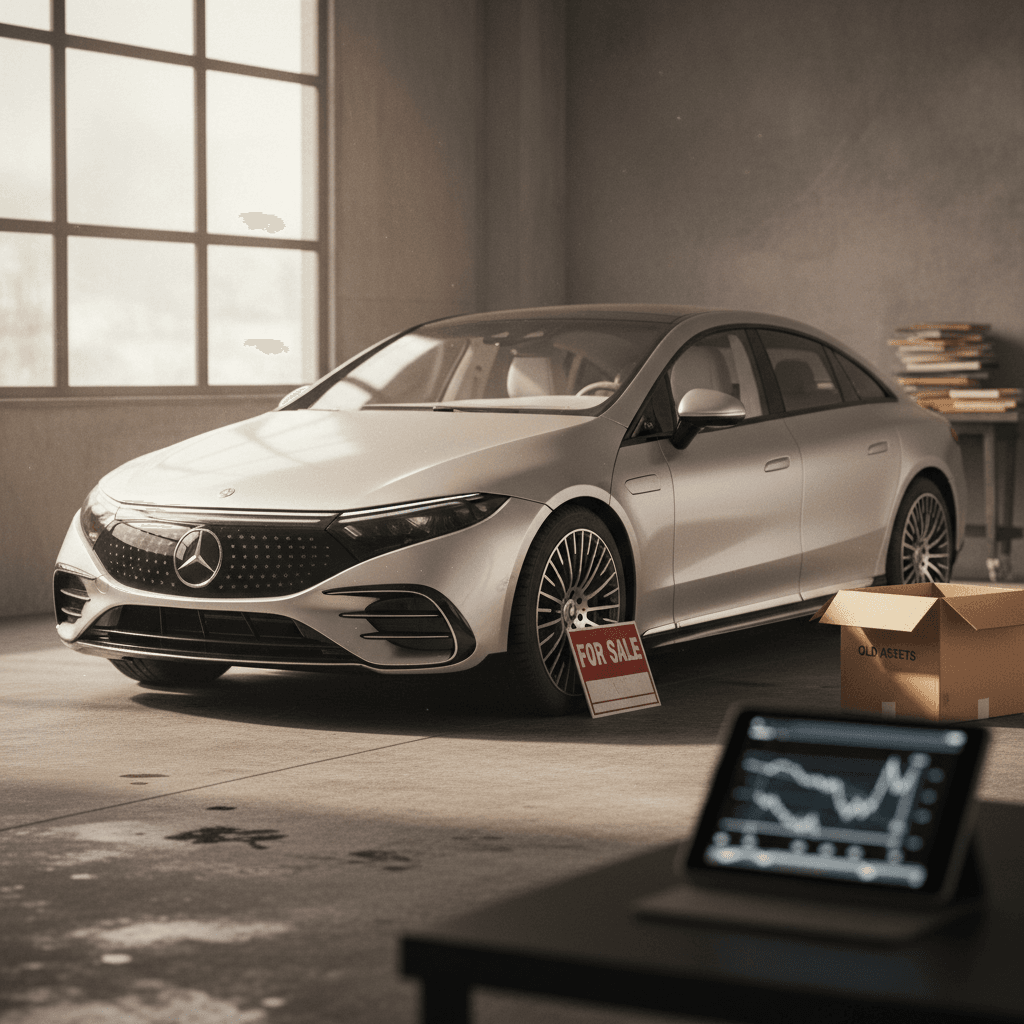
If you bought or leased a Mercedes EQS when it was new, you’ve probably heard the stories: six‑figure window stickers turning into used‑car prices that start with a “4.” The Mercedes EQS value after 3 years is one of the hottest topics in the EV world, because this flagship luxury EV has been a textbook case of aggressive depreciation, and huge opportunity for used buyers.
What this guide covers
Why the Mercedes EQS loses so much value in 3 years
All cars depreciate fastest in their first few years, but the EQS has been hit by a perfect storm. High original MSRPs, rapidly advancing EV tech, aggressive discounts on new models, and soft demand for big luxury sedans have combined to push EQS 3‑year values down harder than many owners expected.
- High starting price: Many early EQS 450+ and 580 sedans left showrooms well into six‑figure territory after options and destination fees.
- Rapid tech turnover: EV buyers are extra sensitive to newer batteries, better range, and improved driver‑assist systems, so last year’s flagship suddenly feels “old.”
- Big incentives and price cuts on new EQS models: Mercedes has trimmed sticker prices and offered heavy lease support, undercutting used values.
- Segment headwinds: Large luxury sedans in general, electric or gas, depreciate faster than compact SUVs and crossovers.
Reality check for first owners
Typical 3‑year depreciation for the Mercedes EQS
No one database publishes a single, official “3‑year EQS depreciation” number, but when you cross‑check auction data, pricing guides, and current listings, a clear picture emerges for U.S. cars with normal mileage (roughly 30,000–36,000 miles after three years).
Mercedes EQS value after 3 years: quick snapshot
Kelley Blue Book cost‑to‑own and independent depreciation trackers show that the EQS commonly sheds tens of thousands of dollars in the first couple of years, with one study citing first‑year drops in the high‑40% range for some trims. By year three, the curve begins to flatten, but you’re still looking at a car that may only be worth 45–55% of its original MSRP.
Use MSRP, not “what you paid”
Real‑world used Mercedes EQS prices in 2025–2026
To understand what a 3‑year‑old EQS is worth today, it helps to look at real listings and transaction ranges for U.S.‑market cars in 2025–2026. Most of the early EQS sedans reached buyers in late 2021 and 2022, so those cars are now right in that 3‑ to 4‑year window.
Typical U.S. used Mercedes EQS prices (early 2026)
Approximate asking and transaction ranges for well‑maintained EQS sedans with typical mileage. Local markets and equipment can move a given car above or below these bands.
| Model year / age | Original MSRP (typical) | Approx. 2026 retail asking price | Approx. 2026 trade‑in / wholesale |
|---|---|---|---|
| 2022 EQS 450+ (≈4 years) | $105,000–$115,000 | $48,000–$55,000 | $40,000–$46,000 |
| 2023 EQS 450+ (≈3 years) | $107,000–$120,000 | $52,000–$60,000 | $44,000–$50,000 |
| 2023 EQS 580 4MATIC (≈3 years) | $120,000–$135,000 | $55,000–$65,000 | $47,000–$55,000 |
| 2024 EQS 450+ (≈2 years) | $104,000–$115,000 (lowered MSRPs) | $65,000–$75,000 | $57,000–$65,000 |
These ranges assume clean titles and no major accident history. Niche trims (like AMG) can swing wider.
Sedan vs. SUV vs. AMG
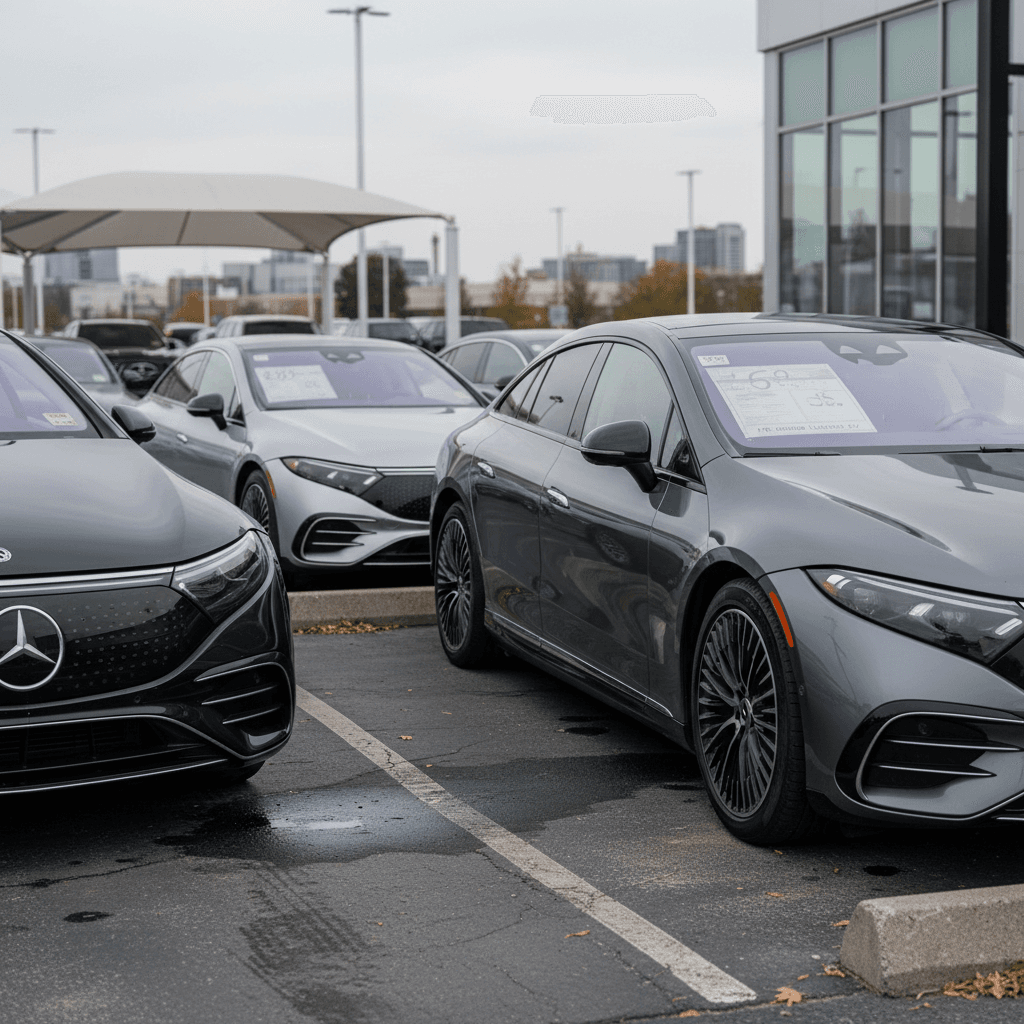
How EQS depreciation compares to other luxury EVs
EQS vs. luxury gas sedans
- Traditional Mercedes S‑Class and comparable gas luxury sedans often lose 40–50% of value over five years in normal markets.
- Many EQS examples are on track to lose close to that much, or more, within just three years.
- Reason: thin buyer pool for big battery sedans and fast‑moving EV tech that makes early cars look dated quickly.
EQS vs. other luxury EVs
- Industry data shows luxury EVs in general can lose 45–55% of value in three years, steeper than many gas counterparts.
- Flagship EVs like the Model S, Taycan, and BMW iX also take big hits, but the EQS has been singled out repeatedly as one of the most aggressive depreciators.
- Compared to more mainstream EVs like Tesla Model 3/Y, the EQS typically loses value faster in percent terms and much more in absolute dollars.
Good news if you’re buying used
Key factors that shape your EQS value after 3 years
What moves Mercedes EQS value up or down at 3 years?
Beyond age, these are the levers that matter most when you go to sell or trade.
Miles & usage
A 3‑year‑old EQS with 18,000 pampered miles will always out‑shine one with 55,000 miles and rideshare history. For this segment, buyers expect low‑to‑moderate mileage.
Warranty status
Mercedes’ battery warranty is typically 8 years/100,000 miles. A 3‑year‑old EQS sitting well under that limit is far more attractive than one closing in on the mileage cap.
Condition & options
Wheel rash, paintwork, and neglected interiors hit EQS value hard. Desirable options, like nicer wheels, sound systems, or Executive packages, help your car stand out.
Location & climate
Coastal luxury markets and EV‑friendly states (CA, WA, NY) usually support stronger resale. Harsh‑climate cars may raise more questions about corrosion and underbody wear.
Software & tech updates
Fresh software, clean infotainment, and working driver‑assist features are must‑haves. A glitchy Hyperscreen or inoperative driver‑assist will scare away buyers and appraisers.
Market timing
End‑of‑quarter incentives on new EQ models, rising interest rates, or a wave of off‑lease EQS cars hitting the market can all nudge your 3‑year value down temporarily.
Lease vs. buy: who should worry about 3‑year EQS value?
For the first owner, the way you structured the deal matters as much as the raw depreciation. Mercedes and its dealers leaned heavily on subsidized leases when the EQS launched, precisely because they knew the resale picture was cloudy.
How 3‑year value plays out for lessees vs. owners
1. If you leased your EQS
The bank (or captive finance arm) took most of the resale risk. If the real‑world 3‑year value comes in below the residual, you simply hand back the keys, no personal hit beyond disposition fees and excess wear/mileage.
2. Lease buyout opportunities
Some EQS lessees will see a buyout price that’s <em>higher</em> than current market value. In that case, walking away and shopping the used market can save you thousands. If your buyout is lower than retail, keeping the car might be a bargain.
3. If you bought new with big discounts
Owners who stacked factory incentives, dealer discounts, and possibly tax credits have a softer landing. You may still be underwater compared with MSRP charts, but your real‑world loss is smaller than the headline numbers suggest.
4. If you paid near sticker in 2022–2023
This is the group feeling the most pain. If you have to sell at year three, you may see losses that rival exotic cars. If you can hold to year 6–8, depreciation tends to flatten out and total cost of ownership starts to look more reasonable.
Think hard before short‑cycling a purchased EQS
Is a 3‑year‑old Mercedes EQS a smart used buy?
For the right shopper, a three‑year‑old EQS might be one of the best luxury‑EV bargains on the road. You’re stepping into an ultra‑quiet, tech‑packed flagship sedan for about what many buyers spend on a new mid‑grade crossover.
Pros and cons of buying a 3‑year‑old EQS
Use this to decide if the value proposition fits your priorities.
Why a 3‑year‑old EQS can be a steal
- Massive upfront depreciation already paid: Someone else ate the first $50,000+; you start much closer to long‑term residual value.
- Plenty of battery warranty left: At three years, you still have about five years of factory battery coverage in many cases.
- Flagship comfort: Quiet cabin, air suspension, and high‑end materials rival or beat many new gas‑powered luxury sedans.
- Lower effective cost per mile: Combine a discounted purchase price with lower fueling and maintenance costs, and the math can be compelling.
Where you need to be cautious
- Future resale still unknown: You’re buying into a model that’s still finding its place in the used‑car world.
- Out‑of‑warranty items can be pricey: Advanced features like air suspension and Hyperscreen aren’t cheap to repair.
- Tech expectations move quickly: If you’re sensitive to having the “latest,” an EQS that’s three model years old may feel behind newer rivals.
- Charging network access: Depending on your region, fast‑charging convenience can vary compared with a Tesla.
How Recharged fits into the picture
Ready to find your next EV?
Browse VehiclesHow to estimate your own Mercedes EQS 3‑year value
Whether you’re planning a trade‑in, lease buyout decision, or private‑party sale, you don’t need an advanced economics degree to ballpark your EQS value after three years. Use this simple framework and you’ll be in the right neighborhood before you ever talk to a dealer.
5‑step process to estimate 3‑year EQS value
1. Start with original MSRP
Look up your exact build’s original MSRP using your window sticker or a build sheet. If you no longer have it, price‑guide sites can help you reconstruct the configuration.
2. Adjust for incentives you actually received
Subtract any purchase incentives, discounts, or tax credits you personally used. This gives you your true <strong>effective cost</strong>, which is the only number that matters to your wallet.
3. Check live market listings
Search for EQS models that match your <strong>year, trim, mileage, and region</strong>. Focus on actual listings and recent sales, not just generic price curves.
4. Apply a mileage and condition adjustment
If your EQS has significantly lower miles or is exceptionally clean, you can aim near the top of the range. Higher miles, accident history, or cosmetic issues push you toward (or below) the bottom.
5. Reality‑check with multiple sources
Combine trade‑in offers, online instant‑cash quotes, and marketplace asking prices. If three out of four point to the same ballpark, that’s likely your real‑world 3‑year value.
Use percentage instead of dollars for planning
Battery health and warranty on a 3‑year‑old EQS
Depreciation headlines can make any EV owner nervous about the battery specifically, but the EQS story so far is more nuanced. Range loss on modern EVs tends to be gradual, and the bigger risk to value is how comfortable a future buyer feels with your particular car’s history.
- Warranty: Mercedes typically backs the high‑voltage battery for 8 years or 100,000 miles (whichever comes first). At three years, most EQS batteries are only about one‑third of the way through that window.
- Normal degradation: Many EVs lose a small percentage of range in the first couple of years, then level off. A modest drop isn’t usually a deal‑breaker if the remaining range still fits the buyer’s lifestyle.
- Charging habits: Frequent DC fast‑charging, repeated 100% charges, and extended storage at full or empty can all accelerate wear. Savvy buyers increasingly ask about charging patterns, not just mileage.
- Documentation: Service records, software‑update history, and any battery or charging‑system work should be ready to share when you sell. Transparency builds confidence and value.
How Recharged evaluates battery health
Tips for selling or trading in a 3‑year‑old EQS
You can’t turn back the depreciation clock, but you can absolutely influence where your own EQS lands within the market range. Two nearly identical cars on paper can easily differ by several thousand dollars at sale time depending on presentation and channel.
- Decide on your exit path: Trade‑in, instant cash offer, consignment, or private‑party sale each comes with different pricing and effort levels. A marketplace like Recharged can combine wide exposure with EV‑specific expertise.
- Detail the car professionally: Wheel repair, paint correction, and a deep interior clean pay off especially well on flagship sedans where buyers expect perfection.
- Fix obvious issues: Tire warning lights, windshield cracks, and minor trim damage psychologically drag down what a buyer will pay, even if the underlying car is solid.
- Highlight the right features: Emphasize battery warranty remaining, driver‑assist packages, recent software updates, and any high‑ticket maintenance you’ve already completed.
- Price realistically, not emotionally: Anchor your expectations to current comps, not to your payoff amount or what you wish the car were worth. The market doesn’t see your finance contract; it sees age, miles, and condition.
- Time the market if you can: Selling before a big wave of off‑lease EQS vehicles hits your area, or before a round of fresh incentives on new EQS models, can help you squeeze out a bit more value.
FAQ: Mercedes EQS value after 3 years
Frequently asked questions about 3‑year EQS value
Bottom line: what Mercedes EQS value after 3 years means for you
The Mercedes EQS has become a poster child for steep early EV depreciation: it’s entirely normal to see a car that cost well into six figures new trading for half that figure three years later. For first owners, that can sting. For second owners, it’s an opportunity to buy a cutting‑edge luxury EV at family‑SUV money.
If you already own an EQS, the smartest move is to look at your personal numbers: what you paid, what it’s worth today, and how long you plan to keep it. If you’re shopping used, focus on battery health, warranty remaining, and condition rather than obsessing over what the first owner lost. And if you want more transparency along the way, a marketplace like Recharged, with battery health diagnostics, expert EV guidance, and nationwide delivery, can turn the EQS depreciation story from a cautionary tale into your buying advantage.