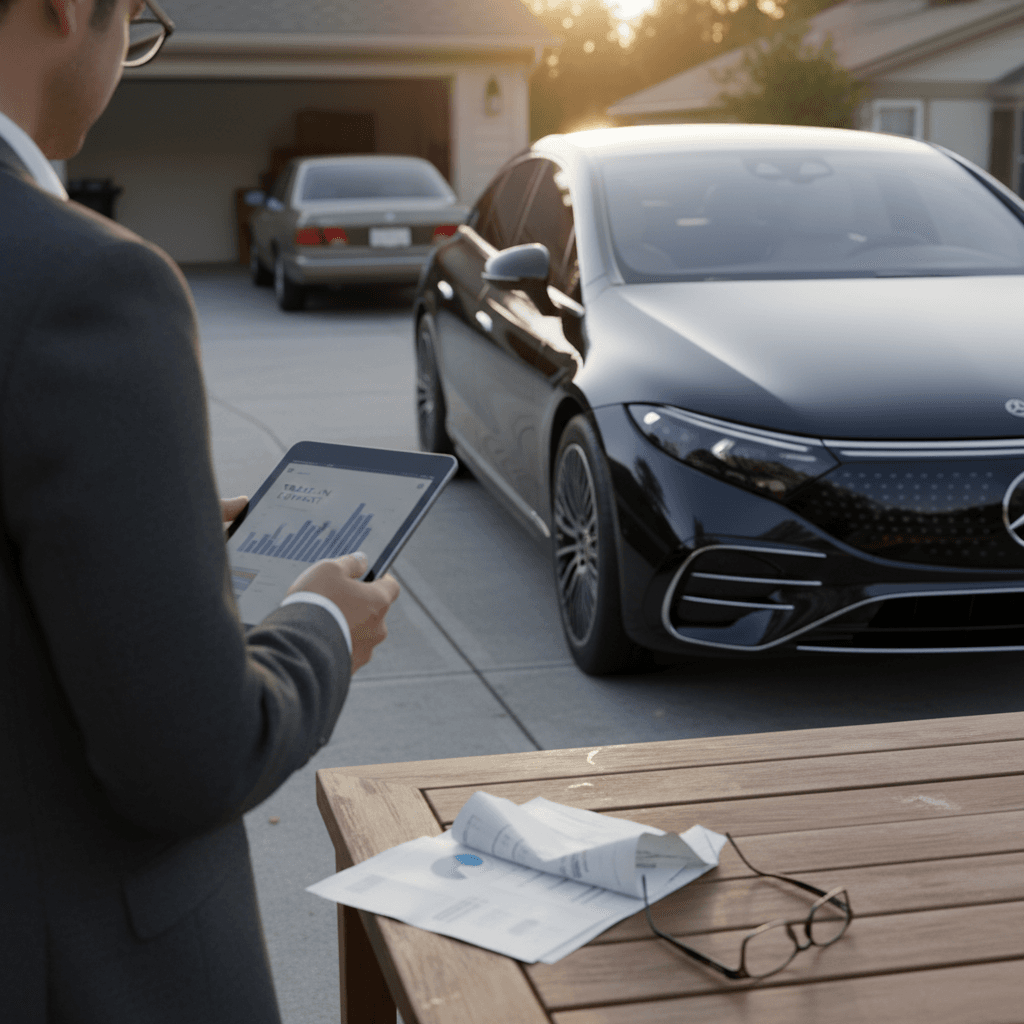
If you own a Mercedes EQS, you’ve probably noticed the headlines: aggressive discounts on new EQ models, paused and restarted production, and luxury EV prices moving faster than anyone expected. That turbulence shows up directly in your Mercedes EQS trade in value, and it can mean a difference of tens of thousands of dollars depending on when and how you sell.
In a hurry?
Why Mercedes EQS trade-in values are so volatile
All EVs are dealing with price whiplash, but the EQS sits at the center of several powerful forces:
- Steep initial MSRPs: Many EQS 450+ sedans launched north of $100,000, with AMG trims even higher. When the market cools, six-figure stickers have a lot of room to fall.
- Heavy incentives and price cuts on new EQS models: Mercedes has sliced prices on EQE and EQS sedans and SUVs for 2026, with cuts ranging from a few thousand dollars to over $15,000 on some trims. That pulls used and trade-in prices down as buyers see cheaper new inventory.
- Stop–start production and paused orders: Mercedes briefly paused U.S. orders and production for some EQ-branded EVs in late 2025 before restarting, creating uncertainty and extra inventory that dealers are now eager to move.
- Shifting EV demand: With some shoppers migrating back to hybrids or efficient gas models, demand for pricey luxury EVs like the EQS has softened, and dealers reflect that in lower trade-in bids.
The big takeaway
Current Mercedes EQS trade-in value ballparks
Every EQS is different, but we can sketch out realistic ranges based on recent U.S. market data for 2022–2025 models. Think of these as starting points, not quotes. Trim, options, mileage, condition, and your ZIP code will push you up or down.
Typical U.S. trade-in ballparks for Mercedes EQS (early 2026)
Approximate wholesale / trade-in ranges assuming average mileage and "good" condition. Actual offers will vary by dealer and region.
| Model year & trim (example) | Original MSRP (approx.) | Typical trade-in range | Notes |
|---|---|---|---|
| 2022 EQS 450+ sedan | ≈ $102,000 | $38,000–$45,000 | Three years old; many have seen nearly 60% depreciation from MSRP already. |
| 2023 EQS 450+ sedan | ≈ $104,400 | $42,000–$50,000 | Younger cars, but still affected by heavy market corrections on early EQS pricing. |
| 2024 EQS 450+ sedan | $104,400–$120,000+ (well-optioned) | $50,000–$65,000 | Low-mile 2024s with desirable packages do better; high-mile units fall toward the low end. |
| 2025 EQS 450+ sedan | $104,400+ | $60,000–$75,000 | Nearly new; small real-world discount from MSRP if mileage is low. |
| 2024–2025 EQS 580 / AMG | $125,000–$175,000+ | $65,000–$100,000 | High trims still command higher trade values, but percentage depreciation can be just as steep. |
| 2023–2025 EQS SUV | $110,000–$150,000+ | $55,000–$90,000 | SUVs have higher MSRP and remain attractive to some buyers, helping trade-in a bit. |
These ranges are directional, not guarantees. Always get live offers for your specific VIN.
Why your number may be higher or lower
Mercedes EQS value snapshot
How the Mercedes EQS depreciates vs. other luxury EVs
The EQS is not alone in seeing sharp price drops, used Tesla prices, for example, have also fallen hard as new-car MSRPs were cut and supply surged. But the EQS has stood out for how quickly six-figure stickers turned into mid-$40K wholesale numbers.
EQS vs. traditional luxury sedans
- Higher first-year depreciation: A well-equipped S-Class will lose value, but not typically 45–50% in year one. Early EQS sedans did.
- Tech risk: EV tech is evolving quickly. Buyers worry that a 3–4-year-old EQS may feel dated versus newer EVs, which pressures prices.
- Brand-new price cuts: When Mercedes lowers the price of a new EQS or offers big incentives, used buyers expect a discount too.
EQS vs. other luxury EVs
- More sensitive to incentives: When federal EV tax credits change, or when Mercedes layers on rebates, used values react.
- Not as supply-heavy as Tesla, but softer demand: There are fewer EQS vehicles on the road than Tesla Model S sedans, but demand is also more limited, so dealers bid cautiously.
- Good news: Depreciation appears to slow after year three, so the absolute dollar drops get smaller over time.
What this means if you own an EQS
Key factors that move your EQS trade-in value up or down
When a dealer or marketplace evaluates your Mercedes EQS, they’re essentially pricing risk: battery, tech, demand, and reconditioning costs. These are the levers that matter most.
Top EQS value drivers
Focus on what you can control before you ask for trade-in bids.
Mileage & usage
Luxury EV buyers pay close attention to miles. An EQS with 20,000 miles will usually get several thousand dollars more than the same car with 60,000 miles.
Battery health
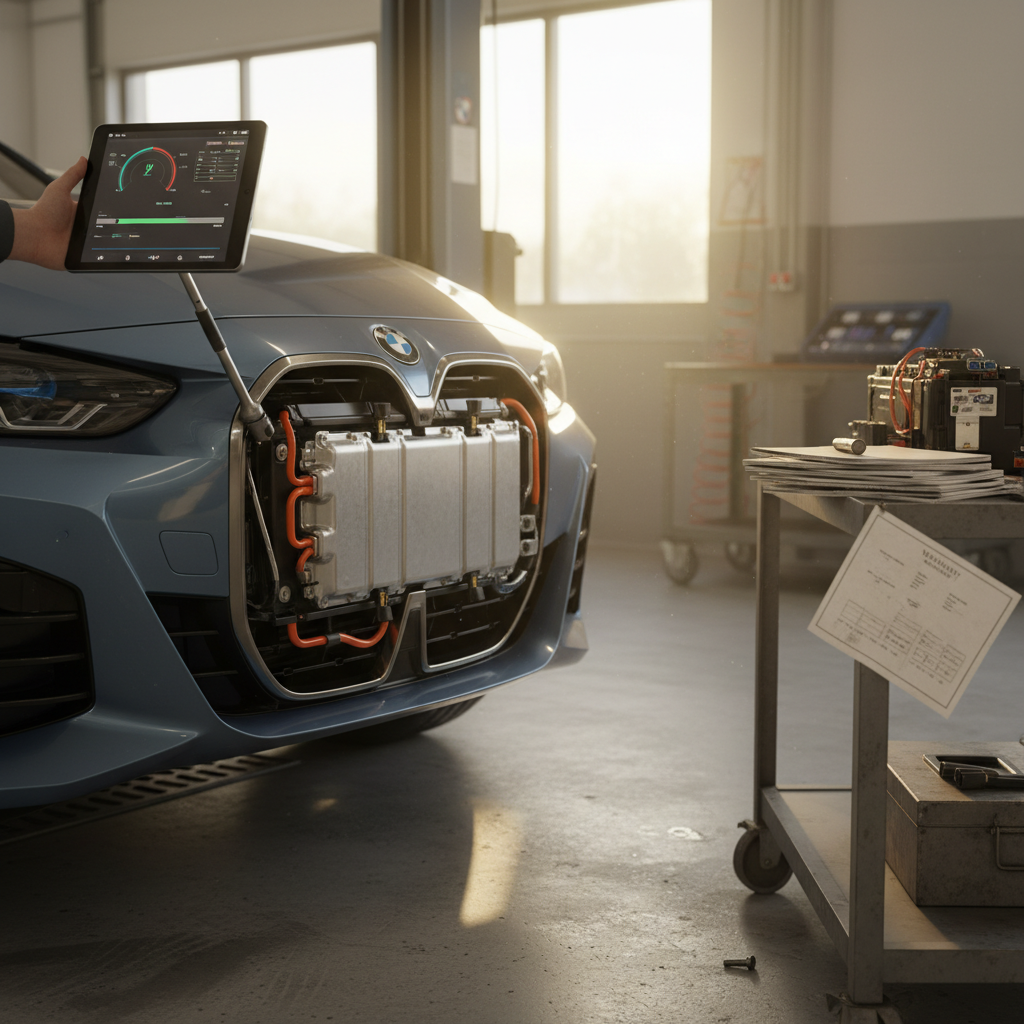
Because the battery pack is so expensive, any hint of abnormal degradation, range complaints, or DC fast-charging abuse can hurt your number.
Accident & title history
Clean Carfax/AutoCheck reports matter. Structural damage, airbag deployment, or branded titles can slash trade-in offers.
Options & trim
Higher trims (580, AMG) and sought-after packages (luxury seats, high-end audio) help. Odd colors or low-demand builds can make the car harder to resell.
Condition & reconditioning cost
Worn tires, curb rash, cracked glass, and cosmetic damage don’t just look bad; they represent real dollars a dealer must invest before retailing your EQS.
Region & timing
Urban EV-heavy markets on the coasts may pay more for EQS inventory than markets where EV adoption is slower.
Red flags that can tank your offer
How to estimate your own Mercedes EQS trade-in value
You don’t need to accept the first number a dealer throws at you. Here’s a simple way to triangulate a realistic EQS trade-in value before you walk into a showroom or start an online appraisal.
5 steps to a realistic EQS trade-in estimate
1. Start with online appraisal tools
Use appraisal tools from major valuation sites to plug in your EQS’s year, trim, mileage, and ZIP code. Capture both trade-in and private-party estimates to understand the spread.
2. Scan real used EQS listings
Search nationwide listings for EQS models matching your year and trim. Focus on asking prices from dealers with similar mileage. Your trade-in value will typically be 10–20% below realistic retail asking prices to cover reconditioning and margin.
3. Adjust for mileage and options
If your EQS has unusually low miles or high-end options (AMG Line, Executive Rear Seat Package, top audio), lean toward the high side of the range. If miles are high or equipment is basic, lean low.
4. Be honest about condition
Grade your car the way a professional would: tires, brakes, bodywork, interior, smells, windshield, and any warning lights. Every flaw is either a direct deduction or a justification for a lower initial bid.
5. Get 2–3 real offers
Once you have a range in mind, get instant or near-instant offers from multiple sources, local Mercedes stores, large used-car retailers, and EV specialists. The midpoint of those bids is usually your true market value.
10 ways to improve your Mercedes EQS trade-in value before you sell
You can’t undo the market-wide depreciation curve, but you can make sure your EQS lands at the top of its value range instead of the bottom.
- Fix inexpensive cosmetic issues first: small dents, curb rash, and windshield chips often cost less to repair than the hit you’ll take on trade-in.
- Replace worn tires if they’re at or below the wear bars, luxury EV buyers (and appraisers) notice immediately.
- Get a fresh detail: a clean interior, decontaminated paint, and odor-free cabin signal good ownership and reduce reconditioning estimates.
- Gather complete maintenance records, including EV-specific services and software updates from your Mercedes dealer.
- Make sure all recall work is completed and documented before you seek offers.
- Include the original charging cable, adapters, cargo accessories, and both keys, missing items lower perceived value.
- Photograph your EQS in good light from all angles if you’re getting online bids or considering consignment.
- Address any warning lights or known issues; an unresolved check-engine or battery fault light will crush value.
- Consider timing your sale away from end-of-quarter periods when dealers are already long on EV inventory.
- If your EQS is under factory warranty, highlight the remaining coverage, especially battery and high-voltage components.
Pro move: document your battery health
Trade in your Mercedes EQS or sell it another way?
Trade-in is convenient: you hand over your EQS, sign some papers, and drive away in something else. But in a choppy luxury EV market, it’s worth asking whether that convenience is costing you too much money.
Ways to sell your Mercedes EQS
How common selling paths compare for a high-end EV like the EQS.
| Option | Typical value vs. best possible price | Pros for EQS owners | Cons for EQS owners |
|---|---|---|---|
| Traditional dealer trade-in | Lowest (you’re selling wholesale) | Fast, simple; easy if you’re buying another car there; tax savings in many states. | Dealers are wary of EV pricing risk; bids can be thousands below what the car might bring in a more EV-focused channel. |
| Online car-buying sites | Low-to-medium | Quick online offers; pickup at your home; no need to negotiate in person. | Many price EVs conservatively; may not factor EV-specific features or battery health in your favor. |
| Private-party sale | Highest potential (but not guaranteed) | You can hold out for retail money if you find the right buyer; more room to highlight condition and options. | Takes time and effort; strangers, test drives, potential financing hurdles; some buyers are nervous about used EVs. |
| EV-focused marketplace (like Recharged) | Medium-to-high | Specialized pricing data, EV-savvy buyers, and battery diagnostics can support stronger offers; options like consignment or instant offer. | Less instant than a same-day dealership trade if you need to be in and out in an hour. |
Convenience vs. price: what EQS sellers typically trade off.
Don’t forget sales tax math
Where Recharged fits in if you’re selling an EQS
Because the EQS is a complex, expensive EV with fast-moving values, it benefits from a sales channel built specifically for electric vehicles. That’s where Recharged comes in.
How Recharged can help EQS sellers
Options beyond a one-size-fits-all trade-in bid.
Instant offer or consignment
You can request an instant offer for your EQS or choose consignment, where Recharged markets your car nationwide and handles the sale while you keep more of the final price.
Recharged Score battery diagnostics
Every vehicle sold through Recharged receives a Recharged Score Report with verified battery health and fair market pricing, data that helps build buyer confidence and support stronger sale prices.
Digital process & delivery
The experience is fully digital with EV-specialist support and nationwide delivery, plus an Experience Center in Richmond, VA if you prefer an in-person handoff.
Ready to find your next EV?
Browse VehiclesIf you’re weighing a low dealer trade-in offer on your EQS, it can be worth comparing it against a Recharged instant offer or exploring consignment. Even a modest bump in sale price can translate into thousands of dollars, especially on a six-figure luxury EV.
FAQ: Mercedes EQS trade-in value
Frequently asked questions about Mercedes EQS trade-in value
Bottom line: making a smart move with your EQS
The Mercedes EQS has been one of the most dramatic examples of how quickly luxury EV values can move. That’s frustrating if you bought early at a six-figure MSRP, but it doesn’t mean you’re powerless when it’s time to sell.
By understanding where EQS trade-in values realistically sit today, documenting your battery health, taking care of basic cosmetic issues, and shopping multiple offers, you can land much closer to the top of your car’s value range. And if a traditional trade-in number feels too low, exploring EV-focused options like Recharged, with its battery diagnostics, expert guidance, and flexible sale paths, can help you capture more of what your EQS is still worth.