If you’re considering a **Mercedes EQS**, either the sleek sedan or the spacious EQS SUV, you’re probably wondering how much it can tow and what that does to **real‑world range**. Luxury EV buyers increasingly want one vehicle that can handle daily commuting *and* light towing for bikes, small trailers, or weekend toys. This guide walks you through Mercedes EQS towing capacity and range so you know exactly what to expect before you hitch up.
Sedan vs. SUV: Big Difference
Can a Mercedes EQS Tow, and Should You?
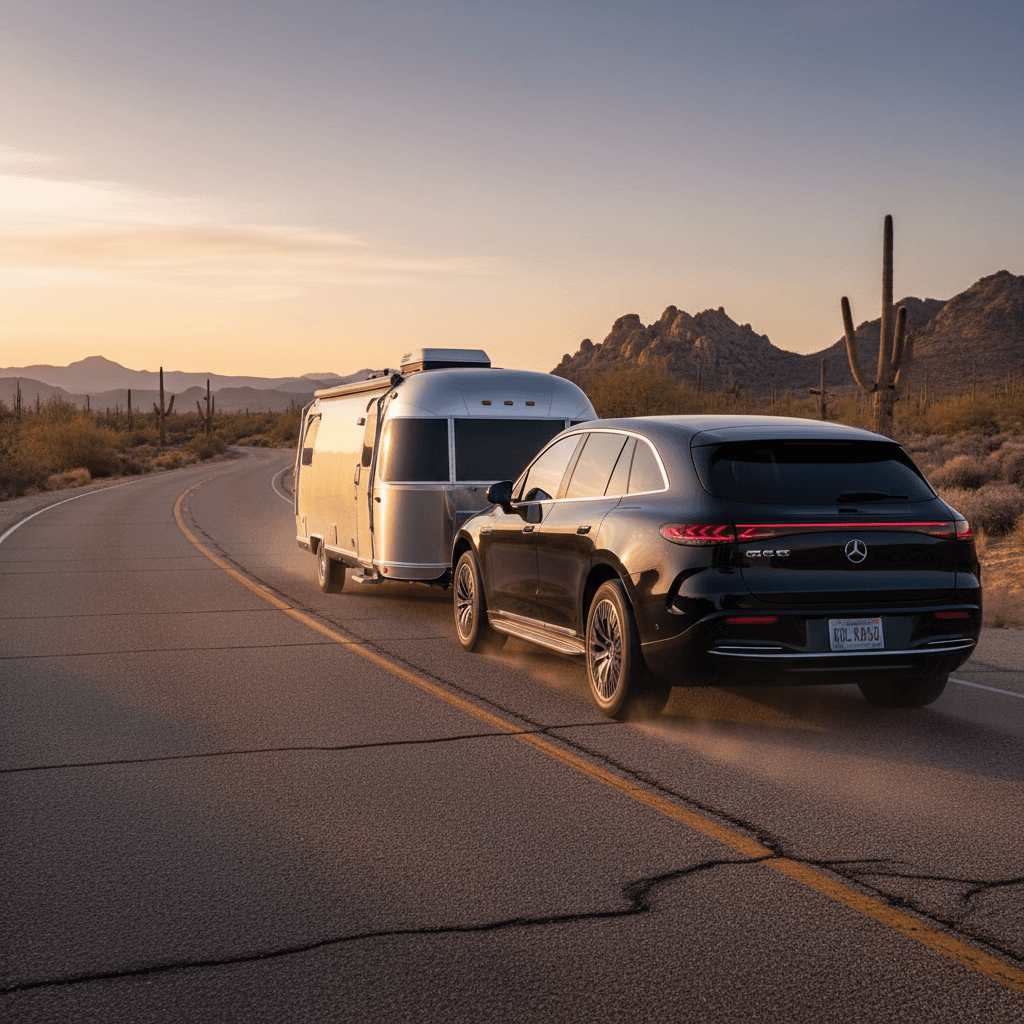
The short answer: **yes, the Mercedes EQS SUV can tow**, and the latest EQS 4MATIC sedans can tow modest loads in markets where they’re rated. But the EQS family is engineered first as a **quiet, ultra‑comfortable luxury EV**, not a heavy‑duty tow rig. That means it’s great for light campers, small boats, and utility trailers, less so for big fifth‑wheels or heavy car haulers.
- EQS **SUV**: rated up to about **3,500 lb** (1,588 kg) with factory tow package in the U.S.
- EQS **sedan 4MATIC**: Mercedes has raised the tow rating to **1,700 kg** (about 3,750 lb) in many markets for 4MATIC versions, but U.S. availability and hitch support are still limited.
- Real‑world use: best suited to **light trailers, pop‑up campers, small boats, and bike racks** rather than large travel trailers.
Always Verify Your Specific VIN
Official Mercedes EQS Towing Capacity by Model
Let’s break down towing capacity for the Mercedes EQS lineup you’re most likely to find new or used in the U.S. market.
Mercedes EQS Towing Capacity Snapshot
Approximate maximum braked trailer ratings for common EQS variants when properly equipped with a factory tow package.
| Model | Drivetrain | Model years (approx.) | Max towing capacity (braked) | Notes |
|---|---|---|---|---|
| EQS SUV 450+ | RWD | 2023–2026 | Up to 3,500 lb | U.S. models typically rated 1,588 kg/3,500 lb with factory hitch |
| EQS SUV 450 4MATIC | AWD | 2023–2026 | Up to 3,500 lb | Twin‑motor AWD; same tow rating as 450+ when equipped |
| EQS SUV 580 4MATIC | AWD | 2023–2026 | Up to 3,500 lb | High‑power AWD; tow rating generally unchanged |
| EQS sedan 450 4MATIC | AWD | 2024–on (select markets) | Up to 1,700 kg (~3,750 lb) | New higher rating; U.S. implementation is limited, verify locally |
| Earlier EQS sedans (RWD) | RWD | 2021–2023 | Often not tow‑rated in U.S. | Typically sold without factory tow prep; assume **no** trailer unless documentation says otherwise |
Always follow the lowest rating between vehicle, hitch, and ball mount.
Don’t Forget Payload and Tongue Weight
Mercedes EQS Range and Battery Basics
Towing and range are joined at the hip. Before you factor in a trailer, it helps to understand the **baseline range** of the Mercedes EQS family. While numbers vary by trim, wheel size, and test cycle, you can use these ballpark figures as a starting point.
Typical Mercedes EQS Range (No Trailer, Mild Weather)
In the real world, your **day‑to‑day range** will float with speed, temperature, elevation, and load. Expect 10–25% less than the headline number on cold, fast highway runs even without a trailer. Add a boxy camper, and you can easily double that loss.
How Towing Affects Mercedes EQS Range
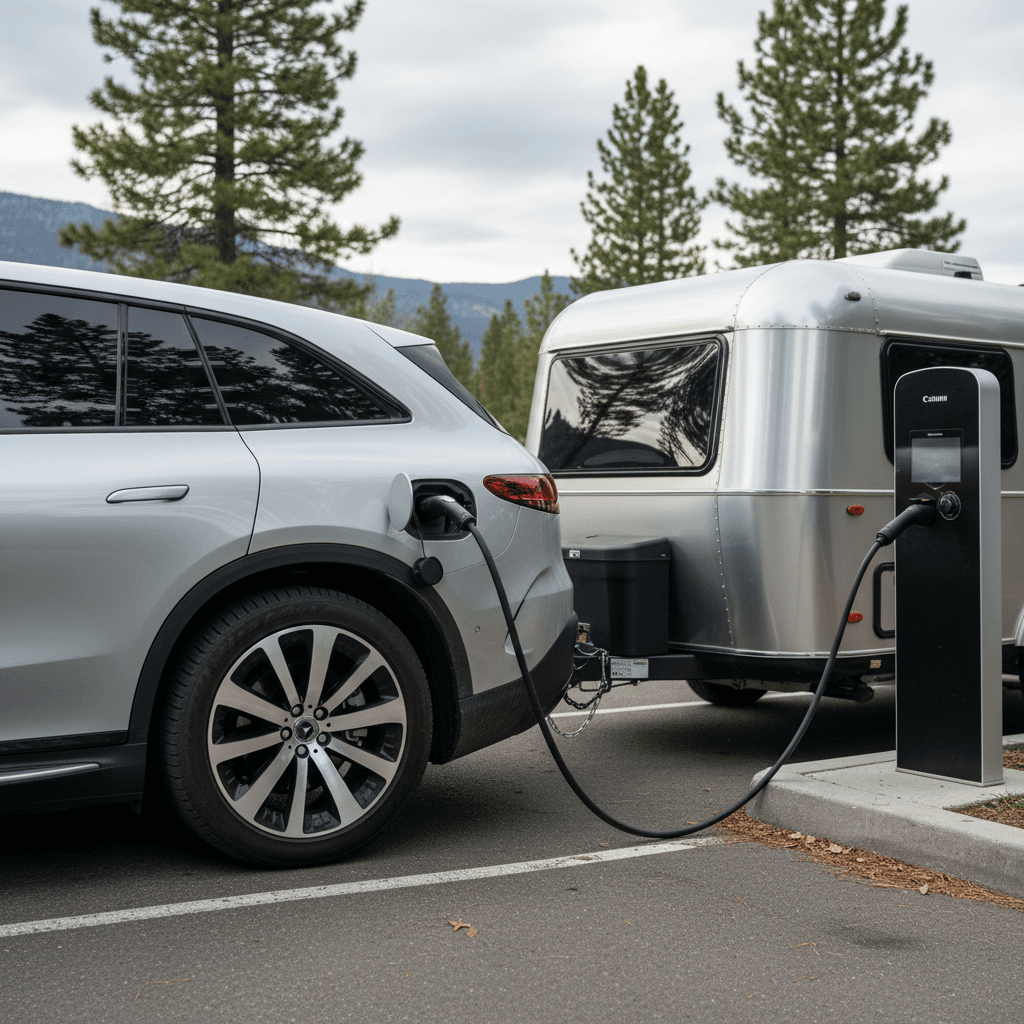
When you add a trailer, you’re increasing **weight** and, more importantly, **aerodynamic drag**. Electric powertrains handle weight surprisingly well at lower speeds, but drag is merciless at highway pace. With a Mercedes EQS, that typically means **losing 30–55% of your solo range while towing**, depending on trailer shape, speed, and terrain.
Realistic Range Expectations for EQS While Towing
Approximate planning numbers for an EQS SUV driver starting with ~320 miles of usable solo range.
Light Utility Trailer
Load: 1,000–1,500 lb open trailer with gear, low profile.
- Range hit: ~25–35%
- Plan for: ~200–240 mi per full charge
- Best use: Landscaping, motorcycles, cargo boxes
Small Teardrop Camper
Load: 1,800–2,500 lb, rounded front, narrow width.
- Range hit: ~35–45%
- Plan for: ~170–210 mi per full charge
- Best use: Weekend camping, solo or couple
Compact Boxy Travel Trailer
Load: 2,500–3,500 lb, taller and squarer.
- Range hit: ~45–55%
- Plan for: ~140–180 mi per full charge
- Best use: Short hops between campgrounds
Speed is Your Secret Range Lever
- Expect **bigger range losses in winter**, where batteries are less efficient and cabin heating loads add up.
- Headwinds and high speed are a bad mix. A 20‑mph headwind at 70 mph is like driving 90 mph aerodynamically.
- Rolling hills cost energy going up but let you **recuperate** coming down; long mountain grades are tougher on range planning.
Matching Your Trailer to an EQS Safely
Even if the brochure says your EQS can tow 3,500 pounds, that doesn’t mean every 3,500‑pound trailer is a good idea. Luxury EVs like the EQS pack in heavy batteries and equipment, which eats into payload and can make tongue weight the limiting factor before you ever reach the theoretical tow max.
Key Weight Limits to Check
- GVWR (Gross Vehicle Weight Rating): Max allowed weight of EQS + passengers + cargo + tongue weight.
- GCWR (Gross Combined Weight Rating): Max for EQS plus fully loaded trailer.
- Payload: How much you can carry in the vehicle. Subtract passengers and cargo to see what’s left for tongue weight.
- Tongue Weight: Typically 10–15% of trailer weight; must stay under the hitch and vehicle rating.
Trailer Types That Suit an EQS
- Compact campers (teardrops, small single‑axle trailers under ~3,000 lb loaded).
- Light boats on low trailers, where drag is modest.
- Utility and bike trailers with low sides and careful packing.
- Anything heavier or taller starts to feel like work for the EQS, especially on long grades.
Avoid Exceeding Ratings, Even “Just This Once”
Charging and Route Planning When Towing with EQS
The Mercedes EQS family can fast‑charge at up to roughly 200 kW on DC, which is plenty to make towing trips workable, as long as you respect that you’ll be stopping more often than when driving solo. The good news is that the EQS is one of the more comfortable places on earth to spend 25–35 minutes while the battery refills.
Smart Charging Strategies for Towing with an EQS
Practical ways to make EV towing trips smoother and more predictable.
1. Shorter Hops, More Stops
Instead of aiming for 10–15% remaining, plan legs that use only **50–60% of the battery**. That gives you a buffer for wind, traffic, and detours.
2. Target High‑Power Stations
Prefer DC fast chargers rated **150–350 kW** along major corridors. The EQS charges fastest between about 10–60% state of charge, so consider several shorter sessions.
3. Choose Trailer‑Friendly Sites
Look for charging stations with **pull‑through or edge stalls** where you can stay hitched. Otherwise, plan a few extra minutes to unhitch and park the trailer safely.
Use Multiple Apps, Not Just One
- Pre‑condition the battery before fast‑charging whenever possible so you arrive at the charger ready to pull max power.
- If your route offers both **70‑mph interstates and 60‑mph highways**, the slower road may actually get you there sooner once you count charging time.
- In cold weather, try to keep the trailer overnight at a **plug‑in campground** so you’re not starting each morning with a cold battery and low state of charge.
Towing & Range Tips for Used EQS Shoppers
If you’re eyeing a **used Mercedes EQS** as a tow‑capable luxury EV, you have a couple of extra boxes to tick. Because tow prep is optional and many first owners never towed, not every used EQS is set up for the job, and range performance can vary with age and battery health.
Key Questions to Ask Before Buying a Used EQS for Towing
These checks help you avoid surprises once you hook up a trailer.
Does it have a factory tow package?
A factory‑installed hitch and wiring harness are strongly preferred over aftermarket solutions on a high‑value EV. Confirm it’s **rated for your intended load**.
How healthy is the battery?
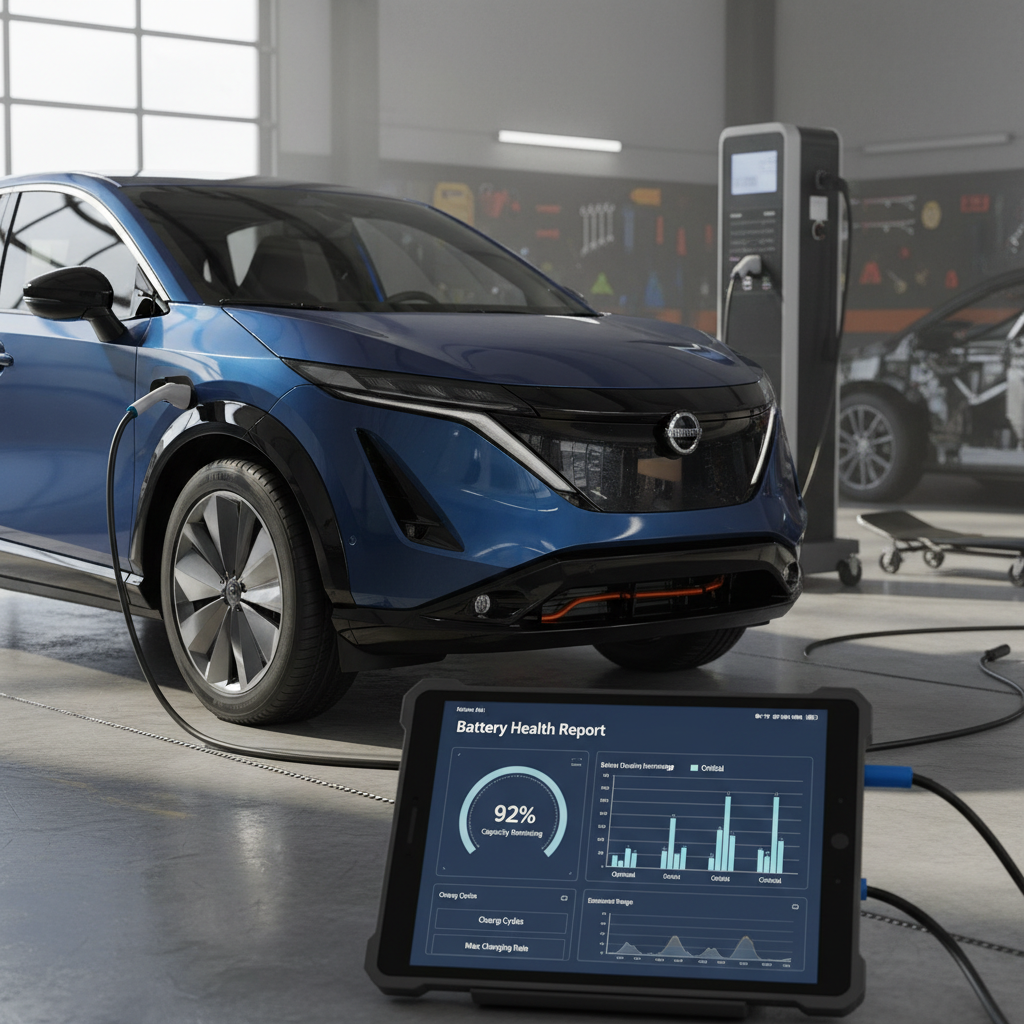
Range while towing depends heavily on pack condition. A **third‑party battery health report**, like the Recharged Score, can show usable capacity and help you forecast real‑world range.
Any towing history or accidents?
Ask whether the EQS has towed before, review maintenance records, and pull a vehicle history report to check for rear‑end repairs that might affect hitch integrity.
Is the price aligned with range & equipment?
Two EQS SUVs of the same year can have very different **value** depending on battery health, tow package, and fast‑charging behavior. That’s where transparent pricing and expert guidance really pay off.
How Recharged Can Help
Ready to find your next EV?
Browse VehiclesPre‑Tow Checklist for Mercedes EQS Owners
Mercedes EQS Pre‑Tow Safety & Range Checklist
1. Confirm Ratings and Hitch Hardware
Double‑check your EQS owner’s manual and door‑jamb sticker for **tow, tongue, and payload limits**. Inspect the hitch, wiring, and receiver for damage or corrosion before each trip.
2. Weigh Your Trailer When Loaded
Visit a public scale once your trailer is fully packed. Verify **gross trailer weight** and tongue weight stay within the EQS and hitch limits, not just the trailer manufacturer’s brochure rating.
3. Set Tire Pressures for the Load
Inflate both EQS and trailer tires to the correct pressures for towing. Under‑inflated tires hurt range and stability; over‑inflated tires can reduce grip and comfort.
4. Dial In Trailer Brakes and Lights
Make sure the trailer’s **electric brakes and lighting** work properly. Test brake gain at low speed in a safe area so you’re comfortable with stopping effort and feel.
5. Adjust Drive Modes and Recuperation
Experiment with EQS drive modes and regen settings while unladen first. For towing, many drivers prefer a **balanced or strong recuperation** mode to reduce brake wear on downhill grades.
6. Pre‑Plan Charging Stops with Buffers
Lay out a route assuming **40–50% of your solo range** and build in multiple backup chargers. Mark trailer‑friendly sites in your apps ahead of time so you’re not improvising with a trailer behind you.
Watch Temperatures on Long Grades
Mercedes EQS Towing Capacity & Range: FAQ
Frequently Asked Questions About Mercedes EQS Towing
Bottom Line: Is the Mercedes EQS a Good Tow Vehicle?
If you want a serene, ultra‑luxury EV that can pull a **small camper, boat, or utility trailer** a few times a year, the **Mercedes EQS SUV** is a compelling choice. Its 3,500‑pound tow rating, large battery, and refined manners make it ideal for long‑weekend adventures, provided you accept shorter legs between charges and plan routes a bit more carefully than you would in a gas SUV.
The EQS sedan is more of a **bonus‑towing** solution than a dedicated hauler, especially in markets where earlier versions aren’t tow‑rated. Either way, the key is matching trailer size to the vehicle, respecting weight limits, and being realistic about range. If you’re exploring a **used Mercedes EQS** for towing, consider working with a specialist marketplace like Recharged that can verify battery health, confirm equipment, and help you shop with confidence instead of guesswork.