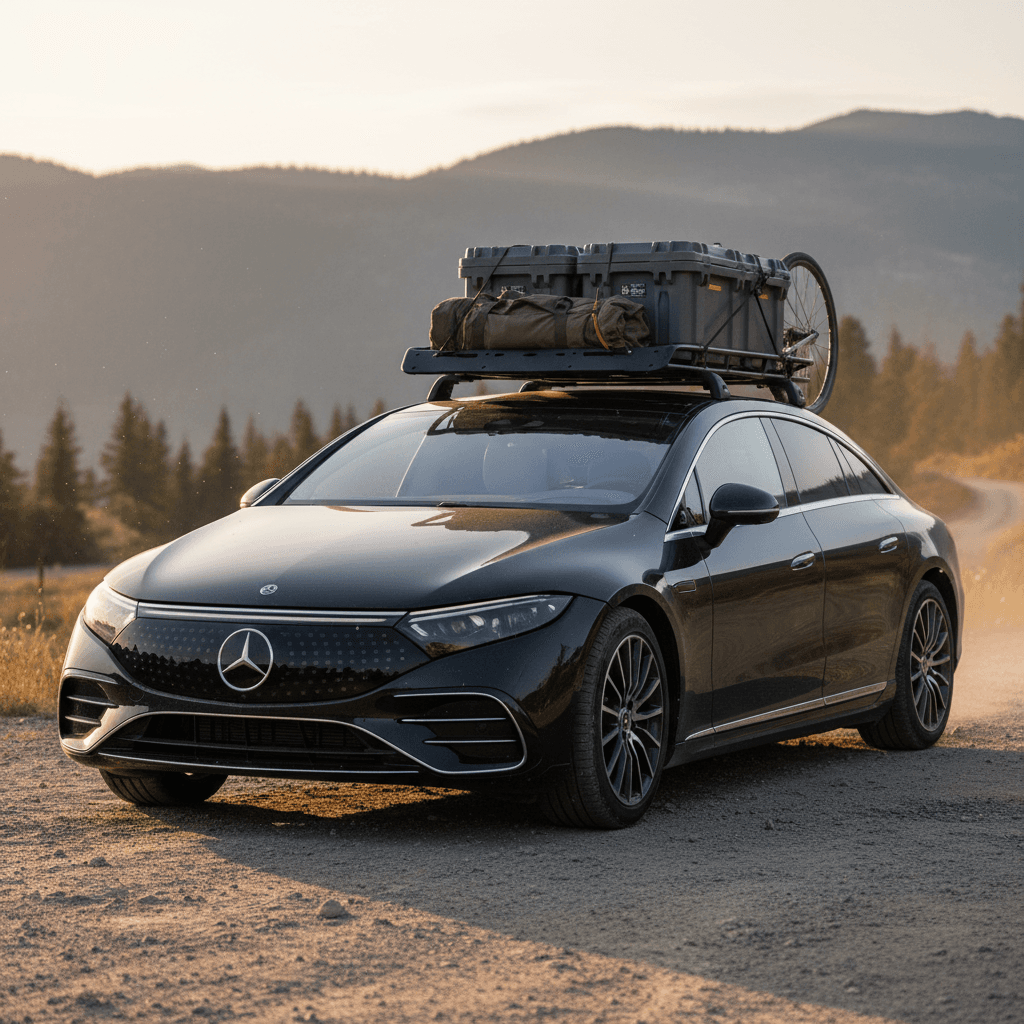
If you own, lease, or are considering a used Mercedes EQS, odds are you’re wondering how much gear you can safely carry on the roof. The phrase you’ll see in the owner’s manual is the roof rack weight limit (or roof load rating), and it’s critical for protecting your EQS’s lightweight body structure, panoramic glass roof, and your EV’s range.
Key takeaway up front
Overview: Mercedes EQS roof rack weight limit
Unlike big SUVs that advertise huge roof loads, the Mercedes EQS is a slippery, efficiency-focused luxury EV with a large glass roof. As a result, Mercedes tends to specify a conservative roof load rating to protect structural integrity and handling. That rating typically includes everything above the metal: crossbars, feet, boxes, baskets, bikes, skis, and bags.
- Roof rack weight limit is a maximum total (rack + accessories + cargo).
- The limit is set by Mercedes-Benz, not the rack maker.
- Exceeding it can affect stability, braking, and emergency maneuvers.
- Your insurance and warranty can be at risk if an overload causes damage.
Never guess the number
Why your EQS roof load rating matters
Where to find the official EQS roof load rating
Mercedes does publish a formal roof load rating for each EQS variant, but it’s often buried in documentation. Before you buy a rack or rooftop box, take five minutes to find the exact figure for your car.
Step-by-step: Confirm your EQS roof rack weight limit
1. Grab your VIN
Locate your Vehicle Identification Number (VIN) on the lower windshield, door jamb sticker, or registration. You’ll use this to pull up the correct EQS documentation if the manual is missing.
2. Check the owner’s manual cargo section
Open the digital or printed EQS manual and search for terms like <strong>Roof load</strong>, <strong>Roof rack</strong>, or <strong>Roof carrying system</strong>. Mercedes typically lists a single number in kilograms and pounds.
3. Look for labels in the door jamb or trunk
Some EQS models include a small label outlining maximum axle loads and sometimes roof load. If you see a roof-load number here, treat it as authoritative, don’t exceed it.
4. Call a Mercedes-Benz service department
If documentation is unclear, call a dealer’s service adviser with your VIN. Ask plainly: “What is the <strong>maximum roof load</strong> (including rack) for my EQS?” and have them read the internal spec.
5. Save the number in your phone
Once you’ve confirmed the rating, note it in your phone or glovebox. When you shop crossbars or a roof box later, you’ll compare their published weights and limits against this figure.
Convert units once and stick to them
OEM vs aftermarket Mercedes EQS crossbars and limits
Once you know the car’s roof load rating, you still have to respect the capacity of the rack system you bolt on. The safe limit is always the lowest rating among the car, the crossbars, and the accessory (like a roof box or bike carrier).
Mercedes OEM EQS roof rack
Mercedes offers model-specific OEM crossbars that clamp to factory mounting points or hidden fixpoints in the roof frame. These bars are engineered with the EQS body structure and glass roof in mind, and their rating is intended to align with the car’s own roof load figure.
- Designed to fit EQS roof shape precisely.
- Usually match the car’s stated maximum roof load.
- Clean look and good integration with panoramic roof.
Aftermarket EQS crossbars
Brands like Thule, Yakima, and others offer fit kits and aero bars for many Mercedes models. For the EQS, you’ll usually see a bar system weight rating that may be equal to or higher than the Mercedes roof load, but you’re still limited by the lower of the two.
- May be rated higher than your EQS roof, don’t exceed the car’s spec.
- Check that the rack is explicitly listed as compatible with the EQS.
- Ensure the feet mount only to approved locations, not glass.
Which roof rack limit do you obey?
Think of the EQS roof rack system as a chain, its strength is determined by the weakest link.
| Component | Example rating | What it means |
|---|---|---|
| EQS roof load (vehicle) | 220 lb (100 kg) | Absolute maximum the car’s roof structure is designed to carry. |
| Crossbar system | 165 lb (75 kg) | Maximum the rack can support, even if the car allows more. |
| Accessory (roof box) | 110 lb (50 kg) cargo | Maximum weight of gear you can place in the box. |
| Your safe working limit | Lowest of the three | If any component is lower, that number is your true limit. |
Always compare these ratings and use the lowest as your working limit.
Don’t “stack” ratings
How a roof rack affects EQS range and efficiency
One of the EQS’s party tricks is its ultra-low drag coefficient, part of why it delivers impressive highway range. A roof rack and cargo box change that equation dramatically. Even a light load that’s well within the weight limit can cut range if it’s tall or bluff-faced.
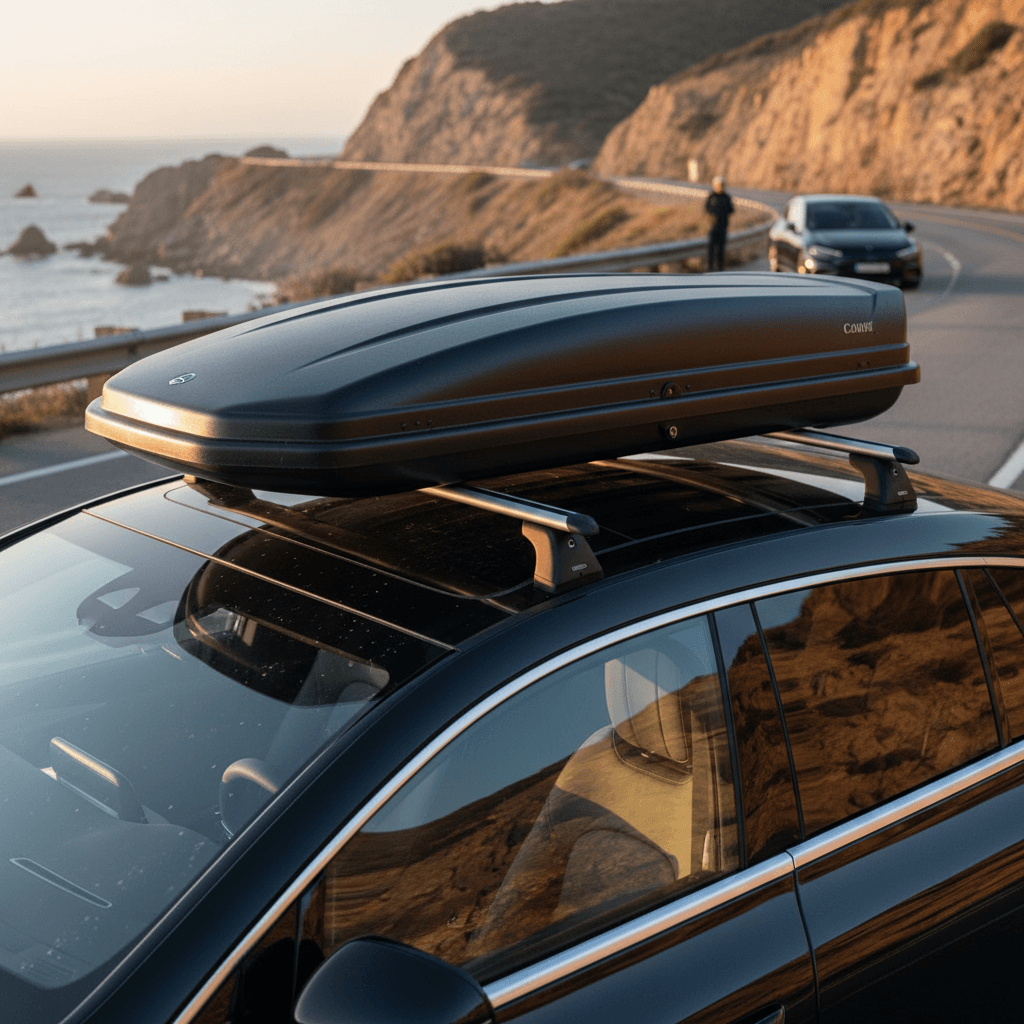
Range impact: rack setups from mild to severe
Weight matters, but aerodynamics usually matter more for an EQS.
Bare crossbars
Even empty crossbars create turbulence:
- Noticeable wind noise above ~45 mph.
- Small but real range hit at highway speeds.
- Remove them between trips if possible.
Slim, aero roof box
A low, tapered box matched to the bar width:
- Can reduce range by roughly 5–10% on long freeway stints.
- Best choice for skis, boards, and soft bags.
- Keep box centered and as low as mounting allows.
Tall box or bikes upright
High, square loads are worst for drag:
- Expect a more noticeable range drop, especially above 65 mph.
- Plan extra DC fast-charging stops on road trips.
- Consider a rear hitch rack instead if possible.
Plan charging around your rack setup
Safe loading checklist for your EQS roof rack
Staying under the roof rack weight limit is only half the job. How you distribute and secure that weight matters just as much for safety and comfort.
10-point EQS roof loading checklist
1. Weigh your components
Look up or weigh the crossbars, feet, adapters, cargo box, and any carriers. Subtract their total from your EQS roof load rating to find how much gear weight you can add.
2. Pack heavy items inside the cabin first
Use the EQS’s trunk and under-floor storage for dense items. Reserve the roof for <strong>bulky but lighter</strong> gear like duffels, skis, or sleeping bags.
3. Keep weight centered and low
Load heavier items in the <strong>middle of the box</strong>, not at the ends. Avoid stacking tall piles that raise the center of gravity even more.
4. Respect dynamic vs static loads
The roof load rating assumes the car is <strong>moving</strong>, braking, swerving, hitting bumps. Don’t exceed it just because the car is parked at a campsite.
5. Tighten and re-check hardware
Follow the torque specs for rack feet and box clamps. After the first 25–50 miles of driving, stop and re-check that everything is still tight and aligned.
6. Secure gear inside the box
Use straps or compression bags inside the roof box so gear can’t shift during sudden maneuvers. Unsecured items can punch through plastic or glass in a crash.
7. Watch overall vehicle height
Know your EQS + rack + cargo height before entering garages, hotel porticos, or drive-throughs. Many owners stick a small note on the dash with the total height.
8. Adjust driving style
With a loaded roof, leave extra following distance, take off-ramps more gently, and expect longer braking distances. The car will feel different at speed and in crosswinds.
9. Mind the speed rating
Some racks and boxes specify a <strong>maximum recommended speed</strong>. Even if your EQS can cruise faster, keep speeds within the accessory’s rating.
10. Remove gear after the trip
Once you’re home, take off the box and bars if you won’t use them for a while. You’ll instantly restore the EQS’s quiet cabin and best range.
Popular Mercedes EQS roof cargo setups
Most EQS owners use roof racks for occasional road trips, ski weekends, or family vacations, situations where the spacious trunk still isn’t quite enough. Here are common setups that work well when kept within the roof rack weight limit.
Three practical EQS roof rack configurations
Each assumes you’ve confirmed your vehicle’s exact roof load rating first.
Ski & snowboard weekend
Typical setup: OEM or premium aftermarket aero bars plus a low-profile ski rack or compact box.
- Light, narrow loads are easy on range.
- Skis/boards concentrate weight near the center.
- Great use case if you travel a few times a season.
Family road trip cargo box
Typical setup: Crossbars with a medium-length, streamlined roof box for duffels, kids’ gear, and soft bags.
- Shift bulky but light items to the roof.
- Keep heavy things (water, tools) in the trunk.
- Plan for a small range penalty on the highway.
Occasional bike transport
Typical setup: Crossbars with 1–2 upright bike carriers or a fork-mount tray system.
- Weigh bikes and carriers carefully, bikes aren’t as light as they look.
- Upright bikes add noticeable aerodynamic drag.
- If you ride often, a rear hitch rack is usually better for EV range.
Balance roof use with cabin and trunk
Protecting the EQS panoramic glass roof
Many Mercedes EQS models feature a dramatic panoramic glass roof integrated into the body. It’s engineered to work with approved mounting points, but that doesn’t mean you can mount just anything, anywhere.
- Use only approved mounting locations, factory fixpoints or channels, never clamp directly to glass.
- Avoid “universal” racks that rely on door jamb pressure or unsupported feet near glass edges.
- Check the rubber pads or feet regularly so grit doesn’t scratch painted metal or trim.
- If your EQS has already had glass or roof repairs, verify that all structural bonding was done by a qualified shop before loading the roof.
Never clamp to glass or unapproved trim
Buying a used EQS? Roof rack questions to ask
If you’re shopping for a used Mercedes EQS and plan to use a roof rack, it’s smart to find out how the previous owner treated the car. A history of overloaded or poorly installed racks can leave subtle damage behind.
Used EQS roof rack due diligence
Ask about past roof rack use
Did the prior owner frequently carry bikes, kayaks, or a heavy roof box? Occasional light use is usually fine; frequent heavy loading is a reason to inspect more carefully.
Look closely at mounting points
With the bars removed, inspect the mounting areas for <strong>dents, chipped paint, or pulled-out threads</strong>. These can hint at overloads or improper installation.
Check for glass or roof repairs
Ask if the panoramic glass or roof structure has ever been replaced or repaired. If so, confirm the work was done by a qualified Mercedes or high-end collision shop.
Review the Recharged Score Report
When you shop at <strong>Recharged</strong>, every used EQS includes a Recharged Score with <strong>verified battery health</strong> and condition details. That gives you confidence that the car hasn’t been abused, even if it’s worn a rack before.
Confirm accessories included in sale
If the seller mentions crossbars or a roof box, verify brand, age, and condition. Factor their weight and ratings into your future loading plans.
How Recharged can help
FAQ: Mercedes EQS roof rack weight limit
Frequently asked questions about EQS roof racks
Bottom line: EQS roof racks and safe cargo
The Mercedes EQS roof rack weight limit is all about balance: enough capacity for a family road trip or ski weekend, but not so much that you can load it like a ladder-on-van work truck. If you confirm your specific roof load rating, choose a well-matched rack system, and load it thoughtfully, you’ll protect your panoramic roof, preserve your range, and keep your handling predictable.
If you’re still shopping for an EQS, or considering a different luxury EV that better matches your cargo lifestyle, Recharged can help you compare options. Every used EV we sell includes a Recharged Score Report with verified battery health and transparent pricing, plus EV-focused guidance on how accessories like roof racks, hitch racks, and charging setups will affect your day-to-day experience. That way, you don’t just buy an EV, you buy one that actually fits the way you travel.