If you’re looking at the Mercedes EQS in 2026, you’ve probably seen impressive EPA figures north of 340–390 miles. Those numbers are helpful, but they don’t tell you what really matters: how far an EQS actually goes on a normal day at U.S. highway speeds, in real traffic, in real weather. This guide breaks down Mercedes EQS real‑world range in 2026 so you can plan confidently, whether you’re buying new, shopping used, or just trying to make your current EQS work better for your life.
Key takeaway up front
Why real‑world EQS range matters more than EPA numbers
Mercedes has tuned the EQS to score very well on official tests. Early range testing from outlets like Car and Driver and Consumer Reports showed the EQS 580 4MATIC sedan actually exceeding its EPA estimate by dozens of miles in steady‑speed highway tests. At the same time, individual owners report big swings based on speed, climate control use, and temperature. In other words, the published number is a good ceiling, not a guarantee. Understanding the real‑world picture is especially important if you’re considering a used EQS where battery age, tire changes, and software updates come into play.
Another wrinkle for 2026: Mercedes has incrementally updated the EQS since launch, adding features like a standard heat pump and more efficient power electronics. That means a 2022 EQS and a 2025 EQS can behave slightly differently on the same route, even if the EPA sticker looks similar. When you’re spending six figures, or shopping a used luxury EV, you deserve to know where the marketing ends and reality begins.
Mercedes EQS range at a glance (2026)
Mercedes EQS range ratings 2024–2026: quick reference
Before we talk about reality, it helps to anchor on the official numbers. Exact EPA ratings can vary slightly by model year and wheel size, but as of the 2024–2025 model years, here’s where the U.S. EQS sedan lineup lands:
Approximate EPA‑rated range: Mercedes EQS sedan (U.S.)
Representative combined EPA range ratings for recent EQS sedan trims. Always double‑check the specific year and wheel size you’re shopping.
| Trim (Sedan) | Model years (typical) | EPA‑rated range (mi) | Notes |
|---|---|---|---|
| EQS 450+ RWD | 2024–2025 | ~352–390 | Single‑motor range champ; the newer 118 kWh updates abroad point to mid‑to‑high 300s in EPA terms |
| EQS 450 4MATIC | 2023–2025 | ~340–345 | Dual‑motor all‑wheel drive, slightly less efficient than 450+ but still strong |
| EQS 580 4MATIC | 2022–2025 | ~340–345 | High‑power dual‑motor, but efficiency remains competitive |
| AMG EQS 53 4MATIC+ | 2022–2025 | ~280–290 | Performance‑tuned; significantly lower official range |
Use these figures as a benchmark; your real‑world results will vary.
The EQS SUV versions use essentially the same battery architecture but carry more weight and frontal area, so their EPA ratings are generally lower for a given trim. The big news heading into 2026 is Mercedes testing larger‑capacity semi‑solid‑state battery packs in EQS prototypes with claimed ranges over 600 miles. Those are not in customer cars yet, but they show where the platform is headed later in the decade.
Watch the wheel size
Real‑world range by trim: how far the EQS actually goes
Real‑world range is where the EQS quietly shines. In independent tests, the EQS 580 and AMG EQS have run 30–40 miles beyond their EPA ratings in controlled 70–75 mph highway loops. At the same time, owners who run 80 mph with full heat or A/C can see a 20–30% hit versus the sticker.
Typical real‑world range by EQS sedan trim (2026)
Assumes a healthy battery, moderate driving, and 65–75 mph highway speeds in mild weather.
EQS 450+ (RWD)
EPA benchmark: roughly 352–390 miles depending on year and spec.
- Mixed driving, 50–70 mph: Many drivers see 320–360 miles on a full charge.
- Steady 75 mph highway: Plan on 280–320 miles, assuming temps in the 50s–70s°F.
- Aggressive driving or 80+ mph: Can drop closer to 250–280 miles.
EQS 450 4MATIC & 580 4MATIC
EPA benchmark: around 340–345 miles for recent model years.
- Mixed driving: Real‑world reports commonly land in the 290–330 mile window.
- 75 mph highway: Think 260–300 miles, with the 580 usually just a hair behind the 450 4MATIC.
- City / suburban: With gentle driving, it’s not unusual to nudge EPA or slightly above.
AMG EQS 53 4MATIC+
EPA benchmark: roughly upper‑200‑mile range depending on spec.
- Mixed driving: Expect in the 220–260 mile neighborhood.
- Highway at 75 mph: Planning around 200–230 miles is realistic.
- Track or spirited mountain driving: Range can fall dramatically; this trim is tuned for performance, not absolute efficiency.
Older (2022–2023) vs newer (2024–2025) EQS
On paper, early and later EQS sedans look similar, but newer software and the standard heat pump in updated models help in the real world.
- Early cars (’22–’23): Often meet EPA in mild conditions but struggle more in deep cold or high heat.
- Updated cars (’24–’25): Owners report more stable winter efficiency and better cabin conditioning for the same energy use.
Good news for shoppers
Sedan vs SUV: how body style changes your range
EQS sedan: the long‑legged option
The EQS sedan is lower, slipperier, and generally lighter than the EQS SUV. Its swoopy shape pays off in aero efficiency, especially at 70–80 mph where wind resistance dominates. If you’re a frequent road‑tripper or live where fast‑moving interstates are the norm, the sedan will usually travel 20–40 miles farther on the same battery.
For most U.S. owners in 2026, the sedan’s real‑world mixed‑use range window of roughly 280–330 miles (non‑AMG) covers commuting, errands, and longer weekend drives with one DC fast‑charge stop when needed.
EQS SUV: practicality with a range penalty
The EQS SUV trades some of that efficiency for upright seating, roomier cargo space, and an available third row. In exchange, you can expect a noticeable hit in real‑world range versus an equivalent sedan, often 10–15% less at highway speeds.
In practice, many EQS SUV drivers report 230–280 miles of comfortable highway range in mild temps, and somewhat less in winter. Still usable for road trips, but you’ll stop a bit more often than an EQS sedan driver covering the same distance.
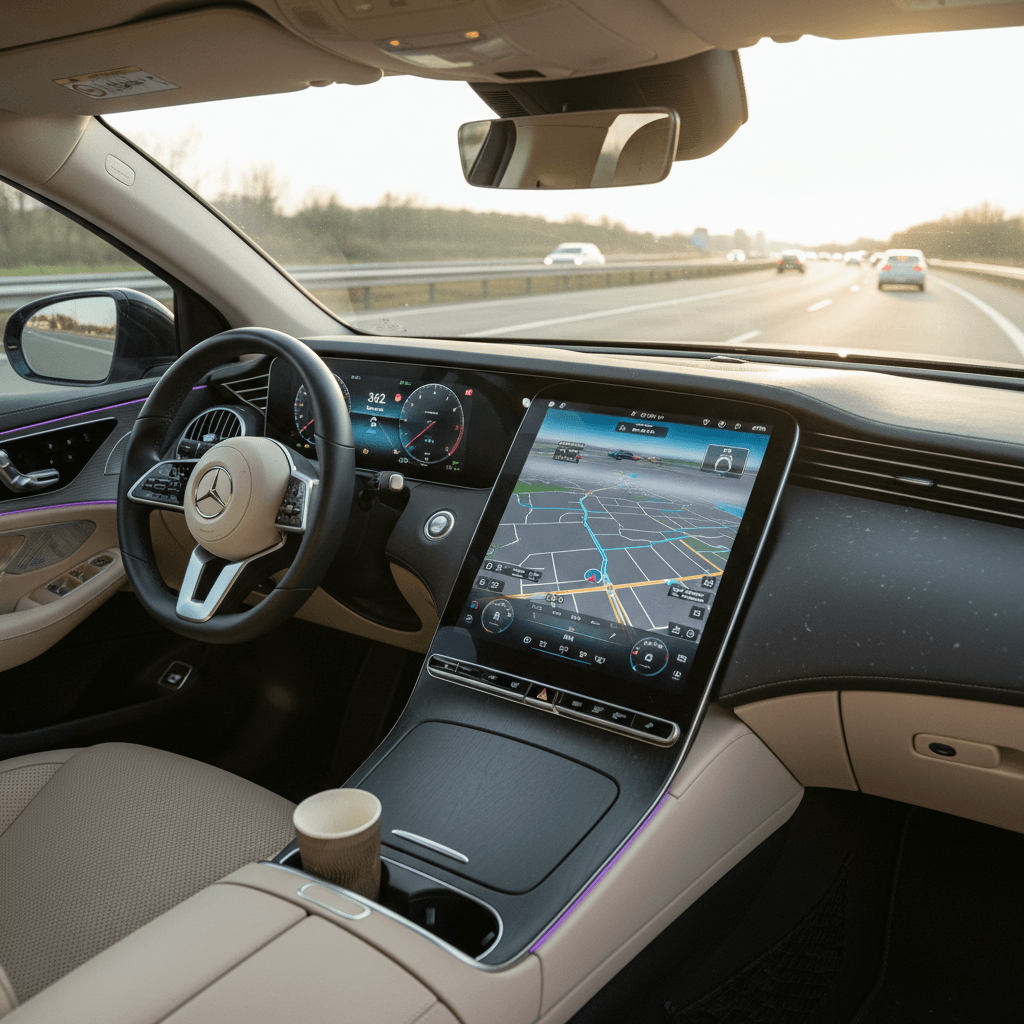
5 biggest factors that shrink or boost your EQS range
Know what actually changes your EQS range
1. Speed: every 5–10 mph matters
Electric drag rises quickly above 65 mph. Cruising at 75–80 mph can trim <strong>15–25% off</strong> your EQS range compared with holding 65–70 mph. You’ll feel this even more in the SUV than in the sedan.
2. Temperature & climate control
Like all EVs, the EQS uses battery energy to heat and cool its big cabin. In freezing weather or intense heat, running the HVAC hard can knock off a <strong>quarter to a third</strong> of your range in combination with denser cold air or heavy A/C use.
3. Wheel size & tires
The aero‑optimized 19–20 inch wheels with low‑rolling‑resistance tires are your friend. Stepping up to wider, stickier tires and 21–22 inch wheels looks great, but can cost <strong>20–40 miles</strong> of usable range, especially at highway speed.
4. Driving style & regen settings
Smooth inputs, early lift‑off, and using strong regenerative braking can significantly improve efficiency. Hard launches and late, heavy braking waste energy the motor could otherwise recover. Many EQS owners find a happy medium in the stronger regen modes.
5. Payload & roof accessories
Four adults, luggage, and a roof box will drag any EV’s efficiency down. On the EQS, that can turn a theoretical 300‑mile car into a <strong>240–260 mile</strong> car on a road‑trip day. When possible, use the large trunk and under‑floor storage instead of roof racks.
Easy experiment you can run this weekend
Winter & highway road trips: what to expect in 2026
If you live in the northern U.S., your big question isn’t “Can the EQS hit 340 miles on a sunny day in May?” It’s “What happens at 20°F, at 75 mph, with the heat on?” The honest answer is that any EV pays a meaningful penalty in those conditions, and the EQS is no exception, though its big pack gives you a healthy buffer and the newer heat‑pump‑equipped models manage energy more gracefully than early builds.
Planning range for a road‑trip day in an EQS sedan
Approximate, conservative targets for trip planning in a healthy‑battery EQS sedan.
| Conditions | Recommended planning range (non‑AMG EQS sedan) | Comments |
|---|---|---|
| Summer, 70–75°F, 70 mph cruise | ~280–320 miles | Best‑case mainstream use; you may do better with patient driving. |
| Mild weather, 45–60°F, 70–75 mph | ~250–300 miles | Slight aero and HVAC losses start to show up. |
| Winter, around freezing, 70–75 mph | ~210–260 miles | Preconditioning and using seat/steering heat instead of max cabin heat help. |
| Deep cold, below 20°F, 70–75 mph | ~180–230 miles | Combines denser air, cold battery, and heavy cabin heating. Plan extra buffer. |
These aren’t lab numbers, they’re starting points to keep you from sweating the last few miles between chargers.
Critical winter tip
Battery health, degradation, and shopping a used EQS
The EQS uses a large, well‑managed battery pack, and most real‑world data so far suggests modest degradation in the first several years if the car is cared for. We’re still relatively early in the life cycle, many U.S. EQS sedans on the road today are 2022–2024 models, so truly long‑term data is limited. But early high‑mileage cars don’t show catastrophic losses; more commonly, owners see a few percent of capacity gone after tens of thousands of miles.
What to look for in a used EQS’s battery
Key questions to ask and numbers to focus on before you sign anything.
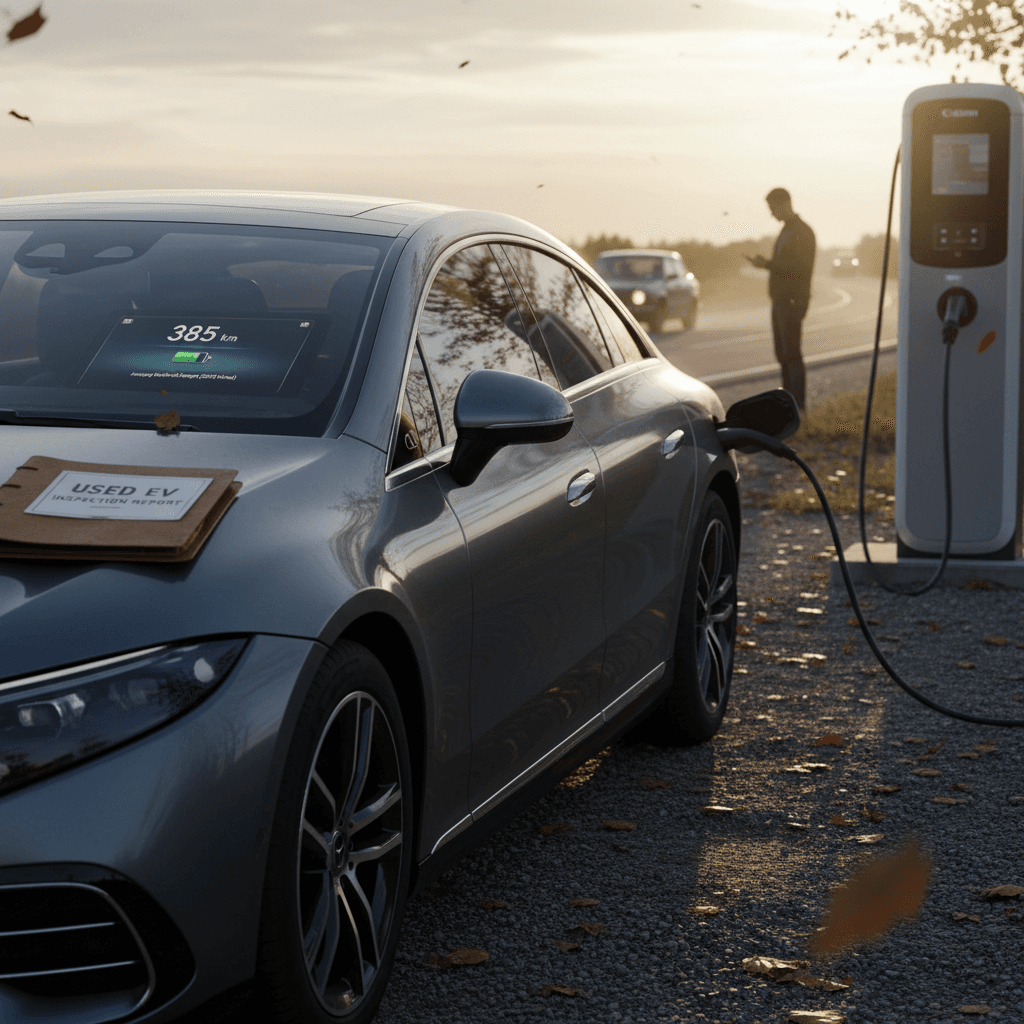
1. Displayed range at 100%
Ask the seller to charge the EQS to 100% and show you the projected range in the car’s display using a normal drive profile. Compare that to the original EPA rating for the trim.
If a 450+ originally rated near 350–390 miles now shows 300 miles at 100%, that suggests roughly 10–15% apparent loss.
2. DC fast‑charging history
Occasional DC fast charging is fine; constant high‑power sessions from very low state of charge are harder on any pack.
Ask how often the car is fast‑charged and whether it lived on a road‑trip‑heavy duty cycle or mostly home Level 2 charging.
3. Warranty and diagnostics
Mercedes typically warrants high‑voltage batteries for many years and a defined mileage against excessive capacity loss. Confirm how much coverage is left.
Whenever possible, lean on an independent battery health report rather than guesswork.
How Recharged helps on used EQS range
How to stretch your Mercedes EQS range every day
- Use Eco or Comfort instead of Sport for daily commuting; the car still feels quick, but throttle mapping is gentler on consumption.
- Keep highway cruising closer to 70 mph than 80 mph when you can, your range meter will thank you.
- In winter, rely on seat and steering‑wheel heaters first; they sip energy compared with blasting cabin heat.
- Precondition on the plug before you leave so the battery and cabin start in their happy zone.
- Check tire pressures monthly. Underinflated tires are a silent range killer on this heavy luxury EV.
- Avoid unnecessary roof racks and boxes. The EQS’s aerodynamics are a huge part of why it does so well; don’t throw that away.
- Plan DC fast‑charge stops around 10–70% state of charge when possible, where charge speeds are highest and overall trip time is shortest.
Use the car’s trip data to learn
Is the Mercedes EQS’s range good value in 2026?
In 2026, the luxury EV field is crowded with strong options from BMW, Audi, Porsche, and Tesla. On paper, some rivals now match or beat the EQS’s EPA numbers. But what continues to set the EQS apart is the combination of a very large battery pack and excellent highway efficiency. That’s why in independent tests you see real‑world figures of 300+ miles at 70–75 mph where other big luxury EVs fall much shorter of their stickers.
On the used market, that matters even more. If you buy a three‑year‑old EQS that’s lost, say, 8–10% of its original capacity, you still have a big enough pack that real‑world range remains comfortable for American driving patterns. That’s part of why a well‑documented EQS can be a strong used buy, especially when you have transparent battery health data in front of you instead of guesswork.
How Recharged fits into your EQS journey
Ready to find your next EV?
Browse VehiclesFAQ: Mercedes EQS real‑world range in 2026
Frequently asked questions about Mercedes EQS range
The bottom line in 2026 is straightforward: the Mercedes EQS is one of the few large luxury EVs whose real‑world range actually lives up to its promise, especially in sedan form. If you respect the usual EV caveats, speed, weather, wheels, and driving style, you can count on 260–330 usable miles from most non‑AMG EQS sedans, with the SUV trailing modestly behind. For shoppers, that combination of efficiency and a big battery makes the EQS an appealing used buy, especially when you pair it with transparent battery health data and expert guidance. Whether you’re just starting your EV research or ready to trade into an EQS, arming yourself with realistic range expectations will make every mile more relaxed.