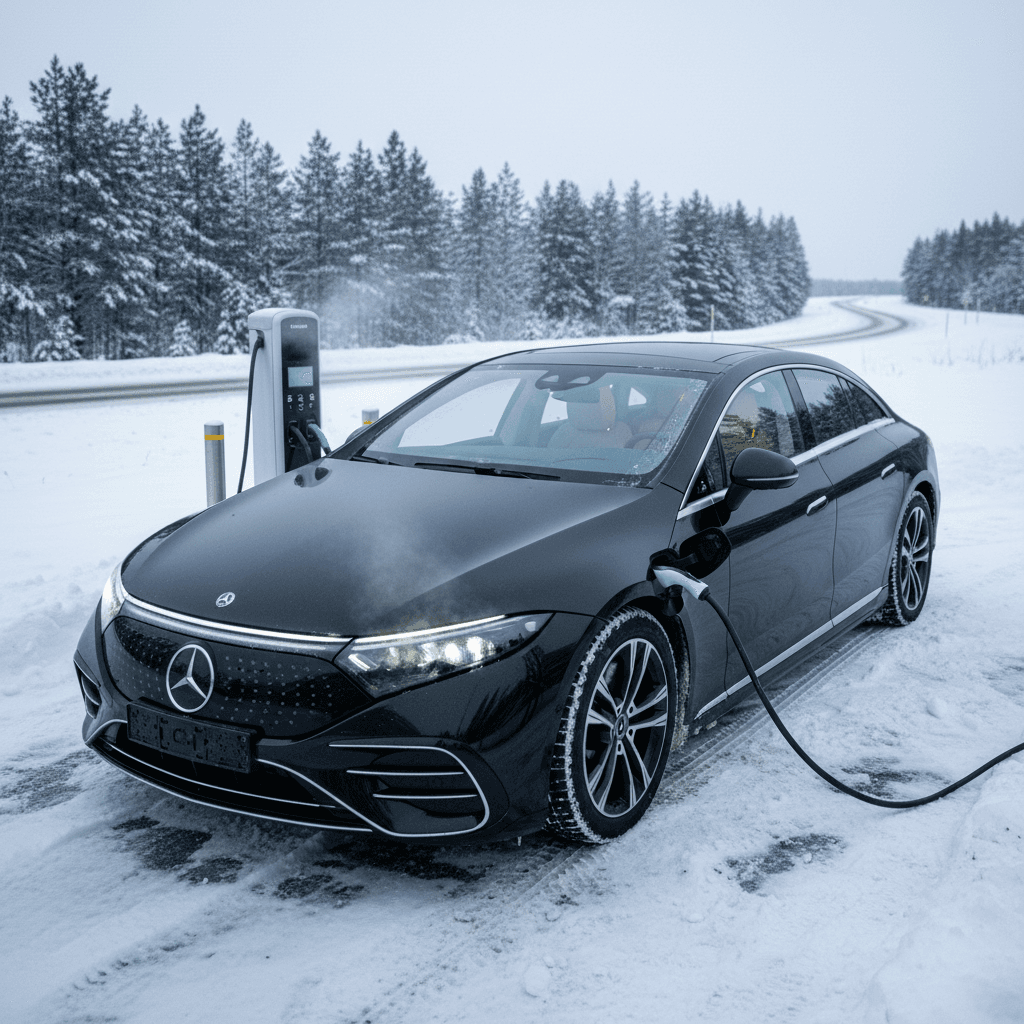
If you’re looking at a Mercedes EQS and you live somewhere with real winters, the first question is simple: what’s the Mercedes EQS range in cold weather actually like? The window sticker might say 350 miles, but a January morning in Minnesota or upstate New York tells a different story.
Key takeaway
Mercedes EQS range in cold weather: quick overview
Mercedes EQS winter range at a glance
Broadly, you can think of the EQS this way: in mild weather it behaves like a 300–350‑mile luxury EV; in winter, it behaves more like a 200–260‑mile car, depending on your trim, speeds, and how toasty you keep the cabin. The good news is that Mercedes’ battery thermal management and heat pump keep the drop manageable if you use the tools the car gives you.
Official EQS range vs real-world winter numbers
Before we talk about winter, it helps to anchor on the official numbers. Depending on model year and trim, the Mercedes EQS sedan offers roughly the following EPA‑rated ranges in the U.S. (rounding slightly for clarity):
Typical EPA-rated range for Mercedes EQS sedan and SUV
Approximate EPA estimates for common EQS trims. Exact figures vary slightly by model year, wheel size, and options, but these are good ballpark numbers.
| Model | Drivetrain | Body style | EPA range (mild weather) |
|---|---|---|---|
| EQS 450+ | RWD | Sedan | ~350 miles |
| EQS 450 4MATIC | AWD | Sedan | ~340 miles |
| EQS 580 4MATIC | AWD | Sedan | ~340 miles |
| EQS 450+ SUV | RWD | SUV | ~305 miles |
| EQS 450 4MATIC SUV | AWD | SUV | ~285–300 miles |
| EQS 580 4MATIC SUV | AWD | SUV | ~285–300 miles |
Use these official ratings as a best‑case baseline. Winter conditions will reduce them, especially at highway speeds with cabin heat on.
Those numbers assume moderate temperatures and a balanced mix of city and highway driving. In winter, several independent tests and owner reports across brands show EVs typically lose 15–40% of their rated range in freezing conditions once you factor in battery warming and cabin heat. The EQS, with its big battery and efficient aerodynamics, tends to land toward the better half of that spectrum when driven reasonably.
Plan around winter range, not EPA stickers
Why cold weather cuts Mercedes EQS range
1. The battery is less efficient when it’s cold
Like every modern EV, the Mercedes EQS uses a lithium‑ion battery. When it’s cold outside, the battery’s internal chemistry slows down. The car protects itself by limiting power and usable capacity until the pack warms up.
- More internal resistance means higher energy losses.
- The car may hold back full regen and peak power until warm.
- The first 10–20 miles after a cold start are often the least efficient.
2. Heating the cabin takes serious energy
Gas cars get cabin heat "for free" from waste engine heat. EVs don’t. Your EQS has to power electric heaters and a heat pump to keep you and the battery warm.
- Cabin heat can easily draw 2–6 kW on a frigid day.
- At 70 mph, that’s like adding 10–25% to the energy the car needs.
- Short trips are worst, because you keep reheating a cold cabin and battery.
Mercedes does a lot behind the scenes in the EQS, battery pre‑conditioning, a sophisticated heat pump, well‑insulated cabin, to reduce these penalties. But physics still wins: some of the energy that would go to moving the car now has to go to staying warm.
Leverage the heat pump, not just the heater
EQS sedan vs EQS SUV: winter range differences
How the EQS sedan and SUV behave in winter
Same platform and battery tech, but different aerodynamics and weight profiles.
EQS sedan in winter
- Best winter range in the EQS family thanks to low drag (aero body).
- Realistic highway winter range for many owners: 220–260 miles between charges at 70 mph, from a full battery to low state of charge.
- City and suburban driving with mixed speeds can stretch that further, especially if you preheat while plugged in.
EQS SUV in winter
- More frontal area and weight than the sedan, so it uses more energy per mile.
- Expect winter highway range more in the 190–230‑mile band, depending on trim and wheel size.
- However, extra ride height can help you in deep snow and poor road conditions.
If you live in a cold climate and absolute winter range is your top priority, the EQS 450+ sedan with smaller wheels is the sweet spot. If you need the space and utility of the SUV, it will still handle winter fine, you’ll just want to be more disciplined about preheating and charging stops on longer drives.
What range to expect in common winter driving scenarios
Every driver’s situation is different, but you can use a few typical scenarios to sanity‑check whether an EQS will cover your winter use cases comfortably.
Mercedes EQS winter range: scenario-based expectations
Approximate usable ranges for an EQS 450+/450/580 in typical sub‑freezing conditions, assuming you start at 90–100% and drive down to ~10% battery. These are directional, not guarantees.
| Scenario | Conditions | Likely usable range | Notes |
|---|---|---|---|
| Daily commuting | Mixed city/highway, 25°F, light snow | 230–260 mi (sedan) / 200–230 mi (SUV) | Plenty for most commutes plus errands. |
| Interstate winter road trip | Steady 70 mph, 20°F, cabin at 70°F | 200–230 mi (sedan) / 180–210 mi (SUV) | Wind, elevation, and heavy snow can push you lower. |
| Short, repeated errands | Multiple 5–15 mi trips, 20°F, lots of restarts | 30–40% less than you’d expect from miles alone | Cold-soak + reheating cabin repeatedly hits efficiency. |
| Brutal cold snap | Single long drive, 0°F or below, strong headwind | Range loss closer to 35–40% vs EPA ratings | Plan conservative legs and expect slower DC charging early in the session. |
Use these numbers to plan with a safety margin. If you routinely need more than this in one shot, plan a fast‑charge stop or consider your local charging options.
Don’t cut it close in winter
9 ways to maximize Mercedes EQS range in cold weather
Practical steps to squeeze more winter range from your EQS
1. Precondition while plugged in
Use the Mercedes app or in‑car scheduler to warm the cabin and battery while the EQS is still on AC power. That way, your first few miles aren’t spent dumping battery energy into warming cold cells and glass.
2. Favor seat and wheel heaters over cabin heat
Seat and steering‑wheel heaters draw a fraction of the power that full cabin heat does. Set the cabin a few degrees lower and let the localized heaters keep you comfortable.
3. Use Eco or Comfort drive modes
Aggressive acceleration wastes energy and can also ask more from a cold battery. Eco and Comfort modes soften throttle response and help the car prioritize efficiency over performance when it’s frigid.
4. Keep speeds reasonable on the highway
Aerodynamic drag climbs quickly above 70 mph, especially in the SUV. Dropping your cruising speed from 75 to 65 mph can easily net you an extra 20–30 miles of winter range on a long leg.
5. Avoid frequent deep cold-soaks
Parking in a garage, even an unheated one, keeps the pack and cabin warmer than sitting outside in the wind. Less temperature swing between drives means less time spent re‑warming everything from scratch.
6. Plan conservative charge stops
On a winter road trip, use the built‑in Mercedes navigation or a planning app, but then add your own buffer. Stopping at 20–30% remaining instead of 5–10% costs little time and a lot less stress.
7. Watch tire choice and pressure
True winter tires are worth it for safety, but they can add rolling resistance. Make sure they’re properly inflated for cold temperatures, under‑inflated tires kill both range and handling.
8. Limit roof boxes and racks
The EQS sedan is extremely aerodynamic. Adding a roof box, ski rack, or leaving a cargo pod on all season can noticeably dent range, especially at interstate speeds in winter air.
9. Use range and energy screens, not guess-o-meters
The EQS lets you view energy consumption by system. Use that to see how much your HVAC is using and adjust. The car will also get better at predicting range as it learns your winter driving patterns.
Good news for winter commuters
Charging a Mercedes EQS in winter: what changes
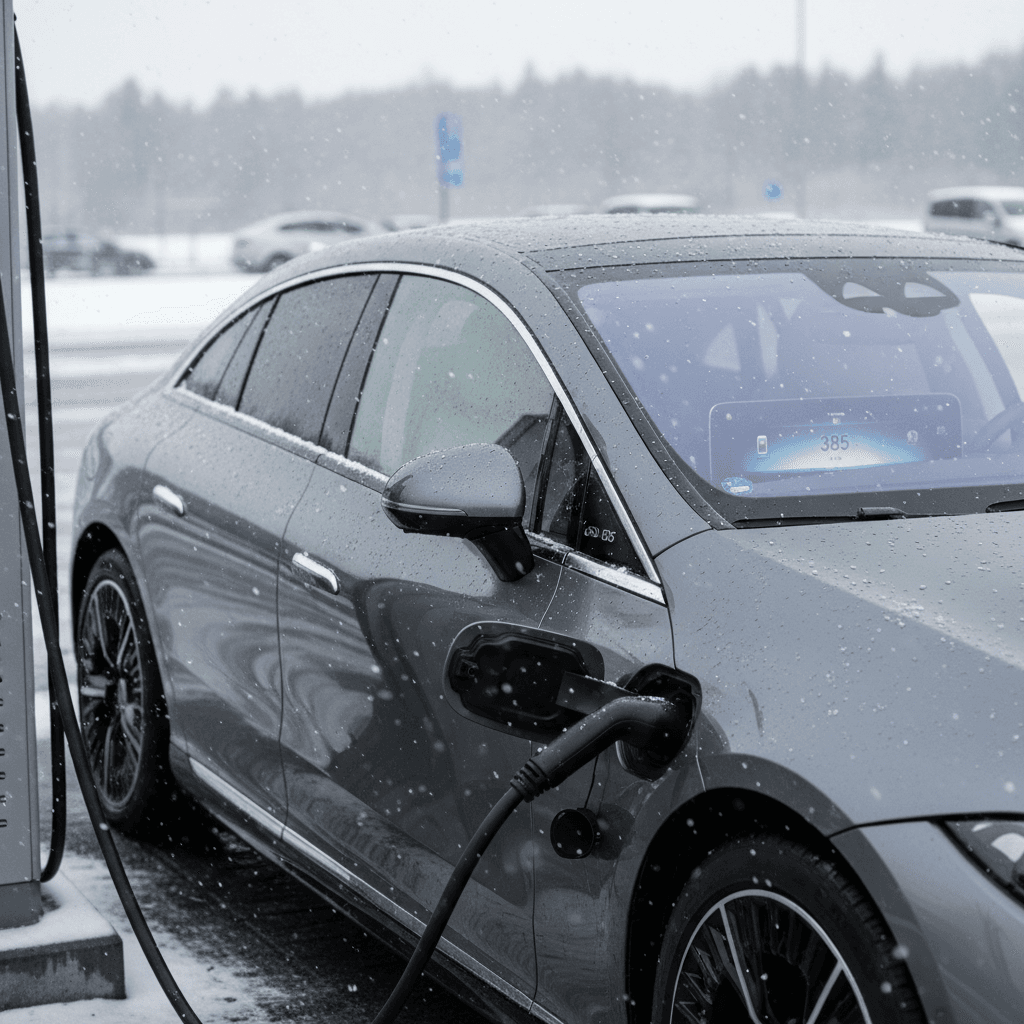
Cold doesn’t just affect how far you can drive on a charge, it also changes how fast you can put energy back into the battery. The EQS has a well‑engineered thermal system, but you’ll notice a few winter quirks at DC fast chargers.
- If the pack is cold, the car will initially limit fast‑charge power until the battery warms up.
- Pre‑conditioning the battery on the way to a DC fast charger can dramatically improve initial charge speeds.
- On road trips, the first fast‑charge of the day is often the slowest; later sessions, when the pack is already warm, tend to reach the advertised peak speeds more easily.
- Level 2 home charging is less sensitive to cold; it simply takes a bit more energy to fill because the car has to keep the pack at a happy temperature while charging.
Use charger preconditioning in the nav
Does winter hurt Mercedes EQS battery health?
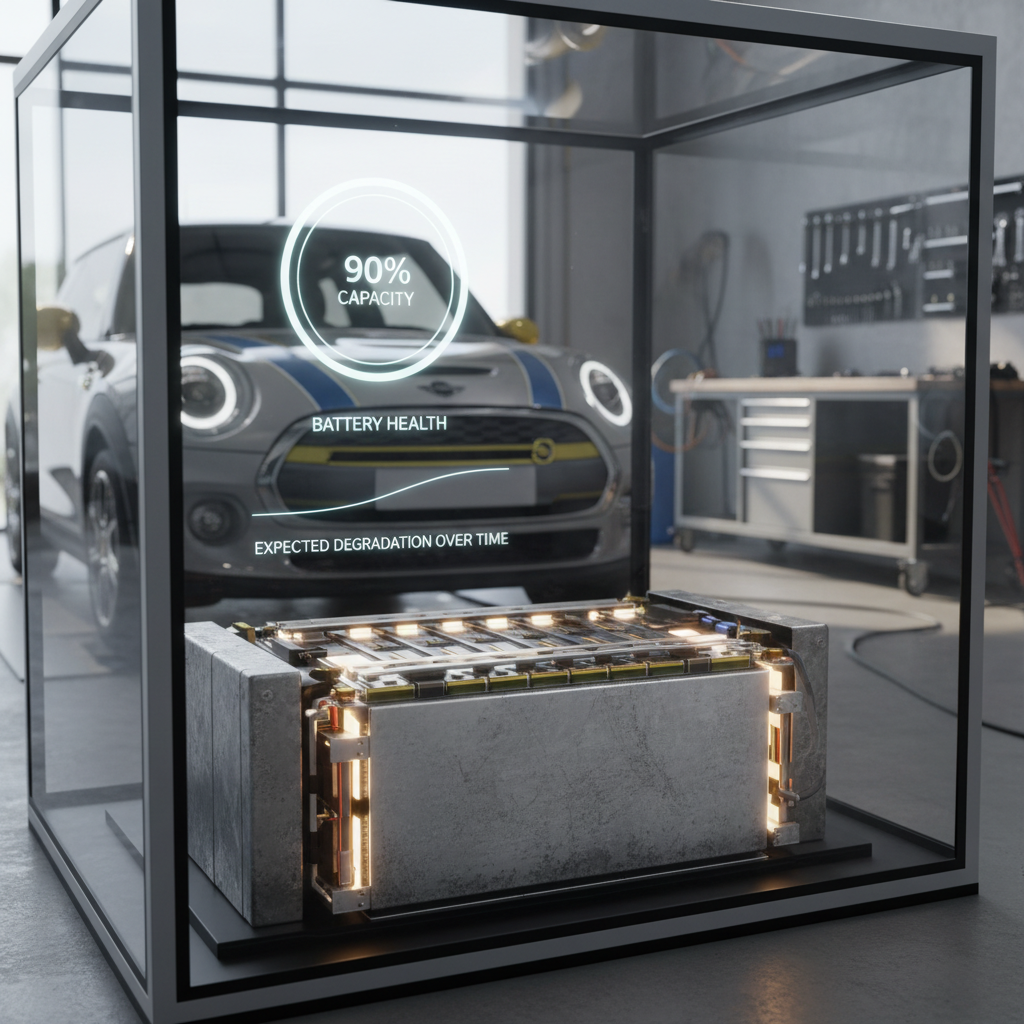
Cold weather is tough on range in the moment, but it’s not particularly bad for long‑term battery health. In fact, chronic high temperatures are usually harsher on lithium‑ion cells than cold snaps.
Cold weather vs. long-term EQS battery health
What matters for day-to-day range vs what matters for the pack’s lifespan.
Short-term: less usable energy
Long-term: generally safe for cells
What actually ages the pack
If you’re shopping a used EQS, you still want to verify battery health, but you don’t need to be scared off just because the car has spent its life in a northern climate. How it was charged and stored over time matters more than the local weather alone.
Buying a used EQS? How to think about winter range
Shopping used adds another variable: how much usable range the EQS still has after a few winters. The platform’s large battery means that even with some normal degradation, most cars retain more range than many new EVs start with, but you want data, not guesses.
Winter-specific checks when evaluating a used EQS
Ask for a recent full-charge range reading in winter
Have the seller share a photo of the car at or near 100% charge, with the predicted range after a few days of typical winter use. That gives you a real‑world reference rather than just the original EPA sticker.
Look at long-term energy consumption
Many EQS cars will show lifetime kWh/100 mi or similar data. Higher numbers can reflect lots of short winter trips, aggressive driving, or towing (in the SUV). It’s not a deal‑breaker, but it helps calibrate expectations.
Consider your own winter use case
If your longest regular winter day is 80–100 miles including detours, even an older EQS sedan will likely have plenty of buffer. If you’re planning 180‑mile rural round‑trips with little charging, you’ll want to be more conservative.
Get an independent battery health snapshot
Tools like the <strong>Recharged Score</strong> report quantify usable battery capacity, not just the car’s guess‑o‑meter. That’s especially useful on large‑pack luxury EVs like the EQS, where a 5–10% change is hundreds of dollars of value and dozens of miles of winter range.
How Recharged can help
Mercedes EQS cold-weather range: FAQ
Frequently asked questions about Mercedes EQS range in cold weather
Bottom line: is the Mercedes EQS good in cold weather?
If you strip away the marketing and look at physics and owner experience, the Mercedes EQS is one of the more winter‑capable luxury EVs you can buy. You will see the same 20–35% range loss in cold weather that hits every EV, but the EQS starts from a high baseline, manages its battery well, and gives you useful tools, preconditioning, a heat pump, detailed energy screens, to keep that penalty under control.
For a typical driver in a cold‑weather state, that means an EQS sedan comfortably covers daily driving and most winter road trips with sensible planning. The SUV trades some efficiency for space and ride height, but remains usable as long as you respect its realistic winter highway range. If you’re evaluating a used EQS, that’s where a verified battery health report and transparent pricing, like the Recharged Score that comes with every vehicle on Recharged, turn winter range from a worry into a known quantity you can confidently plan around.