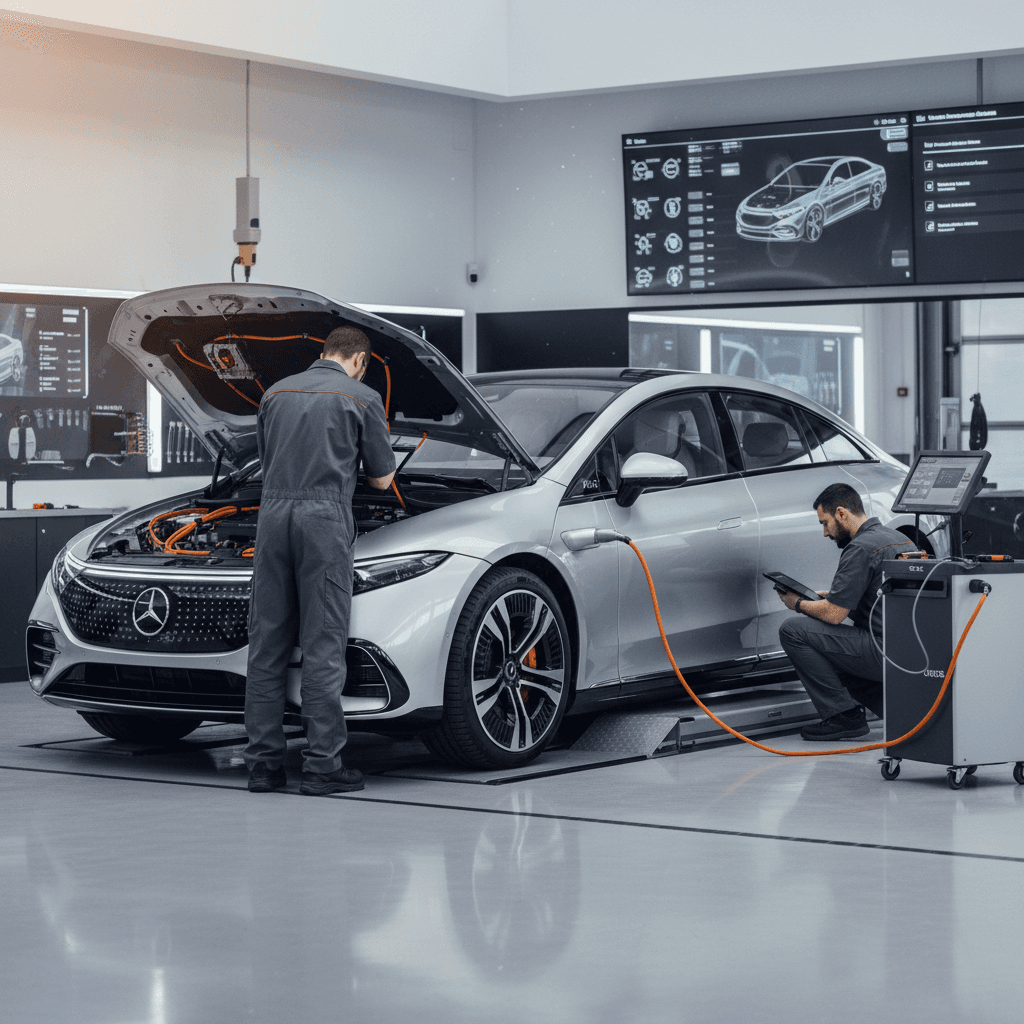
If you’re coming from a gas Mercedes, the Mercedes EQS maintenance schedule can feel almost too simple. There’s no oil to change and far fewer moving parts, but this is still a complex luxury flagship, and skipping the right services can get expensive fast, especially once the warranty is gone.
Quick takeaway
How Mercedes EQS maintenance differs from gas models
What the EQS no longer needs
- Engine oil and filter changes
- Spark plugs, ignition coils, fuel filters
- Exhaust system repairs, emissions checks
- Transmission servicing in the traditional sense
What still matters (or matters more)
- Tires (heavy, high‑torque EV = fast wear)
- Brake fluid (moisture control and safety)
- Cabin and drive‑unit cooling systems
- Suspension and steering components on a heavy car
Think in years, not just miles
Mercedes EQS maintenance at a glance
Official Mercedes EQS maintenance schedule overview
Exact intervals can vary slightly by model year and market, so you should always confirm in the Mercedes ME app or owner’s manual for your specific EQS. But broadly, Mercedes structures the EQS maintenance schedule around alternating services every 1–2 years, similar to traditional Service A and Service B patterns, with additional items at specific mileage or time milestones.
- First service typically around 1 year or ~10,000 miles (whichever comes first)
- Subsequent services roughly every 1–2 years / 10,000–20,000 miles
- Brake fluid changes around every 2 years
- Coolant, battery, and high‑voltage system checks at longer intervals (often 4+ years)
- Frequent visual inspections and software checks at each visit
Dealer vs manual differences
Mercedes EQS maintenance schedule by mileage and time
Use this as a practical, owner‑friendly view of the Mercedes EQS maintenance schedule. Exact naming and small details vary by year and trim, but the pattern below reflects how most EQS models are serviced in North America.
Typical Mercedes EQS maintenance intervals
High‑level guide to the key recurring services you should expect over the first 120,000 miles or 10 years of EQS ownership.
| Interval | Approx. time | Key items | Notes |
|---|---|---|---|
| 10k–15k miles | Year 1 | Multi‑point inspection, cabin filter check/replace, fluid levels, software updates, tire rotation | Often the lightest and least expensive visit. |
| 20k–25k miles | Year 2 | Inspection, brake fluid change, cabin filter, tire rotation and alignment check | Brake fluid is time‑based even if you drive little. |
| 30k–35k miles | Year 3 | Inspection, cabin filter, tire wear/rotation, underbody and suspension check | Good time to budget for first set of tires if you drive hard. |
| 40k–50k miles | Year 4 | Inspection, brake fluid change, cabin filter, cooling system check, potential desiccant or refrigerant service per manual | Heavier “major” service, costs more than early visits. |
| 60k+ miles | Year 5–6 | Repeat of earlier inspections, battery and high‑voltage checks, more frequent tire and suspension attention | Real‑world wear items begin to dominate costs. |
| 80k–120k miles | Year 7–10 | Brake fluid every ~2 years, cooling system checks at prescribed intervals, suspension components as needed | Battery itself is typically only inspected unless a fault is detected. |
Always confirm specifics for your VIN in the official Mercedes documentation.
Where to find your exact EQS schedule
How Mercedes Service A and Service B work on the EQS
Traditional Mercedes models alternate between Service A (lighter) and Service B (heavier). With the EQS, the branding might still show up on your dash or paperwork, but the actual content of Service A/B is different because there’s no engine. Think of A/B more as pricing tiers and bundles than fixed checklists.
Typical EQS “Service A” items
- General inspection of brakes, suspension, steering
- Check and top off fluids (washer, coolant, etc.)
- Cabin air filter check or replacement
- Tire rotation and pressure/TPMS check
- Software/telematics updates and diagnostics
Typical EQS “Service B” items
- All Service A checks
- Brake fluid replacement
- More comprehensive underbody and high‑voltage visual checks
- HVAC system checks (blower, filters, odors)
- Additional maintenance items based on time/mileage (e.g., coolant checks)
Ask for an itemized quote
Common EQS wear items and real‑world service costs
Where EQS maintenance can sneak up on you is not so much routine checks as wear items on a large, powerful luxury EV. This is especially important if you’re shopping used, because the first owner may already have burned through early “cheap” miles.
High‑impact EQS maintenance items
These are the components most likely to show up on real‑world invoices.
Tires
The EQS is heavy, torquey, and often wears large, low‑profile tires. It’s common to see front or rear sets wearing out in 20,000–30,000 miles depending on driving style.
Premium replacement sets can run into four figures, so budget accordingly.
Alignment & suspension
Potholes and heavy curb hits can throw alignment off or stress bushings and control arms. In a big EV like the EQS, you’ll feel this as uneven tire wear or wandering on the highway.
Alignment isn’t expensive by itself, but delayed correction can chew through tires quickly.
Brakes
Regenerative braking means pads and rotors can last significantly longer than on an S‑Class, but surface rust and sticky calipers are real risks if the car sits a lot.
Expect occasional cleaning or replacement, especially in wet or salty climates.
Other potential EQS cost drivers
Less frequent but worth keeping on your radar, especially out of warranty.
Air suspension & steering
Air springs, dampers, and active steering components can last many years, but failure is expensive. Listen for clunks, hissing, or warning lights and address issues early.
Thermal management
The EQS uses complex cooling and heating circuits for the battery, drive unit, and cabin. The good news: coolant is long‑life; the bad news: leaks or component failures can be pricey repairs.
Infotainment & software
MBUX and the Hyperscreen package are impressive but complex. Most software issues are handled under warranty, but screen or hardware failures could be a high out‑of‑pocket item later in life.
Battery health: what you do and don’t have to service
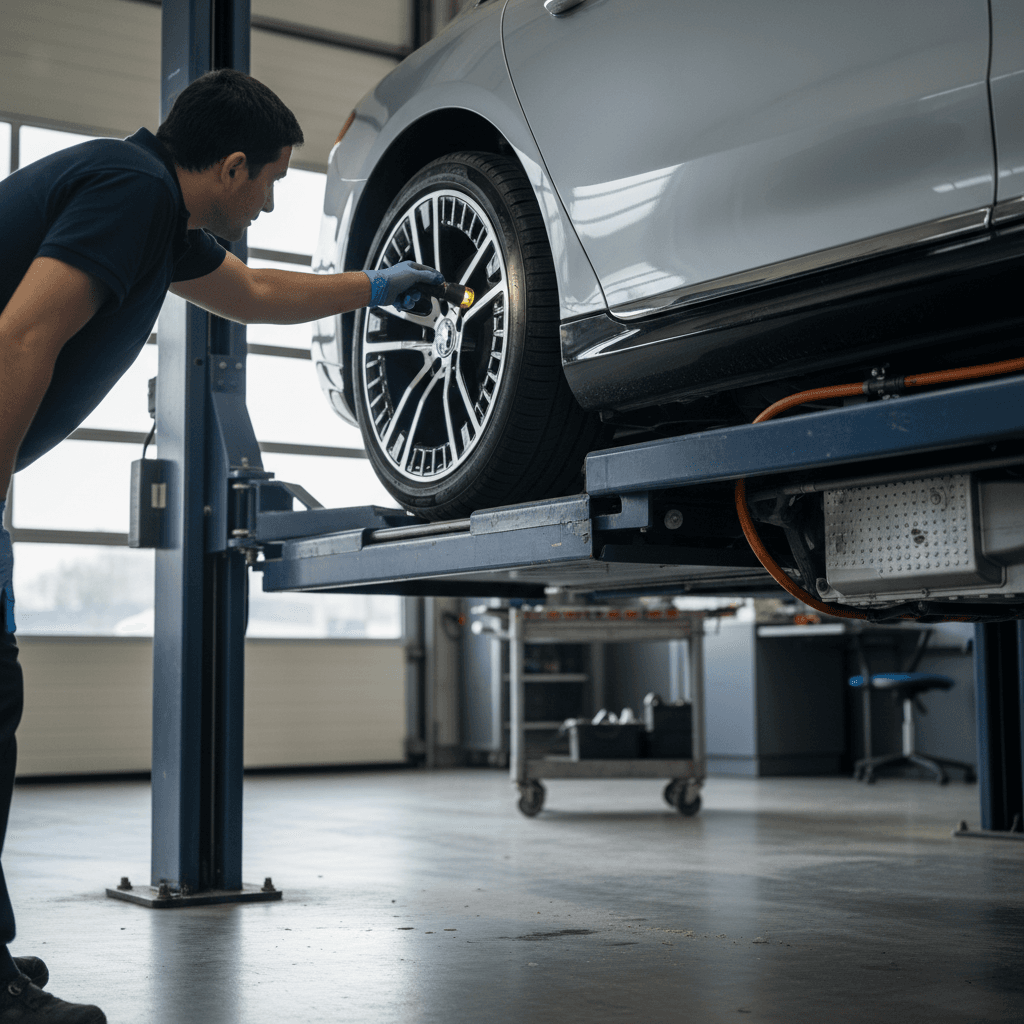
One of the biggest mental hurdles for new EV owners is the high‑voltage battery. On the Mercedes EQS, the main battery pack is not a routine service item. You don’t replace battery fluid or open the pack during regular maintenance. Instead, the focus is on monitoring health and protecting the thermal system that keeps the pack within its ideal temperature range.
- The dealer checks for error codes and software flags related to the high‑voltage system at each visit.
- Battery and coolant circuit inspections are typically visual and diagnostic, not invasive.
- Long‑term pack health is driven more by how you charge and drive than by any specific shop service.
- If a serious battery issue appears during the warranty period, it’s typically addressed under the high‑voltage warranty, subject to terms and diagnostics.
Habits that protect EQS battery health
High‑voltage safety reminder
DIY vs dealer: what you can handle yourself
With the EQS, a surprising amount of basic upkeep is owner‑friendly, as long as you’re realistic about what belongs in a driveway versus a lift bay. Think of DIY on an EQS as focusing on consumables and inspections you can see and touch safely, not anything involving high voltage or complex electronics.
EQS tasks many owners can DIY
Replace the cabin air filter
Usually accessible behind the glovebox or under the cowl. Follow the manual and use OEM‑quality filters to maintain air quality and HVAC performance.
Monitor tire wear and pressures
Use the TPMS plus a physical gauge, check tread depth regularly, and rotate tires at the recommended intervals. On a heavy EV, this is one of the highest‑ROI habits you can have.
Wiper blades and washer fluid
Simple but often overpriced at the dealer. Use high‑quality blades and winter‑rated fluid if you live in a cold climate.
Visual checks for leaks and damage
Look for fluid spots under the car, damaged wheels, or underbody scrapes. Catching issues early can prevent suspension or cooling‑system surprises later.
Software basics
You can usually approve or schedule over‑the‑air updates from the cabin. Keep the car on the latest stable build unless your dealer advises otherwise.
Know when to stop
Maintenance tips when buying a used Mercedes EQS
Because early EQS models are already showing up on the used market, understanding maintenance isn’t just about owning, it’s about what you’re inheriting from the previous owner. A lightly driven corporate lease EQS with regular services can be a fantastic value; a neglected one can turn into a rolling science experiment.
Checklist for evaluating a used EQS
Ask these questions before you fall in love with the ambient lighting.
Service history completeness
Ask for a full digital service record from Mercedes. You want to see regular annual or biannual visits, brake fluid changes roughly every 2 years, and any warranty repairs documented.
Tire wear and alignment
Inspect all four tires for even wear. Uneven shoulders suggest alignment or suspension issues, which matter more on a heavy luxury EV than on a compact commuter.
Battery and charging behavior
Compare the displayed range at 100% charge to original estimates and look for any battery‑related warnings. Ask the seller how often they fast‑charged and where the car typically sat overnight.
Suspension and ride quality
On the test drive, listen for knocks, squeaks, or floatiness. Cycle through ride‑height settings if equipped with air suspension. Repairs here are not cheap.
How Recharged helps with used EQS maintenance risk
Ready to find your next EV?
Browse VehiclesFAQ: Mercedes EQS maintenance schedule
Common questions about Mercedes EQS maintenance
Bottom line: keeping EQS maintenance predictable
The Mercedes EQS doesn’t ask for much in the way of classic car maintenance, but it does demand respect for its weight, complexity, and software‑rich nature. If you follow the factory Mercedes EQS maintenance schedule, stay ahead of tires and alignment, and treat the battery kindly, you can keep running costs far below what you’d expect from a gas flagship while still enjoying a deeply luxurious experience.
If you’re shopping for a used EQS, pairing this maintenance roadmap with a transparent, data‑driven view of battery and component health is the smart move. That’s exactly what Recharged was built for, combining Recharged Score battery diagnostics, fair pricing, and EV‑savvy guidance so you know what you’re getting into long before you sign anything.