If you’re eyeing a Mercedes EQS, or already have one in the driveway, it’s natural to wonder what Mercedes EQS maintenance cost in 2026 really looks like. This is a six‑figure luxury flagship in new-car form, but it’s also an EV with no oil changes and far fewer moving parts than an S‑Class. Where do the numbers actually land over a few years of ownership?
Short answer
Overview: 2026 Mercedes EQS maintenance costs at a glance
2026 EQS maintenance: quick numbers
The EQS is still a Mercedes flagship, so you’ll see premium labor rates and big‑ticket tires. But because it’s a battery‑electric vehicle, there’s no engine oil, no spark plugs, no timing belts, and a lot less heat and vibration attacking components. Industry data in 2024–2025 consistently shows EVs averaging roughly half the lifetime maintenance and repair costs of gas vehicles, and real‑world EQS ownership is lining up with that pattern, just shifted upward a bit because it’s a heavy, high‑performance luxury car.
Rule of thumb for budgeting
Service schedule: how often the EQS needs maintenance
Mercedes structures EQS maintenance around time-based service visits, similar in spirit to the old “Service A / Service B” pattern you may know from its gas cars, but adapted for EVs. Exact details can vary by model year and region, but for U.S. EQS sedans and SUVs in 2025–2026, you’ll typically see:
- A **basic annual service** every 1 year or about 10,000–12,000 miles: inspections, cabin air filter as needed, software checks, fluid checks, tire rotation where possible.
- A **larger biannual service** every 2 years: all of the above plus more in‑depth inspections, brake fluid changes on schedule, cooling system checks for the high‑voltage components and drivetrain.
- Additional items at time or mileage milestones (often 4, 6, 8 years): more comprehensive checks of suspension, steering, and cooling systems, plus any open recalls or software campaigns.
Don’t skip EV service just because there’s no oil
Typical EQS visit every 12 months
- Multi‑point inspection and road test
- Cabin air filter check / replacement
- Brake system and pad inspection
- Tire wear, rotation (if staggered setup allows)
- Software / control unit checks and updates
- High‑voltage system visual inspection
Additional items every 24 months
- Brake fluid flush per Mercedes schedule
- Coolant checks for battery and power electronics
- Alignment check if tire wear suggests it
- Deeper diagnostic scan and any campaign work
- HVAC service if performance has degraded
Always confirm the latest schedule in your EQS owner’s manual for your exact model year.
Typical 2026 Mercedes EQS service pricing
Mercedes doesn’t publish a national flat rate for EQS maintenance, and pricing can swing widely by market. But pulling together dealer menu pricing, independent‑shop quotes, and 2025–2026 cost‑of‑ownership data, you can ballpark EQS service costs like this (U.S., before tax):
Estimated 2026 Mercedes EQS service pricing (U.S.)
Illustrative ranges for common EQS services at typical dealer or specialty EV‑qualified shops. Your actual quotes will vary by region and service provider.
| Service type | What it includes (typical) | Estimated 2026 price range |
|---|---|---|
| Annual EQS service (light) | Inspection, software checks, tire rotation, basic filters | $350–$650 |
| Biannual EQS service (major) | All of the above plus brake fluid, deeper diagnostics | $700–$1,100 |
| Brake fluid flush (stand‑alone) | System flush and bleed with Mercedes‑spec fluid | $180–$300 |
| Coolant system check/service | Battery and inverter cooling circuits inspection, top‑off | $250–$500 |
| High‑voltage diagnostic labor | Specialized troubleshooting for EV systems | $200–$350 per hour |
| Extended service contract/plan | Prepaid maintenance plan for EV models | Often $1,800–$3,000 for 3–4 visits |
Use these numbers as planning guidance, not guaranteed prices.
What five‑year maintenance looks like on paper
Tires, brakes, and other wear items on an EQS
Where EQS maintenance really separates from mainstream EVs is in tires and chassis wear. You’re moving a large, powerful, very heavy luxury sedan (or SUV) with instant torque. That’s a recipe for accelerated tire wear and big replacement bills if you’re not careful.
Big wear items that drive EQS costs
Plan for these on any large luxury EV
Performance tires
Many EQS trims run staggered, high‑performance rubber on 20–21 inch wheels. It’s common to see front tires last 25k–30k miles and rears wear faster if you drive enthusiastically.
A set of quality EV‑rated tires for an EQS can easily run $1,400–$2,000 installed.
Brakes with regen assist
Regenerative braking takes a lot of work off the friction brakes, so pad and rotor life can be significantly longer than in a gas S‑Class, especially if you mostly drive in city and highway traffic, not mountain passes.
Still, expect a full pad/rotor job to cost well over $1,000 at a dealer once you eventually need it.
Suspension & alignment
The EQS’s air suspension and rear‑steer hardware are complex. They’re generally robust, but pothole damage or chronic curb hits can create alignment issues and uneven tire wear.
Annual alignments (often $200–$300) are cheap insurance compared with prematurely replacing a $2,000 set of tires.
Mind your driving style
Battery warranty and long‑term durability
The most expensive component in any EQS is its high‑voltage battery pack. The good news: Mercedes backs this piece with robust coverage in the U.S., and real‑world EV data suggests battery packs are aging better than many early skeptics expected.
- Most EQS models in the U.S. carry an 8‑year / 100,000‑mile high‑voltage battery warranty against manufacturing defects and excessive capacity loss (check your warranty booklet for the exact terms on your VIN).
- Some EQ electric models in other regions advertise even longer mileage caps, but U.S. owners should work from the 8‑year / 100k‑mile baseline unless documentation says otherwise.
- Battery degradation on modern Mercedes packs has generally been modest, think single‑digit percentage loss over the first several years for typical mileage and normal charging habits.
Simple habits that protect your EQS battery
Because the pack is both expensive and well‑protected by warranty, many EQS owners think of it less as a maintenance line item and more as a warranty and resale‑value question. That’s where independent verification, like the Recharged Score battery health diagnostics you get on every used EQS listed on Recharged, becomes useful, it shows how a car’s real‑world pack is aging compared with similar vehicles.
How EQS maintenance compares with gas luxury sedans
The fair way to judge EQS maintenance cost is against the cars shoppers actually cross‑shop: S‑Class, BMW 7 Series, Audi A8 and similar big sedans or SUVs. Those gas cars carry their own heavy costs, oil services, spark plugs, transmission service, emissions hardware, and increasingly complex turbo setups.
Typical large gas luxury sedan
- Oil and filter changes 1–2 times per year
- Spark plugs, belts, and accessory drives at intervals
- Transmission service over time
- More heat‑related wear on engine components
- Complex emissions hardware (cats, O2 sensors, etc.)
AAA and other 2024–2025 studies often land gas‑car maintenance around 10 cents per mile for maintenance, repair and tires combined.
Mercedes EQS and similar EVs
- No engine oil, spark plugs, fuel system or exhaust
- Fewer fluids overall and far fewer moving parts
- Regenerative braking reduces pad and rotor wear
- Software and battery cooling systems need periodic checks
- Heavy curb weight drives up tire size and cost
Government and consumer‑group data often peg EVs around 6 cents per mile in maintenance and repair on average, roughly one‑third to one‑half lower than comparable gas cars.
Net impact on your budget
7 ways to lower your EQS maintenance costs
Practical ways to keep 2026 EQS costs in check
1. Align your service with the manual, not myths
Follow the <strong>official EQS maintenance schedule</strong> in your owner’s manual instead of generic “every 5k miles” advice from gas‑car days. EVs simply don’t need many of those items, and overservicing can burn hundreds of dollars a year without benefit.
2. Use Level 2 home charging as your default
Home charging is gentle on the battery and almost always cheaper than DC fast charging. That reduces long‑term pack stress and keeps your total cost per mile lower.
3. Protect those expensive tires
Check pressures monthly, rotate when your staggered setup allows, and get an alignment annually or after major pothole hits. On a car where a set of tires can cost $1,500+, small habits matter.
4. Shop around after the warranty period
Once your basic warranty expires, consider reputable <strong>independent shops that specialize in EVs and German luxury cars</strong>. Their labor rates can be significantly lower than a metro‑area Mercedes store, especially for out‑of‑warranty work.
5. Keep software and recalls up to date
Many drivability and efficiency issues on modern EVs are solved with software, not parts. Make sure your EQS is current on over‑the‑air and dealer‑installed updates, especially if range or charging speed changes unexpectedly.
6. Consider prepaid maintenance only if the math works
Mercedes and dealers may pitch EV‑specific prepaid maintenance plans. Add up the covered services at retail menu prices before you sign; sometimes these plans are convenient, other times they simply pre‑pay what you might have spaced out anyway.
7. If buying used, demand a battery and condition report
For a pre‑owned EQS, request documentation on battery health, service history and any warranty work. Every EQS sold on <strong>Recharged</strong> includes a <strong>Recharged Score Report</strong> with verified battery diagnostics and fair‑market pricing so you aren’t guessing about hidden future costs.
Why a used Mercedes EQS can be a smart value play
One reason 2026 shoppers are increasingly looking at used EQS models, especially via online EV specialists, is the gap between depreciation and ongoing maintenance cost. The car may shed a big chunk of its original MSRP in the first 3–4 years, but the underlying maintenance curve stays relatively flat if the vehicle’s been cared for.
Used EQS ownership: pros that offset maintenance
What you get when depreciation does the hard work for you
Flagship experience at mid‑market pricing
By 3–4 years in, an EQS often trades for a fraction of its original sticker, yet you’re still getting the quiet cabin, advanced driver assistance, and highway comfort that made it a halo EV when new.
Your maintenance payments are similar to new‑car owners, but you’re doing it on a much lower capital cost.
Transparency on battery and service history
A properly documented used EQS with clear battery‑health data and service records lets you project maintenance with far more confidence than a blind auction buy.
On Recharged, every listed EQS comes with a Recharged Score battery report, expert‑guided support, and options for financing, trade‑in, nationwide delivery, or consignment if you’re selling one of your own.
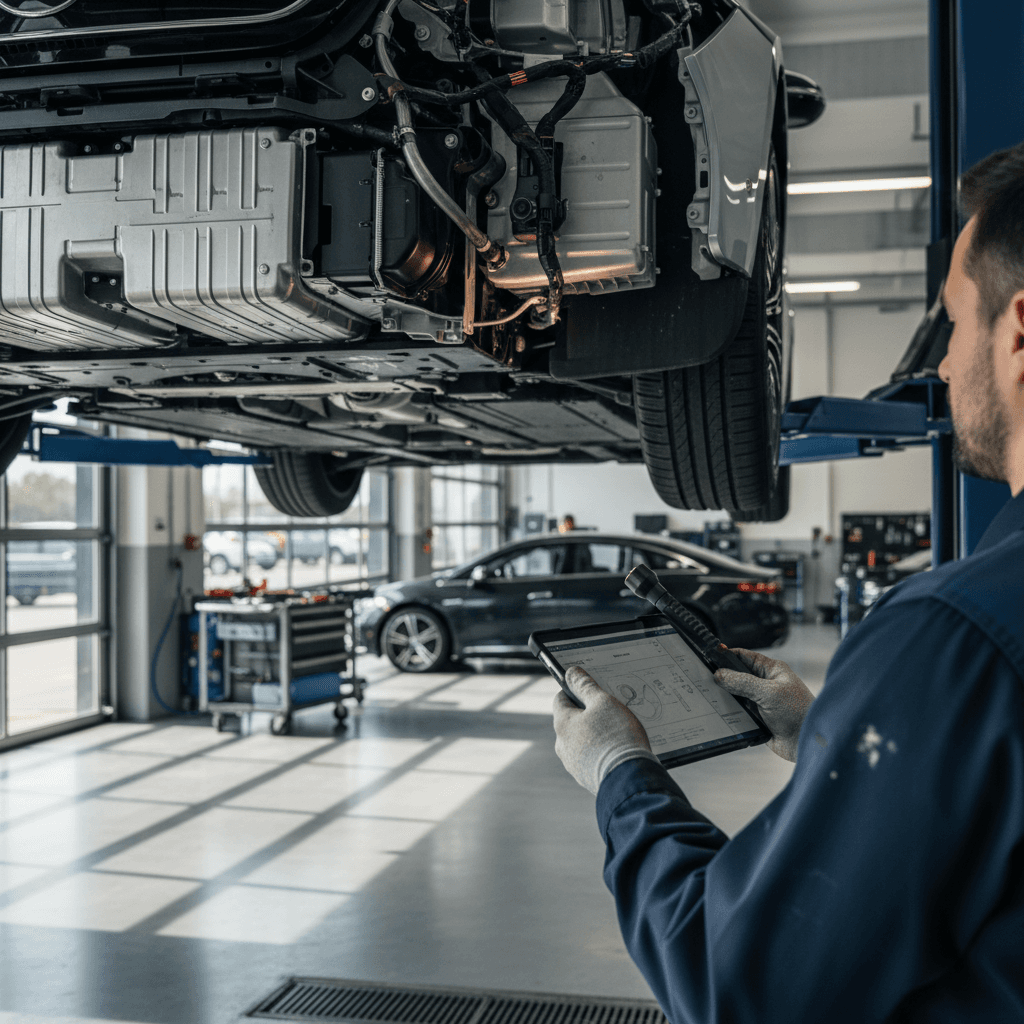
If you treat the EQS like what it is, a heavy, high‑performance luxury EV that still needs regular inspections and premium tires, its 2026 maintenance costs are manageable and often lower than a comparable gas flagship. The key is going in with clear expectations and good data. Whether you’re shopping new or used, build a realistic service budget, protect the tires and battery you already paid for, and lean on specialist platforms like Recharged to surface EQS examples with strong histories and transparent battery health so you’re paying for a car, not a mystery.