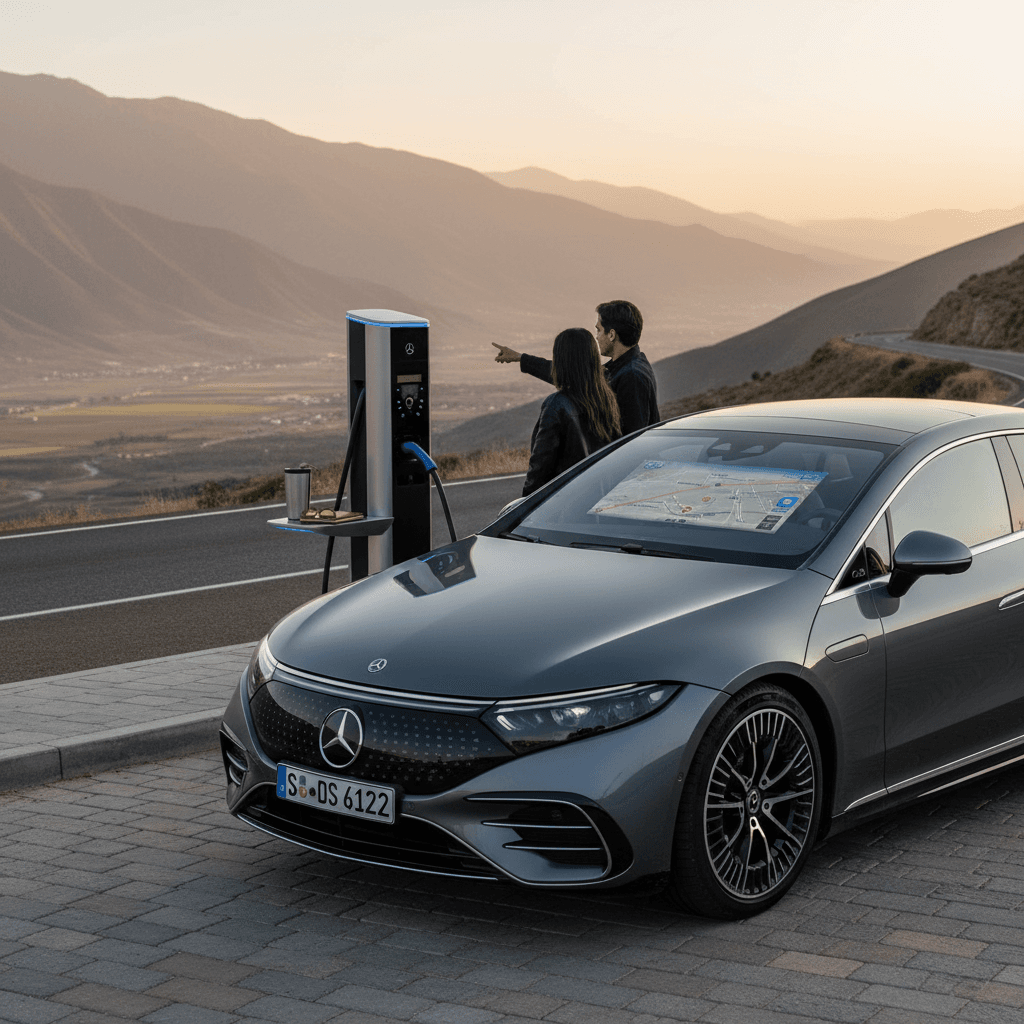
The Mercedes EQS was built for eating up highway miles in hushed, air-sprung comfort. But if you’re used to gas road trips, taking an electric flagship on a long run feels a little different. These Mercedes EQS long distance driving tips will help you squeeze the most range from the big battery, plan smarter charging stops, and use the car’s tech to arrive relaxed instead of range‑anxious.
Quick take
Why the Mercedes EQS Makes Sense for Long Trips
On paper, the EQS has everything you want in a long‑distance EV: a large battery (around 108 kWh usable in many trims), slippery aerodynamics, adaptive air suspension, and serious driver‑assist tech. Real‑world tests routinely show that a well‑driven EQS sedan can match or even exceed its EPA highway range when you keep speeds reasonable and conditions mild.
EQS strengths on the open road
Where the big electric Benz really shines when the miles pile on
Big battery, big buffer
The EQS sedan’s large pack gives you a comfortable highway buffer even if you don’t baby the accelerator. That means you can aim for 2–3 hour stints between stops in good conditions.
Slippery aerodynamics
Its teardrop shape pays off at speed. The EQS is one of the most aerodynamic production cars on the road, which helps keep highway efficiency respectable for such a heavy luxury sedan.
Quiet, calm cabin
Triple‑sealed doors, adaptive suspension, and active safety tech mean you get to the end of a 500‑mile day feeling like it was 300. That matters more than you think after the third charging stop.
Used EQS advantage
Real-World EQS Range: What You Can Actually Drive Between Stops
Mercedes publishes impressive range numbers, but long‑distance driving is all about what you can count on with the cruise control set and the trunk full. Recent EQS 450+ sedans, for example, are rated around the mid‑300‑mile mark on combined cycles, and real‑world highway testing and owner reports show that 280–320 miles between charges is realistic at U.S. freeway speeds when the weather cooperates.
EQS highway range at a glance (sedan, typical conditions)
Don’t chase the last 10%
- In good conditions, assume you can comfortably plan on 200–250 miles between fast‑charge stops without ever dipping into your stress reserves.
- In winter or with lots of elevation gain, plan more like 160–200 miles between stops, even if the car shows more.
- If you’re towing or loaded with passengers and luggage, use energy consumption (Wh/mi) on the cluster as your guide instead of fixating on the predicted range.
Plan Your Route Around How the EQS Really Charges
The EQS can peak at roughly 200 kW on a strong DC fast charger, but like every EV, it doesn’t hold that speed across the whole session. You’ll see the best results when you arrive with a low state of charge, plug into a reliable 150–350 kW unit, and unplug before the taper gets severe.
Sample EQS DC fast-charging strategy
Use this as a planning template; adjust for weather, passengers, and your own comfort level.
| Trip situation | Arrival SOC | Charge to | Approx. stop length | Why it works |
|---|---|---|---|---|
| Normal day, light headwind | 10–15% | 70–75% | 25–30 minutes | You sit in the higher‑power band, then leave before the steep taper. |
| Cold weather, few chargers | 15–20% | 80–85% | 35–40 minutes | You buy yourself extra cushion when stations are sparse. |
| Lunch or dinner stop | 5–10% | 90% | 45–50 minutes | If you’re stopped anyway, topping higher can let you skip the next charger. |
| Hotel with Level 2 available | 5–20% | 50–60% | 15–20 minutes | Just enough to reach your overnight charger with a buffer. |
Arrive low, charge in the fat part of the curve, and get back on the road.
Precondition when you can
Use DC fast charging strategically
- Favor 150 kW+ stations from reputable networks.
- Arrive between 5–20% when possible.
- Unplug between 70–80% for the best miles‑per‑minute.
- If a unit is underperforming badly, don’t be shy about switching stalls or locations.
Don’t forget Level 2 overnight
- A typical 9–11 kW Level 2 charger can easily refill an EQS battery overnight.
- On road trips, prioritize hotels with on‑site charging; it can replace an entire fast‑charge stop the next day.
- If you’re buying a used EQS, confirm the onboard charger power and that home or workplace wiring is up to the task.
Driving Style, Tires & Climate: Easy Efficiency Wins
You don’t have to hypermile your EQS to get solid range, but small choices add up over a long day. Think of efficiency as headroom: every watt‑hour you don’t waste becomes a little more flexibility about where, and how often, you stop.
Simple EQS efficiency habits that actually matter
None of these ruin the trip, but together they add meaningful range
Set a sensible cruise speed
The EQS is so quiet that 85 mph feels like 65. But aerodynamic drag climbs quickly. Dropping from the mid‑80s to the low‑70s can save you 15–20% energy without feeling slow.
Use climate control smartly
Precondition while plugged in so you’re not heating or cooling the cabin from the battery. On mild days, use Eco climate modes and seat heaters or coolers instead of cranking the fan.
Watch your drive modes
Sport mode is fun, but Comfort or Eco modes smooth throttle response and reduce wasteful bursts of power. You can still kickdown for a pass when needed.
Mind wheel size & tires
Those gorgeous 21–22" wheels and performance tires look the part but can hurt efficiency. If you road‑trip often, consider the more moderate wheel/tire packages when you’re shopping.
Plan for hills & weather
Climbing long grades and driving into a stiff headwind will spike consumption. Build in extra margin on mountainous legs or stormy days instead of trusting yesterday’s numbers.
Let the car teach you
Use the energy consumption screen over a few tanks of electrons to learn what speeds and conditions your particular EQS likes best. Every route is different.
The big range killers
Using MBUX and Hyperscreen to Make Road Trips Easier
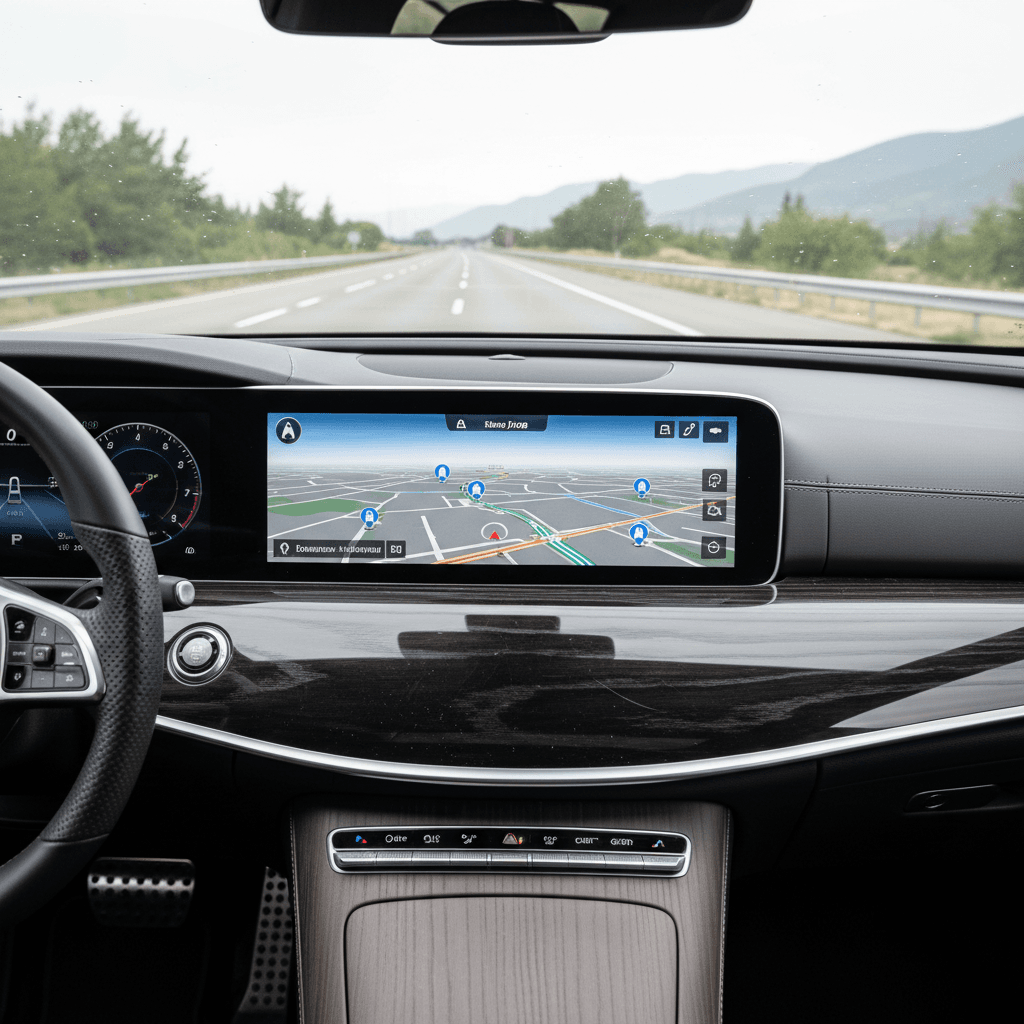
One of the EQS’s secret weapons is how much work the software will do for you if you let it. The wide Hyperscreen or standard MBUX setup can plan routes with charging stops, estimate arrival state of charge, and keep everyone entertained while electrons flow.
- Use the built‑in EV routing instead of generic phone navigation so the car can factor in elevation, weather, and actual energy use.
- Enable charging station filters for minimum power levels so you’re not detouring to 50 kW posts with a 200 kW‑capable car.
- Save favorite networks or locations so the car will surface them first on future trips.
- Keep the driver‑assist stack (adaptive cruise, lane centering, blind‑spot) active when appropriate; they reduce fatigue on long, boring stretches.
Let the tech earn its keep
Comfort Strategy: How to Arrive Fresh, Not Frazzled
The real advantage of a luxury EV on a road trip isn’t just speed or range, it’s how you feel when you step out at the other end. The EQS is packed with comfort tricks that are easy to overlook when you’re focused on charge curves.
Comfort tactics for long EQS days
Dial in seats and massage early
Spend time in the first hour adjusting seat, lumbar, and bolsters. If your car has massage or multi‑contour seats, set a gentle program to cycle periodically rather than running full‑blast for an hour then turning it off.
Use ambient lighting as a cue
The EQS’s ambient lighting isn’t just pretty. Use color themes to help keep you alert at night, cooler tones when you want to stay sharp, warmer when you’re winding down near the destination.
Sync your stops to your body
Plan charging stops around natural breaks: bathroom, meals, leg‑stretching. A 25‑minute 10–70% fast charge aligns nicely with a real rest; don’t just sit scrolling in the driver’s seat the whole time.
Let passengers own their space
Rear passengers can control their own climate and media; hand over that power so you’re not playing air‑traffic controller from the driver’s seat.
Use profiles if sharing driving
If more than one person is driving, set up separate driver profiles so each of you can hop in, tap your profile, and get your wheel, seat, and display layout back instantly.
Charging Etiquette and Backup Plans
Nothing derails a good road trip story faster than a showdown at a busy charger. A little etiquette, and a Plan B or C, keeps your EQS adventure pleasantly uneventful.
- Favor stations with multiple high‑power units so a single broken stall doesn’t strand you.
- If others are waiting, avoid sitting at DC fast chargers past about 80% unless you truly need the range.
- Don’t leave your EQS parked in a fast‑charge spot while you wander off for an hour beyond the session; move it once you’re done, even at “free” chargers.
- Keep at least two different charging apps and payment methods set up in advance. Networks and roaming agreements change; redundancy is your friend.
- On unfamiliar routes, identify one backup station within 20–30 miles of each planned stop in case your first choice is down or congested.
Don’t count on 0%
Extra Considerations If You’re Driving or Buying a Used EQS
A well‑cared‑for EQS can rack up serious highway miles without feeling tired, but when you’re buying used, or taking your newly purchased car on its first big run, you want to know what the battery and charging hardware are really capable of today, not when it left the showroom.
Used EQS road trip checklist
What to confirm before you bank a family vacation on it
Battery health & warranty
Ask for a recent battery health report, not just a guess based on the dash range. Tools like the Recharged Score include pack diagnostics so you can see degradation and error codes before you buy. Make sure you understand how much of the original battery warranty is left.
Charging performance
On your first fast‑charging session, watch how quickly the EQS ramps to peak kW and how long it holds. If it’s consistently far below expectations on multiple stations, have the charging system checked before planning a cross‑country run.
Software & recalls
Confirm that software is up to date and any battery or charging‑related recalls or service campaigns are completed. Updated charging logic can improve reliability on long trips.
Wheels, tires & alignment
Uneven tire wear or out‑of‑spec alignment will eat range and make the car wander on the highway. Have a shop familiar with EV weight check everything before putting 1,000 miles under the wheels.
How Recharged can help
Pre-Trip Checklist for a Mercedes EQS Road Trip
Before any big drive, you probably check your route and pack snacks. With an EQS, add a few EV‑specific steps and you’ll dramatically lower the odds of unpleasant surprises.
EQS road trip prep: 8 key steps
1. Update maps and apps
Make sure your EQS navigation data and any charging apps you rely on are updated a few days before you leave, so new stations and pricing are reflected.
2. Check tire pressures and tread
Set pressures to the placard spec when the tires are cold, and confirm you have adequate tread, especially for rain or snow. Rolling resistance and safety both benefit.
3. Set up driver profiles
If more than one person will share driving duty, create or refresh profiles, including seating, mirrors, driver‑assist preferences, and favorite chargers.
4. Plan chargers with backups
Map out primary fast‑charge stops along your route with one backup each. Favor sites with multiple high‑power units and amenities you’ll actually use.
5. Test your charging accounts
Do a local DC fast‑charge session or Level 3 test to confirm your payment credentials and RFID cards work before you depend on them hours from home.
6. Pack your charging kit
Include your portable Level 2 cord (if equipped), any adapters you own, gloves for cold‑weather charging, and a small towel or wipes for dirty handles.
7. Precondition before departure
While plugged in at home or your starting point, pre‑heat or cool the cabin so you roll out with a comfortable interior and a warm (or cooled) battery.
8. Set realistic legs for day one
On your first day, keep projected legs a little shorter than you think you’ll need. You can always stretch later once you’ve seen how your EQS behaves with your load and the day’s weather.
Mercedes EQS Long-Distance Driving FAQ
Frequently asked questions about EQS road trips
Bottom Line: Make the Most of Your EQS on the Open Road
The Mercedes EQS is one of those rare EVs that still feels fresh at the end of a very long day. If you respect how the battery and charging curve work, keep your speeds reasonable, and let the navigation and driver‑assist systems pull some weight, you’ll discover just how easy it is to cover serious distance in near silence.
Whether you already own an EQS or you’re eyeing a used one for road‑trip duty, a little planning goes a long way. Build itineraries around smart 10–70% fast‑charge windows, give yourself margin in bad weather, and use the car’s comfort features intentionally instead of treating them as set‑and‑forget toys. And if you’re still hunting for the right EQS, starting with a car that has verified battery health and transparent pricing, backed by EV experts who live and breathe this stuff, makes every mile after that easier. That’s exactly the gap Recharged was built to fill.