If you’re considering a used electric hatchback, the 2021 Chevy Bolt EV is probably on your short list. It’s efficient, practical, and often very affordable on the used market, but its reputation is dominated by one question: how reliable is the 2021 Chevy Bolt EV, especially with the battery recall?
Snapshot: 2021 Bolt EV reliability
2021 Chevy Bolt EV reliability at a glance
2021 Chevy Bolt EV: key reliability signals
As an electric drivetrain, the 2021 Bolt EV starts with some built‑in reliability advantages: no oil changes, no transmission shifts, far fewer moving parts. Day to day, most owners report the car is easy to live with and cheap to run. The complication is the traction battery recall, which affects all 2020–2022 Bolt EVs and is the headline issue you need to understand before you buy.
Big picture
Battery recall & fire risk: what actually happened
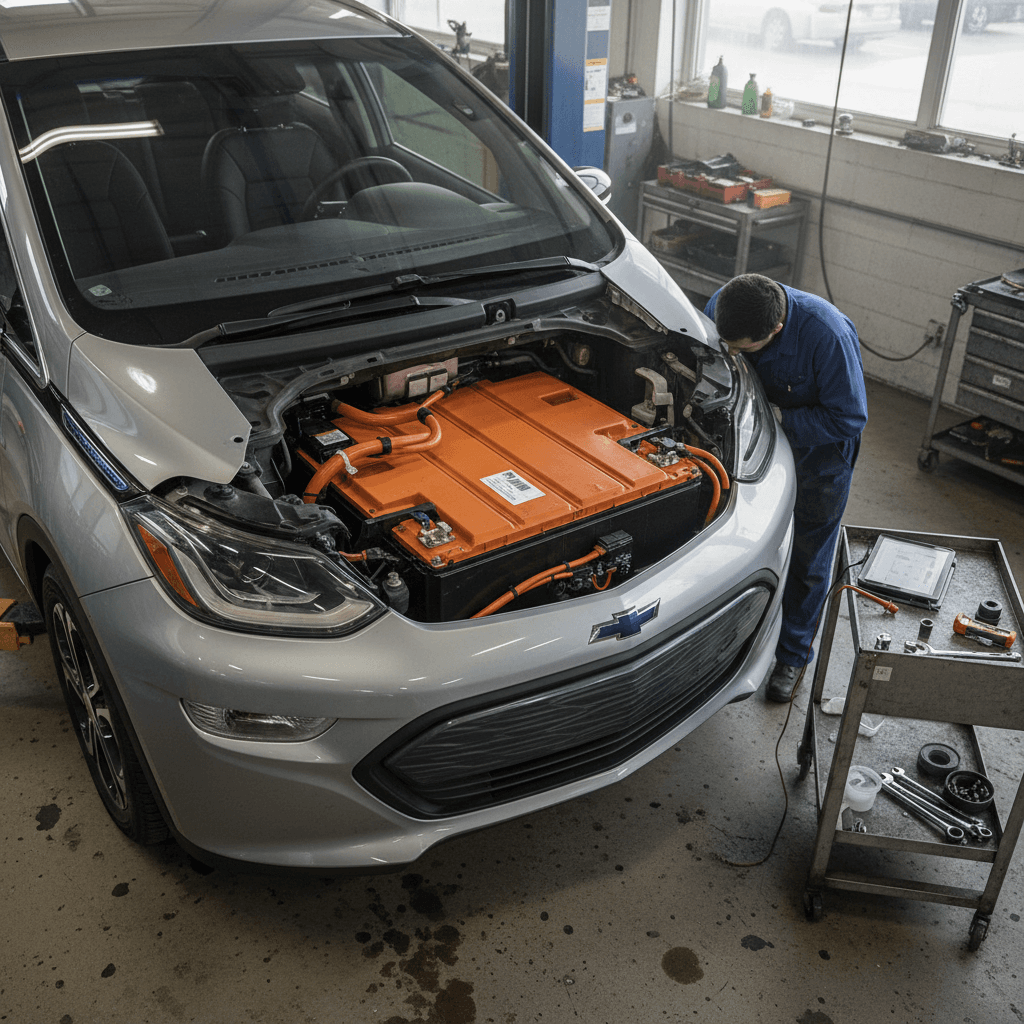
Chevrolet’s Bolt EV story is inseparable from its high‑voltage battery recall. In 2020–2021, GM identified manufacturing defects in certain LG‑supplied battery modules used in 2017–2022 Bolts. Under rare conditions, those defects could lead to thermal runaway and fires, sometimes when the car was parked and not charging.
- Initial recalls covered early model years, but by late 2021 GM expanded the campaign to include all 2020–2022 Bolt EV and 2022 Bolt EUV vehicles.
- Owners were told to limit charging (typically to 90%), avoid deep discharges, park outside after charging, and avoid overnight indoor charging until repairs were completed.
- GM and LG ultimately agreed LG would reimburse roughly $1.9 billion in recall costs so GM could replace defective battery modules free of charge for owners.
- Over time, the remedy strategy evolved from full module replacements in many cars to a combination of hardware replacement and enhanced battery diagnostic software.
Safety first
Have the 2021 Bolt EV battery problems been fixed?
The short answer: for many cars, yes; for some, not fully or not yet. GM’s recall campaign covered every 2021 Bolt EV, but the path to "fixed" can look different from car to car.
1. Full battery module replacement
Many 2021 Bolt EVs received new battery modules or complete packs built after LG corrected the manufacturing defect. From an owner’s point of view, this is the gold‑standard outcome: you essentially get a newer‑generation pack with fresh capacity and continued warranty coverage.
If you’re lucky, that can mean better real‑world range than the car had a few years into its life.
2. Advanced diagnostic software & monitoring
GM also rolled out software that continuously monitors cell voltages and behavior to detect early signs of a defective module. If it flags a problem, the car limits usable capacity and alerts the driver so the pack can be repaired under warranty.
On some 2021 Bolts, this software initially reduced usable state of charge to around 80–90% for a period, effectively cutting range until the system confirms the pack is healthy.
How to verify recall status
Owner experiences vary widely. Some drivers report trouble‑free operation and no noticeable range loss years after getting new packs. Others have dealt with long waits for parts or repeat visits for “propulsion reduced” warnings that lead to further diagnostics. That spread is exactly why documentation matters so much on this car.
Other common 2021 Bolt EV issues to know about
Beyond the big battery headline, the 2021 Bolt EV has a handful of issues that come up repeatedly in owner reports and NHTSA complaints. None rise to the level of the battery recall, but they’re worth having on your radar when evaluating reliability.
Typical 2021 Bolt EV trouble spots
Most are manageable, if you know to look for them
Steering feel & rack issues
Some owners report stiff or binding steering, especially on‑center, with the wheel not returning to center smoothly. In more serious cases, dealers diagnose and replace a faulty steering gear or rack.
On a test drive, pay attention to steering effort, straight‑line tracking, and any clunks over bumps.
“Propulsion reduced” warnings
A subset of cars trigger drive system or propulsion‑reduced alerts, sometimes tied to battery diagnostics or electronic glitches. In most cases the car enters a limp‑home mode and needs dealer evaluation.
Ask for service records showing how any such warnings were resolved.
Tires & ride quality
The Bolt’s low‑rolling‑resistance tires prioritize efficiency over ultimate grip and can feel noisy or harsh on rough pavement. A few owners dislike the OEM self‑seal tires, especially in wet traction.
Factor potential tire upgrades into your long‑term budget if ride and grip matter to you.
Less common, but worth asking about
Real-world ownership: range, costs & day-to-day reliability
Once you’re past the recall drama, living with a 2021 Chevy Bolt EV is mostly about three things: range, charging, and running costs. This is where the Bolt tends to shine compared with similarly priced gas cars, and even many rival EVs of its age.
2021 Chevy Bolt EV: everyday ownership snapshot
How a healthy 2021 Bolt EV typically behaves in real use.
| Category | Typical Experience | What It Means For You |
|---|---|---|
| Real‑world range | 180–240 miles on a full charge for most drivers | Plenty for commuting and suburban errands; long trips require planning public charging. |
| Energy efficiency | Around 3.5–4.0 mi/kWh in mixed driving | One of the more efficient older EVs, keeping charging costs low. |
| Routine maintenance | Tire rotations, cabin filter, brake fluid service | Fewer wear items than a gas car, no oil changes, timing belts, or exhaust. |
| Brake wear | Generally low thanks to strong regen | Pads and rotors often last far longer than on comparable gas compacts. |
| Charging habits | Most owners rely on Level 2 at home or work | If you can plug in overnight, the Bolt is easy to keep “topped off.” |
Real‑world numbers will vary by climate, driving style, and whether your car had its battery modules replaced.
Why many owners stick with their Bolts
One other upside: because the battery saga hurt resale values, the Bolt often delivers more range per dollar than almost any other used EV. You’re effectively being compensated up front for taking the time to do your homework on reliability.
Shopping for a used 2021 Chevy Bolt EV
If you’re shopping a 2021 Bolt EV, you’re not just buying a used car, you’re buying a story. How that car was charged, how the recall was handled, and how quickly any issues were resolved tells you as much about future reliability as the odometer does.
Used 2021 Bolt EV reliability checklist
1. Confirm battery recall completion
Use the VIN to check recall status on NHTSA and Chevrolet sites. Ideally, you want documentation of completed battery module replacement or a clearly described final remedy, not just an interim software update from years ago.
2. Ask for battery service records
Request paperwork for any high‑voltage work, battery replacements, or "propulsion reduced" events. Repeated unresolved warnings are a red flag; a clean resolution with a new pack can actually be a plus.
3. Evaluate range and charge behavior
On a full charge, compare displayed range to the original 259‑mile EPA figure, adjusted for temperature. Sudden large drops, wildly fluctuating range estimates, or extremely slow Level 2 charging are all reasons to dig deeper.
4. Test steering and ride on real roads
On a test drive, pay attention to steering effort, return‑to‑center, and front‑end noises over bumps. Any binding, wandering, or clunking deserves a professional inspection before you sign anything.
5. Scan for open recalls and software updates
Ask the seller or dealer to print the latest GM service and recall report. Confirm that airbag, seat‑belt, and other safety recalls are completed, and that the latest battery monitoring software is installed.
6. Consider who you’re buying from
A private‑party car with missing records and an unresolved recall is very different from a <strong>professionally inspected Bolt EV</strong> with a documented battery fix and a clear condition report from a specialist EV retailer like Recharged.
Think beyond the battery
How Recharged evaluates 2021 Bolt EV battery health
Because battery condition and recall status are so central to 2021 Chevy Bolt EV reliability, Recharged treats every incoming Bolt like a case study. The goal is simple: separate the genuinely solid cars from the ones that might give you headaches later.
What our Recharged Score looks for on a 2021 Bolt EV
Battery health and recall status aren’t just footnotes, they’re front‑page items.
Deep history & recall check
We start by pulling the car’s full recall status and service history, including GM campaign numbers for the battery recall. We confirm whether the vehicle received new modules, software‑only monitoring, or both, and whether any high‑voltage faults were recorded.
Battery diagnostics & range
Using our Recharged Score battery health diagnostics, we measure usable capacity, look for cell imbalances, and compare expected range to real‑world results. The goal is to flag abnormal degradation or patterns that could hint at future reliability issues.
Road test & systems check
Every Bolt EV gets a thorough drive: we evaluate steering feel, braking, ride quality, and power delivery, along with charging behavior on Level 2. Any warnings, limp‑mode events, or strange noises are investigated before the car is cleared for sale.
Ready to find your next EV?
Browse VehiclesWhy this matters for you
Should you buy a 2021 Chevy Bolt EV?
So where does all of this land? The 2021 Chevy Bolt EV is a bit of a paradox: one of the best-value long‑range used EVs you can buy, wrapped around one of the industry’s most publicized battery recalls. That doesn’t make it a bad car, but it does mean you need to be more informed than usual.
Why a 2021 Bolt EV can be a smart buy
- Strong efficiency and usable range for the price.
- Simple, proven electric powertrain with few routine maintenance needs.
- Many cars now have brand‑new or updated battery packs under a long factory warranty.
- Lower resale values mean you often pay less than for comparable‑range rivals.
When to be cautious, or walk away
- Recall status is unclear, or the seller can’t show basic paperwork.
- The car has a history of unresolved battery or propulsion warnings.
- Steering or suspension issues show up on the test drive.
- You’re buying from a source that doesn’t specialize in EVs and can’t explain what’s been done.
If you’re willing to do the homework, or let an EV‑focused retailer like Recharged do it for you, a 2021 Chevy Bolt EV can be a reliable, inexpensive way into everyday electric driving. Treat battery health and recall paperwork as non‑negotiable, take your time with the test drive, and you’ll have a much better chance of ending up with the kind of quiet, plug‑in‑and‑forget experience most Bolt owners enjoy.