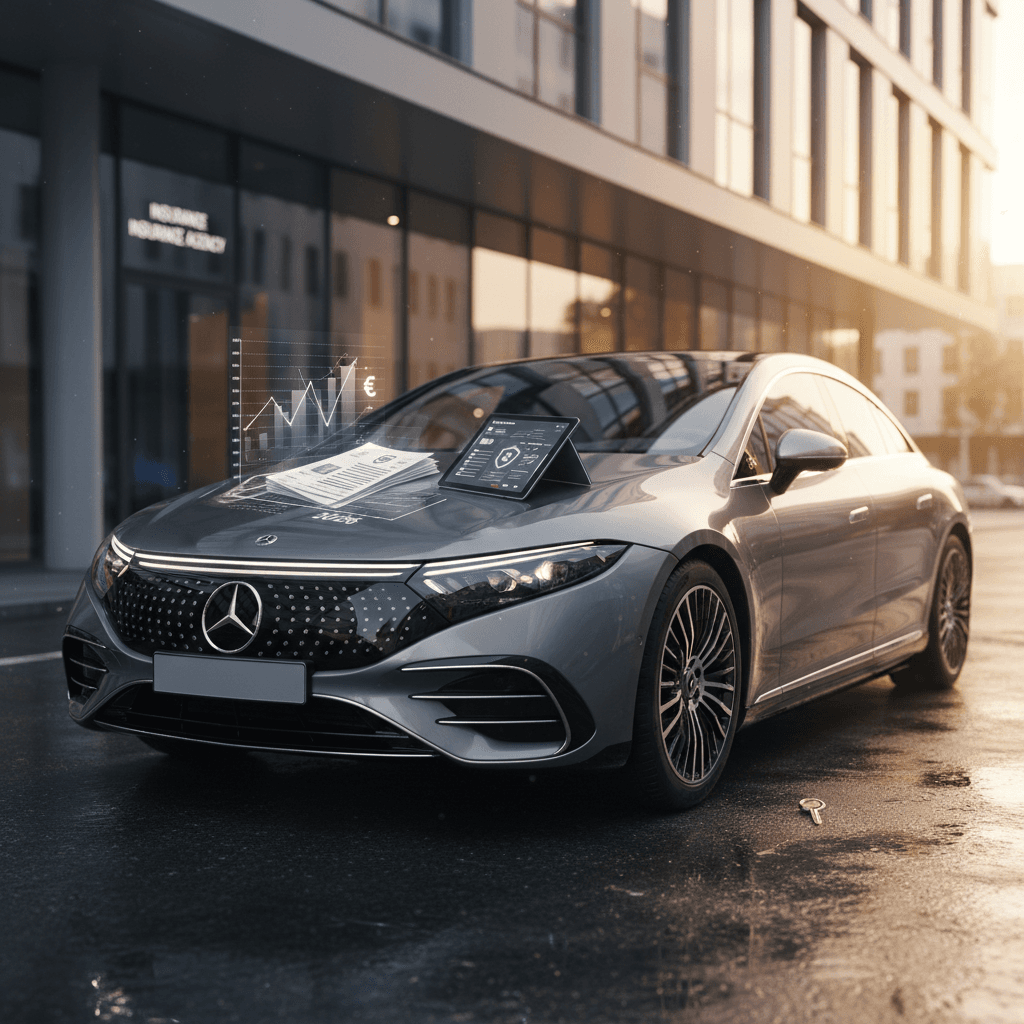
If you’re looking at a Mercedes EQS in 2026, especially a lower-priced used car, you’re probably trying to square that gorgeous luxury EV with some reality checks. Near the top of that list: Mercedes EQS insurance cost in 2026. Premiums on this flagship EV can be thousands per year above what you’d pay for a mainstream electric sedan, but there are levers you can pull to keep costs under control.
Key takeaway for 2026
Mercedes EQS insurance cost in 2026: quick overview
Mercedes EQS insurance at a glance (2026)
Different data providers peg Mercedes EQS insurance costs slightly differently, but they all land in the same uncomfortable neighborhood: a lot more than most cars, and generally more than most non-luxury EVs. For example, one large national rate comparison site lists average annual EQS insurance around the mid-$4,000s for recent model years, while some trim-specific analyses show select 450 models closer to the low $3,000s for very strong drivers. Meanwhile, forums and owner reports routinely show premiums above $5,000–$6,000 per year in high-cost states for higher trims like the EQS 580.
EQS vs average car
How much does Mercedes EQS insurance cost in 2026?
No two EQS insurance quotes look exactly alike, but using 2023–2025 data and early 2026 trends, here’s a realistic expectation for full-coverage insurance (liability + comprehensive + collision) on a Mercedes EQS sedan in the U.S.:
Typical 2026 Mercedes EQS annual insurance costs (sedan)
These ballpark numbers assume full coverage, good credit, and typical limits. Your actual quote will vary by state, age, driving history, and carrier appetite for EVs.
| Driver profile | Vehicle | Location type | Likely annual premium (2026) | Monthly equivalent |
|---|---|---|---|---|
| Experienced driver, clean record | 2024–2025 EQS 450+ | Suburban, moderate-cost state | $3,400–$4,000 | $280–$335 |
| Experienced driver, clean record | 2024–2025 EQS 580 4MATIC | Suburban, moderate-cost state | $4,300–$5,200 | $360–$435 |
| Experienced driver, 1 minor at-fault in 3 yrs | 2023–2024 EQS 450 4MATIC | Urban, higher-cost state | $4,800–$6,000 | $400–$500 |
| Younger driver (under 30), few years of history | 2022–2023 EQS 450+ | Mixed urban/suburban | $5,000–$7,000+ | $415–$585+ |
| Value-focused buyer, strong history | Used 2022 EQS 450+ (lower market value) | Suburban, moderate-cost state | $3,000–$3,600 | $250–$300 |
Use these ranges as planning tools, not guaranteed prices.
If you’re tracking specific model years, some rate tools show average premiums around $4,700–$4,900 for 2022–2024 EQS sedans, versus about $3,500–$3,700 for smaller EVs like the Mercedes EQE. In other words, you pay a noticeable insurance premium for choosing the flagship luxury EV.
Compare quotes by VIN, not just model
Why is Mercedes EQS insurance so expensive?
Core reasons EQS insurance runs high
Luxury EV + complex tech + costly repairs = higher risk for insurers
High purchase price
Battery and EV components
Complex body & interior
Advanced driver-assist systems
Young EV repair ecosystem
Luxury-brand risk profile
On top of those EQS-specific factors, 2025 and 2026 have seen elevated auto insurance inflation across the board, driven by rising repair costs, higher accident severity, and more expensive replacement vehicles. A big, complex luxury EV like the EQS sits right at the intersection of these trends, which is why its insurance bills stand out even in a high-cost market.
EQS 450+, EQS 450 4MATIC, EQS 580: trim-level impact on insurance
Not every Mercedes EQS is treated the same way by insurers. Under the umbrella term “EQS,” you’ll find multiple trims and option packages that change performance, equipment and price, and that trickles into your insurance quote.
EQS 450+ (RWD)
- Typically the lowest to insure among EQS sedans thanks to lower power and pricing.
- Still a large, heavy, premium EV, so expect premiums well above a mainstream sedan.
- Good match for buyers focused on comfort and range more than maximum performance.
EQS 450 4MATIC & EQS 580 4MATIC
- Dual-motor power, higher MSRP and, on the 580, typically richer standard equipment.
- Insurers may treat these as higher risk because of added performance and higher claim costs.
- On average, you can see several hundred dollars per year of premium difference versus a comparable 450+ for the same driver profile.
Don’t assume “smaller number” = cheaper to insure
12 factors that actually shape your EQS quote
Insurers don’t just look at the Mercedes badge and the battery pack. They feed dozens of variables into their models. For EQS owners, these 12 tend to be the big ones:
Major rating factors for Mercedes EQS insurance
1. Where you live and park
Urban ZIP codes with more congestion, theft, and higher repair costs generally mean higher premiums. Garaging your EQS off-street at night helps.
2. Your driving record
Recent at-fault accidents, speeding tickets, or DUIs can add thousands per year. A clean record is the single biggest discount lever you control over time.
3. Annual mileage and use
An EQS that sees 6,000 miles of mostly leisure driving looks different to insurers than one that racks up 18,000 miles of daily commuting or rideshare work.
4. Credit-based insurance score
In many states, insurers legally use credit-based scores as a risk proxy. Good credit can materially lower your EQS bill, while poor credit does the opposite.
5. Vehicle value and age
A brand-new EQS 580 with a six-figure sticker carries more risk than a three- or four‑year‑old EQS 450+ that’s lost a big chunk of its value on the used market.
6. Chosen deductibles
Higher deductibles on comprehensive and collision (say $1,000 instead of $500) shift more risk to you and can trim your premium, just make sure you can afford the out-of-pocket hit.
7. Liability limits
Raising bodily injury and property damage limits (for example, 100/300/100 vs. state minimums) increases cost but provides much better protection for a pricey, high‑profile vehicle.
8. Optional coverages
New-car replacement, OEM parts endorsements, gap coverage, and rental reimbursement all add cost. Some are smart for a new EQS, less critical on a high‑mileage used one.
9. Safety and telematics discounts
Defensive driving courses, telematics apps, and strong safety equipment can unlock discounts with some carriers, even on a high‑end EV like the EQS.
10. Household and multi‑policy bundling
Insuring multiple cars, a home, or a rental property with the same company often earns a meaningful discount on all policies, including that pricey EQS.
11. Young or occasional drivers on the policy
Teen drivers or newly licensed adults in the household can dramatically raise your EQS premium, even if they rarely drive the car. Consider separate policies or strict usage rules.
12. Carrier appetite for EVs and luxury brands
Some insurers are leaning away from high-end EVs due to repair costs; others are courting them. The same EQS can price very differently between carriers in 2026.
How EQS safety and tech can both raise and lower rates
On paper, the Mercedes EQS comes loaded with tech that should help you avoid crashes: automatic emergency braking, lane-keeping systems, blind-spot monitoring, and, on some models, the hardware needed for Mercedes’ Drive Pilot Level 3 system. These systems are designed to reduce certain types of collisions and can support strong crash-test performance.
How safety tech helps
- Fewer small claims: Automatic emergency braking and lane-keeping features can prevent or soften low‑speed impacts.
- Better occupant protection: Strong crash structures, airbags and seat restraints help protect people in higher‑speed crashes, which insurers care about.
- Discount eligibility: Many carriers offer small discounts for advanced safety features and anti‑theft systems, especially on vehicles with strong safety records.
How tech can raise costs
- Expensive components: Radar sensors, cameras, LiDAR, and the huge Hyperscreen aren’t cheap. Even minor front‑end or rear‑end damage can mean big bills.
- Calibration and diagnostics: After a collision, re‑calibrating driver‑assistance systems often adds hundreds or thousands of dollars to the repair invoice.
- Drive Pilot complexity: Higher-level automation hardware on some EQS variants makes repair networks narrower and replacement parts more specialized.
Battery and underbody damage are critical
7 smart ways to lower Mercedes EQS insurance costs
You can’t turn an EQS into a budget econobox in the eyes of your insurance company, but you can make a big dent in the bill with some deliberate choices. Here are practical ways EQS drivers are shaving hundreds off their 2026 premiums:
- Shop aggressively, especially if your current insurer is nervous about EVs or luxury brands. Get quotes from at least three to five carriers, including those that actively advertise EV expertise.
- Right-size your coverage for your situation. New EQS under loan or lease? You’ll likely need full coverage plus gap. Older, paid-off EQS with modest market value? You may choose higher deductibles or, in rare cases, to drop collision, after talking with a professional.
- Adjust deductibles carefully. Raising from $500 to $1,000 on comprehensive and collision can bring your premium down, but only if you have an emergency fund to cover that out-of-pocket cost.
- Use telematics or usage-based programs if you’re a low‑mileage or consistently cautious driver. Many carriers offer device- or app-based programs that reward good driving behavior, even for luxury EVs.
- Improve security and parking. Garaging the EQS, installing cameras, or adding tracking/anti‑theft devices can lower risk. In some urban areas, moving from street parking to a secure garage meaningfully changes quotes.
- Bundle policies. If you own a home, condo or rental property, moving them to the same insurer as your EQS often unlocks meaningful multi‑policy discounts.
- Revisit your quote when you buy used or refinance. If you pick up a used EQS at a steep discount versus original MSRP, the lower actual cash value can support lower comprehensive and collision costs, especially once your lender requirements change.
How Recharged can help on the finance side
Ready to find your next EV?
Browse VehiclesInsurance tips if you’re buying a used Mercedes EQS
The used market is where the EQS becomes truly interesting: deep depreciation has pushed early-model EQS sedans into price territory that overlaps new mid-market EVs. Insurance doesn’t fall as fast as purchase price, but buying used still changes the equation.
Before you commit to a used EQS, check these insurance boxes
Get VIN-specific quotes first
Don’t wait until after you sign. Ask the seller or marketplace (including Recharged) for the VIN and run quotes with several insurers so you know exactly what you’re in for.
Ask about prior damage and claims
A previous total loss or major structural repair can affect insurability and future claim handling. Request a history report and ask your insurer if they see any red flags.
Consider the battery health story
Insurers don’t underwrite directly on battery state-of-health yet, but a healthy pack reduces your risk of expensive out-of-warranty surprises. Recharged includes a <strong>Recharged Score Report</strong> with battery diagnostics for every EV we list.
Match coverage to market value
If you buy a used EQS at a steep discount to its original MSRP, explore whether it still makes sense to pay for rich new-car endorsements like full replacement cost.
Review lender and lease requirements
If you’re financing, your lender will mandate certain coverage levels. Knowing these before you shop prevents surprises at signing.
Plan for rising EV insurance trends
EV insurance rates have been trending upward as repair data matures. Build some cushion into your budget so a renewal increase in 2027 doesn’t derail your ownership plan.
Leverage the Recharged Score
Sample Mercedes EQS insurance scenarios for 2026
To put everything together, here are three composite scenarios based on the 2022–2025 EQS market and what insurers are doing with EVs in 2026. These are not quotes, but they give you a sense of scale.
Scenario 1: Value-focused used EQS buyer
Driver: 45‑year‑old, clean record, good credit
Vehicle: 2022 EQS 450+ purchased used at a big discount
Location: Suburban area in a moderate‑cost state, garaged
Coverage: Full coverage, $1,000 deductibles, solid liability limits
Likely range: $3,000–$3,600/year ($250–$300/month)
Buying used softens the blow versus a brand‑new EQS, especially when combined with higher deductibles and clean history.
Scenario 2: New EQS 580 in a big city
Driver: 38‑year‑old, one minor at‑fault accident three years ago
Vehicle: 2025 EQS 580 4MATIC, heavily optioned
Location: Large metro with high repair and medical costs
Coverage: Full coverage, $500 deductibles, robust liability
Likely range: $4,800–$6,000/year ($400–$500+/month)
Here the combination of vehicle value, performance trim, urban risk and a blemished record push premiums to the upper end of the range.
Scenario 3: Younger EQS lessee
Driver: 28‑year‑old, limited credit depth, clean but short record
Vehicle: 2024 EQS 450 4MATIC on a lease
Location: Mixed urban/suburban region
Coverage: Full coverage plus gap and new‑car replacement endorsements
Likely range: $5,000–$7,000+/year ($415–$585+/month)
Age and required lease-end coverages stack on top of a high‑value EV, making this one of the most expensive insurance setups in the EQS universe.
Frequently asked questions about Mercedes EQS insurance in 2026
Mercedes EQS insurance: 2026 FAQ
Bottom line: is EQS insurance worth it in 2026?
If you’re drawn to the Mercedes EQS, there’s a good chance you value refinement, quiet, and cutting-edge tech as much as raw speed. In 2026, insurance cost is one of the main friction points standing between shoppers and the keys. Expect premiums that are meaningfully higher than for a typical car, and higher than for many smaller EVs, but also remember that you’re insuring a flagship luxury sedan with a sophisticated battery pack and a cabin full of sensors and glass.
By buying used instead of new, comparing multiple insurers, tuning your deductibles and coverage levels, and taking full advantage of safety and telematics discounts, you can usually bring Mercedes EQS insurance cost in 2026 back into a range that fits a realistic ownership budget. And if you’re shopping pre-owned, working with an EV‑focused retailer like Recharged, where every vehicle includes a transparent Recharged Score battery report and expert support, makes it much easier to see the whole cost picture before you commit.