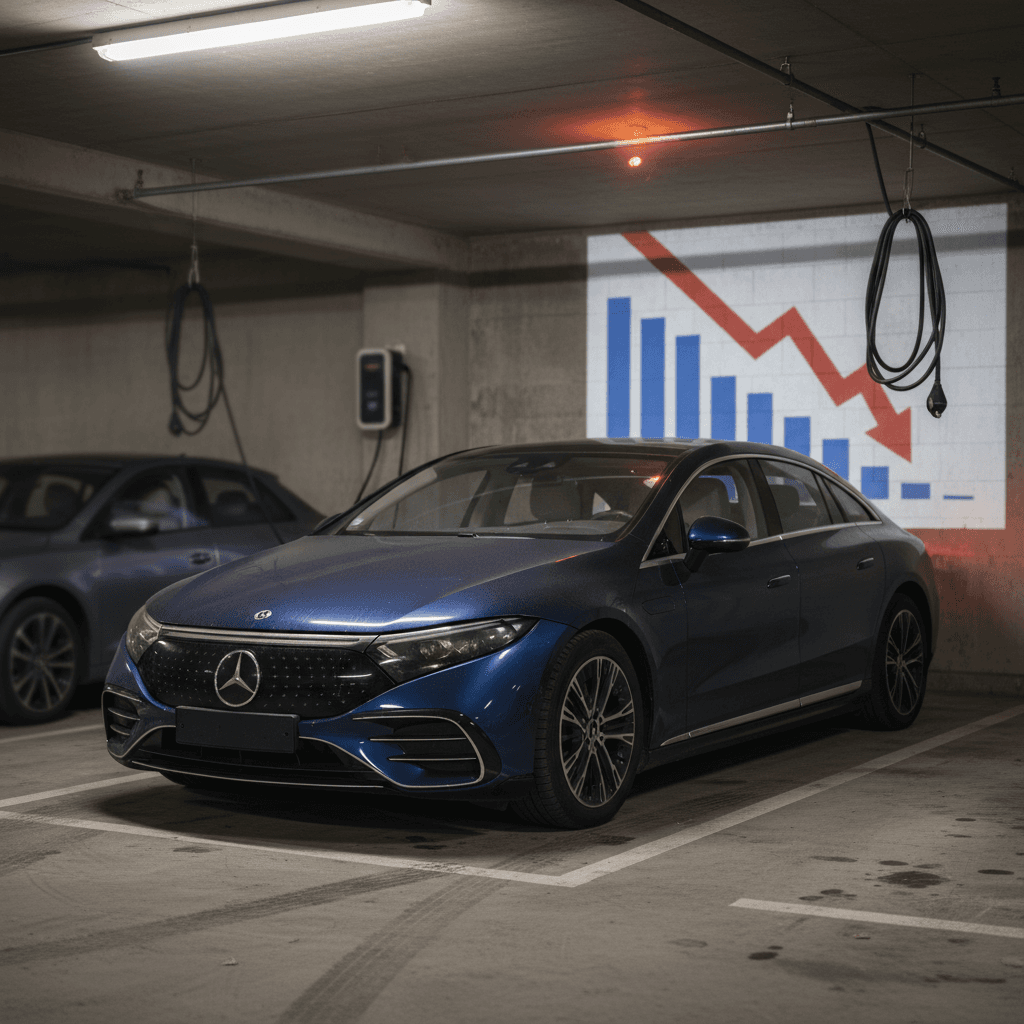
If you’re looking at a flagship luxury EV, the Mercedes EQS depreciation rate in 2026 is impossible to ignore. This sedan launched north of $100,000, yet by 2026 plenty of clean, low‑mile examples are selling for the price of a new mainstream crossover. That’s brutal news for first owners, but a major opportunity if you’re shopping used.
Key takeaway for 2026
Mercedes EQS depreciation rate in 2026 at a glance
Mercedes EQS depreciation snapshots (estimated, 2026 market)
In plain English, a well‑optioned EQS that cost around $110,000 new in 2022 might be sitting on a used lot in 2026 with an asking price in the mid‑$40,000s to mid‑$50,000s, depending on mileage and condition. That’s a 50–60% haircut in just a few years, far steeper than the typical luxury sedan.
Mind the spread
How fast does the Mercedes EQS depreciate?
Different data sources use different assumptions, but looking at 2024–2025 valuation studies, auction results, and real‑world listings, a reasonable 2026 snapshot for the EQS depreciation curve looks like this for a typical EQS 450+/580 sedan:
Illustrative Mercedes EQS depreciation curve (typical sedan, U.S. market)
Approximate retained value vs. original MSRP for a well‑kept EQS, assuming normal mileage and no accidents. Your exact numbers will vary by trim, incentives at time of sale, and local demand.
| Age of EQS | Estimated value vs. original MSRP | What that looks like on a $110k car | Market notes |
|---|---|---|---|
| 1 year old (model‑year newer) | ≈55–65% of MSRP | ≈$60k–$72k | Some studies have found nearly 50% loss after a single year for early EQS builds, especially where new‑car discounts are aggressive. |
| 2 years old | ≈45–55% of MSRP | ≈$50k–$60k | By year two, many EQS sedans are deep into half‑price territory compared with their original window sticker. |
| 3 years old | ≈40–50% of MSRP | ≈$44k–$55k | Depreciation pace starts to slow as used prices find a floor and most rapid write‑down has already occurred. |
| 5 years old | ≈25–35% of MSRP | ≈$27k–$38k | Long‑term EV price behavior is still evolving, but current trends point to about two‑thirds of value gone by year five. |
These percentages are directional, not guarantees. Always check current comparables before you buy or sell.
Sedan vs. SUV
Mercedes EQS depreciation vs other luxury EVs
Where the EQS sits in the luxury EV depreciation pack
Good for you as a used buyer, sobering if you’re the first owner.
EQS vs Tesla Model S
Recent 5‑year comparisons show the Mercedes EQS losing roughly 73% of its value over five years, while the Tesla Model S loses around 65%. That means the EQS typically sheds thousands more in absolute dollars over the same period.
EQS vs mainstream EV sedans
Many mainstream EVs (Hyundai Ioniq 5, Kia EV6, Tesla Model 3) still depreciate quickly, but their lower MSRPs mean the dollar loss isn’t as shocking. The EQS combines big‑ticket pricing with heavy incentives, amplifying the real‑world hit.
EQS vs gas luxury flagships
Traditional S‑Class and 7 Series sedans depreciate, but the EQS has added headwinds: EV market uncertainty, charging‑network anxiety, and rapid tech turnover. That’s why used EQSes have been highlighted as some of the "best bargains" in the luxury EV space by 2025.
Silver lining for used buyers
Why the EQS is depreciating so hard by 2026
- High starting prices: Early EQS sedans routinely stickered from the high‑$90,000s to well over $120,000. When new‑car prices later dropped and incentives piled on, used values had to reset downward.
- A soft EV luxury market: By 2024–2025, multiple studies showed EVs, especially pricey luxury models, depreciating faster than comparable gas cars as demand cooled and incentives shifted.
- Heavy discounts and lease cash: Mercedes and dealers have run aggressive lease programs and price cuts on EQ models. That helps move new cars but undercuts residuals when those leases end.
- Rapid tech changes: Buyers know a mid‑cycle update or next‑gen EV can bring more range or faster charging. That "obsolescence risk" weighs more on an EQS than on a traditional gasoline S‑Class.
- Charging ecosystem uncertainty: As non‑Tesla brands pivot toward the NACS connector and more models gain Tesla Supercharger access, earlier EVs with CCS only can feel left behind, even if they still charge fine on today’s networks.
New‑car price cuts hurt used values
Year‑by‑year Mercedes EQS value trends (2021–2025)
The EQS hasn’t been on sale long, but there’s already a clear pattern. Early buyers paid full freight; later ones saw discounts; used shoppers in 2025–2026 are seeing the spoils. Here’s a simplified look at how value has shifted for a typical well‑equipped EQS 580 sedan that stickered around $120,000:
2022: Launch hype and full MSRPs
- Many early EQS buyers paid close to sticker with modest discounts.
- Depreciation in the first 12 months looked brutal once broader EV prices started softening.
- By late 2023, some 2022 cars were already appearing around the low‑$60,000s and even under $50,000 for higher‑mile examples.
2023–2024: Incentives and used price floor
- Mercedes leaned on incentives and price adjustments to keep EQ inventory moving.
- Used 2022–2023 EQS sedans frequently traded in the $45,000–$60,000 band by 2024–2025, depending on trim.
- By 2025, market behavior suggested the steepest part of the curve was behind many examples, with depreciation slowing as prices approached a buyer‑friendly floor.
What this means heading into 2026
What 2026 buyers should expect to pay for a used EQS
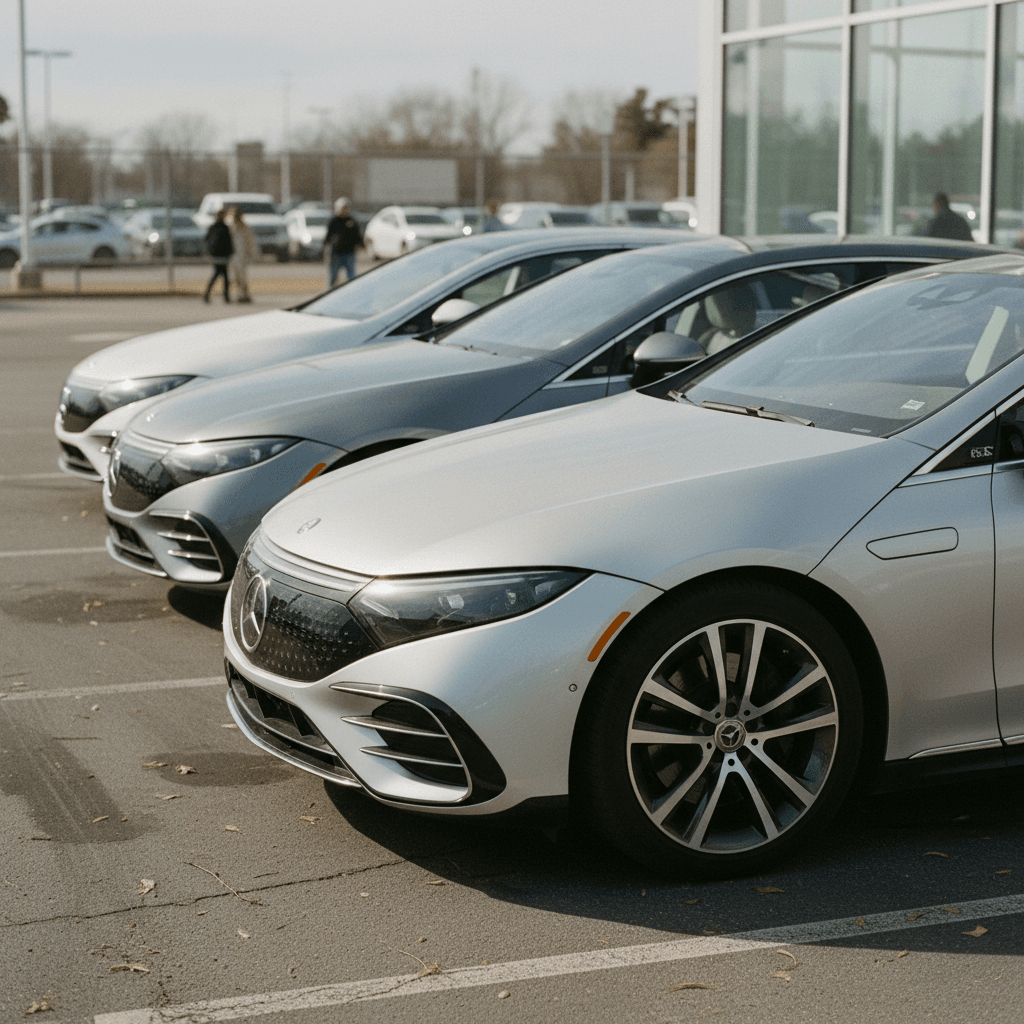
Exact pricing will vary by mileage, trim, options, region, and how motivated a dealer or private seller is. But based on 2025–early‑2026 market behavior, here’s a realistic ballpark for U.S. shoppers:
Indicative 2026 used Mercedes EQS asking prices (U.S., typical mileage)
Approximate retail asking ranges for common EQS configurations in 2026. These are directional, not quotes.
| Model / Year | Typical mileage in 2026 | Likely asking range | Notes |
|---|---|---|---|
| 2022 EQS 450+ sedan | 35k–60k miles | ≈$40,000–$52,000 | Early builds with more software quirks and higher miles can dip into the low‑$40,000s; pristine low‑mile cars sit higher. |
| 2022 EQS 580 4MATIC sedan | 30k–55k miles | ≈$42,000–$55,000 | Higher MSRP when new, but often similar used pricing to 450+ because of heavier initial depreciation. |
| 2023 EQS 450+ sedan | 20k–45k miles | ≈$45,000–$60,000 | Later software and minor tweaks; values generally a bit firmer than 2022s but still sharply discounted from original price. |
| 2023 EQS SUV 450 4MATIC | 25k–45k miles | ≈$48,000–$65,000 | SUV body style and larger MSRPs, but incentives pushed many into lease deals; some off‑lease units can be compelling buys. |
| 2024 EQS sedan (any trim) | 10k–25k miles | ≈$60,000–$80,000 | Newer builds hold value better in year one, but further price adjustments by Mercedes could still move these numbers. |
Always check live listings and valuation tools for current numbers in your ZIP code.
Where Recharged fits in
Lease residuals: what they reveal about EQS depreciation
Lease residuals are the finance world’s way of predicting depreciation. With the EQS, they tell a clear story: banks and captive finance arms expect these cars to lose value quickly.
- Reports of EQS leases with 36‑month residuals hovering near the mid‑40% to low‑50% range of MSRP show that even the lenders pricing these cars assume steep depreciation.
- Some lessees have shared residual figures around $50,000 on $110,000‑ish EQS MSRPs for 36‑month terms, again, roughly half the sticker price.
- Dealers have occasionally bought cars back at tens of thousands below contracted residuals just to make the numbers work, a sign that the market value sank faster than the original lease math assumed.
If you’re coming off an EQS lease
Battery health and long‑term EQS value
So far, there’s no broad evidence that the EQS’s battery packs are failing en masse. Mercedes offers lengthy battery warranties, and most 2022–2023 cars are still early in their life. But in a used EV, perceived battery risk is a major factor in what buyers are willing to pay.
How battery condition shapes EQS resale value
Two cars with the same mileage can be worth very different money.
State of health (SoH)
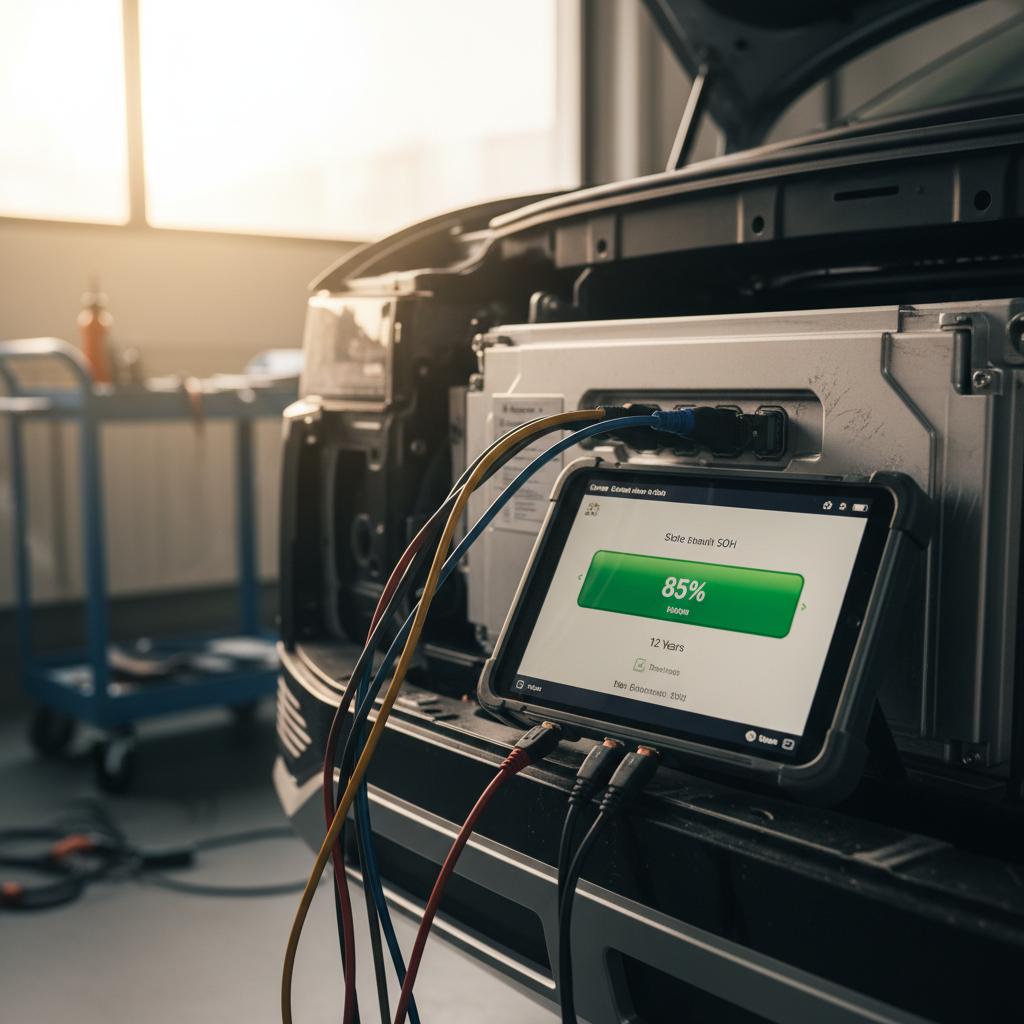
An EQS pack that still tests at 90%+ of original capacity will command stronger money than one that’s already noticeably degraded. Serious shoppers pay attention to this now.
Driving & charging history
Heavy DC fast‑charging, ride‑hail use, or repeated deep discharges can all influence long‑term health. A car that mostly did home Level 2 charging looks better on paper, and in your daily range.
Diagnostics & transparency
A detailed battery health report like the Recharged Score gives buyers confidence. That can narrow the depreciation gap between "unknowns" and well‑documented cars.
Why diagnostics matter more on a depreciated EQS
How to shop a used Mercedes EQS wisely in 2026
2026 checklist for buying a used Mercedes EQS
1. Start with the right model years
If you can, focus on 2023–2024 EQS sedans and SUVs, which benefitted from software updates and incremental refinements. A clean 2022 can still be fine, you just want strong service and update history.
2. Verify battery health objectively
Don’t rely on a generic "battery OK" line in an ad. Use a marketplace like <strong>Recharged</strong> that runs a battery diagnostic and gives you a quantified health score instead of a guess.
3. Examine charging behavior
Test DC fast‑charging if you can. The EQS should ramp up and hold power reasonably well for its chemistry and age. Anomalies, very slow charging, repeated charge errors, are red flags.
4. Scrutinize software and infotainment
Spend time with the Hyperscreen or main display. Check that navigation, driver‑assist systems, cameras, and OTA updates work cleanly. Early EQS models had their share of software quirks.
5. Look beyond miles to usage pattern
A 40,000‑mile EQS that did easy highway commuting and home charging can be a better bet than a lower‑mile car that did short‑trip city duty and constant DC fast‑charging.
6. Compare price to true market value
Use multiple valuation tools, then sanity‑check them against real listings. On <strong>Recharged</strong>, the Recharged Score Report includes a fair‑market pricing analysis so you can see if a given EQS is under‑ or over‑priced.
Cast a wider net
Is a heavily depreciated EQS a good buy?
Why a used EQS can be a steal
- Flagship experience for mid‑market money: You’re getting S‑Class‑level comfort, tech, and refinement for the price of a new mid‑size crossover.
- Massive depreciation already taken: If you buy at three to four years old, much of the painful value loss is behind you.
- Mature software and service history: By 2026, many quirks have been ironed out, and you can see which cars have been cared for.
Where to stay realistic
- Future values are still evolving: No one can promise what a 2022 EQS will be worth in 2030. EV secondary markets are still finding their long‑term level.
- Luxury EVs aren’t cheap to fix: Out‑of‑warranty repairs on complex tech and air suspensions can be costly.
- Charging landscape is shifting: As NACS and new fast‑charging hardware spread, the EQS’s CCS‑only setup may influence later resale in ways we can’t fully quantify yet.
The EQS is a classic case of the right car at the wrong price for many early buyers, brilliant to drive and live with, but launched into a volatile EV market that punished six‑figure stickers.
If you approach the Mercedes EQS depreciation rate in 2026 with clear eyes, it stops being scary and starts looking strategic. Someone else paid for the first, steep part of the curve. Your job is to choose a car with strong battery health, clean history, and a price that reflects today’s soft luxury‑EV market, not yesterday’s six‑figure MSRP. With tools like the Recharged Score, expert EV guidance, and nationwide delivery, you can make a flagship EQS work for your budget instead of blowing it up.