If you’re looking at a new or used Mercedes EQS in 2026, you’re probably asking yourself one big question: what happens when the battery wears out, and how much will it cost to replace? The EQS uses a very large, sophisticated pack, so understanding 2026 Mercedes EQS battery replacement cost, warranty coverage, and real‑world risk is critical before you sign a finance or lease contract.
Key context for 2026 shoppers
Mercedes EQS battery replacement cost in 2026: the short answer
EQS battery cost benchmarks for 2026
As of 2026, no U.S. dealer is advertising a flat menu price for an out‑of‑warranty EQS pack, and individual quotes can vary widely. But when you combine what we know about EQS battery size, luxury EV pack pricing, and real invoices from other 100 kWh‑class EVs, a realistic expectation for a full high‑voltage battery replacement on a Mercedes EQS in 2026 looks like this:
- Battery pack (parts only): roughly $15,000–$24,000 depending on exact EQS variant and regional pricing.
- Labor and shop fees: typically $2,500–$5,000 for pack removal, installation, coolant service, diagnostics, and programming.
- Total installed cost at a Mercedes dealer: about $18,000–$30,000 for a full pack, assuming no warranty help.
These are 2026 ballpark figures
In other words, replacing an EQS battery out of warranty in 2026 is **similar in cost to rebuilding or replacing the engine and transmission on a high‑end S‑Class**. It’s a major repair, but also one you’re unlikely to face early in the car’s life.
EQS battery size, chemistry, and why it’s expensive
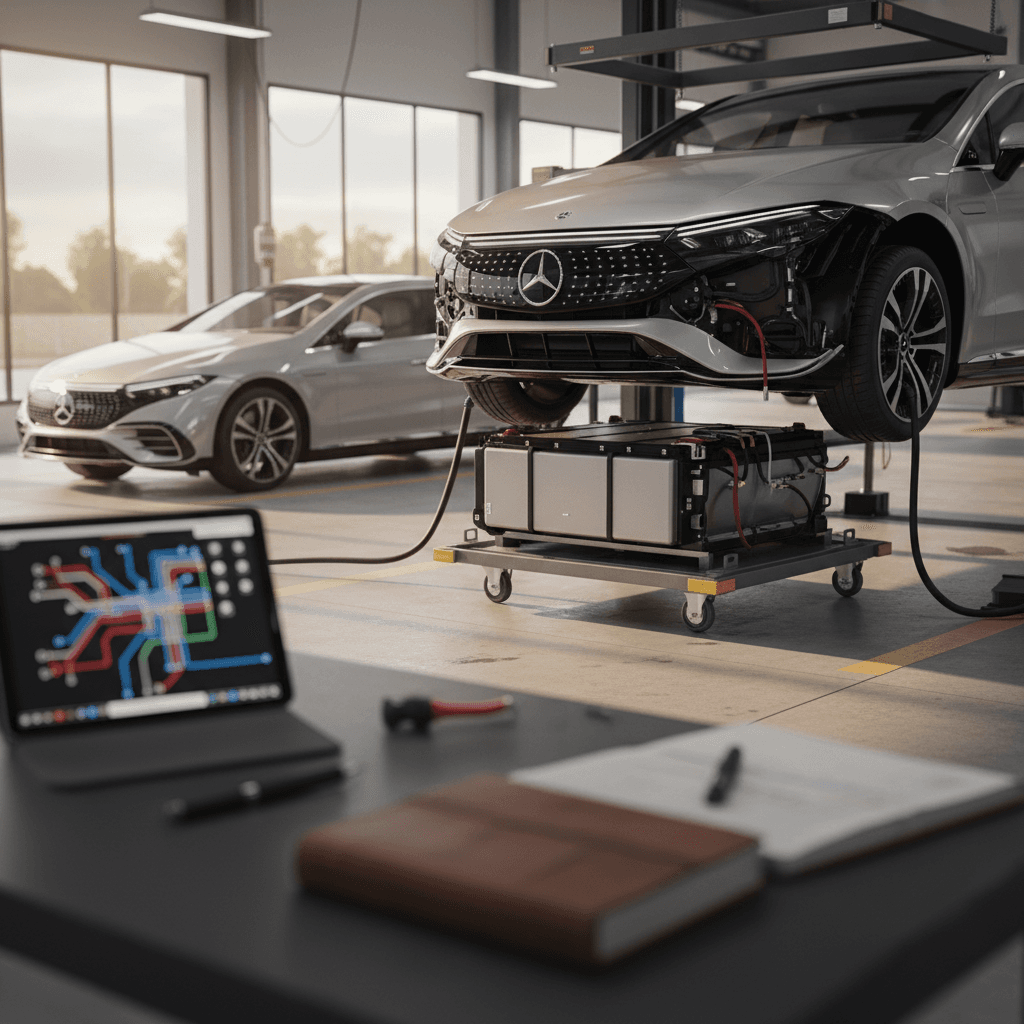
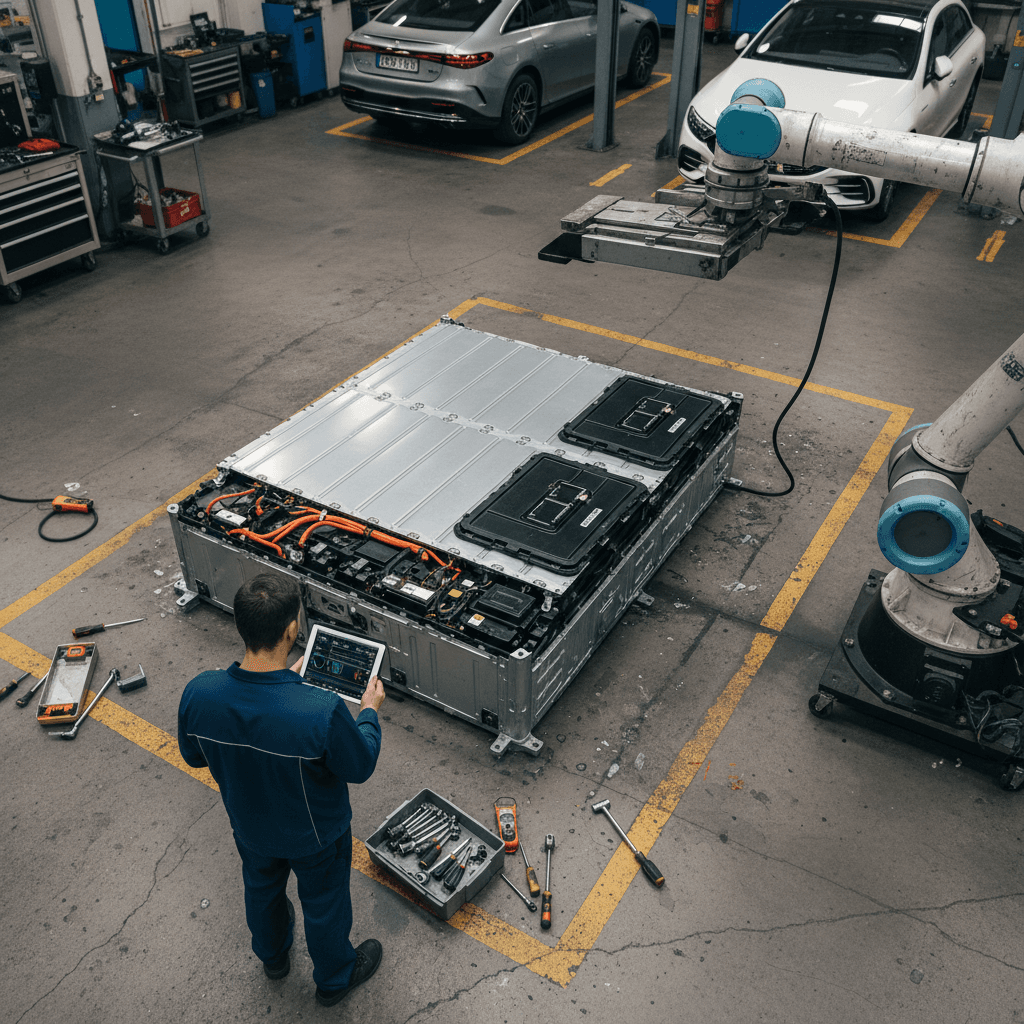
To understand why EQS battery replacement is costly, it helps to look at what’s actually under the floor. EQS sedans and SUVs generally use 90–108 kWh lithium‑ion packs, depending on the exact trim. That’s comparable to or larger than packs in many Tesla Model S, BMW iX, and other flagship EVs.
What you’re paying for in an EQS battery
Large capacity, complex packaging, and premium thermal management all influence cost.
Huge energy capacity
An EQS pack stores roughly 90–108 kWh of energy. More kWh means more cells, more material, and more cost when it’s time to replace.
Advanced thermal system
The pack is liquid‑cooled and integrated with the car’s HVAC system. Any replacement involves managing coolant, sensors, and software calibration, not just swapping a box.
Integrated electronics
The high‑voltage battery includes a battery management system (BMS), contactors, and safety hardware. If those components are damaged, costs climb further.
On top of that, the EQS is a premium product. Mercedes‑Benz parts pricing, dealer labor rates, and specialized EV tooling all push the invoice higher than you’d see for a mainstream 60–70 kWh crossover. That’s why a luxury 100 kWh‑class EV can easily run into the high teens or tens of thousands of dollars for a full pack swap, even as underlying battery cell prices continue to drop.
Mercedes EQS battery warranty: what’s covered until 2031–2034
Here’s the good news: for U.S. buyers, **Mercedes wraps the EQS high‑voltage battery in a very long factory warranty**. In most cases, EQS sedans and SUVs sold here get a 10‑year / 155,000‑mile battery warranty that covers defects and excessive loss of usable capacity.
Typical Mercedes EQS battery warranty coverage (U.S.)
Check your specific warranty booklet, but these are the usual terms EQS owners see in 2021–2025 model years.
| Item | Typical Coverage | What It Means for You |
|---|---|---|
| High‑voltage battery warranty | 10 years / 155,000 miles | Protection against manufacturing defects and significant capacity loss, whichever comes first. |
| Capacity guarantee threshold | Around 70% usable capacity | If the pack falls below this threshold under normal use within the time/mileage limit, Mercedes may repair or replace it. |
| Basic new‑vehicle warranty | Generally 4 years / 50,000 miles | Covers most other components; expires well before the battery warranty. |
| Certified Pre‑Owned (CPO) battery | Remainder of original 10‑year term | Buying CPO doesn’t reset the battery clock, but you keep what’s left of the original coverage. |
The battery warranty is separate from the basic bumper‑to‑bumper coverage and often outlasts the rest of the car’s protection.
Always verify the in‑service date
If a dealer determines that an EQS pack has fallen below its warranted capacity threshold or suffers an internal defect within the warranty window, **Mercedes typically covers repair or replacement**. You may still pay diagnostics or ancillary fees in some cases, but the five‑figure parts bill is what this coverage is designed to shield you from.
Six factors that change your EQS battery replacement bill
Even with ballpark ranges, two EQS owners in 2026 could see very different invoices for "battery work." Here are the biggest variables that push your cost up or down.
What drives Mercedes EQS battery cost in 2026
1. Full pack vs. partial repair
A complete pack swap is the worst‑case, high‑five‑figure scenario. Many issues, coolant leaks at the pack interface, a single faulty module, or electronics, may be repairable for a fraction of full replacement cost.
2. Sedan vs. SUV, and trim level
An EQS 450+ with a smaller usable capacity may be slightly cheaper to re‑pack than an AMG EQS with the largest battery and performance tuning, but both operate in the same general cost tier.
3. Dealer vs. independent specialist
A Mercedes dealer is your default option today, but over the rest of the decade more independent EV shops will be equipped to service high‑voltage packs. They may offer lower labor rates or creative repair options once parts access improves.
4. Accident vs. wear‑and‑tear
If the pack is damaged in a collision, your insurance, not you, may be footing the bill, or the car may be declared a total loss. Wear‑and‑tear degradation late in life is more likely to land on you or the second/third owner.
5. Region and labor rates
Luxury dealer labor in major coastal metros can easily exceed $250 per hour. In lower‑cost regions, the same job might be hundreds or even a thousand dollars cheaper in labor alone.
6. Timing within the decade
Cell prices are still trending downward. An EQS battery replacement carried out in, say, 2029 or 2030 could cost meaningfully less than the same job in early 2026, even at the dealer.
Do you really need a whole new EQS battery pack?
When people hear "battery replacement," they often picture a single, all‑or‑nothing operation. In reality, **there’s a spectrum of battery repairs**, and many of them cost far less than a full pack swap.
Common lower‑cost EQS battery fixes
- Software updates & BMS calibrations to correct state‑of‑charge reporting.
- Coolant line or seal repairs around the battery pack.
- High‑voltage contactor or wiring repairs without touching cells.
- Replacing 12‑volt support batteries that can mimic HV issues.
These are often four‑figure jobs, not the five‑figure shock owners fear.
When full pack replacement is likely
- Severe impact or flooding damage to the pack structure.
- Multiple failed modules that make partial repair uneconomical.
- Warranty‑approved capacity loss below the guaranteed threshold.
In these edge cases, a new or remanufactured pack may be the right call, ideally paid for by warranty or insurance, not your checkbook.
High‑voltage safety reminder
Buying a used EQS? How to check battery health first
Because full EQS battery replacement is expensive, the smarter move, especially in 2026, is to avoid surprises when you buy. That’s where proper battery health checks and transparent reporting make a big difference.
How to evaluate a used EQS battery in 2026
You don’t have to be an engineer, just ask for the right information and tools.
Look at real‑world range
Compare the seller’s stated typical range (at your climate and speeds) to original EPA numbers. Big gaps without explanation can signal abuse or underlying issues.
Pull vehicle data
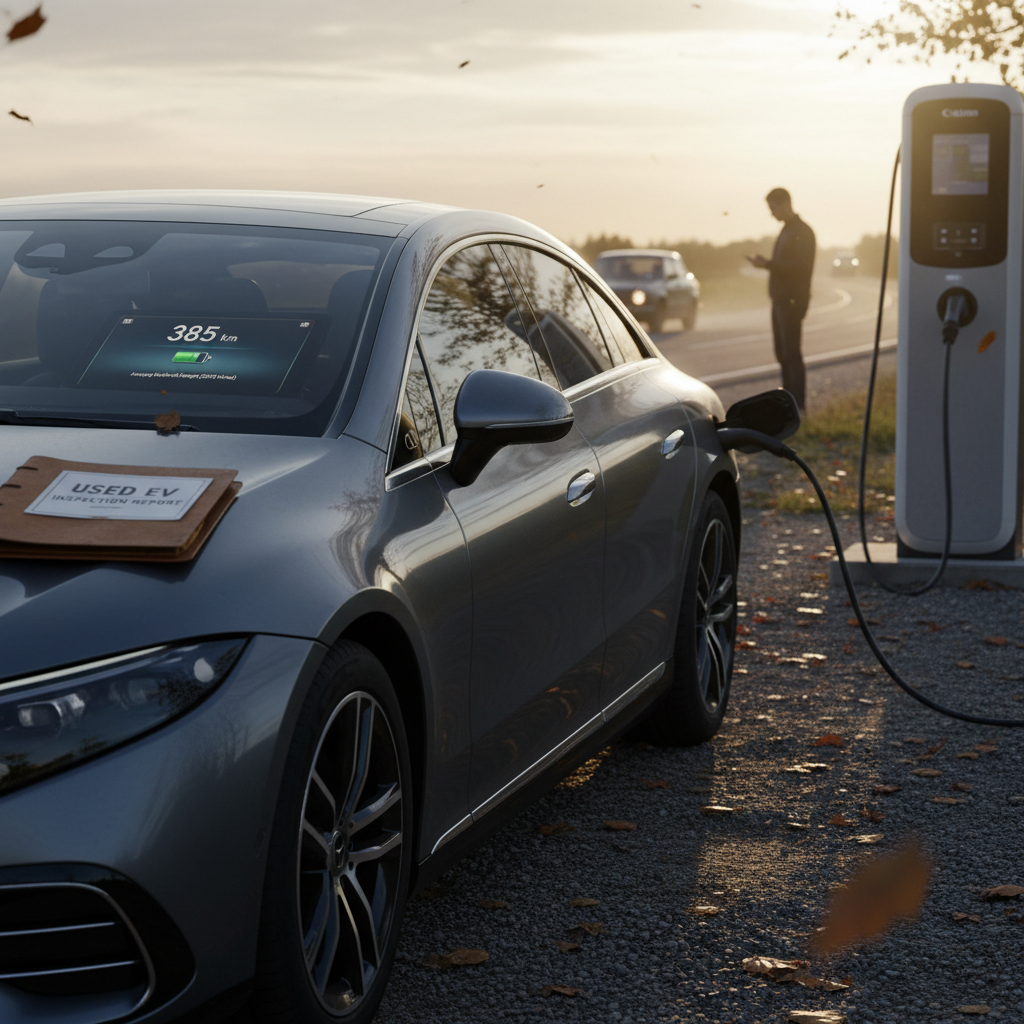
Some EQS models and third‑party tools can read state of health (SoH) estimates from the car. Even if it’s not perfect, it’s better than a guess.
Ask for documentation
Well‑kept service records, warranty repairs, and recall work tell you how the battery has been treated and if Mercedes has already addressed any issues.
Where Recharged fits in
Ready to find your next EV?
Browse VehiclesIf you’re browsing EQS listings elsewhere, don’t be shy about asking sellers for a pre‑purchase inspection from a dealer or qualified EV shop. Spending a few hundred dollars today can easily save you from a five‑figure surprise later.
How EQS battery costs compare to other luxury EVs
EQS battery replacement costs aren’t happening in a vacuum. Across the market, **large luxury EV batteries remain the most expensive packs to replace**, even as mainstream EV costs fall.
Approximate 2026 battery replacement tiers by EV type
Broad ranges based on 2024–2026 market data for full high‑voltage pack replacement at dealer or OEM‑affiliated service centers. Actual quotes vary.
| Vehicle type (examples) | Typical pack size | Typical installed replacement cost | Notes |
|---|---|---|---|
| Compact EV (Nissan Leaf, Mini EV) | 30–50 kWh | $5,000–$10,000 | Smaller packs, simpler packaging; many older models now see lower‑cost refurb options. |
| Mainstream crossover (Kona EV, ID.4) | 60–80 kWh | $8,500–$14,500 | Mid‑size packs, increasingly competitive pricing as volumes grow. |
| Luxury sedan/SUV (Mercedes EQS, BMW iX, Tesla Model S) | 90–118 kWh | $18,000–$30,000+ | Large, complex packs with high dealer labor rates, where the EQS lives. |
| Electric trucks & max‑range SUVs (R1T, Hummer EV) | 120–200+ kWh | $20,000–$35,000+ | Very large packs; often the highest replacement cost segment today. |
EQS sits squarely in the same cost neighborhood as other flagship luxury EVs with 90–120 kWh packs.
So while an EQS battery is undeniably expensive, it’s not an outlier in its competitive set. Any 100 kWh‑class luxury EV you cross‑shop will play in roughly the same cost band if you ever need a full pack outside of warranty.
Ways to reduce EQS battery costs in the late 2020s
You can’t change the price of a brand‑new Mercedes battery pack, but you *can* influence whether you’ll ever need one, and how painful it would be if you did. Here are practical levers you can pull.
Smart strategies to manage EQS battery risk
1. Maximize your warranty window
If you’re buying new in 2026, consider your expected mileage. High‑milers may burn through 155,000 miles before 10 years; lower‑milers will time‑out on years first. Structure leases and ownership horizons so your heaviest usage happens under factory coverage.
2. Consider extended protection, carefully
Some owners choose third‑party or Mercedes extended warranties to bridge the gap between the 4‑year basic coverage and their long‑term plans. Read the fine print: many plans exclude high‑voltage batteries or only cover them after factory coverage ends, with caps.
3. Drive and charge with the battery in mind
Avoid living at extremes, constantly fast‑charging from very low to 100%, or leaving the car parked full for weeks in hot climates. Using moderate charge limits for daily use (for example 70–80%) and reserving 100% for trips is gentler on long‑term health.
4. Shop smarter on the used market
On a 4–6‑year‑old EQS, battery health and remaining warranty are more important than a particular paint color or option package. A fairly priced EQS with a strong battery and several warranty years left is often a better buy than a cheaper car with unknown history.
5. Leverage modern diagnostics
By the late 2020s, more independent shops and online services will offer detailed EV battery assessments and even module‑level refurb options. Before agreeing to a five‑figure replacement, get a second opinion from an EV specialist.
6. Use marketplaces that disclose battery health
Platforms like <strong>Recharged</strong> that bake in a battery health report and a transparent Recharged Score help you compare multiple used EQS vehicles side‑by‑side, factoring in battery condition, not just odometer and price.
Mercedes EQS battery cost: FAQs for 2026
Frequently asked questions about EQS battery replacement
Bottom line: should EQS battery cost scare you off?
The numbers on paper are big: in 2026, a Mercedes EQS battery replacement can reasonably cost as much as a major engine rebuild on a high‑end gas S‑Class. But context matters. The EQS battery is backed by one of the longest factory warranties in the EV world, real‑world degradation has been modest so far, and many issues can be solved with targeted repairs rather than a wholesale pack swap.
If you’re shopping new, the smartest play is to enjoy the car while your 10‑year/155,000‑mile battery warranty has your back, then reevaluate your plans as you approach the end of that window. If you’re shopping used, focus on **battery health, remaining warranty, and transparent inspection data** instead of only chasing the lowest price.
That’s exactly the gap Recharged is designed to fill. Every used EV we sell, EQS included, comes with a Recharged Score Report that puts battery health, fair market pricing, and expert guidance front and center. If you want the comfort of a flagship Mercedes with EV refinement, you don’t have to be afraid of the battery. You just need the right information before you buy.