The Mercedes EQE is the electric E‑Class in all but name: smooth, silent, heavy with tech, and expensive enough that you really don’t want to get it wrong. Whether you’re eyeing a new 2026 EQE 320 or a lightly used 2023–2025 EQE 350 sedan or SUV, this Mercedes EQE buying checklist walks you through every decision, from range and charging to options, depreciation, and battery health.
Sedan, SUV, and a moving target
Why you need a Mercedes EQE buying checklist
The EQE is not a simple car. Even before you get to the Hyperscreen, you’re choosing between sedan and SUV, rear‑ or all‑wheel drive, multiple battery configurations, and a long menu of luxury options that can push the price tens of thousands of dollars. On top of that, the EQE lives in a fast‑moving EV market: incentives are shifting, Mercedes has already adjusted EQE pricing downward for 2026, and U.S. production of several EQ models is scheduled to pause after September 1, 2025. In this environment, having a structured checklist isn’t obsessive, it’s self‑defense.
Mercedes EQE key numbers at a glance
Mercedes EQE quick specs: the 60‑second briefing
Core EQE sedan & SUV specs (typical U.S. trims)
These are ballpark figures so you can sanity‑check listings. Always verify exact specs by VIN for the car you’re considering.
| Model | Typical years | Drive | Battery (kWh) | EPA range (mi) | 0–60 mph (approx.) |
|---|---|---|---|---|---|
| EQE 350+ sedan / EQE 320+ sedan | 2023–2026 | RWD | ≈90.6 | Up to ~298 | ~6.0 s |
| EQE 350 4Matic sedan / EQE 320 4Matic sedan | 2023–2026 | AWD | ≈90.6 | Mid‑200s | ~5.6 s |
| EQE 350+ SUV | 2023–2024 | RWD | 90.6–96 | 279–307 | ~6.3 s |
| EQE 350 4Matic SUV | 2023–2024 | AWD | ≈90.6 | Mid‑200s | ~6.0 s |
| EQE 500 4Matic (sedan & SUV, earlier years) | 2023–2025 | AWD | ≈90.6–96 | High‑200s | ~4.5 s |
| AMG EQE sedan / SUV | 2023–2025 | AWD | ≈90.6 | ~230–235 | Low‑4s |
Exact specs vary by model year, wheel size, and trim; use this as a guide, not gospel.
Watch the badge changes
Step 1: Define your Mercedes EQE use case
Before you dive into trims, think like an engineer: what problem is this car solving for you? The EQE can be anything from a serene commuter to a family road‑trip machine to a silent AMG cruise missile. Your use case decides which compromises make sense.
Common EQE buyer profiles
Match yourself to one of these, then keep it in mind for every decision that follows.
Daily commuter & client car
You drive mostly city and suburban miles, under 80–100 miles per day, often with passengers or clients.
- Prioritize: sedan comfort, quiet ride, driver‑assist tech.
- Good fit: EQE 350+/320+ sedan RWD.
Family hauler & road‑tripper
Kids, strollers, sports gear, Costco runs, plus a couple of longer trips each year.
- Prioritize: EQE SUV for space, all‑wheel drive, higher seating.
- Good fit: EQE 350+ or 350 4Matic SUV.
Luxury performance fan
You like your leather quilted and your electrons angry.
- Prioritize: stronger acceleration, adaptive suspension, AMG or EQE 500.
- Accept: lower range, higher tire and brake costs.
Use mileage, not fantasy
Step 2: Mercedes EQE sedan vs SUV
EQE sedan: the electric E‑Class
- Driving feel: Lower, more planted, more aerodynamic and generally a bit more efficient than the SUV.
- Comfort: Exceptionally quiet, especially on smaller wheels; available massaging seats and Hyperscreen turn it into a rolling spa.
- Practicality: Trunk instead of hatch; fine for couples or small families but not a cargo superstar.
- Image: Traditional luxury sedan, understated and business‑friendly.
EQE SUV: the family‑friendly flagship
- Driving feel: Taller, heavier, still comfortable but more SUV‑like in corners.
- Space: Easier loading height, more upright seating, more useful cargo area for family life.
- Range: Slightly lower than comparable sedan trims, though newer 96 kWh SUVs can now crest 300 miles.
- Image: Fits the American preference for luxury SUVs, with a more commanding seating position.
Sedan vs SUV rule of thumb
Step 3: Range, battery size, and battery health
The Mercedes EQE lives in the middle of the luxury‑EV pack for range. RWD sedans can approach 300 miles on the EPA cycle; heavily optioned AMG SUVs can dip into the low‑230s. For most drivers, that’s plenty, but only if the battery is healthy and you’re realistic about how you drive.
Range & battery checklist
1. Match range to your real route
Take your longest regular day, commute, kids, errands, and double it. If that’s 120 miles, aim for a trim with at least 240–260 miles of rated range to leave room for weather, aging, and detours.
2. Understand EQE battery sizes
Most EQE sedans and SUVs use a ~90.6 kWh pack; newer EQE SUVs may have a 96 kWh pack with slightly better range. In practice, both are big‑battery EVs, but the larger pack adds useful cushion on road trips.
3. Factor in real‑world vs EPA
At 70–75 mph on the highway, expect less than the window‑sticker number, especially in cold weather or on big wheels. A 298‑mile sedan might deliver ~240–260 miles at fast highway speeds in mixed conditions.
4. Check battery warranty coverage
Mercedes typically offers a 10‑year / ~155,000‑mile high‑voltage battery warranty in the U.S. Verify the in‑service date so you know how much warranty life is left on a used EQE.
5. Get a battery health report on used EQE
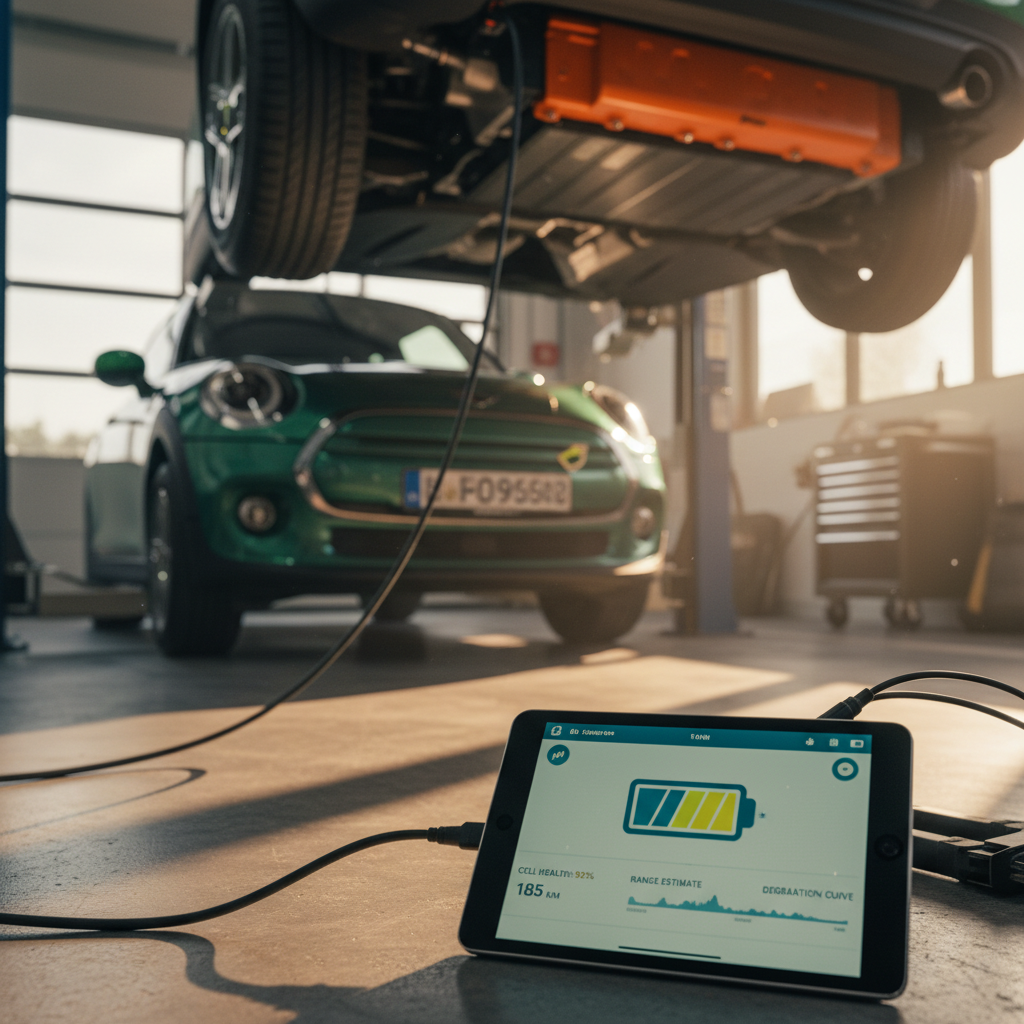
For used cars, insist on <strong>objective battery diagnostics</strong>, not just “it feels fine.” Every EV on Recharged includes a <strong>Recharged Score</strong> battery health report so you can see how much usable capacity remains.
6. Beware performance trim trade‑offs
AMG EQE models trade efficiency for speed. If you regularly drive long distances or have limited fast‑charging access, a calmer EQE 350/320 may be the happier long‑term choice.

How to sanity‑check a seller’s range claims
Step 4: Charging, connectors, and home setup
The EQE charges about as quickly as its peers: up to around 170 kW on a DC fast charger and roughly 9–11 hours for a full charge on a 240‑volt Level 2. The details matter, especially if this is your first EV or you live in an apartment.
Charging checklist for Mercedes EQE buyers
Sort out your charging life before you sign anything.
Home charging plan
- Do you have a garage or dedicated parking space?
- Can an electrician install a 240‑volt outlet or wallbox?
- Will your landlord or HOA allow it?
If the answer is “no,” prioritize fast‑charging access and workplace charging.
Connector & adapter reality
Early EQE models in North America use the CCS connector; newer ones are shipping with a North American Charging Standard (NACS) adapter so you can use Tesla Superchargers as the network opens up.
Confirm which connector and adapters are included with the specific car.
Public charging strategy
- Check fast‑charger availability on your regular routes.
- Look up pricing in your area; some networks are far more expensive than others.
- Download and set up charging‑network apps before your first road trip.
Don’t cheap out on installation
Step 5: Features, options, and software to check
A new EQE can easily climb from the mid‑$60,000s into six‑figure territory with options. On the used market, that complexity becomes your opportunity: you can let the first owner pay for the toys, while you make sure you’re not inheriting their mistakes.
High‑impact EQE features to confirm
Not every option pays for itself, but some radically change the ownership experience.
Seats & comfort
- Heated & ventilated seats are common; massage is a bonus.
- Check for multi‑contour seats and memory for both front seats.
- Try all adjustments; listen for creaks or motor strain.
Hyperscreen & infotainment
Many EQEs offer the vast “Hyperscreen” that stretches across the dash.
- Confirm wireless Android Auto / Apple CarPlay support.
- Check for stuck pixels and laggy performance.
- Test voice commands and navigation routing to chargers.
Driver‑assist & safety tech
- Adaptive cruise and lane‑keep assist.
- Blind‑spot monitoring and 360º cameras.
- Parking assistance and automatic emergency braking.
On a test drive, verify that assist systems track lanes smoothly without ping‑ponging.
Software & updates
Ask the seller when the car last received an over‑the‑air (OTA) update or dealer software refresh.
- Check for any active recall campaigns.
- Verify app connectivity and remote‑control features.
Climate & comfort features
- Four‑zone climate control on higher trims.
- Heat pump or efficiency‑focused climate settings help winter range.
- Test pre‑conditioning (warming or cooling the car while plugged in).
Sound & ambiance
- Upgraded Burmester audio is a huge quality‑of‑life upgrade.
- Check ambient lighting, seat‑comfort profiles, and EQ “soundscapes.”
- Drive with the system muted to listen for wind and road noise.
Skip the vanity, chase the value
Step 6: Price, depreciation, and total cost of ownership
The EQE launched as an expensive experiment in luxury electrification. In today’s market, it’s a used‑EV bargain waiting to happen, if you understand how pricing and depreciation work, and where your money actually goes over five to ten years.
Illustrative Mercedes EQE 350+ sedan values
Approximate numbers based on early market data and typical depreciation; real listings will vary by mileage, condition, and options.
| Model year | Age (2026) | Original MSRP (approx.) | Typical used asking price (example) | Value retained |
|---|---|---|---|---|
| 2023 EQE 350+ | ~3 years | $74,900 | Low‑ to mid‑$50,000s | ≈70% |
| 2024 EQE 350+ | ~2 years | $74,900 | Low‑$60,000s | ≈80–85% |
| 2025 EQE 350+ | ~1 year | $74,900 | High‑$60,000s | ≈90%+ |
| 2026 EQE 320+ (post‑price‑cut) | New | ≈$66,000+ | New | 100% |
Depreciation can be your friend as a second owner, if you don’t overpay on day one.
Why EQE depreciation is a buying opportunity
Cost checklist beyond the sticker
- Financing rate: Your APR can easily cost or save thousands over the loan term.
- Insurance: Luxury EVs can be pricey to insure; get quotes for the exact VIN.
- Charging costs: Home electricity vs public DC fast charging can be a 2x–3x difference per kWh.
- Tires: Heavy, torquey EVs wear tires faster; budget for premium rubber.
How Recharged can help
Recharged simplifies the money side of a used EQE:
- Transparent, fair‑market pricing based on live EV data, not wishful thinking.
- Built‑in financing so you can see payment options right alongside the car.
- Trade‑in and instant offer tools if you’re coming out of a gas car or another EV.
Step 7: Test‑drive and inspection checklist
An EQE is quiet enough to hear its own sins. That’s good for you: creaks, rattles, and weird whines can’t hide behind a V6. Use your test‑drive like a stethoscope, and don’t be shy about walking away from a car that doesn’t feel coherent.
On‑the‑ground EQE inspection checklist
1. Exterior and wheels
Walk the car slowly. Look for panel gaps that don’t match side‑to‑side, paint repairs, curb‑rashed wheels, and mismatched tires. Big 20–21" wheels look great but can ride harshly and reduce range.
2. Interior wear vs mileage
A 15,000‑mile EQE should not have shiny, worn‑down seat bolsters or sticky controls. Check seat adjusters, steering‑wheel buttons, and door handles; luxury cars can hide hard lives behind a quick detail.
3. Screens and software
Cycle through every menu. Pair your phone. Check CarPlay/Android Auto, cameras, sensors, and audio. Any freezes, long lag, or repeated error messages should be resolved before you sign, not after.
4. Low‑speed refinement
In a parking lot and on a rough road, listen for creaks from the dash, sunroof, and seats. Light suspension thumps are normal; repetitive clunks, buzzes, or rattles in a nearly new luxury EV are not.
5. High‑speed stability & noise
On a highway, feel for straight‑line stability and cross‑wind behavior. The EQE should track confidently with minimal steering correction. Wind roar around the mirrors or A‑pillars can indicate misaligned trim or glass.
6. Braking & regen behavior
Try different regeneration settings if available. Braking should be smooth and progressive; if it feels grabby or inconsistent, ask for a technician to inspect pads, rotors, and software updates.
7. Charging demo, if possible
If the seller allows, plug the car into a Level 2 or DC fast charger. Confirm the car initiates charging cleanly, reports realistic speeds, and doesn’t throw error codes.
Red flags, walk away, don’t rationalize
How Recharged simplifies buying a used Mercedes EQE
Luxury EVs reward homework and punish impulse. The EQE is no exception. That’s why Recharged was built around used EVs specifically, instead of treating them like slightly weirder gas cars.
Why shop for a used EQE with Recharged
Built for EVs from the battery up, not bolted onto a gas‑car playbook.
Recharged Score battery health
Every vehicle on Recharged includes a Recharged Score Report with verified battery diagnostics, so you’re not guessing about the most expensive component in the car.
Fully digital, human‑backed
Shop, compare, finance, and sign online with EV‑specialist support when you want it, not a commission‑driven hard sell.
Nationwide delivery & trade‑in
Recharged can arrange nationwide delivery, value your trade‑in, or give you an instant offer, plus consignment if you’re selling an EV you still love.
Ready to find your next EV?
Browse VehiclesIf the idea of a new EQE at full sticker makes your stomach knot, that’s your instincts doing their job. Let someone else take the early‑adopter hit. With a clear checklist, verified battery health, and transparent pricing, a used Mercedes EQE can deliver all the serenity, tech, and presence you wanted, without the financial vertigo.