If you’re shopping for a sleek, premium electric sedan, a **used 2022 BMW i4** is probably on the same short list as a Tesla Model 3 or Polestar 2. The i4 takes classic BMW sport-sedan DNA and swaps the straight-six for electrons, keeping the low-slung shape, rear‑drive balance, and serious performance. This review walks through the 2022 i4 eDrive40 and M50, range, charging, comfort, reliability, and used prices, so you can decide if it deserves a spot in your driveway.
Two flavors of 2022 BMW i4
2022 BMW i4 overview
The 2022 BMW i4 is a five-door electric liftback based on the 4 Series Gran Coupe. That shared platform brings familiar BMW proportions and driving manners, but it also means some compromises you won’t find in EVs built on clean‑sheet electric platforms. Still, for many drivers, the trade‑off is worth it: the i4 feels more like a traditional sport sedan than most EVs, with quick steering, a planted chassis, and a cabin that’s more BMW than sci‑fi spaceship.
- Body style: 5-door liftback (sedan silhouette with a hatch)
- Seating: 5, though rear center seat is tight for adults
- Drivetrains: eDrive40 (RWD), M50 (AWD)
- Battery: ~80.7 kWh usable in both trims
- EPA range: up to 301 miles (eDrive40), 245–270 miles (M50 depending on wheels)
- DC fast charging peak: about 195–200 kW; 10–80% in roughly 31 minutes under ideal conditions
- Onboard AC charging: 11 kW, full charge in under 8 hours on a 48‑amp Level 2 charger
Key specs: battery, range and charging
Core specs: 2022 BMW i4 eDrive40 vs M50
2022 BMW i4 eDrive40 vs M50: key numbers
Headline specs for the two 2022 i4 trims most used‑EV shoppers will cross‑shop.
| Spec | 2022 i4 eDrive40 | 2022 i4 M50 |
|---|---|---|
| Drivetrain | RWD, single rear motor | AWD, dual motors |
| Power | 335 hp, 317 lb‑ft | 536 hp, 586 lb‑ft |
| 0–60 mph | ~5.5 seconds | ~3.7 seconds |
| Usable battery | ~80.7 kWh | ~80.7 kWh |
| EPA range (18" wheels) | 301 miles | ~270 miles |
| EPA range (larger wheels) | 282 miles (19") | as low as 245–255 miles |
| Max DC fast charge | ≈195–200 kW | ≈195–200 kW |
| Onboard AC charger | 11 kW Level 2 | 11 kW Level 2 |
EPA ranges are U.S. ratings; real‑world results vary with wheels, weather, and driving style.
Wheel choice matters
Real‑world testing has shown that the eDrive40 can match or slightly exceed its EPA range when driven sensibly, even on 19‑inch wheels. The M50’s extra motor and power shave off range, especially at highway speeds or in colder weather. Both trims benefit from BMW’s robust thermal management: the car can precondition the battery before fast charging to hit higher charge rates more consistently, provided you set a DC fast charger as your destination in the navigation.
Driving impressions: eDrive40 vs M50
i4 eDrive40: Classic BMW, now electric
If you grew up loving BMW 3 and 4 Series sedans, the eDrive40 is the one that feels most familiar. With a single motor on the rear axle, it’s quick enough to be fun, 5.5 seconds to 60 mph is warm‑hatch territory, but its real talent is balance. Steering is precise, body motions are well‑controlled, and the low battery pack keeps the car planted through fast sweepers.
It’s also the more relaxed car. Power delivery is smooth, and the lighter front end compared to the M50 makes turn‑in feel natural. If you do a lot of commuting or long highway drives, the eDrive40 has the calmer personality and better efficiency.
i4 M50: EV muscle car in a tailored suit
The M50 is what happens when BMW’s M division gets ahold of an EV. Dual motors, all‑wheel drive, and over 500 horsepower mean brutal straight‑line thrust, 0–60 in the mid‑threes, provided you have room to use it. Instant torque makes passing effortless, and launch control can make passengers question their lunch decisions.
The trade‑offs come in the form of firmer ride quality, especially on big wheels, and shorter range. If you’re the kind of driver who seeks back roads just to see how a car behaves at the limit, the M50 will keep you smiling. Just know you’re paying in both dollars and miles.
Ride comfort note
“Think of the i4 M50 as an electric M3 you can live with every day, sharp, fast, and refined, but not as punishing as a track toy.”
Interior, tech, and comfort
Open the door and the 2022 BMW i4 feels more like a modern 4 Series than a futuristic EV lab experiment. That’s either a plus or a minus depending on how much you crave novelty. Material quality is high, switchgear feels substantial, and the **curved dual‑screen setup** blends BMW’s latest iDrive infotainment with a clean digital instrument cluster.
What the 2022 i4 cabin gets right (and wrong)
Premium feel and strong tech, with a few packaging compromises from its gasoline roots.
Driving position
You sit low, with a long hood ahead, classic BMW sport‑sedan posture. Plenty of adjustment in the seat and steering wheel makes it easy to get comfortable, even for taller drivers.
Infotainment & UI
The big curved display looks fantastic and supports Apple CarPlay and Android Auto. Menus are deep but logical once you learn BMW’s way of organizing settings.
Seat comfort
Front seats are supportive for long trips, with optional adjustable bolsters and lumbar. Rear seats are fine for two adults on shorter trips; the center tunnel pinches legroom for a third passenger.
Because the i4 rides on a platform designed for gasoline engines, you’ll notice a **tall center tunnel** running through the cabin. In a pure EV designed from scratch, that space often becomes flat floor and extra legroom; here, it means the center rear seat is best reserved for kids or shorter hops. There’s also no front trunk, despite the long hood, open it and you’ll find plenty of space that looks like it should be storage, but isn’t.
No frunk, cramped middle rear seat
Practicality, charging experience, and ownership costs
Despite its sedan silhouette, the 2022 BMW i4 hides a practical liftback. The hatch opens wide, with a low load floor and more usable cargo space than the spec sheet suggests. That makes it great for road trips, Costco runs, or a couple of suitcases and a stroller. Fold the rear seats and you get wagon‑like utility, even if the roofline is lower than a crossover.
Charging and day‑to‑day ownership: what to expect
1. Home charging is where it shines
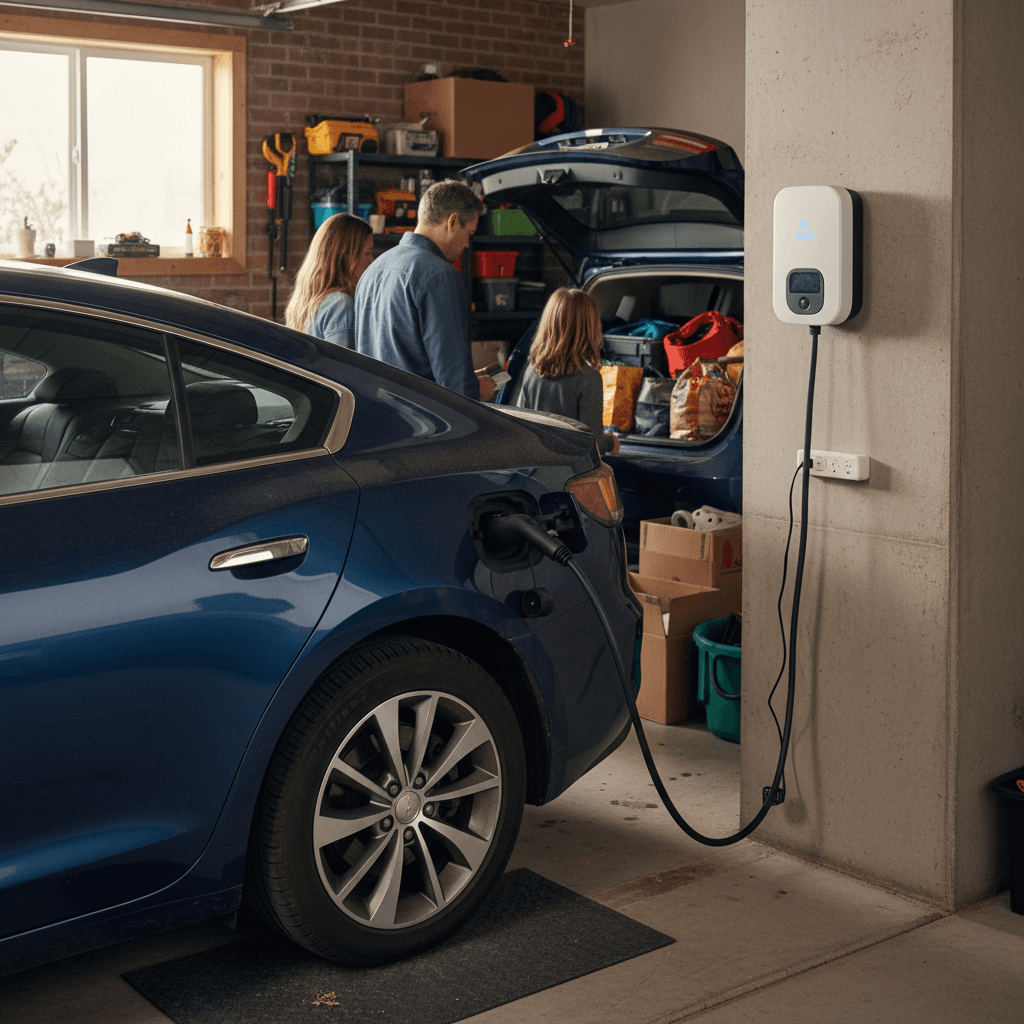
With an 11 kW onboard charger, the i4 can go from empty to full in under 8 hours on a 48‑amp Level 2 charger, perfect for overnight charging in a garage or driveway.
2. Public fast charging is competitive
On a 150–200 kW DC fast charger, you can expect roughly 10–80% in about 30–35 minutes when conditions are right. Plan on a coffee stop, not a full meal.
3. Plan around range on the M50
The high‑performance M50 uses more energy, especially at highway speeds. If your road trips are long and frequent, the eDrive40’s extra range is easier to live with.
4. Software and route planning
BMW’s built‑in route planner can include charging stops, but it isn’t as slick as Tesla’s. Using CarPlay or Android Auto with apps like A Better Routeplanner can make life easier.
5. Insurance and maintenance
Insurance tends to be similar to other premium sport sedans. Routine maintenance is light, no oil changes, but budget for tires, especially on M50s with big wheels and sticky rubber.
6. Real‑world efficiency
In mixed driving, owners commonly see consumption in the high 20s to low 30s kWh/100 miles. Gentle driving and smaller wheels help hit or exceed EPA ratings.
Where Recharged fits in
Ready to find your next EV?
Browse VehiclesReliability, recalls, and battery health
The 2022 BMW i4 is still a relatively young model, but early data has been encouraging. Independent reliability surveys have rated the 2022 i4 as **better than average for its model year**, though like many early EVs it has seen several software‑related recalls rather than major mechanical failures.
- Multiple recalls have focused on software controlling the high‑voltage system, where a fault could cause a loss of drive power. These are typically fixed with over‑the‑air (OTA) updates or quick dealer visits.
- No widespread pattern of traction battery degradation has emerged for 2022 cars used normally; most packs appear to be holding capacity well in the first few years.
- Because the i4 uses BMW’s fifth‑generation eDrive hardware, many components are shared with other i‑branded models, which helps with parts availability and long‑term support.
Recall check is non‑negotiable
Battery health is the big question mark for any used EV. The good news: BMW’s pack management is conservative, with a sizeable buffer that you never use, helping limit degradation. The better news is that tools now exist to measure pack health directly. On Recharged, the **Recharged Score** includes a battery‑health diagnostic so you can see how much usable capacity remains, not just what the dash display claims.
Used 2022 BMW i4 prices and value
By early 2026, the first wave of 2022 BMW i4s has already taken its steepest depreciation hit. That’s exactly when shoppers looking for **maximum value per dollar** should start paying attention. Original MSRPs were in the mid‑$50,000s for the eDrive40 and mid‑$60,000s for the M50, before options.