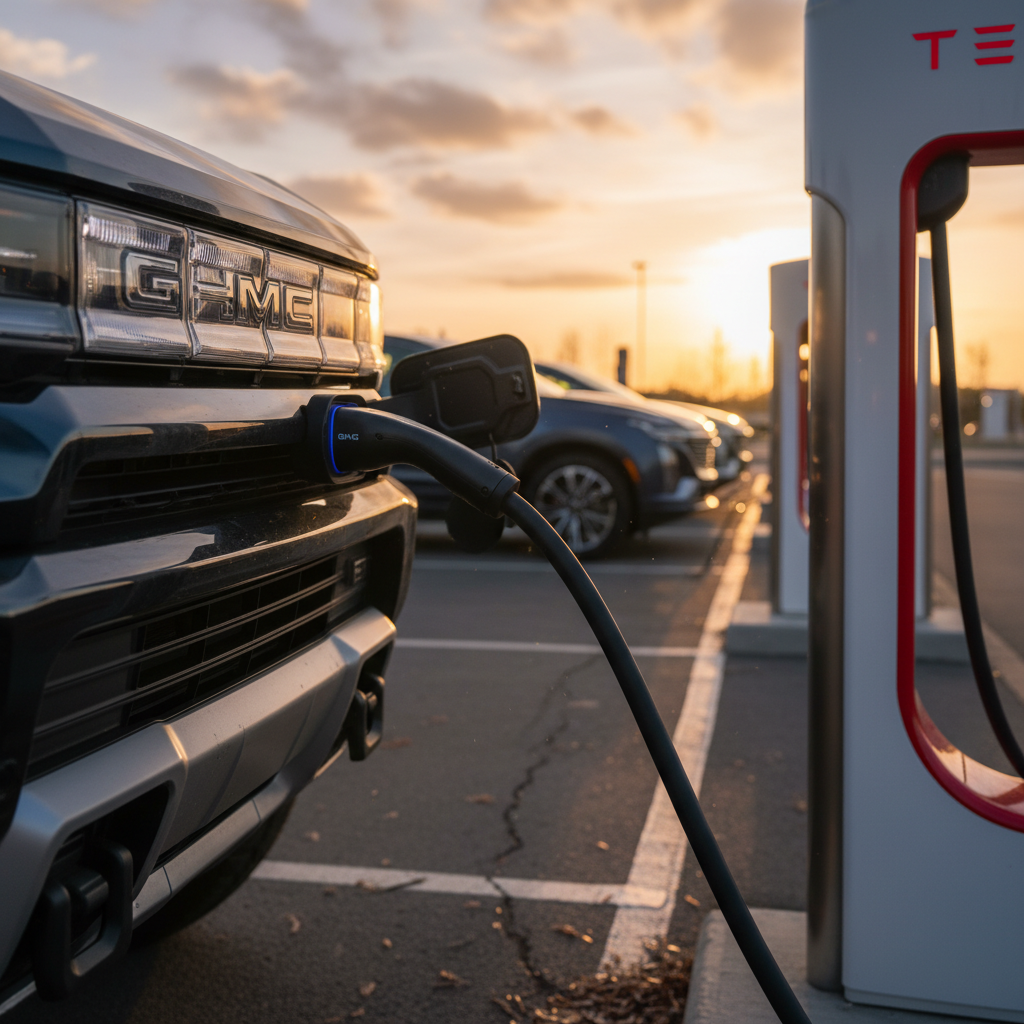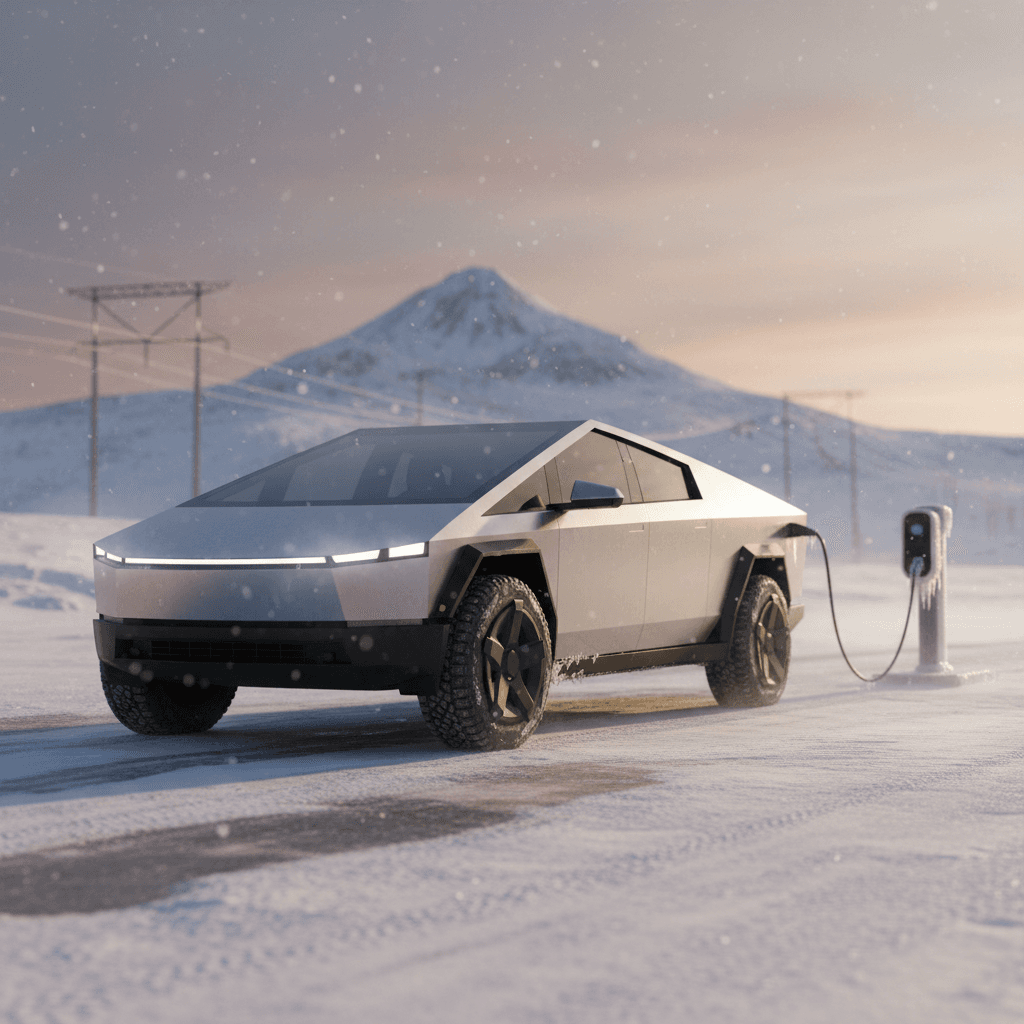
If you live where winter actually feels like winter, the question isn’t whether your Tesla Cybertruck will lose range in the cold, it’s how much. Early tests and owner reports show the Tesla Cybertruck winter range loss percentage can be modest in mild cold and much steeper in deep freezes, especially at highway speeds. Understanding the numbers, and what’s behind them, will save you stress at 10°F on a windy interstate shoulder.
Quick answer: Cybertruck winter range loss in one glance
How much range the Cybertruck really loses in winter
Let’s start with the headline number everyone searches for: what percentage of range you lose in winter. There isn’t a single exact figure that fits every Cybertruck driver, but we can bracket realistic expectations from what we know about EVs in general and early Cybertruck testing in particular.
Typical winter range loss expectations
The Cybertruck is a large, heavy, high‑profile truck with a big battery, great for towing and capacity, but that size and frontal area work against you in winter, especially at highway speeds. On the flip side, Tesla’s thermal management and software are among the best in the business, which helps keep its winter range loss roughly in line with other big EV trucks when driven similarly.
Don’t confuse EPA range with winter reality
Why EVs, and the Cybertruck, lose range in the cold
To make sense of any winter range percentage, you first need to understand why your Cybertruck’s projected miles suddenly shrink when the thermometer drops. It’s not just the battery; it’s what you’re asking the truck to do in those conditions.
Two main reasons winter kills range
Battery chemistry plus how you use the cabin
1. Cold battery chemistry
At low temperatures, the lithium‑ion cells inside your Cybertruck can’t move ions as efficiently. That means:
- Higher internal resistance, so more energy is lost as heat
- Temporarily reduced usable capacity (the famous blue snowflake icon)
- Slower fast‑charging until the pack warms up
The good news: this is mostly temporary, not permanent battery damage.
2. Cabin & battery heating load
In a gas truck, cabin heat is basically free waste heat from the engine. In an EV like the Cybertruck, all heat comes from the battery:
- Cabin heater and defrosters can draw several kilowatts
- Battery preconditioning for Supercharging uses more energy
- Short trips are hardest, because the truck keeps reheating from cold
That extra energy consumption shows up as lower miles per percent of battery.
What Tesla’s manual says about cold weather
Real-world Cybertruck winter range data so far
Because the Cybertruck is still relatively new, we don’t yet have decade‑long datasets. What we do have are early independent tests and owner experiences that line up fairly well with what we see across other EVs in winter.
Early Cybertruck winter range examples
These numbers are directional, not official ratings, but they show how quickly range can change with conditions.
| Scenario | Conditions | Observed vs Rated Range | Approx. Loss % |
|---|---|---|---|
| Highway winter test around 70 mph | Sub‑freezing Texas winter, steady highway speeds | ~254 miles vs ~320‑mile expectation | ≈20–25% loss |
| Mixed driving in light winter | Temps in the 20s°F, city + suburban use after preconditioning | Many drivers report "close to" predicted miles | ≈10–20% loss |
| Short trips, deep cold, no preconditioning | Single‑digit temps, frequent stops, heavy cabin heat | Range drops much faster than predicted | 30–40%+ loss |
Use these examples as planning guidance, not guarantees, your driving style and weather will move the needle.
Use your own truck as a rolling lab
6 factors that change your Cybertruck winter range loss
Ask two Cybertruck owners about winter range and you’ll hear two different percentages. That’s not misinformation; it’s just different use cases. Here are the biggest levers that swing your Tesla Cybertruck winter range loss percentage up or down.
Key drivers of Cybertruck winter range loss
1. Temperature band, not just "winter"
There’s a big difference between 32°F and 0°F. Above freezing, losses can be modest. Drop into the teens and single digits, and the truck spends more energy just keeping the pack and cabin warm.
2. Highway speed and headwinds
At 70–80 mph, aerodynamic drag and crosswinds magnify winter losses. A boxy, upright truck profile like the Cybertruck’s is more sensitive than a low sedan, so high‑speed winter driving can easily push you into the 30–40% loss range.
3. Trip length and pattern
Longer drives after one warm‑up are easier on range than multiple short, cold starts. If you make several 5–10 minute errands with hours between them, expect much worse efficiency than a single 90‑minute drive at the same temperature.
4. Cabin comfort settings
Blasting climate control to 78°F with constant defrost can peel away miles. Running the heated seats and wheel and setting the cabin a bit cooler is one of the simplest ways to claw back winter range.
5. Tires, wheels, and snow setup
Aggressive winter tires, chains, and deep snow all hurt efficiency. They’re the right tradeoff for safety, but understand that a dedicated winter setup can add a few more percentage points of range loss.
6. Towing and payload
Hook a trailer to any EV truck in winter and you can roughly halve your practical range. The Cybertruck is no exception, towing in cold weather can easily turn a 25% loss into 40–50% or more depending on terrain and speed.
How to cut Cybertruck winter range loss (step by step)
You can’t negotiate with physics, but you can work with it. Here’s a straightforward playbook to keep your Cybertruck’s winter range loss closer to 15–25% instead of pushing into the 30–40%+ zone.
Practical steps to protect your winter range
1. Always start trips with a warm, plugged‑in truck
Whenever possible, precondition while plugged in. Use the Tesla app to schedule departure so the Cybertruck warms the cabin and battery using grid power instead of the pack. That preserves range and improves early‑trip efficiency.
2. Use seat and wheel heaters first
For most drivers, setting the cabin to 68–70°F and relying on heated seats and steering wheel is more efficient than blasting hot air. You stay comfortable while cutting the energy load on the HVAC system.
3. Dial back your winter cruise speed
Dropping from 75–80 mph to 65–70 mph can make a surprising difference on a bluff‑front truck in cold air. Slower isn’t exciting, but arrive‑with‑battery beats sit‑on‑the‑shoulder‑and‑freeze every time.
4. Group errands into longer drives
If you can combine several short errands into one continuous trip, the warmed‑up battery and cabin pay off in better mi/kWh. Many owners notice their worst numbers on repetitive cold‑start grocery and school runs.
5. Keep the truck garaged when you can
Parking in a closed garage, even an unheated one, reduces how cold‑soaked the battery gets. That, in turn, shortens preheat time and reduces how long you see the blue snowflake and reduced regen.
6. Plan extra margin for towing
If you’re towing a trailer in winter, assume a 40–50% hit until you’ve built your own dataset. Plan more frequent charging stops and conservative arrival buffers, especially in sparsely populated areas.
Winter charging tips: Supercharging and home charging
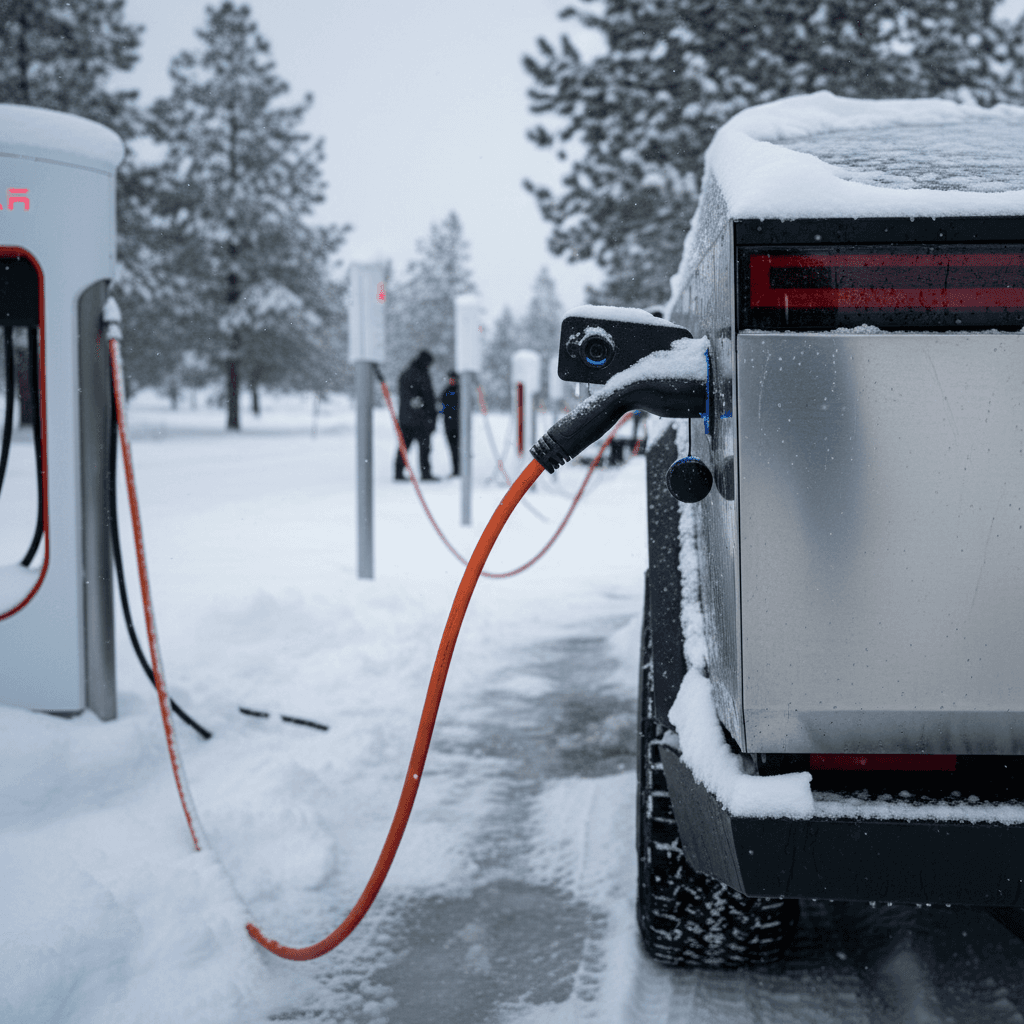
Range percentage is only half the story; how you charge the Cybertruck in winter is just as important. A cold battery won’t accept fast charge rates, and repeated shallow charging without warming the pack can make the truck feel less capable than it really is.
Supercharging in the cold
- Use Trip Planner: Enter the Supercharger in the navigation. Cybertruck will pre‑heat the high‑voltage battery on the way, so you get higher charge rates sooner.
- Arrive with low‑ish SOC: For efficiency, aim to arrive around 10–20% when possible. The lower the state of charge, the faster the initial charge rate (once the pack is warm).
- Expect slower speeds if you skip preconditioning: Pulling straight into a Supercharger from a short, cold drive will almost always result in sluggish charging until the pack warms up.
Home charging in winter
- Leave it plugged in: Tesla recommends leaving Cybertruck plugged in when parked in cold weather so it can maintain the battery at a healthier temperature without depleting range.
- Schedule charging and departure: Set charging to finish right before you leave, which leaves the pack warmer and improves early efficiency.
- Consider Level 2 at home: A 240V Level 2 charger provides faster, more flexible overnight charging than a standard outlet, especially helpful after energy‑intensive winter days.
Thinking about a used Cybertruck or other EV?
Range planning for cold-weather road trips
Long winter drives are where misunderstandings about Tesla Cybertruck winter range loss percentage can turn into white‑knuckle experiences. The truck’s navigation and trip energy graph are powerful tools, as long as you feed them realistic expectations.
How much winter buffer to plan
Recommended buffers assume a healthy battery and no towing. Increase margins for trailers, mountains, or truly extreme cold.
| Scenario | Outside Temp | Driving Profile | Suggested Arrival Buffer |
|---|---|---|---|
| Mild winter highway leg | 28–32°F | 65–70 mph, light wind | 15–20% battery |
| Cold, windy interstate | 10–25°F | 70–75 mph, headwind or crosswind | 25–30% battery |
| Deep cold, variable speeds | 0–10°F | Mixed conditions, some elevation | 30–40%+ battery |
| Towing in winter | Any sub‑freezing | Highway with trailer | 40–50%+ battery and shorter hops |
Remember: these are minimums. There’s no downside to arriving with extra range, especially at night or in storms.
Don’t chase zero in winter
Buying a used Cybertruck? What winter range tells you
If you’re shopping for a used Tesla Cybertruck, winter range is both an opportunity and a trap. A single bad cold‑weather trip doesn’t mean the battery is shot, but consistent, unusually high winter losses might be a sign to dig deeper.
How to evaluate a used Cybertruck’s winter behavior
Use cold weather to your advantage as a buyer, not just a risk as an owner.
Look for pattern, not one story
If the seller complains about “terrible winter range,” ask how fast, how cold, and how far they were driving. A single 50% hit towing at 75 mph in 5°F isn’t alarming; it’s physics.
Ask about charging habits
Well‑maintained EVs are usually charged between about 20–80% for daily use, with occasional 100% for trips. Years of constant 100% fast‑charging can accelerate degradation, which will show up as reduced year‑round range, not just in winter.
Demand real battery data, not guesses
Marketplace listings that include objective battery health data give you a better picture than “feels like less range.” On Recharged, every vehicle includes a Recharged Score battery health report so you can separate normal winter loss from underlying battery issues.
Why battery health matters more than one winter number
FAQ: Tesla Cybertruck winter range loss percentage
Frequently asked questions about Cybertruck winter range
Key takeaways for Cybertruck owners and shoppers
If you remember nothing else from this guide, remember this: winter range loss is normal, predictable, and manageable, and the Tesla Cybertruck is no exception. In moderate cold you’ll often see 15–25% less range than the sticker suggests; in deeper cold at highway speeds, especially with towing or heavy loads, plan for 30–40%+ and you’ll almost never be surprised.
Your job as an owner or shopper is to treat those percentages as planning tools, not reasons to panic. Precondition while plugged in, lean on seat and wheel heaters, drive a bit slower when it’s truly nasty out, and build generous buffers into winter road trips. If you’re eyeing a used Cybertruck or any used EV, focus on verified battery health data first, then factor in seasonal behavior as normal operating reality, not a flaw.
At Recharged, every used EV we list comes with a Recharged Score battery health report, transparent pricing, and EV‑savvy support, so you can shop for a truck that fits both your winter range expectations and your budget. Cold weather will always nibble at your range, but with the right information and habits, it doesn’t have to take a bite out of your confidence.