If you’re considering a Mercedes EQB as a family hauler or road‑trip companion, you’re probably wondering how much it can tow and how far it will go on a charge while pulling a load. The good news is that the Mercedes EQB towing capacity and range are well suited to light-duty trailers, bikes, and small campers, if you understand the limitations and plan around them.
Quick EQB towing & range snapshot
Overview: Mercedes EQB towing capacity and range
The Mercedes EQB is a compact, three-row optional electric SUV based on the gas GLB. In the U.S. it’s been offered mainly in three trims: the EQB 250+ (single-motor FWD) and the dual‑motor EQB 300 4Matic and EQB 350 4Matic. All of them share a battery around 70.5 kWh usable and support DC fast charging up to about 100 kW, with 10–80% in roughly 30–32 minutes under ideal conditions.
- Compact three-row SUV, available as a 5- or 7-seater (optional third row)
- Single battery size around 70.5 kWh usable across trims
- EPA range from roughly 205 to 251 miles depending on trim and wheel size
- Factory-rated towing capability when properly equipped (not all EQBs have it)
Always verify your specific EQB
Mercedes EQB towing capacity by trim
Official U.S. towing ratings for the EQB are not as heavily marketed as on some rival SUVs, but owner manuals and spec databases indicate a modest, light‑duty tow rating when you have the proper equipment. For most late‑model EQB 250+ and EQB 300/350 4Matic vehicles with the factory tow package, you’ll typically see a maximum braked trailer capacity in the 1,600–3,000‑pound range, with tongue weight limits around 10% of that figure.
Approximate Mercedes EQB towing capacity (properly equipped)
Summary of typical tow ratings reported for late‑model U.S. EQBs. Always confirm numbers for the specific vehicle in its owner’s manual and data card.
| EQB trim | Drive | Typical max braked trailer rating* | Typical tongue weight limit* | Best use cases |
|---|---|---|---|---|
| EQB 250+ | FWD | Up to ~3,000 lb | ~300 lb | Small pop‑up camper, teardrop trailer, single PWC/ATV, small utility trailer |
| EQB 300 4Matic | AWD | Up to ~3,000 lb | ~300 lb | Light camper trailers, small boats, snowmobile/ATV trailer, cargo trailer |
| EQB 350 4Matic | AWD | Up to ~3,000 lb | ~300 lb | Similar to EQB 300, with more performance but same basic tow envelope |
These figures are directional, intended to help you right‑size a trailer for an EQB. They are not a substitute for the official rating for your VIN.
Do not exceed the rated limit
If you find conflicting information online, remember that European WLTP‑market EQBs sometimes show slightly different tow listings than U.S. models. When in doubt, use the lower number and stay well within the gross vehicle weight rating (GVWR) printed on the driver’s door jamb.
EPA-rated Mercedes EQB range by trim
Understanding baseline range is the first step to predicting how far your EQB can travel when you’re towing. For recent U.S. model years, all EQBs use a battery around 70.5 kWh but offer different power outputs and efficiency depending on trim.
Mercedes EQB EPA range snapshot (recent U.S. models)
Those numbers come from recent EPA listings and automaker data for 2024–2025 EQBs, and they line up with what you’ll see in reviews from outlets like InsideEVs and Car and Driver. The takeaway is simple: the EQB 250+ goes farthest, while the dual‑motor versions trade some range for all‑weather traction and performance.
Recent Mercedes EQB EPA range and battery specs (U.S.)
Representative figures for late‑model EQBs. Individual vehicles may vary based on wheel size and options.
| Trim | Drive | Usable battery | EPA combined range | Onboard AC charger | DC fast charge peak |
|---|---|---|---|---|---|
| EQB 250+ | Single motor FWD | ~70.5 kWh | 251 miles | 9.6 kW | Up to 100 kW (10–80% ≈ 31–32 min) |
| EQB 300 4Matic | Dual motor AWD | ~70.5 kWh | 205 miles | 9.6 kW | Up to 100 kW |
| EQB 350 4Matic | Dual motor AWD | ~70.5 kWh | 207 miles | 9.6 kW | Up to 100 kW |
EPA range figures are for unladen vehicles in standardized tests. Real‑world range will be lower, especially when towing or in cold weather.
What this means for towing
How towing impacts Mercedes EQB range in the real world
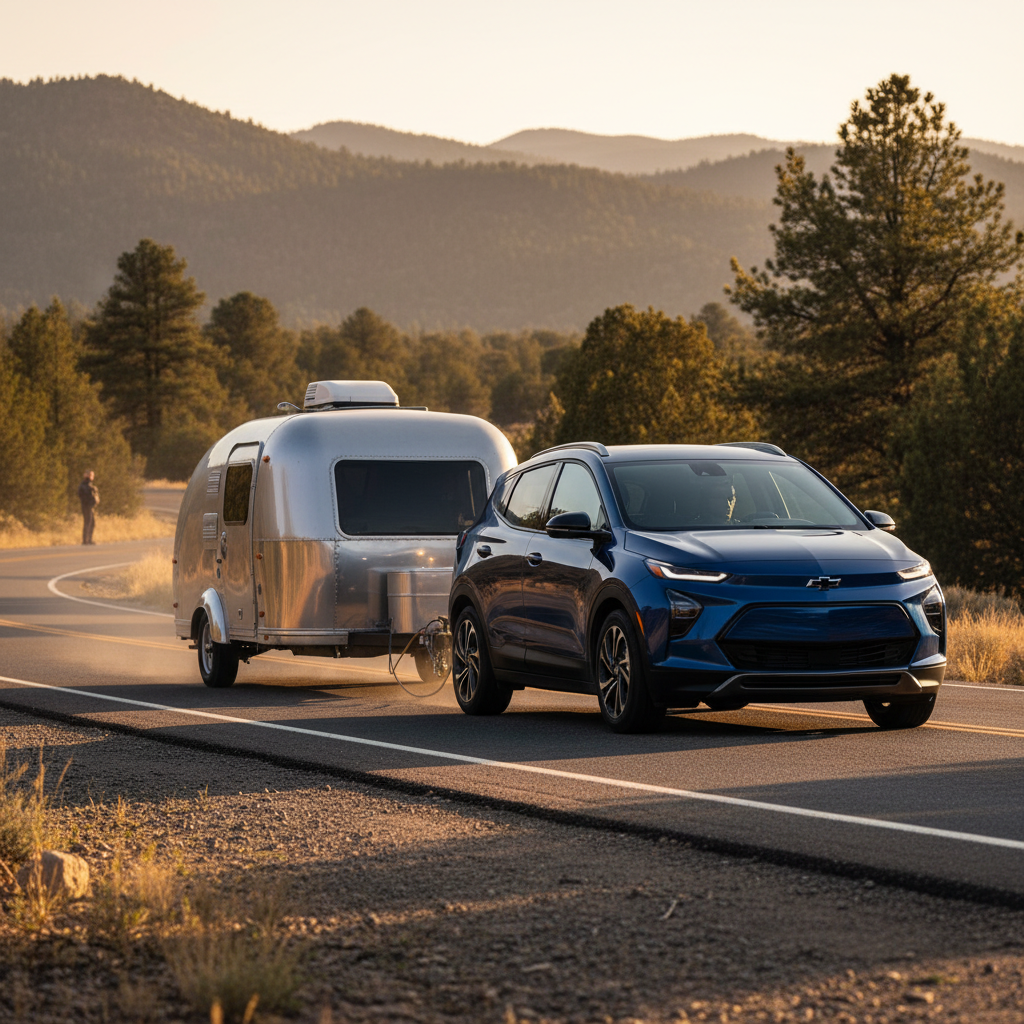
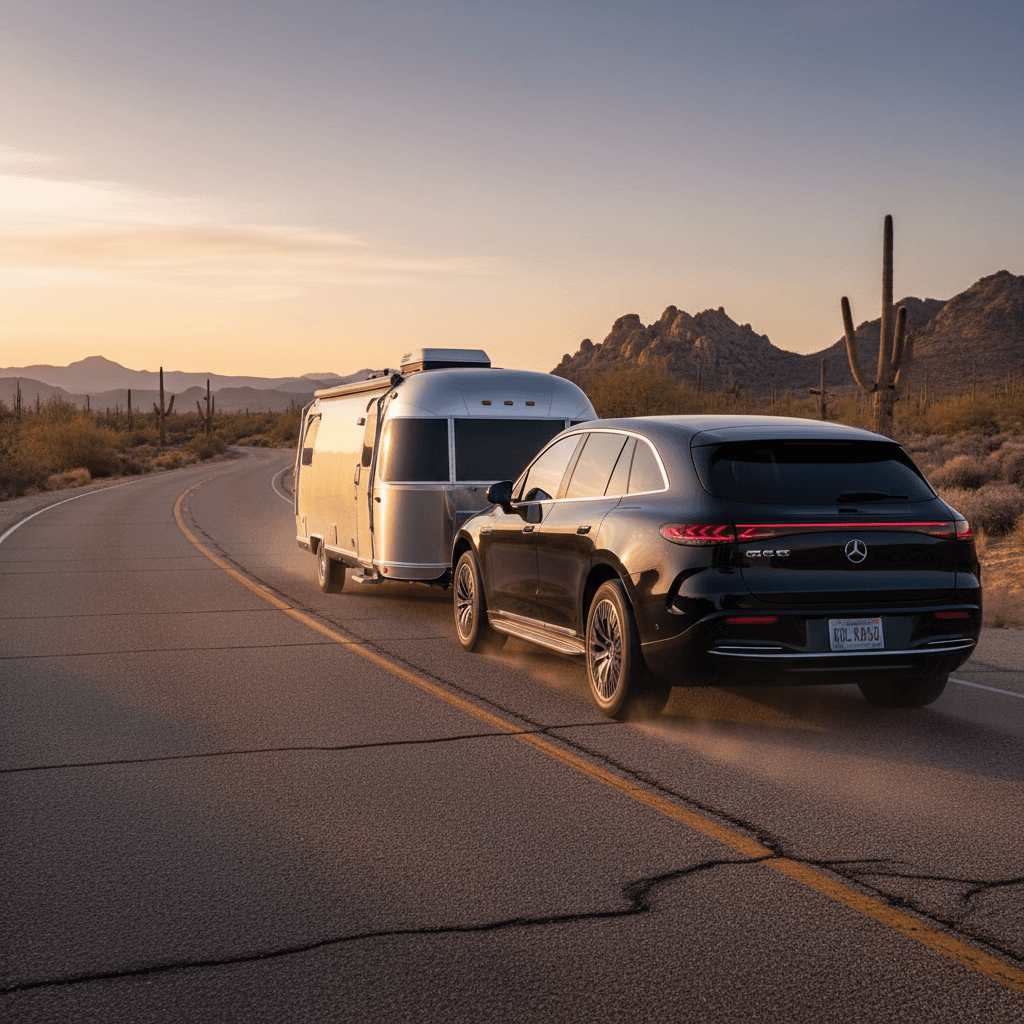
No matter which EV you drive, towing is going to hit range hard. You’re pushing more weight and more frontal area through the air, and EVs are very sensitive to aerodynamic drag. With the EQB, owners commonly report range reductions of 40–60% when towing a small camping trailer at highway speeds.
Light, low-profile trailer
- Examples: small utility trailer, single jet ski, lightweight teardrop
- Expected hit: roughly 35–45% less range at 55–65 mph
- EQB 250+ example: 251 mi EPA → plan around 130–150 real-world towing miles per charge
Taller or heavier camper
- Examples: boxy small travel trailer, cargo trailer loaded up
- Expected hit: often 50–60% or more at highway speeds
- EQB 300/350 example: ~205–207 mi EPA → plan around 90–115 towing miles per charge
Speed matters more than weight
- Headwinds and cold weather can further reduce towing range, sometimes dramatically.
- Climbing long grades (mountain passes) will spike energy use, though you regain some on the way down via regen braking.
- Roof boxes and bike racks add drag much like a small trailer, even if you aren’t technically towing.
- Driving at 55–60 mph instead of 70–75 mph can preserve a surprising amount of range.
Charging an EQB while towing
Charging logistics are just as important as tow ratings. The EQB uses the CCS port on the left rear and can accept up to about 100 kW on a DC fast charger, doing 10–80% in roughly 30–32 minutes when conditions are ideal. That’s competitive for a compact luxury EV, and it helps offset the shorter towing range.
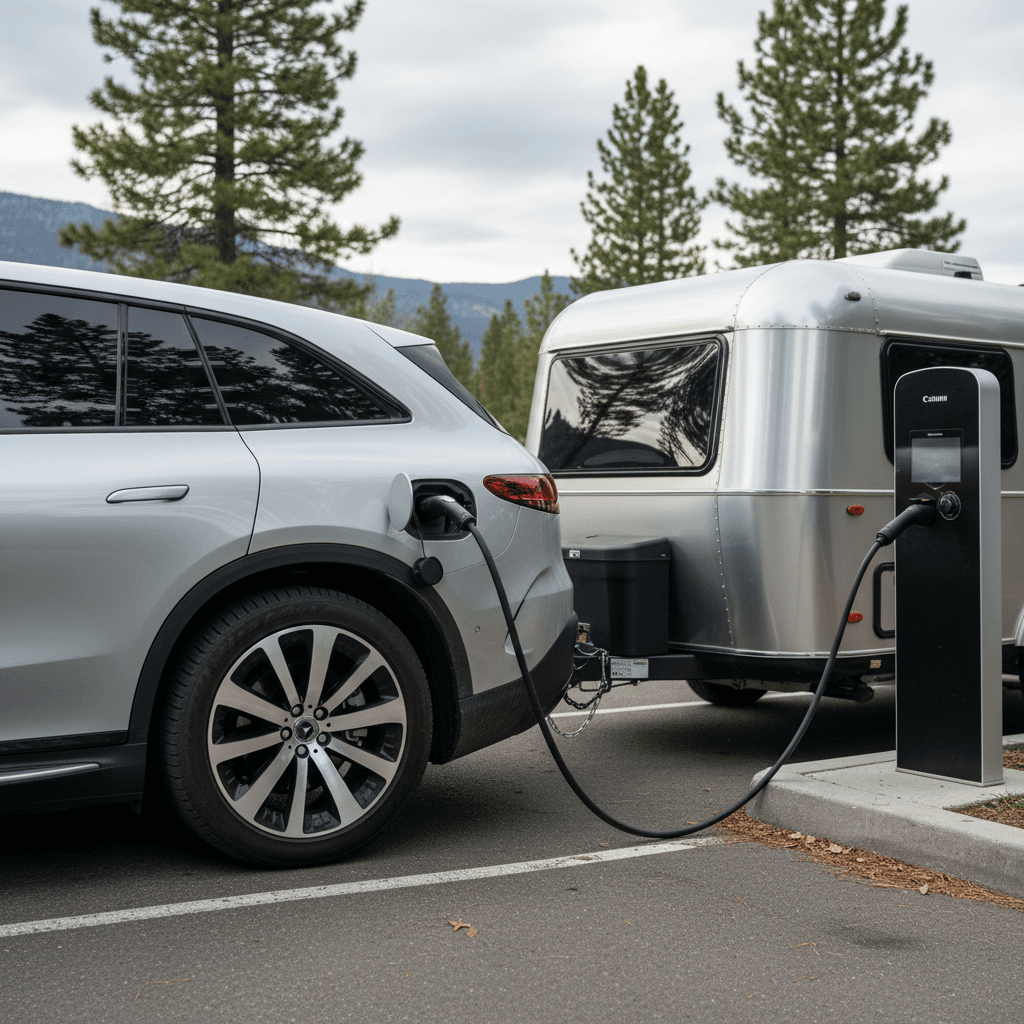
Practical EQB charging tips when you’re towing
Small tweaks in planning can make road trips much smoother.
Pick trailer‑friendly stations
Look for pull‑through DC fast chargers or end stalls where you can stay hitched. Many stations are designed for solo cars, so use satellite view in mapping apps to scout layouts ahead of time.
Charge more often, not longer
Because towing cuts range, it’s usually smarter to run between 20% and 70–80% rather than deep cycling the pack. That keeps sessions shorter and makes better use of peak charge speeds.
Route plan with buffer
When towing, plan each leg with at least 20–30% battery in reserve. Apps that can model energy use with trailers are ideal, but you can also watch your real‑time consumption and adjust speed accordingly.
Cold weather + towing = big range hit
Is the Mercedes EQB a good tow vehicle? Use cases that work
The EQB isn’t a heavy‑duty tow rig, nor is it trying to be. Think of it as a compact family EV that happens to be able to tow small loads when asked. If your expectations match that mission, it can be a very satisfying solution.
Where the EQB shines as a tow vehicle
Stick to light, occasional towing and it does the job well.
Weekend toys & gear
- Small utility trailer for Home Depot runs
- Single jet ski, dirt bikes, or ATV
- Bike rack plus light cargo trailer
For these uses, the EQB’s modest tow rating and compact size are actually a strength.
Compact campers & teardrops
- Lightweight teardrop or pop‑up camper under ~2,000–2,500 lb loaded
- Short regional trips with frequent fast charging
Keep speeds reasonable and plan conservative legs, and an EQB can make for a pleasant electric camping setup.
When the EQB isn’t the right tow rig
Shopping for a used Mercedes EQB for towing
On the used market, the EQB is appealing: premium interior, optional third row, and decent range at approachable prices compared with new luxury EVs. If towing is on your wish list, though, you’ll want to be even more selective when you shop.
What to check before buying a used EQB for towing
1. Confirm the factory tow package
Look for the integrated hitch receiver and 7‑pin wiring, then verify the trailer rating in the <strong>owner’s manual</strong> and on the build sheet or window sticker. Aftermarket hitches don’t automatically give you a legal tow rating.
2. Review service and accident history
Towing within the limits is fine, but repeated overloading or rear‑end collisions can stress the structure and suspension. Run a history report and have a trusted shop inspect the rear subframe and hitch area.
3. Check battery health and range
Ask for current range at 100% charge and compare it with original EPA figures. A used‑EV specialist can run diagnostics; Recharged includes a <strong>Recharged Score battery health report</strong> with every vehicle so you know what you’re getting.
4. Inspect tires and brakes
Towing adds extra load. Uneven tire wear, budget replacement tires, or worn brake components are all red flags. Make sure the tires are load‑rated for towing and have plenty of tread.
5. Test drive with highway speeds
Take the EQB up to typical towing speeds (65–70 mph) and watch energy use. This gives you a realistic baseline for what range will look like when you add a trailer.
How Recharged can help
Ready to find your next EV?
Browse VehiclesTips to maximize EQB range when towing
You can’t change physics, but you can stack the deck in your favor. A few smart habits will make your EQB feel much more capable as a tow vehicle, especially on longer trips.
- Choose the smallest, most aerodynamic trailer that does the job. Rounded fronts and lower rooflines help.
- Travel a bit slower than you would in a gas SUV, 55–60 mph instead of 70–75 mph.
- Use Eco or Comfort drive modes to soften throttle response and reduce peak power draw.
- Keep tires on both the EQB and trailer properly inflated and within load ratings.
- Precondition the battery and cabin while plugged in before you depart, especially in cold weather.
- Plan conservative legs, aiming to arrive with 20–30% state of charge rather than running to near‑zero.
Think in kWh, not just miles
FAQ: Mercedes EQB towing capacity and range
Frequently asked questions about EQB towing & range
Bottom line: Who the EQB suits as a tow rig
If you picture the Mercedes EQB as a compact luxury SUV that happens to tow, not as a dedicated tow vehicle, you’ll be right on target. Within its roughly 3,000‑pound capacity and 100‑mile‑plus practical towing range, it’s a refined, comfortable way to haul small trailers and weekend toys, especially for families who value its premium cabin and optional third row.
If your plans stay in that light‑duty lane and you’re comfortable planning more frequent fast‑charge stops, the EQB can be a smart choice, particularly on the used EV market where pricing is more approachable. And if you’d like help finding an EQB with the right tow rating and healthy battery, Recharged’s combination of Recharged Score diagnostics, transparent pricing, and EV‑savvy support can give you a much clearer picture before you hook up the trailer and head out of town.