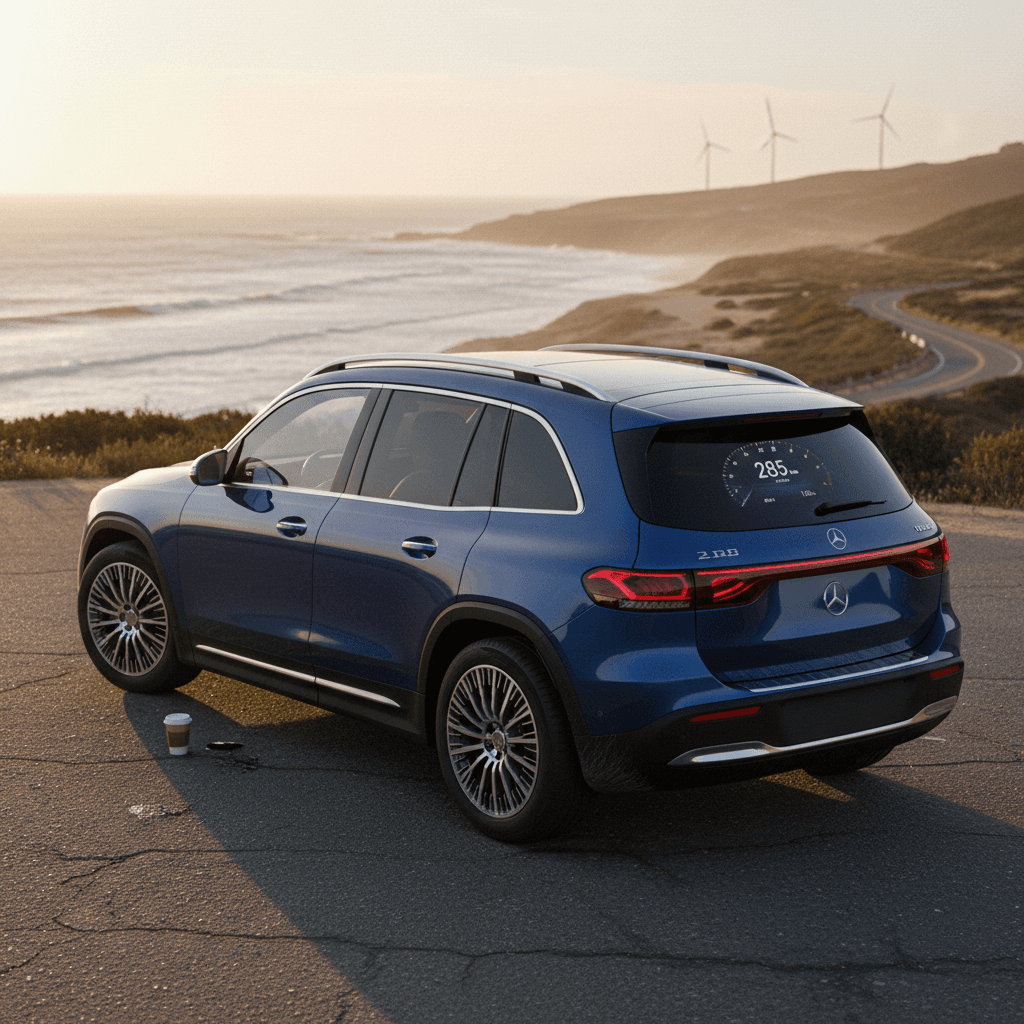
If you’re looking at a Mercedes EQB in 2026, you’ve probably noticed the brochure numbers and thought: that can’t be the whole story. You’re right. The **Mercedes EQB real-world range in 2026** lives in a narrower, more complicated band than the optimistic window stickers suggest, especially at U.S. highway speeds and in winter.
Quick takeaway
Mercedes EQB range basics for 2026
Current U.S.‑spec EQB models (2024–2026) share essentially the same battery pack: about 70.5 kWh usable capacity in a compact, upright SUV shell. On paper, the 2025–2026 EQB lineup spans roughly 205–251 miles of EPA range, depending on trim and wheels, with the front‑drive EQB 250+ at the top of the heap and the dual‑motor 300 and 350 4MATIC trims sitting lower in the charts.
2026 Mercedes EQB range snapshot (EPA window sticker)
Why these numbers mislead
EPA range vs real-world EQB numbers
To make sense of the Mercedes EQB real‑world range in 2026, it helps to keep two sets of figures in your head: the EPA number you’ll see in marketing, and a more conservative real‑world expectation based on owner data and independent testing.
Mercedes EQB EPA vs typical real-world range (2024–2026 U.S. specs)
Rounded estimates for a healthy battery in mild weather, starting from 100% charge. Real‑world figures assume mostly highway for the highway column and mixed city/suburban driving for the city/mixed column.
| Trim (2024–2026) | Drivetrain | EPA rated range (mi) | Typical real-world highway (mi) | Typical real-world city/mixed (mi) |
|---|---|---|---|---|
| EQB 250+ | FWD | ≈ 245–251 | 190–210 | 220–230 |
| EQB 300 4MATIC | AWD | ≈ 205 | 165–185 | 190–205 |
| EQB 350 4MATIC | AWD | ≈ 206–221 | 165–190 | 195–210 |
Use these as planning tools, not promises. Weather, terrain, wheels, and your right foot will move the needle up or down.
What "typical" really means
Real-world highway range at 70–75 mph
Highway is where the EQB’s bluff, GLB‑derived profile and modest battery collide with physics. Multiple road tests and owner reports land the EQB in the **180‑mile neighborhood at 70–75 mph**, with the EQB 250+ stretching that a bit further and the dual‑motor trims falling a bit shorter.
Highway range expectations by EQB trim (2026)
What you can reasonably plan for on a full charge at 70–75 mph in mild weather.
EQB 250+ (FWD)
Plan around: 190–210 miles at U.S. freeway speeds on a mild day.
- Best aero/efficiency of the lineup.
- Single motor and FWD keep consumption lower.
- Great for commuters who do the occasional long run.
EQB 300 4MATIC
Plan around: 170–185 miles at 70–75 mph.
- Extra front motor and AWD add weight and drag losses.
- Real‑world consumption often in the 2.8–3.2 mi/kWh band on highway.
- Plenty for most regional trips with one fast‑charge stop.
EQB 350 4MATIC
Plan around: 170–190 miles at 70–75 mph.
- Same battery as 300, more power and often larger wheels.
- When you use the extra shove, efficiency pays the bill.
- Similar highway legs to the 300; don’t expect miracles.
Easy way to sanity‑check a road-trip
City and suburban range in normal daily driving
If your EQB life is mostly errands, kid‑shuttling and stop‑and‑go commutes, the news is better. The Mercedes EQB real‑world range in **mixed city/suburban driving** often comes surprisingly close to the EPA number, especially in the 250+.
In-town and low-speed driving
Below about 45 mph, the EQB gets to use its regenerative braking and doesn’t have to fight much aero drag. Owners commonly report:
- EQB 250+: 220–240 miles from 100% to near‑empty in fair weather.
- EQB 300 / 350: 200–215 miles in the same conditions.
If you leave a buffer and don’t run to 0%, you might treat it like a 150–180‑mile commuter between charges without anxiety.
Suburban ring roads and light highway
Mix in 55–65 mph arterial roads and the picture shifts slightly:
- Expect 10–15% less range than pure city figures.
- Short hops with plenty of stops actually favor the EQB’s efficiency.
- Remote pre‑conditioning while plugged in keeps HVAC from eating into your usable miles.
For most households, this makes the EQB a very easy daily driver, even the “short”‑range 300 and 350 trims.
Winter, heat and climate control: how much range you lose
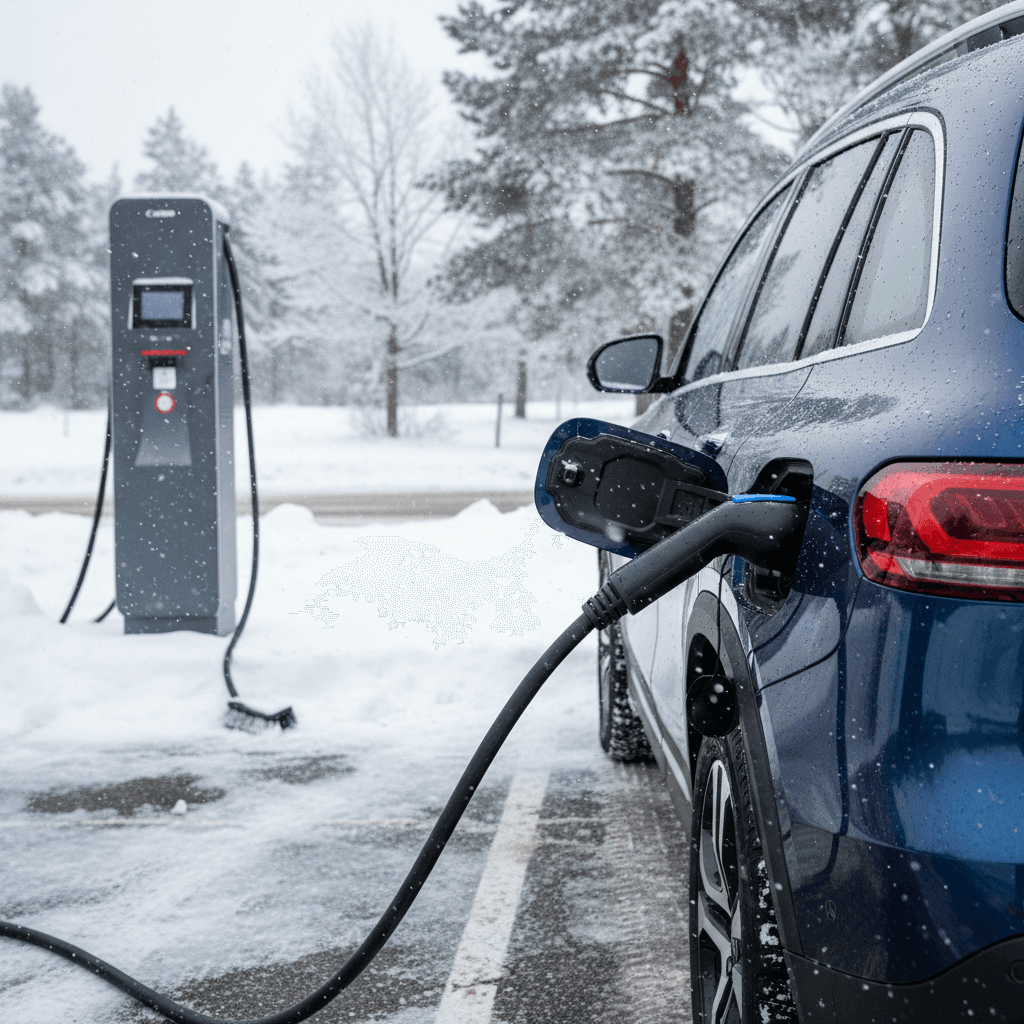
Cold‑weather range is where internet horror stories are born, and the EQB is not immune. Like most compact EV SUVs without huge batteries, it feels the impact of low temperatures and constant cabin heat. The 2024–2026 EQB does benefit from software and hardware tweaks compared with early cars, heat pump availability, improved motor decoupling, but physics still take their cut.
How weather and HVAC hit EQB range
Rough guidance for a healthy‑battery EQB with all‑season tires.
Mild temps (50–75°F)
- Highway: Close to the ranges in our earlier table.
- City/mixed: Often within 5–10% of EPA for the 250+.
- Use Eco or Comfort climate modes and pre‑condition when plugged in.
Cold weather (below 32°F)
- Expect 20–35% range loss, more on short hops.
- Battery and cabin both need heat; repeated warm‑ups are expensive.
- Heat pump‑equipped EQBs cope better but still lose noticeable range.
Heat and A/C (90°F+)
- 10–20% range hit is common with heavy A/C use.
- Dark paint, pano roofs and parked‑in‑sun scenarios make A/C work harder.
- Ventilated seats are efficient; set climate a degree or two warmer.
The extreme case to plan around
Battery degradation and EQB ownership over time
The other big 2026 question is how much range a used EQB has lost. The encouraging answer so far: not much, in most cases. Owner reports from 2022–2024 EQBs with 20,000–40,000 miles often show **90–98% of original usable capacity**, which tracks with what we see across many modern EVs.
- Most EQBs use a lithium‑ion pack with active liquid cooling and conservative buffer, which slows degradation.
- Charging mostly on AC (Level 2 at home or work) is gentle on the pack; frequent DC fast charging can add some wear but usually not dramatically so in the first 80,000–100,000 miles.
- Mercedes typically warranties the battery against excessive loss (often to around 70% capacity) over a set mileage/years window, check the fine print for your model year.
Why a third-party battery health report matters
Ready to find your next EV?
Browse Vehicles2026 EQB trim comparison: 250+ vs 300 vs 350
Choosing between EQB 250+, 300, and 350 in 2026 is basically choosing your compromise between traction, performance and usable range. All three sip from essentially the same battery. How quickly they drain it is the story.
2026 Mercedes EQB trims: range-focused comparison
Approximate U.S.‑spec numbers based on 2024–2025 data carried into the 2026 model year. Exact EPA range can shift slightly with wheels and options.
| Trim | Drivetrain | Power feel | EPA range band (mi) | Likely highway range (mi) | Best for |
|---|---|---|---|---|---|
| EQB 250+ | FWD | Calm, adequate | ≈ 245–251 | 190–210 | Max range, mild climates, mostly on‑road driving |
| EQB 300 4MATIC | AWD | Punchy enough | ≈ 205 | 170–185 | Snowbelt drivers, mixed‑use families |
| EQB 350 4MATIC | AWD | Genuinely quick | ≈ 206–221 | 170–190 | Drivers who value acceleration over a few extra miles |
If range is your top priority, start with the EQB 250+. If you must have AWD, budget for more frequent charging stops.
How to pick your trim by range need
Practical tips to stretch EQB range
You can’t change physics, but you can work with them. A few habits go a long way toward making the Mercedes EQB real‑world range in 2026 feel less fragile and more like a tool you understand.
Everyday EQB range‑stretching checklist
1. Drive 5 mph slower on the highway
The EQB is an aerodynamic brick. Dropping from 75 mph to 70, or 70 to 65, can easily net you another 10–15% range without adding much time to your trip.
2. Use Eco / Eco+ proactively
Mercedes’ Eco modes soften throttle response and dial back climate loads. They’re not just for emergencies; think of them as normal mode when you’re planning a long leg between chargers.
3. Pre-condition while plugged in
In both winter and summer, warm or cool the cabin while you’re still connected to AC or DC power. That front‑loads the energy draw onto the grid instead of your battery.
4. Watch your wheels and tires
Large wheels and aggressive winter tires look great and grip well, but they can cost you 5–10% range. If efficiency matters, stick with the most modest wheel/tire package you can live with.
5. Use navigation with charger-aware routing
The built‑in Mercedes navigation and most third‑party apps can estimate arrival SOC and suggest charging stops. Trust the tools; they’re often more conservative (and accurate) than the dash guess‑o‑meter.
6. Charge in a smart SOC window
For DC fast charging, living between roughly 10–70% state of charge strikes the best balance of quick charge times and healthy buffers. Above ~80%, the EQB’s charge curve slows way down.
Shopping a used EQB in 2026: range questions to ask
By 2026, the used market is full of 2022–2024 EQBs coming off lease. That’s great news if you like the concept but not the MSRP. It also means you need to be a little forensic about what kind of range you’re actually buying.
Key range questions for a used Mercedes EQB
Whether you’re shopping locally or online, don’t be shy about digging into battery and usage history.
1. What’s the battery health today?
Ask for a recent battery health report expressed as usable capacity vs. original. A healthy EQB with, say, 95% of its original capacity will still deliver almost all of the range figures in this guide. At Recharged, this is baked into the Recharged Score for every EV we sell.
2. How was it used and charged?
Light, mostly‑highway mileage with lots of Level 2 charging is the dream scenario. A hard‑driven car that lived on DC fast chargers won’t necessarily be bad, but it’s worth cross‑checking the battery data and doing a real‑world range test if you can.
3. How old is the pack vs. its warranty?
Look at in‑service date, mileage, and the battery warranty terms for that model year. If you’re buying a 2023 EQB in 2026, you likely still have several years of battery warranty coverage as a backstop.
4. Does its history fit your climate and routes?
A car that spent its life in Phoenix or northern Canada may have a different wear profile than one from the Pacific Northwest. Likewise, your own use, ski trips, long‑haul work drives, mostly city, should guide whether an EQB 250+ or 4MATIC trim makes more sense.
How Recharged simplifies the used EQB decision
Mercedes EQB real-world range 2026: FAQ
Frequently asked questions about Mercedes EQB real-world range in 2026
Bottom line: is the Mercedes EQB’s real-world range enough?
The Mercedes EQB isn’t a range monster, and it doesn’t pretend to be. In 2026, it sits in that honest middle ground: a compact luxury SUV with a real‑world cruising radius of roughly **180–210 miles** per leg, depending on trim, with the usual EV caveats about winter and speed.
If you mostly do school runs, commutes and weekend errands, and you’re willing to think in terms of charging rhythm rather than gas‑tank emptiness, the Mercedes EQB real‑world range is more than workable. If you live on the interstate or chase back‑to‑back 250‑mile days, you’ll simply plan around more frequent fast‑charge stops or look to a larger‑pack rival.
Either way, the smart play in 2026 is to pair the EQB’s polished cabin and compact‑SUV utility with hard data. That means understanding the gap between EPA and reality, and, if you’re buying used, getting objective battery health information. That’s exactly what Recharged was built for: verified packs, transparent range expectations, and expert EV support from your first search to delivery in your driveway.