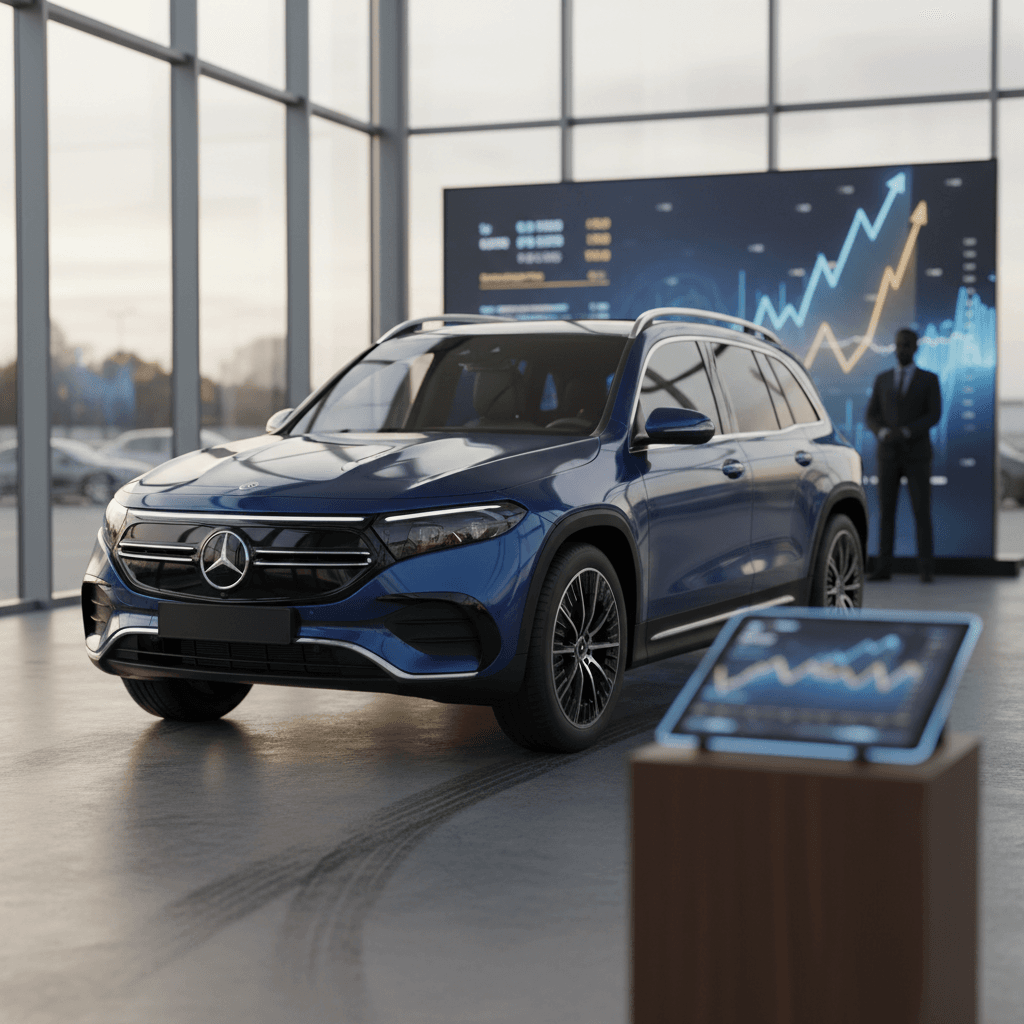
If you’ve been eyeing a Mercedes EQB, you’re probably wondering where prices will land by 2026. The compact luxury EV SUV segment is getting crowded, incentives are shifting, and several rivals are undercutting the EQB on price. This guide pulls together what we know about today’s Mercedes EQB pricing and uses broader EV market trends to build a realistic Mercedes EQB price forecast for 2026, with a special focus on what it means if you’re shopping new or used.
Quick take
Why Mercedes EQB prices are hard to pin down
Forecasting EV prices is never simple, and the EQB adds a few twists. It’s a niche product, a compact three-row luxury electric SUV, in a segment where demand has seesawed since 2023. Mercedes has already adjusted pricing and incentives several times, and industry reports suggest the company is rethinking parts of its EQ lineup for North America. At the same time, the broader EV market is trending cheaper overall, especially in compact SUVs, putting price pressure on legacy luxury brands.
So instead of pretending there’s a single “right” number for a 2026 Mercedes EQB price, we’ll walk through where pricing sits today, what’s changing in the EV market, and the ranges that look realistic for both new and used EQBs by the time you’re signing paperwork in late 2025 or 2026.
Where EQB pricing stands today (2024–2025)
Mercedes EQB pricing snapshot (U.S., 2024–2025)
Across major pricing guides and dealer listings, the 2024 Mercedes EQB 250+ typically stickers just above $53,000, with the EQB 300 and EQB 350 4MATIC climbing into the upper-$50,000s once you add options. At the same time, transaction data and shopper reports show heavy incentives on the hood, lease cash, loyalty bonuses, and dealer discounts trimming 10–20% off MSRP in many deals.
On the used side, 2022–2023 EQB 300 4MATIC models have already changed hands in the mid-$30,000s to mid-$40,000s depending on mileage, trim, and condition. That’s a fast drop from sticker, but it’s consistent with what we’ve seen across many early EVs: steep first-owner depreciation followed by a long period of slower value loss once pricing reaches a more mainstream, used-car-friendly level.
Remember destination and fees
Factors that will shape Mercedes EQB prices by 2026
Four big forces behind 2026 EQB pricing
From EV price wars to incentives, here’s what will really move the needle.
1. Overall EV price deflation
Industry analysts expect average EV prices to drift downward through 2026 as battery costs fall and more mid‑priced models enter the market. Compact electric SUVs that once stickered in the high‑$40Ks now frequently start closer to the mid‑$30Ks.
That puts pressure on premium brands like Mercedes to either justify higher prices with features and range, or quietly adjust pricing and incentives.
2. Luxury compact SUV competition
By 2026, you’ll be cross‑shopping the EQB against more rivals than ever: Cadillac Optiq, Volvo EX60, upcoming Korean EV crossovers, and refreshed entries from BMW and Audi. Several are targeting starting prices in the high‑$40Ks to low‑$50Ks.
When everyone is fishing in the same luxury pond, Mercedes can’t ignore where the water level is.
3. Incentives and tax credits
Federal and state incentives may look very different in 2026 than they did in 2022, and the EQB has had an uneven relationship with U.S. tax credits because of assembly and battery‑sourcing rules.
The more direct‑to-consumer rebates and point‑of‑sale credits expand, the more pressure there is for MSRP to stay roughly flat, or even dip a little, while effective transaction prices fall.
4. Shifting EV demand and tech
Buyers are learning fast: range, charging speed, and software matter as much as badges. Newer rivals with 300‑plus‑mile range and faster DC charging may make the EQB feel older sooner than a traditional Mercedes would.
If the EQB doesn’t see a major powertrain update by 2026, Mercedes will likely lean on price and incentives to keep it competitive.
Don’t forget EV depreciation patterns
Mercedes EQB price forecast for 2026 (new models)
Let’s put some stakes in the ground. Based on current pricing, competitor targets, and broader EV trends, a reasonable Mercedes EQB 2026 price forecast for the U.S. market looks like this for new vehicles, before any incentives or dealer discounts:
Forecasted 2026 Mercedes EQB new-vehicle pricing (U.S.)
Approximate MSRP ranges if the EQB continues in its current form through the 2026 model year.
| 2026 EQB variant | Current 2024–2025 MSRP (approx.) | Forecast 2026 MSRP range | What’s driving the forecast? |
|---|---|---|---|
| EQB 250+ (FWD) | ≈$53,000 | $51,000–$54,000 | Mild downward pressure from cheaper mainstream EV SUVs, but Mercedes may hold the line on base pricing and compete more with incentives. |
| EQB 300 4MATIC | ≈$57,000 | $54,000–$58,000 | Dual‑motor models stay positioned as the sweet‑spot trim, but face intense competition from all‑new rivals with more range. |
| EQB 350 4MATIC | ≈$61,000+ | $58,000–$62,000 | Range‑topper likely sees modest adjustments rather than big cuts, staying aligned with other compact luxury EVs. |
These are directional forecasts, not official Mercedes pricing. Actual prices will depend on equipment, updates, and incentives at launch.
In other words, by the time you’re shopping in 2026, it’s reasonable to expect a new EQB 250+ to advertise somewhere around the low‑$50Ks, with nicely optioned EQB 300/350 models stretching into the high‑$50Ks or low‑$60Ks. The bigger story may be behind-the-scenes rebates and dealer discounts, which can easily trim thousands off those numbers, just as they already have in 2024 and 2025.
MSRP vs. what you’ll really pay
Used Mercedes EQB price forecast for 2026
If you’re reading this on Recharged, there’s a good chance you’re more interested in where used EQB prices will land by 2026. That’s where things get interesting, in a good way for shoppers.
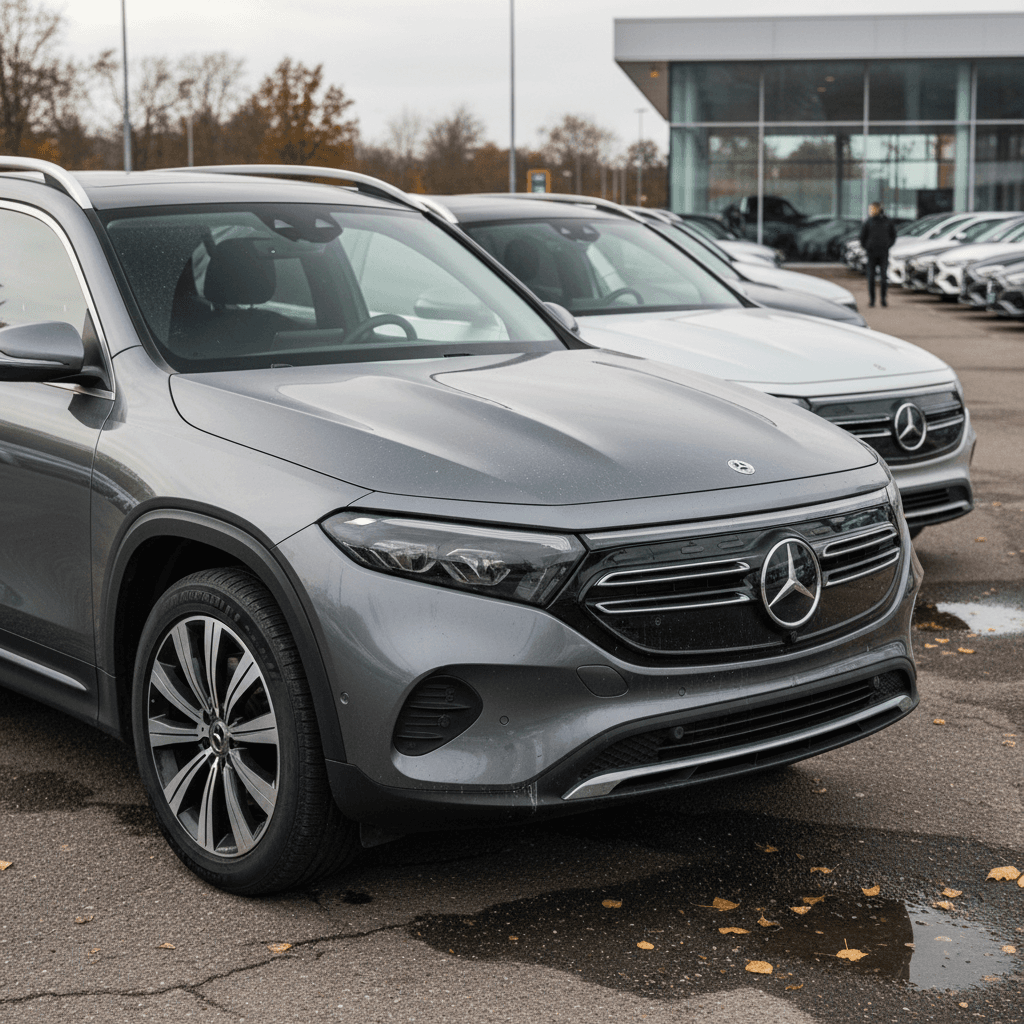
Forecasted used Mercedes EQB price ranges in 2026 (U.S.)
Approximate retail asking prices for clean‑title, average‑mileage examples sold through dealers or reputable marketplaces.
| Model year & trim | Typical mileage by 2026 | Likely 2026 price range | What to expect |
|---|---|---|---|
| 2022 EQB 300/350 | 35,000–55,000 miles | $29,000–$36,000 | First model‑year EQBs will be some of the least expensive ways into the nameplate, especially higher‑mile examples. |
| 2023 EQB 250/300/350 | 25,000–45,000 miles | $31,000–$38,000 | More inventory and improved equipment could hold values slightly higher than 2022, but still far below original MSRP. |
| 2024 EQB 250/300/350 | 15,000–35,000 miles | $34,000–$42,000 | These will be prime used buys, new enough to feel current, but already past the steepest part of the depreciation curve. |
| 2025 EQB (all trims) | Under 25,000 miles | $38,000–$47,000 | Late‑model, low‑mile EQBs should still command a decent premium, especially with desirable packages and long range. |
Mileage, condition, options, and battery health can move any individual EQB well above or below these ranges.
Those ranges assume a reasonably stable EV market and no major EQB‑specific recall or reputation issues that would spook buyers. They also assume battery health remains solid, a big reason why tools like the Recharged Score (which includes verified battery diagnostics) matter more for used EVs than traditional gas cars.
Why 2023–2024 EQBs may hit the sweet spot
Lease vs. buy: how 2026 pricing changes the math
Leasing an EQB in 2026
Leasing has already been a popular way into the EQB thanks to strong captive incentives and the ability to pass commercial EV tax credits into monthly payments. If those programs continue, you may see advertised EQB leases in 2026 that look surprisingly attractive compared with MSRP, especially on remaining inventory when a refreshed model is on the horizon.
- Pros: Lower upfront cost, ability to walk away if values fall faster than expected, easy access to the latest tech.
- Cons: Mileage limits, higher long‑term cost if you keep leasing, and no control over residual if you end up wanting to buy out the car.
Buying new or used in 2026
Buying outright, especially used, lets you take advantage of the EQB’s early depreciation. If our forecast holds, a 2–3‑year‑old EQB will cost dramatically less than new while delivering most of the same experience.
- Pros: You own the car outright, no mileage limits, and you capture the upside if EV resale values stabilize.
- Cons: You shoulder more risk on future value, and you’ll want a solid handle on battery health and warranty coverage.
Either way, it’s smart to compare a new‑car lease to a certified or thoroughly inspected used EQB payment side by side.
Run the numbers both ways
How the EQB compares to rivals on 2026 pricing
The EQB doesn’t live in a vacuum. By 2026, you’ll be cross‑shopping it against a fresh crop of compact and midsize electric SUVs. Many mainstream options will undercut Mercedes on price, while a few luxury rivals meet it head‑on.
EQB vs. likely 2026 rivals (big-picture price view)
Approximate starting prices in the U.S. for 2026 model‑year EV SUVs.
Mainstream compact EV SUVs
Think Hyundai Kona Electric, Kia Niro EV, Chevy Equinox EV, and Nissan Leaf/Leaf‑successor models.
Likely 2026 base prices: roughly $30,000–$38,000 before incentives.
If price is your only compass, the EQB will look expensive. If you value the Mercedes badge, interior, and three‑row layout, you’re shopping a different map.
Entry luxury EV SUVs
Cadillac Optiq, Volvo EX60, BMW iX1/iX2 equivalents, Audi Q4 e‑tron refreshes, these are the EQB’s true peers.
Likely 2026 base prices: roughly $48,000–$60,000, depending on battery and trims.
Here, the EQB’s forecast mid‑$50K transaction prices should keep it squarely in the mix.
Performance‑leaning crossovers
Rivian R2, high‑spec Koreans, and sportier configurations of other compact EVs will trade some practicality for style and speed.
Likely 2026 base prices: around the mid‑$40Ks and up.
If you’re value‑hunting, a used EQB could undercut some of these while still feeling premium inside.
Watch the range arms race
Shopping strategies if you want an EQB around 2026
Smart moves for 2026 EQB shoppers
1. Decide early: badge vs. budget
If you mainly want a luxury badge and three rows in a compact footprint, the EQB is in rare company. If you mostly care about maximum range per dollar, a mainstream EV SUV might be smarter, and that will change how much “premium” you’re willing to pay for an EQB.
2. Time your purchase around inventory
Historically, EQB deals get sweeter when dealers are long on inventory or when a refreshed model is looming. In 2026, that might mean better pricing in late winter and late summer as lots make room for new arrivals.
3. Focus on battery health, not just miles
A 2023 EQB with 35,000 careful miles and a strong battery report can be a better buy than a lower‑mile car with unknown charging history. Look for documentation, or independent testing, of state of health before you pay a premium.
4. Compare total cost, not just price tag
Consider energy costs, insurance, maintenance, and projected resale value. A slightly higher‑priced EQB with better efficiency, equipment, or remaining warranty can be cheaper to own than a bare‑bones bargain.
5. Get multiple offers if you’re trading in
By 2026, used EV pricing will be much better understood, but still volatile. If you’re trading in another EV, shop your car to multiple buyers (including instant‑offer services) so you don’t quietly give back the discount you just negotiated on the EQB.
6. Consider certified and marketplace options
Don’t limit yourself to a single dealer’s used lot. Certified pre‑owned and reputable marketplaces, especially EV‑focused ones, can give you more choice, transparent pricing, and better insight into battery condition.
How Recharged helps with used EQB shopping
By 2026, the used EV market will be crowded with EQBs coming off lease and first‑owner loans. That’s great news for shoppers, but only if you can tell the good ones from the question marks. That’s where Recharged comes in.
Why shop for a used EQB through Recharged?
Tools and support that are built specifically for used EVs, not gas cars.
Recharged Score battery health diagnostics
Every vehicle on Recharged comes with a Recharged Score Report, which includes verified battery health, charging history insights where available, and a clear explanation of how that affects real‑world range.
On an EQB, that means you’re not guessing whether the pack has been fast‑charged to death or gently used on a Level 2 charger.
Transparent pricing and EV‑savvy support
Recharged analyzes fair‑market pricing for used EQBs nationwide, factoring in trim, mileage, options, and battery condition. That helps you quickly see whether a 2023 EQB 300 in your favorite color is genuinely a deal.
If you want help comparing a certified‑pre‑owned EQB to other EV SUVs, Recharged’s EV specialists can walk you through charge times, range, and cost of ownership in plain language.
Ready to find your next EV?
Browse VehiclesCombine that with financing options, trade‑in or consignment help, and nationwide delivery, and you can shop for a used Mercedes EQB in 2026 without spending your weekends bouncing from one luxury showroom to another.
Mercedes EQB 2026 price forecast: FAQ
Frequently asked questions about 2026 Mercedes EQB pricing
Bottom line: should you wait or buy used?
If you’re drawn to the Mercedes EQB’s blend of compact size, optional three‑row seating, and luxury feel, 2026 is shaping up to be an excellent year to buy, just not necessarily new. Our Mercedes EQB price forecast for 2026 points to modest MSRP adjustments on new models but far more dramatic value on 2–3‑year‑old EQBs that have already absorbed their initial depreciation.
For many shoppers, the smartest move will be to target a well‑equipped 2023 or 2024 EQB in 2026, backed by transparent battery‑health data and fair‑market pricing. That’s exactly the gap Recharged is built to fill: helping you compare options, understand true battery condition through the Recharged Score Report, and buy a used EQB with confidence, without playing pricing roulette at a traditional luxury dealership.