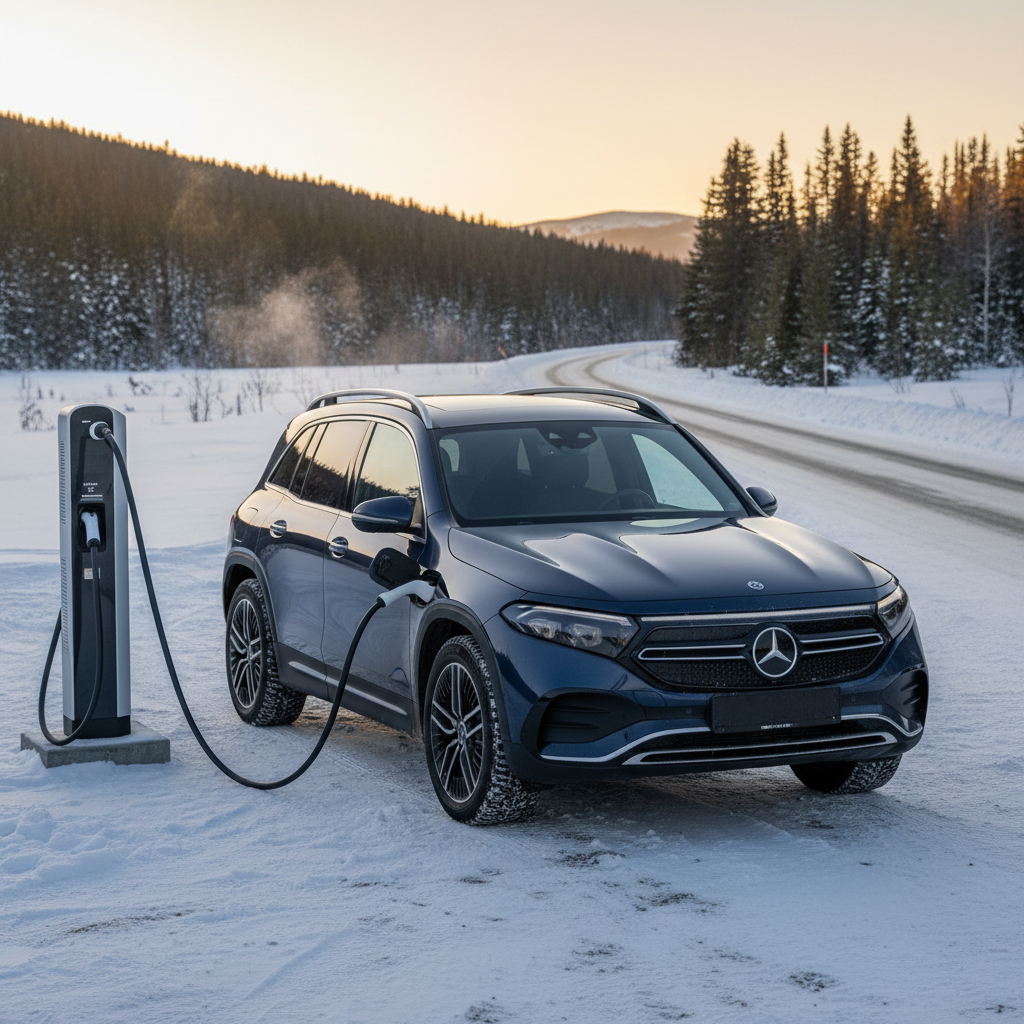
If you’re eyeing a Mercedes EQB, or already own one, the big question is obvious: how long will the EQB’s battery actually last? Battery lifespan affects everything from everyday range to long‑term resale value, especially if you’re planning to keep the car beyond its first owner or you’re shopping used. This guide breaks down real‑world Mercedes EQB battery lifespan, how degradation works, and what you can do to keep your pack healthy for well over a decade.
Quick answer
Overview: How long does a Mercedes EQB battery last?
The short version: the Mercedes EQB battery is built for the long haul. In the U.S., most model‑year EQB SUVs use a roughly 70 kWh lithium‑ion pack and share similar charging hardware across EQB 250+, 300 4MATIC, and 350 4MATIC trims. Under the skin, the battery is engineered to deliver reliable capacity for well over a decade of normal use.
- Mercedes’ own documentation and warranty structure suggest a design life comfortably beyond the 8‑year / 100,000‑mile warranty window.
- Real‑world data from similar Mercedes EQ battery packs points to single‑digit percentage loss in the first 50,000–60,000 miles when used and charged sensibly.
- For most owners, the limiting factor won’t be the battery dying, it will be changing needs, new tech, or simply being ready for a different car.
So when you ask, “Mercedes EQB battery lifespan, how long, really?” a realistic answer is that a well‑treated pack should still be very usable at 12–15 years old. That doesn’t mean zero degradation; it means you’re likely to see reduced but still practical range rather than a catastrophic failure.
EQB battery specs that shape lifespan
To understand lifespan, it helps to know what’s actually in the EQB. All recent U.S. trims share a similar battery and charging layout, which means degradation trends and best practices are broadly the same regardless of whether you drive a 250+, 300, or 350.
Mercedes EQB battery & charging specs (U.S. models)
Key battery details that influence lifespan and charging behavior.
| Trim | Usable battery capacity (kWh) | EPA range (mi, approx.) | Max Level 2 AC | Max DC fast charge |
|---|---|---|---|---|
| EQB 250+ | ≈70.5 | ~250 | Up to 9.6 kW | Up to 100 kW |
| EQB 300 4MATIC | ≈70.5 | ~205 | Up to 9.6 kW | Up to 100 kW |
| EQB 350 4MATIC | ≈70.5 | ~207 | Up to 9.6 kW | Up to 100 kW |
Values are approximate and can vary slightly by model year, wheel/tire choice, and software.
Gross vs. usable capacity
Warranty vs. real life: what Mercedes actually guarantees
The easiest hard number you’ll find for EQB battery lifespan comes from its warranty. In the U.S., the high‑voltage battery is typically covered for 8 years or 100,000 miles, whichever comes first. That clock starts from the original in‑service date, not the model year.
EQB warranty clocks at a glance
Battery coverage is separate from the basic bumper‑to‑bumper warranty.
High‑voltage battery
About 8 years / 100,000 miles on U.S. EQB models. Covers defects and excessive capacity loss based on Mercedes’ criteria.
New‑vehicle warranty
Typically 4 years / 50,000 miles on the rest of the vehicle. This clock often expires before the battery warranty does.
What it signals
Automakers don’t warranty batteries right to the ragged edge. An 8‑year battery warranty usually implies a pack designed to last significantly longer under normal use.
Warranty is not a timer to failure
How fast does the EQB battery really degrade?
Battery degradation isn’t a straight line, and every car lives a different life. But we can make some reasonable, conservative expectations based on data from Mercedes EQ‑series packs and modern EV batteries in general.
Typical EV battery degradation pattern (including EQB-class packs)
In real life, that means a 250‑mile EQB 250+ might feel more like a 220–230‑mile car after many years and tens of thousands of miles. Annoying on paper, but still entirely usable for daily commuting and moderate road‑tripping, especially with DC fast charging up to about 100 kW.
Don’t obsess over the guess‑o‑meter
6 factors that shorten or extend EQB battery life
Every EQB leaves the factory with essentially the same battery. What really separates a pack that’s still strong at 12 years from one that feels tired at 8 is how it’s used and charged. Here are the big levers you control.
Key EQB battery lifespan drivers
1. Average state of charge (SoC)
Lithium‑ion cells are most comfortable living in the middle of their charge window. Keeping your EQB around 30–80% for daily use is gentler on the pack than parking it at 100% every night.
2. Time spent at 100%
Charging to 100% occasionally for trips is fine; <strong>parking at 100% for days at a time is not</strong>. High voltage plus time is a major aging driver for any EV battery.
3. Heat and climate
High temperatures accelerate chemical aging. The EQB’s thermal management helps, but if you live in a hot climate, minimizing time at high SoC in the heat pays real dividends.
4. DC fast charging habits
The EQB tops out around 100 kW on DC, which is relatively gentle. Still, using DC fast charging multiple times per week for years will age the pack faster than mostly Level 2 home charging.
5. Deep discharges
Regularly running the pack down into single digits and then fast‑charging to the top is harder on the cells than cycling between, say, 20% and 80% most of the time.
6. Software & recalls
Mercedes can issue battery‑management updates and, in rare cases, recalls that change usable capacity or charging behavior. Always get recall work done; it’s about safety and pack longevity, even if it temporarily alters range or charging speed.
Don’t ignore EQB battery recalls
Daily use tips to maximize your EQB battery lifespan
You don’t have to baby the EQB to get a long life out of its battery. But a few low‑effort habits will stack the odds heavily in your favor, especially if you plan to keep the car past the 8‑year mark or you’re buying used and want as much remaining life as possible.
Battery-friendly EQB habits
- Set a daily charge limit around 70–80% for routine commuting.
- Charge to 100% only before trips, and start driving soon after.
- Use Level 2 at home as your primary charging method.
- Precondition the cabin while plugged in during very hot or cold days.
- Store the car around 40–60% if you’re leaving it parked for weeks.
Habits that shorten battery life
- Parking at 100% in the hot sun for days at a time.
- Frequent 0–5% to 100% fast‑charge cycles.
- Using DC fast charging as your main charging source.
- Ignoring software updates and recall notices.
- Letting the car sit for long periods at very low state of charge.
The upside of a 100 kW ceiling
Buying a used Mercedes EQB? How to judge battery health
If you’re shopping used, “How long will the EQB battery last from here?” becomes an even more pointed question. The good news: you can get a reasonably clear picture of how the pack has been treated and how much warranty coverage is left.
Used EQB battery checklist
What to look for before you sign anything.
1. In‑service date
Ask for the original in‑service date to see how many of the 8 battery‑warranty years are left. A 2022 EQB first sold in early 2023 may be covered until early 2031 or 100,000 miles, whichever comes first.
2. Current mileage
A 30,000‑mile EQB that lived on Level 2 home charging is often a safer bet than a low‑mileage car that lived its life on DC fast chargers.
3. Charging & service history
Ask how the car was charged, whether recalls and software updates have been performed, and whether the battery has ever been repaired or replaced.
How Recharged helps on used EQBs
On-road checks for EQB battery health
1. Compare displayed range to EPA numbers
On a full or near‑full charge, is the estimated range roughly in the same ballpark as the original EPA figure for that trim, adjusted for weather and wheels? A modest gap is normal; a huge gap may warrant questions.
2. Watch charging behavior
If you can, plug into a DC fast charger. Does the car ramp up smoothly toward ~100 kW when the battery is low and then taper down? Wild fluctuations or very low peaks at moderate SoC may be a red flag, or a sign of a pending software update or recall.
3. Listen for thermal management
Fans and coolant pumps cycling on during heavy charging or fast driving are normal. Constant loud cooling noises at light loads may hint at an unhappy pack or software issue.
4. Ask for a battery health report
Some Mercedes dealers can pull a capacity or “state of health” readout. It’s not perfect science, but it adds another data point when comparing vehicles.
When will an EQB actually need a new battery, and what then?
Here’s the uncomfortable truth: almost no EQB on the road today is old enough to give us a complete real‑world curve from new to end‑of‑life. But we can still sketch what “replacement territory” might look like.
- Most drivers start to feel constrained when a pack has lost 30–40% of its original capacity, especially on road trips.
- For an EQB 250+ that started around 250 miles EPA, that might mean the car now behaves more like a 150–170‑mile vehicle in similar conditions.
- Depending on how the car is used, that point might not arrive until well past 150,000–200,000 miles, if it ever does during your ownership.
Battery replacement is rare, but expensive
If you’re shopping used and worried about a worst‑case scenario, focus on two things: how much battery warranty remains, and whether the particular VIN has any open battery‑related recalls or service campaigns. Those items matter far more than the car being a year or two newer on paper.
FAQ: Mercedes EQB battery lifespan & degradation
Frequently asked questions about Mercedes EQB battery life
Bottom line: Should you worry about EQB battery life?
If you strip away the internet anxiety, the Mercedes EQB battery lifespan story is reassuringly boring. The pack is well‑sized, thermally managed, and protected by software buffers and an 8‑year / 100,000‑mile warranty. Treated reasonably, mostly Level 2 charging, modest daily charge limits, and attention to recalls, an EQB battery should give you well over a decade of useful service and easily 150,000+ miles before range becomes a real constraint for most drivers.
Whether you’re buying new or exploring a used EQB, focus on how the car has been used, how much warranty time is left, and what the real‑world range looks like today. If you want backup, shopping through Recharged adds another layer of protection: every EQB comes with a Recharged Score Report that verifies battery health, clarifies remaining warranty, and checks pricing against the market. That way you’re not just betting on battery lifespan, you’re making an informed decision about it.