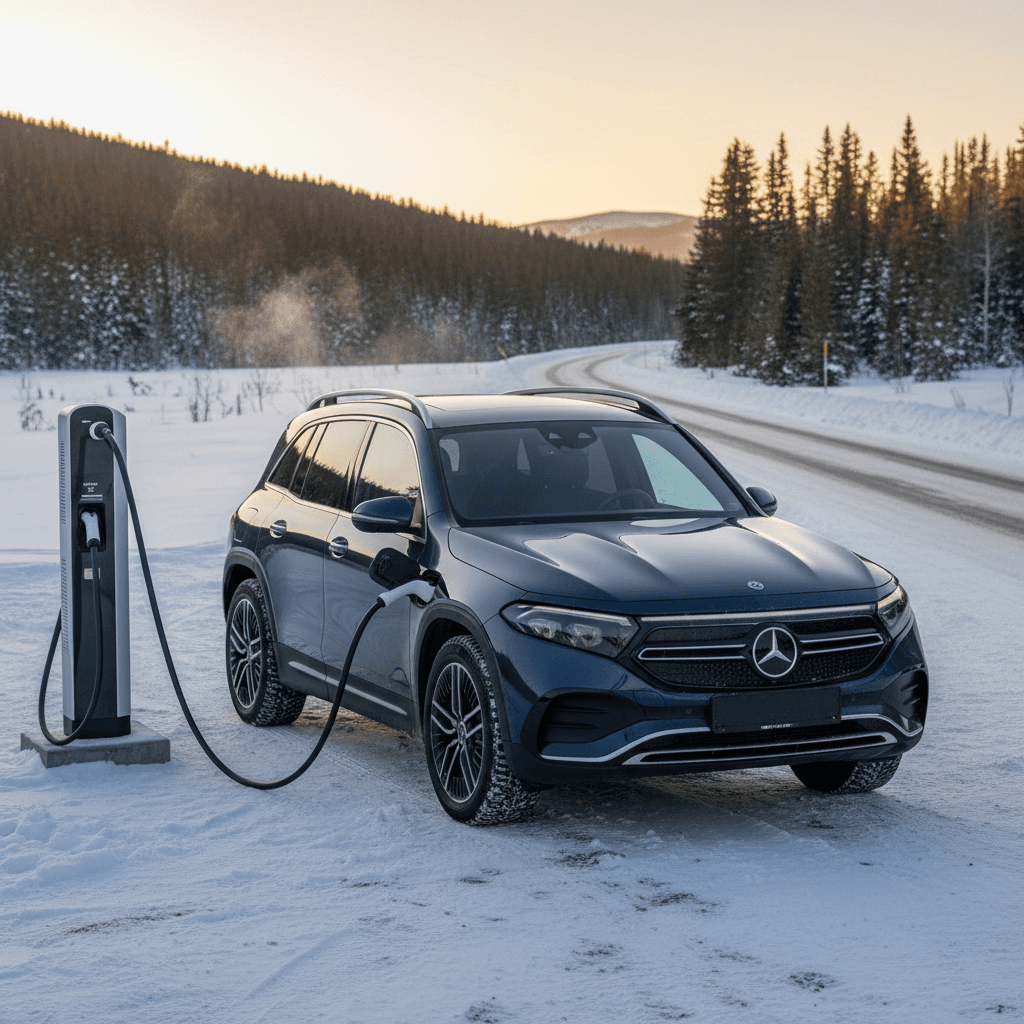
If you live somewhere with real winters, the official range number on a Mercedes EQB window sticker doesn’t tell the whole story. Mercedes EQB range in cold weather can shrink noticeably, especially on fast highway runs with the heat cranked and the cabin full of ski gear. The good news: once you understand what’s going on and how to drive around it, the EQB can still be a confident, cold‑weather family hauler.
Quick take: EQB winter range
Why cold weather hits EQB range so hard
Cold weather is tough on any EV, but the EQB feels it more than a sleek, low sedan because it’s a tall, boxy crossover. Three forces work against your range when the temperature drops:
- Cold battery chemistry: Lithium‑ion batteries hate the cold. Below freezing, they can’t accept or deliver energy as efficiently, so you get fewer miles from each kWh and slower fast‑charging until the pack warms up.
- Cabin heating load: Unlike a gas SUV, there’s no free waste heat from an engine. Your EQB has to spend precious battery power to warm the cabin, defrost windows, and keep the pack in its happy temperature window.
- Aerodynamics and rolling resistance: The EQB’s tall, square shape and available big wheels mean more drag and tire friction. Add dense cold air, slushy roads, and winter tires, and it takes more energy just to keep 70 mph.
Winter hurts short trips most
How much range you actually lose in winter
Typical EQB range loss in cold weather
Across EVs, independent testing and owner data show winter can trim range by 20–40%, depending on temperature, speed, and cabin‑heat use. The EQB lands right in that band. Mercedes dealers often quote a 20–30% winter hit as normal for their EQ models, including EQB. In practice, what you see on the dash will depend heavily on how and where you drive.
Mercedes EQB winter range by trim
Let’s translate the EQB lineup’s lab numbers into realistic cold‑weather range estimates you can plan around. We’ll assume steady winter conditions (around 20°F/‑7°C), mixed driving, and sensible but not hyper‑efficient habits.
Estimated Mercedes EQB winter range by trim
Approximate usable winter range assuming 20–30% loss vs mild‑weather real‑world range. These are planning numbers, not guarantees.
| Trim | EPA rating (approx.) | Comfortable real‑world in mild weather | Typical winter range (20°F, mixed) | Conservative winter planning number |
|---|---|---|---|---|
| EQB 250+ (FWD, 70.5 kWh pack) | ≈245–250 miles | ≈200–220 miles | ≈150–180 miles | ≈140–150 miles |
| EQB 300 4MATIC | ≈220–230 miles | ≈180–200 miles | ≈135–160 miles | ≈130–140 miles |
| EQB 350 4MATIC | ≈220 miles | ≈170–190 miles | ≈130–155 miles | ≈125–135 miles |
If you routinely drive in harsher conditions (below 0°F, heavy snow, or 80+ mph), use the lower end, or subtract another 10–15%, to stay comfortable.
About those numbers
If you’re cross‑shopping trims, the EQB 250+’s larger usable battery and single‑motor setup give it a clear advantage in both mild and cold weather. Dual‑motor 4MATIC versions trade some range for all‑weather traction and punchy acceleration. In snow country, that trade can still be worth it, as long as you plan your charging around the lower winter numbers.
City vs highway: which kills EQB winter range faster?
Stop‑and‑go city winter driving
On paper, EVs usually shine in the city because regen braking recovers energy and speeds are low. In winter, the picture gets more complicated:
- Lots of short trips mean your EQB spends more energy warming up the cabin and battery, then cooling off between stops.
- Heavy defrost and heated glass use can add a steady overhead, especially if the car sits outside.
- Range estimator may look scary because it projects from these energy‑heavy miles.
If most of your winter life is five‑mile errands, you may see the biggest percentage hit here, even if your total daily mileage is low.
Highway and road‑trip winter driving
Once everything is warm and you’re cruising, the EQB settles into a more predictable groove:
- At 65–70 mph on dry, cold pavement, you’ll usually do better than what the city short‑trip display suggested.
- At 75–80 mph, the EQB’s boxy shape and cold, dense air ramp up drag. Expect a big step down in efficiency.
- Snowy, slushy roads can add another hit, as the tires have to push slush out of the way.
For winter highway trips, plan legs at about 60–70% of the EPA figure, and you’ll rarely be surprised.
A simple winter rule of thumb
Charging your EQB in cold weather
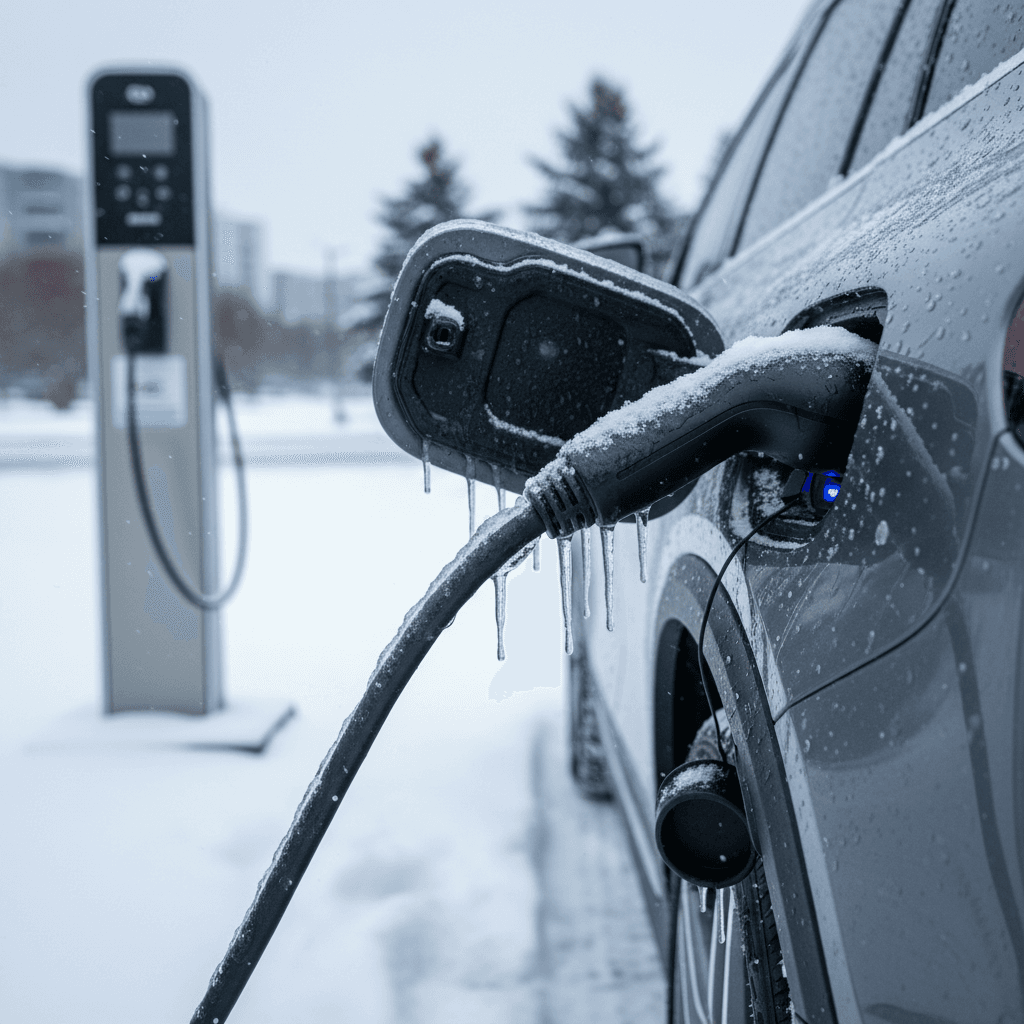
You’ll notice winter not only shrinks how far you can drive, it also slows how fast you can charge. That’s the same chemistry problem in reverse: cold batteries don’t like to accept energy quickly.
What to expect when charging your EQB in the cold
Home Level 2 vs DC fast charging, and how to make both work better in winter.
Home Level 2 charging
On a 40‑amp Level 2 charger, an EQB can usually go from low to full overnight, even in the cold.
- Charging power may start lower if the pack is very cold, then rise as it warms.
- Leaving the car plugged in lets it maintain a friendlier pack temperature.
- Use scheduled charging and pre‑climate so the pack is warm when you leave.
DC fast charging in winter
At public DC fast chargers, a cold EQB battery will often ramp up slowly.
- Arrive with 20–40% state of charge and the pack already warm for best speeds.
- Expect lower peak kW and a longer 10–80% session in sub‑freezing temps.
- Use navigation to the charger so the car can precondition the battery where supported.
Preconditioning pays off
Mercedes EQ models with pre‑entry climate and Navigation with Electric Intelligence can warm the cabin and battery before you leave.
- Do it while plugged in so that energy comes from the grid, not the battery.
- Start 15–30 minutes before departure on very cold days.
- This alone can save you 10–15% of winter range on many trips.
Don’t fast‑charge a frozen battery if you can avoid it
10 ways to improve Mercedes EQB range in cold weather
Practical winter tips for EQB owners
1. Precondition on the plug
Use the Mercedes me app or in‑car scheduling to warm the cabin (and, in many EQBs, the battery) <strong>while the vehicle is still charging</strong>. You start your drive with a warm pack and don’t burn as much energy on initial heat.
2. Rely on seat and wheel heaters
Seat and steering‑wheel heaters sip energy compared with blasting the cabin HVAC. Set the cabin a bit lower and let the heated touch points keep you comfortable.
3. Choose Eco or Comfort modes
Eco and Comfort driving modes soften throttle response and can limit peak climate output, nudging you toward smoother, more efficient driving without turning your EQB into a slug.
4. Keep speeds in check
Above 70 mph, especially in a tall, boxy SUV, drag skyrockets. On cold‑weather trips, cruising at 65–70 mph instead of 80 can be the difference between one charging stop and two.
5. Watch tire choice and pressure
Proper winter tires are a must for traction and safety, but keep them inflated to the recommended pressure. Under‑inflated or aggressive off‑road‑style tires can chew through winter range.
6. Clear off snow and ice
Driving with snow on the roof and packed around the wheels adds weight and aerodynamic drag. Take the extra minute to brush off the car, including the tailgate and roof rails.
7. Travel light and skip the box when you can
Roof boxes, ski racks, and a full load of gear all cost miles. If possible, use a rear hitch rack instead of a big box, and don’t haul around heavy cargo you don’t need.
8. String trips together
If you can batch errands into one longer outing instead of several short, cold starts, your EQB spends less time in the energy‑hungry warm‑up phase and more time in its efficient cruising zone.
9. Use route planning with chargers in mind
In winter, plan your routes to pass high‑reliability fast chargers a bit sooner than you would in summer. Apps like PlugShare plus the EQB’s built‑in Navigation with Electric Intelligence can help you build in a comfortable buffer.
10. Keep software and navigation updated
Mercedes routinely tunes efficiency, thermal management, and charging behavior via software updates. Keeping your EQB current helps it make the smartest decisions in cold weather.
How winter range should shape your EQB shopping decision
If you’re considering a new or used Mercedes EQB, winter range shouldn’t scare you off, but it should factor into which trim you choose and how you plan to use the car. Here’s how to think it through before you sign anything.
Daily commuting and kid duty
If most of your life is school runs, commuting, and weekend errands under 70–100 miles a day, even in winter, any EQB trim can work just fine.
- Prioritize Level 2 home charging so you leave every morning with a full battery and a warm cabin.
- If you’re in a flatter, milder climate, the EQB 300 or 350 4MATIC’s lower range may be a complete non‑issue.
- In places like the upper Midwest or New England, the extra buffer of the 250+ can feel reassuring on those surprise snow‑day detours.
Regular winter road‑tripping
If you’re heading to mountain cabins, college towns, or family three states away when it’s below freezing, your trim choice matters more.
- The EQB 250+ is the winter road‑trip darling thanks to its larger usable battery and higher mild‑weather real‑world range.
- With 4MATIC trims, factor in their lower winter planning numbers and make sure your usual routes offer enough reliable fast charging.
- Think about charging network coverage along your routes, not just the EQB’s number on paper.
Where Recharged fits in
Ready to find your next EV?
Browse VehiclesBecause every used EV has a history, how it was charged, whether it lived outdoors in Minnesota or in a temperate garage, two otherwise identical EQBs can behave differently in the cold. A structured battery‑health check and transparent pricing help you understand those differences before you buy, instead of discovering them on the first January road trip.
FAQ: Mercedes EQB range in cold weather
Frequently asked questions about Mercedes EQB winter range
Bottom line: Is the Mercedes EQB a good winter EV?
If you expect the Mercedes EQB to deliver its window‑sticker range at 10°F on the interstate, you’re going to be disappointed. But if you treat those numbers as a summer best case and plan for roughly 60–70% of that in real winter driving, the EQB settles into a predictable, confidence‑inspiring rhythm. Its upright driving position, available all‑wheel drive, and thoughtful Mercedes climate features make it a genuinely pleasant winter companion once you understand its appetite.
For shoppers, that means picking the right trim for your climate and use case, investing in good home charging, and buying with transparent battery‑health information rather than blind faith. Recharged exists to make that easy, every used EQB we sell includes a Recharged Score Report, expert EV guidance, and a seamless digital buying experience. For owners, the recipe is simple: precondition, plug in, slow down a little, and let the EQB’s winter strengths shine while you keep your toes, and your range, warm.